 Semiahmoo
 Why Ferndale Homes Need Siding That's Built for This Climate
Ferndale sits close enough to the water that salt air is a real factor in how exterior materials age, and far enough into Whatcom County's marine weather pattern that driving rain off Puget Sound and the Strait is a fact of life most of the year. Add a long, damp shoulder season where moss and algae get a head start on any surface that holds moisture, and you've got a climate that is genuinely harder on siding than most of the country deals with. Homes here don't just need siding that looks good on install day — they need siding that still looks and performs the same way after a decade of wet Novembers and salty westerlies.
This isn't a generic problem with a generic fix. It's why we treat a Ferndale James Hardie install differently than a job in a drier inland climate: the product choice, the flashing details, and the maintenance plan all get adjusted for what this specific area throws at a house.
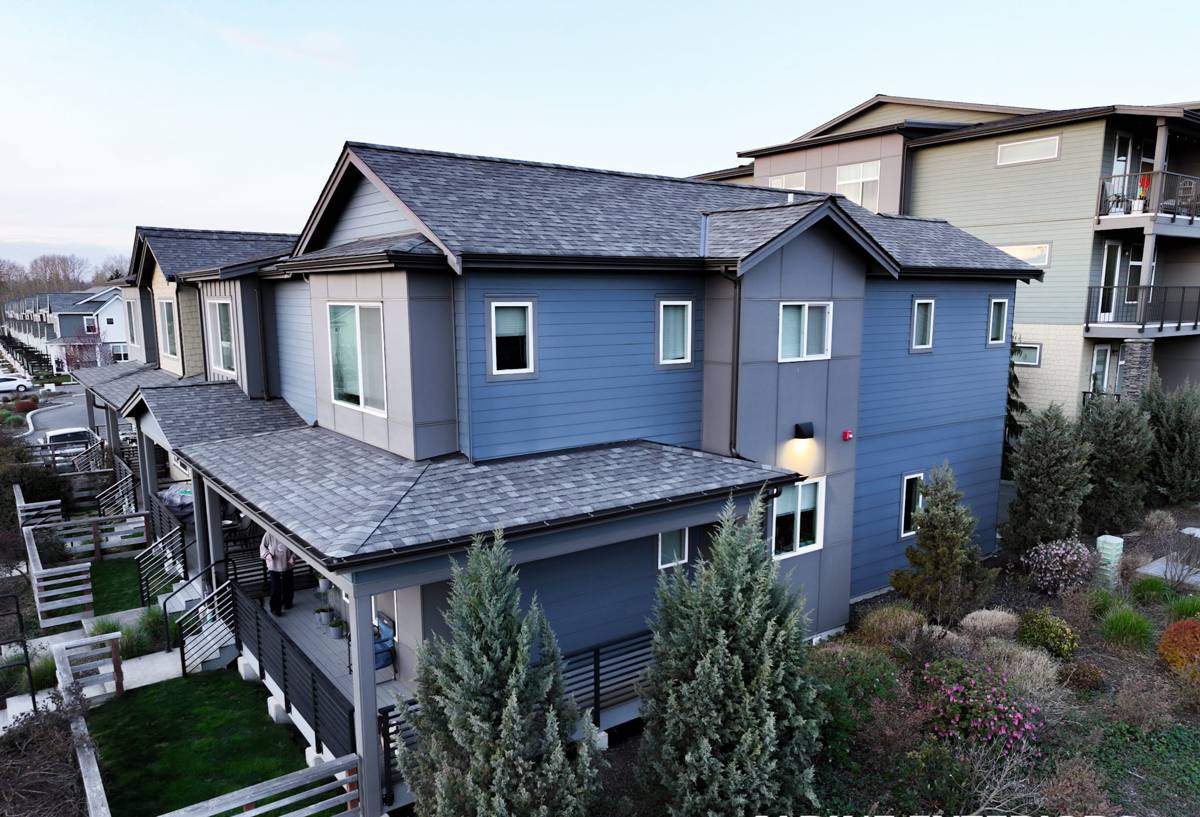
What James Hardie Brings to a House in This Environment
We install James Hardie fiber cement siding exclusively, and in a coastal Whatcom County climate the reasons are practical, not just brand preference:
- Non-combustible material that doesn't rot, delaminate, or feed insects the way wood-based products can when they stay damp for extended periods.
- ColorPlus factory-applied finish, which is baked on and warrantied against fading and peeling — a real advantage when a house is getting salt spray and UV exposure on top of the usual weather.
- HZ5 product engineering, Hardie's climate zone designation built specifically for the moisture and freeze-thaw conditions of the Pacific Northwest, rather than a one-size-fits-all national product.
- Dimensional stability — fiber cement doesn't swell and contract with moisture the way wood and some composite products do, which matters when a house is damp more months than it's dry.
None of that replaces good installation. Hardie's own literature is clear that the product's long-term performance depends heavily on correct water management underneath it — which is where a lot of siding jobs in this region actually go wrong.
Picking the Right Hardie Product for a Ferndale Home
James Hardie makes several product lines, and the right one depends on the house's style and exposure, not just personal taste:
| Product | Best Suited For | Notes for This Climate |
|---|---|---|
| HardiePlank Lap Siding | Most standard homes, ranch to two-story | Widest color and texture range; workhorse choice for wind-driven rain areas |
| HardieShingle | Craftsman and cottage-style homes | Gives a cedar-shake look without the moisture upkeep bare wood shingle needs here |
| HardiePanel Vertical Siding | Modern builds, accent walls, gables | Needs careful joint and batten detailing to shed rain correctly |
| HardieTrim | Corners, fascia, window/door trim | Matched product line avoids the mismatched expansion/moisture behavior of mixing materials |
For most Ferndale homes we're specifying HZ5 versions of these products, which are engineered with moisture and impact performance suited to the Pacific Northwest rather than a milder or drier climate zone.
What a Correct Installation Actually Involves
Water Management Comes First
In a climate with this much driving rain, the siding itself is really the second line of defense. The first line is the water-resistive barrier and flashing underneath it — house wrap installed and lapped correctly, window and door flashing that actually directs water out and away rather than behind the siding, and kick-out flashing at roof-to-wall intersections so runoff doesn't dump straight down the wall. We see more moisture problems traced back to flashing shortcuts than to the siding material itself.
Fastening and Clearances
Hardie specifies fastener type, spacing, and placement for a reason — done wrong, panels can crack, pull loose, or trap moisture at the fastener point. Ground clearance and clearance from decks, patios, and roof lines also matter more here than in a dry climate, because splashback and standing moisture near the bottom of the wall are exactly the conditions that accelerate problems.
Caulking and Joint Details
Every seam, corner, and penetration is a place water can find its way in. Correct sealant selection and joint spacing — not just "caulk everything" — is part of doing the job to spec, particularly on vertical panel applications where water runs directly down the joint lines.
Common Problems We See on Older Siding in This Area
On tear-offs and repair calls around Ferndale and the broader Semiahmoo area, a few patterns show up repeatedly:
- Moss and algae staining concentrated on north-facing and shaded walls that stay damp longest through fall and winter.
- Paint failure and wood rot at butt joints and corners where old siding wasn't properly flashed or caulked.
- Soft or delaminated material near ground level, where salt-laden moisture and splashback did the most damage over time.
- Fastener staining and streaking where the wrong fastener type corroded over years of salt air exposure.
These aren't defects unique to any one brand — they're what happens when any siding material, or its installation, wasn't matched to this specific climate.
Our Process, Start to Finish
A siding job on a Ferndale home typically moves through the same stages, though the details shift with the house:
- On-site assessment — we look at exposure (which walls take the worst wind and rain), existing moisture damage, and the condition of the sheathing underneath the current siding.
- Product and color selection — matching the right HardiePlank, Shingle, or Panel line and ColorPlus finish to the home's style and exposure.
- Tear-off and inspection — removing old siding lets us actually see the sheathing and framing, which is often the first honest look anyone's had at the wall's condition in years.
- Water-resistive barrier and flashing install — this is the step that determines how the wall performs for the next 20-plus years, done to Hardie's written specifications.
- Siding installation — correct fastening, clearances, and joint treatment throughout.
- Trim, caulking, and final detailing — the finish work that keeps water out at every seam and penetration.
- Final walkthrough — reviewing the finished job and warranty coverage with the homeowner.
What It Costs and What Drives the Price
Every house is different, but the factors that move the price on a Ferndale James Hardie job are consistent:
| Factor | Why It Matters |
|---|---|
| House size and wall complexity | More corners, gables, and dormers mean more cutting, flashing, and trim work |
| Sheathing condition underneath old siding | Rot or moisture damage found during tear-off adds repair scope |
| Product line and texture | Shingle and vertical panel styles run higher in labor than standard lap siding |
| Trim and detail work | Corner boards, window trim, and fascia in matched HardieTrim add cost but keep the whole system consistent |
| Access and site conditions | Multi-story sections, tight lots, and landscaping can affect equipment and labor time |
We give a firm number after an on-site look, not a phone estimate — there's too much variation house to house to guess accurately from a description.
Living With Hardie Siding Through a Whatcom County Moss Season
ColorPlus finish and fiber cement's dimensional stability cut down on maintenance, but no siding is zero-maintenance in this climate. A short annual routine keeps a Hardie job looking like it did on install day:
- Rinse down north-facing and shaded walls in early fall, before moss and algae get established for the winter.
- Keep gutters clear so overflow isn't running down the wall face during heavy rain.
- Trim back shrubs and landscaping that hold moisture against the bottom courses of siding.
- Check caulking at trim and joints every couple of years — it's the first thing to wear, and it's cheap to redo before it fails.
- Avoid pressure washing directly at joints and fastener points; a garden hose and soft brush do the job without forcing water where it doesn't belong.
Why a Crew That Already Works Ferndale Matters
Flashing details, fastener choices, and clearance decisions that work fine in a dry climate can be exactly wrong here. A crew that installs siding across Semiahmoo and Whatcom County regularly already knows which walls in this area take the worst weather, how the moss and moisture pattern actually plays out through the year, and where the old installation shortcuts tend to fail first. That local pattern recognition is the difference between a siding job that looks right on install day and one that's still performing correctly a decade into salt air and driving rain.
If you're weighing a siding replacement or repair on a Ferndale home, we're happy to take a look and walk you through what your specific house needs — no pressure, no upsell, just a straight assessment and a firm estimate. Reach out using the form below to get started.