 Semiahmoo
 Why Drayton Harbor Homes Wear Out Siding Faster
Drayton Harbor sits at the edge of Semiahmoo, right where Whatcom County's marine air meets a shallow, wind-exposed bay. Homes here don't get the sheltered, gentler weather that inland Whatcom County properties see. Wind pulls moisture off the harbor and drives it sideways into exterior walls, salt hangs in the air year-round, and the combination of shade, dampness, and mild temperatures makes this one of the more favorable environments in the state for moss and algae to take hold on siding. None of that is unusual for a Puget Sound-adjacent waterfront community — but it does mean siding installed without those specific conditions in mind tends to fail early, whether that shows up as swelling, staining, fastener corrosion, or paint that gives out years ahead of schedule.
This page is about one thing: what it actually takes to install siding correctly on a Drayton Harbor home, and why a crew that already works this specific stretch of Semiahmoo brings something a general contractor from out of the area usually doesn't.
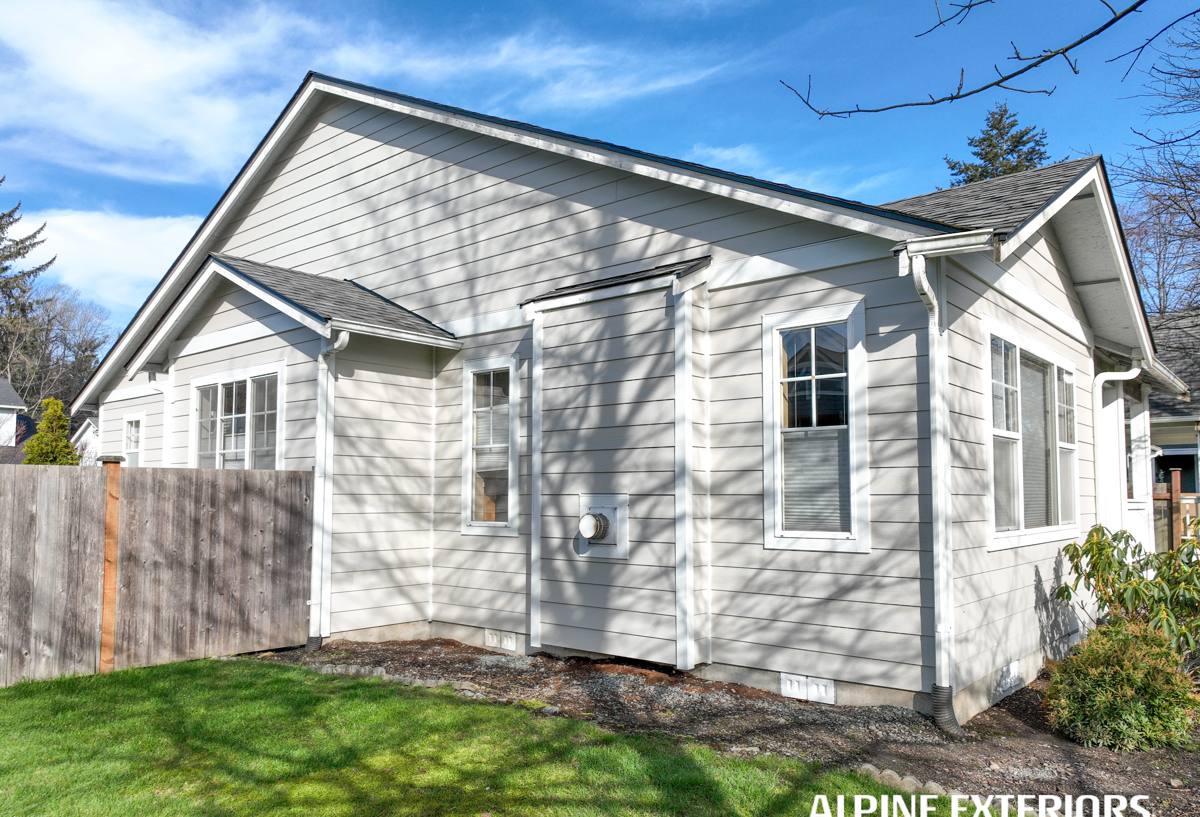
What the Local Climate Demands From a Siding System
Salt-Laden Air and Fastener Corrosion
Airborne salt from Drayton Harbor accelerates corrosion on anything metal — fasteners, flashing, trim caps, and hardware. On a waterfront-adjacent property, using the wrong fastener material or skipping corrosion-resistant flashing isn't a minor shortcut; it's the difference between trim that holds paint for fifteen years and trim that starts bleeding rust streaks within two or three.
Wind-Driven Rain and Water Management
Rain in this area rarely falls straight down. Wind off the harbor pushes it into wall assemblies at an angle, which means water management details that would be "good enough" on a sheltered inland lot aren't good enough here. Every horizontal joint, window head, and butt seam is a potential entry point if it's not lapped, flashed, and sealed with wind-driven rain specifically in mind.
Moss, Mildew, and the Shaded North Wall Problem
North- and east-facing walls that stay shaded through Whatcom County's long, damp stretch of the year are where moss and mildew take hold first. Siding that traps moisture against its backside, or that's installed too tight to the ground, deck, or roofline, gives moss exactly the damp, low-light conditions it needs to establish and spread.
What a Correct Siding Installation Actually Involves
A siding job is only as good as what's underneath it. On a Drayton Harbor home, the sequence and details matter more than they would somewhere drier and calmer.
Weather-Resistive Barrier and Flashing
A continuous, properly lapped weather-resistive barrier goes down first, with self-adhered flashing at every window, door, and penetration. Head flashing needs a drip edge that actually sheds water away from the wall rather than letting it run back behind the siding — a detail that's easy to rush and expensive to fix later.
Clearances and Ventilation
Siding needs air space behind it and proper clearance at grade, decks, roof lines, and any horizontal surface where water and debris can collect. Skipping clearance is one of the most common causes of the moss and rot problems that show up on older homes in wet coastal areas.
Fastening and Panel Layout
Fastener type, spacing, and depth all affect how a panel performs over time — over-driven or under-driven fasteners loosen panels or crack them, and the wrong fastener material corrodes faster in salt air. Panel joints should be planned out before installation starts, not improvised board by board.
| Installation Detail | Why It Matters at Drayton Harbor | What a Correct Install Does |
|---|---|---|
| Flashing material | Salt air corrodes standard metals faster | Corrosion-resistant flashing at every penetration and joint |
| Fastener placement | Wind-driven rain finds any gap or crack | Manufacturer-spec depth and spacing, no shortcuts |
| Bottom clearance | Damp ground feeds moss and rot | Proper gap at grade, decks, and patios |
| Caulking and sealant | UV and salt break down cheap sealants fast | High-quality, paintable, exterior-rated sealant only where specified |
| Panel material | Wood-based products swell and absorb moisture | Fiber cement, which doesn't swell or rot from water exposure |
Our Process for Drayton Harbor Installations
- On-site assessment: we walk the home, note wind exposure, shaded walls, drainage patterns, and existing moisture damage before quoting anything.
- Tear-off and substrate check: old siding comes off and we inspect the sheathing underneath for rot or hidden damage before anything new goes up.
- Weather barrier and flashing: a continuous barrier and flashing system goes in at every window, door, and penetration point.
- Installation to manufacturer spec: panels, fasteners, and clearances are installed to James Hardie's published specifications, not shortcuts we've picked up over time.
- Finish and detail work: caulking, trim, and touch-up are handled last, with attention to the joints and edges most exposed to wind-driven rain.
- Final walkthrough: we go over the finished job with the homeowner before calling it done.
Why We Install Only James Hardie Fiber Cement Here
We don't install vinyl, LP SmartSide, cedar, primed spruce, or other fiber cement brands. That's a deliberate standard, not an oversight, and it matters even more in a climate like this one.
Vinyl expands and contracts with temperature swings and can crack or warp under sustained UV and wind exposure; it also isn't the product we'd choose for a coastal-adjacent property where wind loads are a real factor. Wood-based products like LP SmartSide and cedar perform well when maintained perfectly, but they rely on an intact factory or field-applied coating to keep moisture out — and moisture is the one thing Drayton Harbor has in steady supply. Once that coating is compromised, wood-based siding absorbs water, swells, and becomes a long-term maintenance commitment that most homeowners don't want to sign up for.
James Hardie fiber cement doesn't absorb water the way wood-based products do, and it doesn't expand and contract the way vinyl does. It's also non-combustible, which is a real consideration given how many properties in this area sit near dry brush, trees, or seasonal debris. Hardie's HZ5 product line is engineered specifically for climate zones with the kind of moisture exposure Whatcom County sees, and the ColorPlus factory finish is baked on under controlled conditions rather than field-applied, which means it holds color and resists fading and chipping better than a job-site paint job — a real advantage against constant salt air and UV. It also carries a strong transferable warranty, which matters on a coastal property where siding is doing more work than it would somewhere drier.
Why Hiring a Crew That Already Works Semiahmoo Matters
A contractor who's worked other homes in this immediate area already knows which walls take the worst of the harbor wind, where moss tends to establish first, and how Whatcom County inspectors expect flashing and weather barriers detailed. That's knowledge you don't get from a crew that mostly works inland and treats a waterfront job the same as any other. It shows up in small decisions — extra flashing on a north wall, tighter attention to a shaded corner, choosing sealants rated for sustained salt exposure — that a generic install misses because the crew has never had to watch how their work holds up two winters later in this specific environment.
What Drives the Cost of a Drayton Harbor Siding Job
| Cost Factor | Why It Matters |
|---|---|
| Home size and wall complexity | More corners, dormers, and cutouts mean more labor and material waste |
| Existing substrate condition | Rot or hidden moisture damage found during tear-off adds repair work |
| Siding profile and accessories | Trim boards, soffit work, and specialty profiles add to material cost |
| Wind and moisture exposure | Waterfront-facing walls may need extra flashing and sealant detail |
| Access and site conditions | Steep lots, tight access, or landscaping near the foundation affect labor time |
We give a firm, itemized quote after walking the property — not a phone estimate — because the details above genuinely change the scope on a house-by-house basis.
A Homeowner's Pre-Project Checklist
- Ask what's happening to the sheathing underneath — will it be inspected and repaired before new siding goes on?
- Confirm what flashing and weather barrier system will be used, not just what the finished siding will look like.
- Ask how clearances at grade, decks, and rooflines will be handled, especially on shaded or damp-prone walls.
- Get the fastener type and installation spec in writing, not just verbal assurance.
- Ask whether the crew has worked other homes in the immediate Semiahmoo or Drayton Harbor area.
- Confirm the warranty terms in writing, including whether it's transferable if you sell the home.
Ready for a Straight Answer on Your Home
Every Drayton Harbor property carries a different mix of wind exposure, shade, and existing wear, and the right approach depends on seeing the actual walls, not guessing from a photo. If you'd like a straightforward look at what your home needs and what it would cost to do right, request a free, no-pressure estimate below and we'll walk the property with you.