 Semiahmoo
 Drayton Harbor's Climate Is Harder on Siding Than People Expect
Homes around Drayton Harbor sit right where Whatcom County's marine climate does its most work. The water is close enough that salt-laden air reaches siding, trim, and fasteners year-round, not just during storms. Add in the driving rain that comes off the Strait of Georgia and Puget Sound during fall and winter, and you've got a combination that tests every seam, joint, and coating on a house. Then there's moss season — long, wet, low-light stretches where anything that holds moisture against a wall becomes a growing surface.
None of this is unusual for Semiahmoo. It's just the baseline. The problem is that a lot of siding products were engineered for a national market, not for a shaded, salt-exposed, rain-heavy corner of the Pacific Northwest. When a product isn't suited to this exposure, the failures don't show up right away — they show up in year four or five, as soft trim, lifted paint, streaking, or panels that never quite dry out between storms.
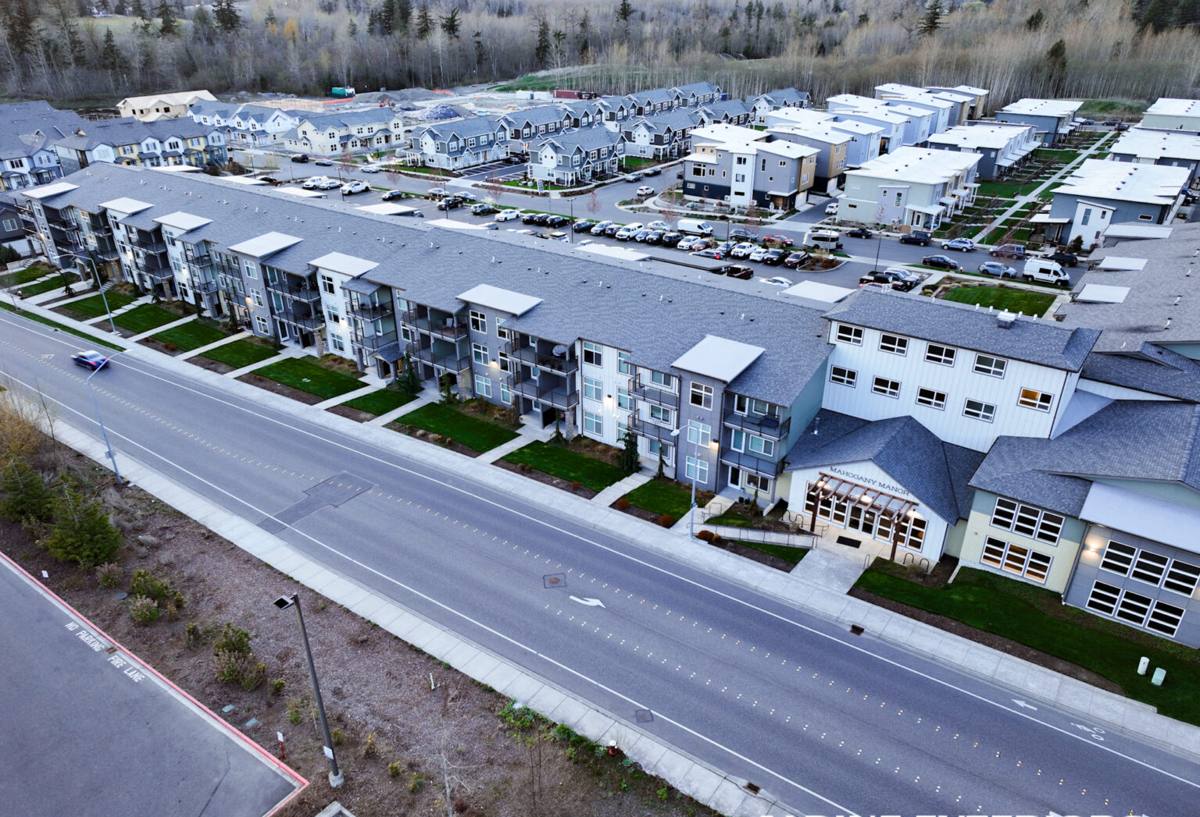
What Salt Air, Rain, and Moss Actually Do to Siding
Salt air
Airborne salt is corrosive to exposed metal fasteners and flashing, and it accelerates the breakdown of lower-grade paints and coatings. Siding that isn't factory-finished with a coating rated for this kind of exposure will chalk, fade, or fail at the surface faster near the water than it would ten miles inland.
Driving rain
Wind-driven rain doesn't just fall on siding — it gets pushed sideways and upward into laps, joints, and butt seams. A house near Drayton Harbor needs a siding system and installation detail that assumes water will be forced at the wall, not one that only sheds water falling straight down.
Moss and prolonged moisture
Shaded north and east walls, tree cover, and long damp stretches give moss and algae the conditions they need. Any siding material that absorbs and holds water — even a little — gives moss something to root into over time, which then holds even more moisture against the wall.
Why Fiber Cement Is the Right Material for This Exposure
Fiber cement is cement, sand, and cellulose fiber formed under pressure. It doesn't rot, it isn't a food source for moss or mildew the way wood-based products can be, and it holds paint and factory finishes far longer than wood or wood-composite siding because it doesn't expand and contract with moisture the same way. For a property exposed to salt air and near-constant winter rain, that stability matters more than it does in a drier climate.
It's also non-combustible, which is a genuine advantage but a secondary one here — the primary reason we recommend it for Drayton Harbor homes is moisture and coating performance over the long haul, not just fire rating.
Why we don't offer alternatives
We get asked about vinyl and engineered wood siding fairly often, and we're upfront about why we don't install them. Vinyl can crack in cold snaps, fades unevenly under UV and salt exposure, and its seams give wind-driven rain an easier path inward. Engineered wood products perform well when kept perfectly sealed and maintained, but they're wood-based at the core, which means any breach in the coating — a nail pop, a scuff, an unsealed cut edge — opens the door to moisture absorption in a climate that doesn't let things dry out quickly. We standardized on James Hardie fiber cement because it holds up to this specific combination of salt, rain, and shade with the least long-term risk, not because every other product is universally bad.
Why We Install Only James Hardie Fiber Cement
There are other fiber cement brands on the market. We install James Hardie exclusively because of three things that matter directly for a Drayton Harbor property:
- ColorPlus factory finish — baked-on, multi-coat color applied under controlled conditions, which resists fading and chalking far better than field-applied paint, especially under salt-air UV exposure.
- Climate-engineered HZ product lines — Hardie's HZ5 formulation is built for wetter, harsher climates and is what we spec for homes with direct water exposure like this one.
- A warranty structure that's actually transferable — Hardie backs its products with a long-term limited warranty that follows the house, which matters if the home changes hands, and ColorPlus finishes carry their own separate finish warranty.
We'd rather install one product line correctly and stand behind it than offer several options and hedge on which one holds up. For this stretch of Whatcom County, Hardie is the one we're willing to warranty our workmanship against.
What a Correct Installation Involves
Fiber cement is only as good as the installation behind it. Most of the siding failures we get called out to inspect aren't material failures — they're installation shortcuts that let water in behind a product that was otherwise fine.
Drainage plane and flashing first
Before a single piece of siding goes up, the wall needs a continuous weather-resistant barrier, properly lapped and taped, with flashing integrated at every window, door, and horizontal trim transition so water is directed out and down instead of behind the siding. On a property exposed to wind-driven rain, this layer matters as much as the siding itself.
Clearances and gaps
Hardie's install specs call for clearance from grade, roofing, and decks, plus consistent gaps at butt joints and trim to allow for expansion and drainage. Skipping these clearances is one of the most common ways moisture gets trapped at the bottom of a wall.
Fastening and caulking
Fasteners need to be corrosion-resistant and driven correctly — not overdriven, not underdriven — and butt joints need to be caulked with a product rated for the movement and exposure involved, not whatever's on hand. Near the water, we use corrosion-resistant fasteners as a standard, not an upgrade.
Our Process for Drayton Harbor Projects
- On-site assessment. We look at wall orientation, shade patterns, existing moisture or rot damage, and how the current siding has held up, since that tells us a lot about how the house handles this exposure.
- Tear-off and sheathing check. Once the old siding is off, we inspect the sheathing for hidden rot or moisture damage before anything new goes up — this is where problems that caused the original failure usually surface.
- Weather barrier and flashing. We install and integrate the drainage plane and flashing at every penetration before siding starts.
- Hardie installation to spec. Correct clearances, fastening, and joint treatment, following James Hardie's published installation guidelines for HZ5 product.
- Final walkthrough. We review the finished work with the homeowner and go over basic care specific to this environment.
What Fiber Cement Siding Costs to Install Here
Every home is different, but these are the factors that move the price up or down on a Drayton Harbor project specifically:
| Cost Factor | Why It Matters Here |
|---|---|
| Wall exposure and orientation | Salt- and rain-facing walls may need additional flashing detail or trim work |
| Existing sheathing condition | Rot or moisture damage found during tear-off adds repair scope before new siding goes on |
| Siding profile and accessories | Lap width, trim style, and corner details affect material and labor |
| Access and site conditions | Waterfront lots, slopes, or limited access can affect staging and labor time |
| Color and finish selection | ColorPlus factory finishes vs. field-applied primed panels affect both cost and long-term maintenance |
We'll always give a firm, itemized quote after seeing the actual house — broad national averages don't account for what we typically find once we open up a wall near the water.
Living With Fiber Cement Siding in This Environment
Fiber cement is low-maintenance compared to wood, but "low-maintenance" isn't "no-maintenance," especially in a moss-prone, salt-air area. A little seasonal attention goes a long way toward protecting the investment:
- Rinse siding with a garden hose once or twice a year to remove salt residue and airborne debris, especially on water-facing walls
- Keep gutters and downspouts clear so water doesn't overflow and run down the siding face
- Trim back vegetation and tree limbs that shade walls and slow drying, since that's exactly where moss takes hold
- Inspect caulked joints annually and have any cracked or failing caulk replaced before winter rains set in
- Avoid pressure washing directly at joints and seams — a soft wash is safer for the caulking and flashing behind the siding
- Address any moss growth early with a gentle wash rather than letting it establish and hold moisture against the wall
Why Hiring a Crew That Already Works Drayton Harbor Matters
Installation quality is what determines whether fiber cement siding performs for thirty-plus years or needs early repairs — and the details that matter most near Drayton Harbor aren't the same ones that matter on a dry inland lot. A crew that regularly works this stretch of Whatcom County already knows which walls take the worst of the wind-driven rain, where salt air does the most damage to fasteners and trim, and how much clearance and flashing detail this exposure actually requires. That's the difference between a siding job that's technically correct on paper and one that's correct for this specific property.
If you're weighing a siding replacement or repair on a home in or near Semiahmoo, we're happy to take a look and walk you through what we're seeing — no pressure, no obligation. Use the form below to request a free estimate, and we'll talk through what your home actually needs.