 Semiahmoo
 Decks on Drayton Harbor Wear Differently Than Decks Inland
If you own a home along Drayton Harbor in Semiahmoo, you already know your deck doesn't age like a deck fifteen miles inland. The combination of salt-laden air off the harbor, near-constant driving rain through the fall and winter, and a moss season that can run six months or longer puts a different kind of stress on wood, fasteners, and finishes than most decks in Whatcom County ever see. A deck built to a generic spec — the kind that would be perfectly fine in a drier, inland neighborhood — often starts showing problems here years before it should.
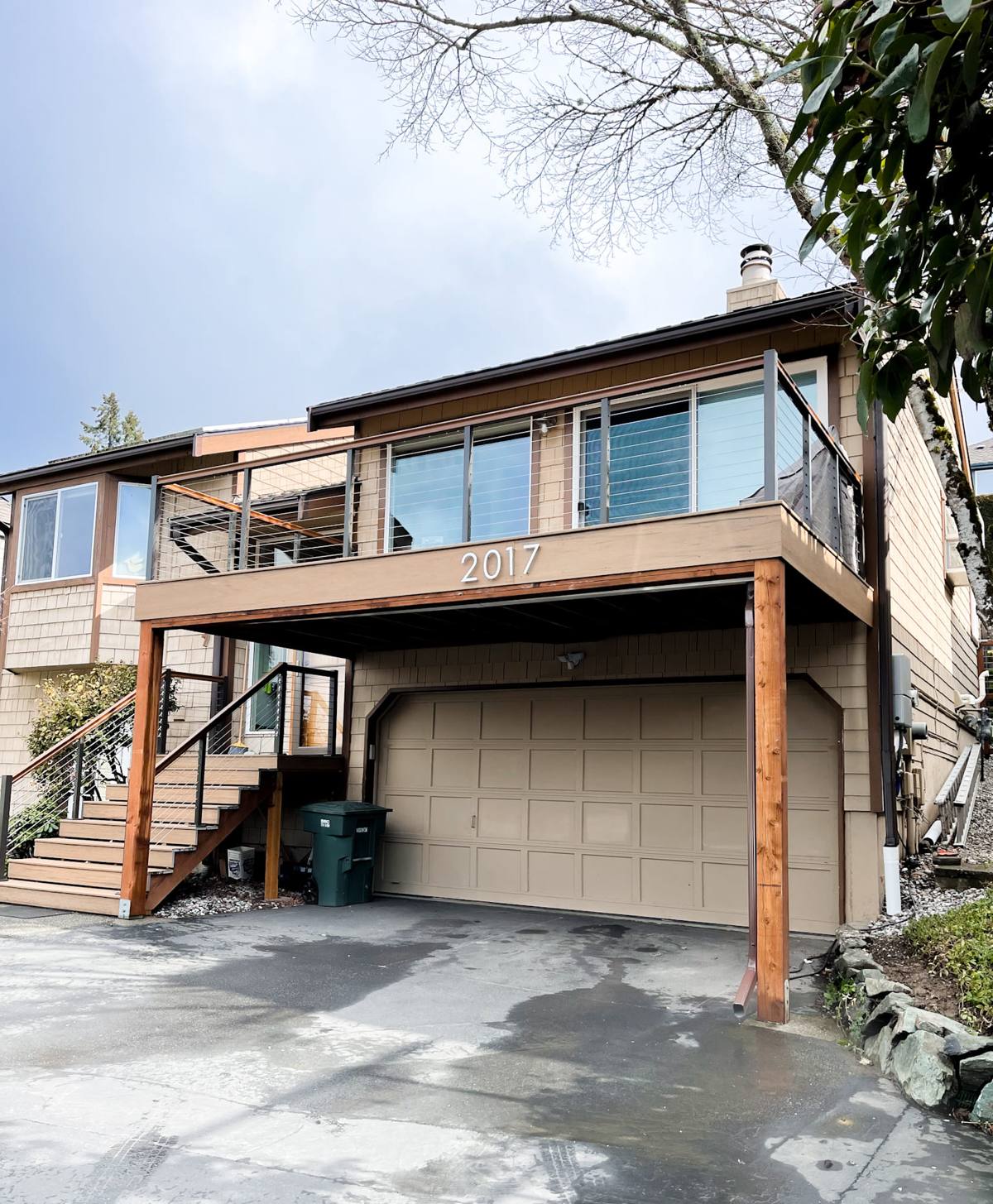
We've replaced and rebuilt decks up and down this stretch of Semiahmoo, and the failures we see are consistent: corroded fasteners bleeding rust streaks into the boards, ledger boards rotting from trapped moisture behind the house, joists that look fine on top but are soft underneath from years of standing water, and moss-slick surfaces that turn a deck into a hazard well before the structure itself is actually failing. This page is about what a deck replacement should look like when it's done for this specific environment — not a generic deck rebuilt in a place where salt air and moss aren't part of the equation.
Why Salt Air, Rain, and Moss Are a Tougher Combination Than Any One Alone
Salt Air
Airborne salt from the harbor accelerates corrosion on any exposed metal — nails, screws, joist hangers, post bases, and railing hardware. Once a fastener starts to corrode, it loses holding strength gradually and often invisibly, which is why a deck can look structurally sound from the top while the connections underneath are quietly failing.
Driving Rain
Wind-driven rain off the water doesn't just fall on a deck — it gets pushed sideways into ledger connections, under railing posts, and into any gap where flashing was skipped or installed poorly. Over time, that's where rot starts, almost always in places you can't see without pulling boards or checking from underneath.
Moss and Constant Dampness
Whatcom County's long wet season keeps decking surfaces damp for extended stretches, and moss takes hold anywhere sunlight and airflow are limited — under railings, in board gaps, on the north side of the house. Moss holds moisture against the wood surface, which speeds up decay and turns boards slick and dangerous underfoot.
Any one of these three would shorten a deck's life on its own. Together, they're why decks in Drayton Harbor often need real attention on a faster timeline than a generic "20-year deck" estimate would suggest.
Signs You're Looking at Replacement, Not Repair
Not every tired-looking deck needs to come out. But there's a point where patching boards or re-staining is just delaying an inevitable, more expensive fix — and in a few cases, delaying it becomes a safety issue. Here's how we tell the difference on a site visit:
- Soft or spongy spots underfoot, especially near the house or around post bases — usually means rot has reached the framing, not just the surface boards.
- Rust streaking below fastener heads or joist hangers — a sign the hardware itself is corroding and losing strength.
- Gaps or separation at the ledger board where the deck attaches to the house — often the first place water intrusion starts, and one of the most serious structural concerns on any deck.
- Persistent moss or algae that comes back within weeks of cleaning — a sign the deck isn't drying out between rain events, which points to a design or drainage problem, not just a cleaning problem.
- Railings that flex or wobble — post connections are one of the first things salt air corrosion attacks.
- Boards cupping, splitting, or delaminating (common with older composite generations) — a sign the material itself has reached the end of its useful life.
If what you're seeing is limited to a few boards or a section that gets more sun and less spray, repair may still make sense. If it's showing up in the framing, the ledger connection, or across most of the deck's surface, replacement is usually the more honest recommendation — and the more cost-effective one over a five-to-ten-year horizon.
What a Correct Deck Replacement Involves Here
A deck replacement done right for a harbor-adjacent property isn't just "same deck, new boards." The details that matter most are almost all in places you won't see once the project is finished.
Ledger and Flashing
The connection between the deck and the house is the single most common source of long-term failure. Proper flashing — installed so water is directed out and away from the house framing, not trapped behind the ledger — is non-negotiable in a climate with this much driving rain. This is also the detail most likely to be shortcut on a low-bid job, because it's invisible once the decking goes down.
Fasteners and Hardware
In a salt-air environment, stainless steel or heavy hot-dip galvanized fasteners and connectors aren't an upgrade — they're the baseline. Standard coated deck screws and joist hangers corrode faster here than they would fifteen miles inland, and once corrosion starts, it's a structural issue, not a cosmetic one.
Framing and Drainage
Joists and beams should be sized and spaced for the actual load and span, not just matched to what was there before, and the substructure should be built to shed water rather than pool it. Post bases should sit above grade and away from standing water, which is a common problem on older Drayton Harbor decks built closer to natural water tables near the shoreline.
Surface Material Selection
The decking surface itself needs to handle sustained dampness and limited winter sun without becoming a moss trap. That doesn't mean one material is right for every home — it means the choice should be made with this specific climate in mind, not a catalog photo.
Comparing Decking Materials for a Harbor-Adjacent Home
There's no single "best" decking material — the right choice depends on your budget, how much upkeep you want to do, and how much sun and airflow your deck actually gets. Here's how the common options hold up specifically against salt air, rain, and moss:
| Material | Moisture & Moss Behavior | Maintenance | Typical Lifespan Here |
|---|---|---|---|
| Pressure-treated wood | Absorbs moisture, prone to moss and mildew in shaded areas without regular cleaning and sealing | Annual cleaning, re-sealing every 1-2 years | 10-15 years with upkeep |
| Cedar | Naturally more rot-resistant than pressure-treated pine, but still needs finish maintenance in this rain load | Regular sealing/staining to maintain resistance | 15-20 years with consistent care |
| Composite decking | Resists rot and absorption well; surface can still stay damp and grow moss in low-light, low-airflow spots | Periodic washing, no sealing/staining required | 25-30 years, varies by product line |
| PVC/capped decking | Best moisture and mildew resistance of common options; sheds water and doesn't absorb it into the board | Occasional washing only | 25-30+ years |
For fully shaded, low-airflow sections of a deck — common on the north or water-facing side of many Drayton Harbor homes — composite or PVC decking earns its higher upfront cost by simply not holding moisture the way wood does. For sunnier, better-ventilated sections, a well-maintained wood deck can still be a reasonable and more budget-friendly choice. We'll walk your specific site and tell you honestly where each material makes sense rather than pushing one option across the whole deck.
How We Approach a Drayton Harbor Deck Replacement
- On-site assessment. We check the framing, ledger connection, post bases, and drainage — not just the visible boards — so we know whether this is a true replacement or whether targeted repair is honestly enough.
- Straightforward scope and estimate. You get a clear breakdown of what's being replaced, what materials and hardware we're using and why, and what it costs — no vague allowances that turn into surprises later.
- Tear-out and structural inspection. Once old decking is off, we inspect the framing directly. If we find rot or corrosion that wasn't visible from the surface, we'll show you before proceeding, not after the invoice.
- Rebuild to the local standard. Corrosion-resistant hardware, properly flashed ledger connections, and framing built to shed water — the details that actually determine how long the deck lasts here.
- Decking installation and finish work. Boards, railing, and any stairs installed to spec, with attention to gaps and airflow that reduce future moss buildup.
- Walkthrough. We go over the finished deck with you, including basic care specific to the material you chose.
Permits and Local Considerations
Deck projects in Whatcom County can be subject to permitting depending on the size, height, and scope of the work — this varies enough by property that it's not something to guess at from a website. As part of your estimate, we'll tell you plainly whether your project needs a permit and handle that process as part of the job, so it's not something you're navigating on your own. Properties directly along the harbor may also have additional considerations tied to setbacks or shoreline proximity; we'll flag that during the site visit rather than assume it applies or doesn't.
Protecting Your Investment After Installation
Even the best-built deck in this climate benefits from a little seasonal attention. A short annual routine goes a long way toward keeping moss, rot, and corrosion from getting a foothold:
- Sweep debris and standing leaves off the deck surface regularly, especially in fall — trapped organic matter holds moisture and feeds moss.
- Rinse or wash the surface a few times a year to interrupt moss and algae growth before it establishes.
- Check railing posts and stair connections annually for looseness — an early sign of hardware corrosion.
- Keep gutters and downspouts near the deck clear so runoff isn't dumping extra water onto or under the structure.
- For wood decks, re-seal or re-stain on the schedule the finish product calls for — skipping a cycle in this climate shows up fast.
- Trim back vegetation that shades the deck and blocks airflow, if moss is a recurring problem in a specific area.
Why Hire a Crew That Already Works Drayton Harbor
A deck built by a crew that hasn't worked this specific stretch of coastline tends to make the same mistake: they design and fasten for a generic climate instead of this one. We already know which fastener grade holds up here, which ledger details actually keep driving rain out, and which parts of a typical Drayton Harbor lot stay shaded and damp long enough to need a different material approach. That's not something you learn from a spec sheet — it's something you learn from replacing decks in this exact environment, season after season.
We also know this isn't a generic siding job with a deck attached — it's a structure that has to hold up under salt air, sustained rain, and a long moss season every single year, and we build and price it with that reality in mind from the first estimate.
Get a Free, No-Pressure Estimate
If your deck is showing rust streaks, soft spots, persistent moss, or just isn't holding up the way it used to, we're happy to take a look and give you an honest read on repair versus replacement — no pressure either way. Fill out the form below to schedule a free estimate for your Drayton Harbor property.