 Semiahmoo
 Building a Deck That Can Actually Handle Drayton Harbor
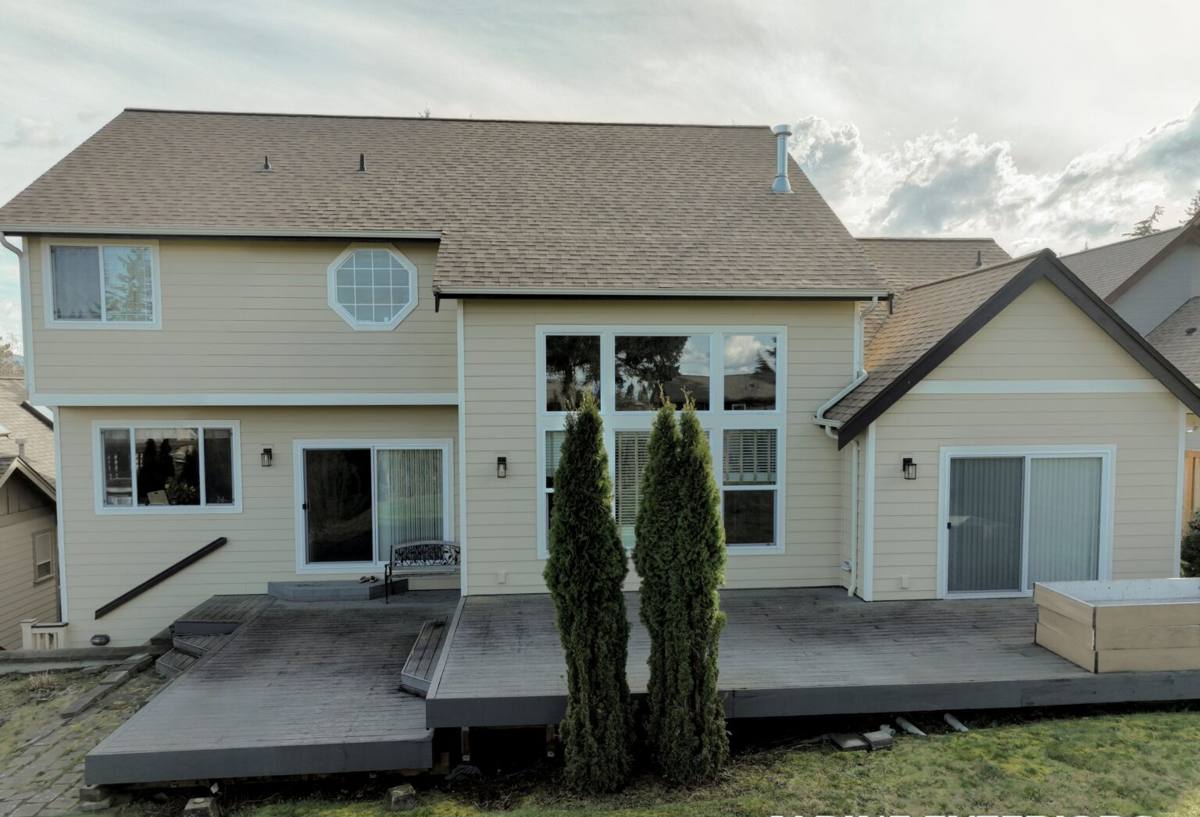
Drayton Harbor sits right on the water in Whatcom County, and homes around it deal with a combination most inland Washington properties never see: salt-laden air off the harbor, wind-driven rain that comes in sideways instead of straight down, and a moss season that can run most of the year in the shaded, damp spots every waterfront lot has. A deck built the same way you'd build one on a dry, sheltered lot in another part of the county will start showing problems fast — rust streaks around fasteners, soft or spongy boards near the ledger, a green film on the walking surface that gets slick the moment it's wet. Building a deck for Drayton Harbor is a different job than building a generic deck, and it starts with material and hardware choices that account for the environment before the first board goes down.
What the Marine Environment Actually Does to a Deck
It helps to understand the specific forces at work here, because they're not the same ones that wear out a deck in a drier climate:
- Salt air accelerates corrosion. Standard coated fasteners and hardware that hold up fine 20 miles inland can start rusting within a couple of seasons this close to the water, and once a fastener corrodes it weakens the connection it's holding together.
- Driving rain finds gaps. Wind off the harbor pushes rain sideways and even upward under railings and ledger boards, so water ends up in places a straight-down rain would never reach.
- Shade plus moisture equals moss. Waterfront lots are often partly shaded by trees or the house itself, and combined with near-constant dampness, that's ideal growing conditions for moss and algae on any horizontal wood or composite surface.
- Constant wet-dry cycling stresses materials. The freeze-thaw swings are milder here than inland, but wood and finishes still take a beating from being saturated, drying out, and getting saturated again on a near-weekly basis much of the year.
None of these are exotic problems — they're predictable, and a deck designed with them in mind from the start will outlast one that wasn't by a wide margin.
Choosing Decking Material for a Waterfront Whatcom County Lot
There isn't one "correct" decking material for Drayton Harbor — it depends on how much maintenance you want to do, your budget, and how close the deck sits to the water and shade. Here's how the common options actually perform in this specific climate:
| Material | Salt air / corrosion behavior | Moss & algae tendency | Maintenance | Typical cost tier |
|---|---|---|---|---|
| Cedar or other natural wood | Wood itself resists rot reasonably well, but all fasteners and hardware still need to be corrosion-rated | Higher — porous surface holds moisture and gives moss something to grip | Regular cleaning, re-sealing every 1–2 years | Lower to mid |
| Pressure-treated lumber | Chemical treatment resists rot; fasteners must be rated compatible with the treatment | High if not cleaned — rougher surface texture | Cleaning, sealing, occasional board replacement | Lowest |
| Capped composite | Excellent — no metal to corrode in the board itself, only in connectors | Lower, but not immune — smooth cap sheds moss more easily than wood | Occasional wash, no sealing or staining | Mid to higher |
| PVC decking | Excellent — fully synthetic, doesn't absorb moisture | Lowest of the common options | Occasional wash | Highest |
Composite and PVC cost more up front but remove most of the ongoing sealing and staining work that wood demands in a climate this wet. Wood costs less initially but only performs well long-term if you're genuinely willing to clean and reseal it on schedule — skipped maintenance is where most wood deck failures near the water actually start.
What we recommend and why
For most Drayton Harbor projects, we lean toward capped composite or PVC decking on the walking surface, paired with real cedar or a hidden structural option for railings and trim where appearance matters more than exposure. That's not a brand endorsement — it's a maintenance and moisture-behavior call. If a homeowner wants the look and feel of solid wood and is committed to the upkeep, we'll build it right and tell you honestly what that upkeep involves before you commit.
Framing, Fasteners, and Hardware That Actually Hold Up Here
The decking surface gets all the attention, but the framing and fasteners underneath are what determine whether a deck is safe and solid in ten years. In a salt-air environment, this is where corners get cut most often, and it's usually invisible until something fails.
- Structural fasteners and connectors rated for coastal/marine exposure — not the general-purpose galvanized hardware that's fine further inland.
- Stainless steel fasteners at the ledger board and other critical structural connections, where corrosion would have the biggest consequence.
- Joist hangers and structural connectors matched to the framing material and rated for the exposure category, not just "galvanized" as a blanket spec.
- Ledger board flashing installed as a system — not just a bead of caulk — so water is directed away from the house structure at the single most vulnerable connection point on the whole deck.
Drainage and Moss Control Built Into the Design
Moss doesn't show up because a deck is "old" — it shows up because water sits somewhere it shouldn't. The fix isn't cleaning more often, it's designing the deck so water doesn't linger in the first place:
- Correct board spacing so water drains through rather than pooling on the surface.
- Joist tape over the top of framing lumber, so the joists themselves aren't sitting in standing moisture under the decking.
- Ventilated skirting instead of solid, sealed skirting, so air can move underneath the deck and it can actually dry out between rain events.
- Thoughtful orientation and layout relative to shade and prevailing wind off the harbor, where it's practical within the site.
A deck designed this way still needs occasional cleaning, but it won't be fighting a losing battle against moisture trapped by its own construction.
How Your Deck Connects to Your Home's Siding and Water Management
The ledger board — where the deck attaches to the house — is one of the most common places water intrusion starts on any home, and it's a spot where deck framing and siding work overlap directly. If the ledger flashing isn't integrated correctly with the house's water-resistive barrier and siding, water can travel behind the siding at that connection point long before anyone notices a problem on the deck itself. Because we work on both siding and decks, we build that connection as one system rather than treating the deck as something bolted onto the house after the fact. That's a detail that's easy to get wrong and expensive to fix once siding has to come off to correct it.
Our Process for a Custom Deck Project in Drayton Harbor
- Site walk and design conversation. We look at sun exposure, prevailing wind and rain direction, shade patterns, and how close the site sits to the water, then talk through what you actually want to use the space for.
- Material selection based on exposure. We recommend decking, framing, and hardware matched to that specific site rather than a one-size-fits-all spec.
- Design and permit prep. We put together the plan and handle the permit submission with the applicable local jurisdiction.
- Structural build and ledger tie-in. Framing, footings, and the critical ledger/flashing connection to your home come first, done correctly before anything else goes on top.
- Decking, railing, and finish work. Surface material, railings, and any trim or lighting go in once the structure is solid and inspected.
- Final walk-through. We go over the finished deck with you, including what maintenance (if any) it needs going forward.
Permits and Local Considerations
Most new or substantially rebuilt decks require a permit through the applicable local building department, and requirements can include setbacks, guardrail height, and structural review depending on the deck's size and how it attaches to the house. Properties near the water in Whatcom County can also fall under additional shoreline-related review depending on proximity to Drayton Harbor itself — that's worth confirming early, before design work locks in a layout that might need adjusting. We handle the permit process as part of the job rather than leaving it to the homeowner to sort out.
Deck maintenance checklist for this climate
- Rinse or sweep debris off the deck surface regularly, especially in fall when leaves and needles trap moisture.
- Check for early moss or algae growth in shaded corners and address it before it spreads across the whole surface.
- Inspect visible fasteners and hardware once a year for rust streaking or corrosion.
- Confirm gaps between boards haven't closed up from swelling or debris buildup, which blocks drainage.
- Re-seal or re-stain wood decking on the schedule your specific product calls for — don't wait until it's visibly gray and dry.
- Keep skirting and under-deck areas clear of stored items that block airflow.
If you're planning a new deck or replacing one that hasn't held up near Drayton Harbor, we're happy to walk the site with you and talk through what would actually work best for your specific spot — no pressure, no obligation. Use the form below to request a free estimate.