 Semiahmoo
 Decking Built for Drayton Harbor's Marine Climate
Drayton Harbor sits close enough to the water that every deck built here deals with the same three stresses year-round: salt-laden air drifting off the harbor, driving rain that comes in sideways during winter storms, and a moss season that can stretch from October well into spring. A deck that would hold up fine forty miles inland can start showing problems within a couple of seasons out here if it wasn't built with this specific environment in mind. That's the gap we work to close — not just installing composite decking, but installing it the way homes in this part of Whatcom County actually need it done.
Composite decking has become the go-to choice for homeowners near the water because it doesn't absorb moisture the way solid wood does, it doesn't need annual staining, and it resists the rot that salt-air humidity accelerates. But composite is not a material you can install the same way everywhere and expect the same result. Fastener choice, gap spacing, substructure ventilation, and drainage detailing all have to be adjusted for a site that sits this close to Semiahmoo Bay.
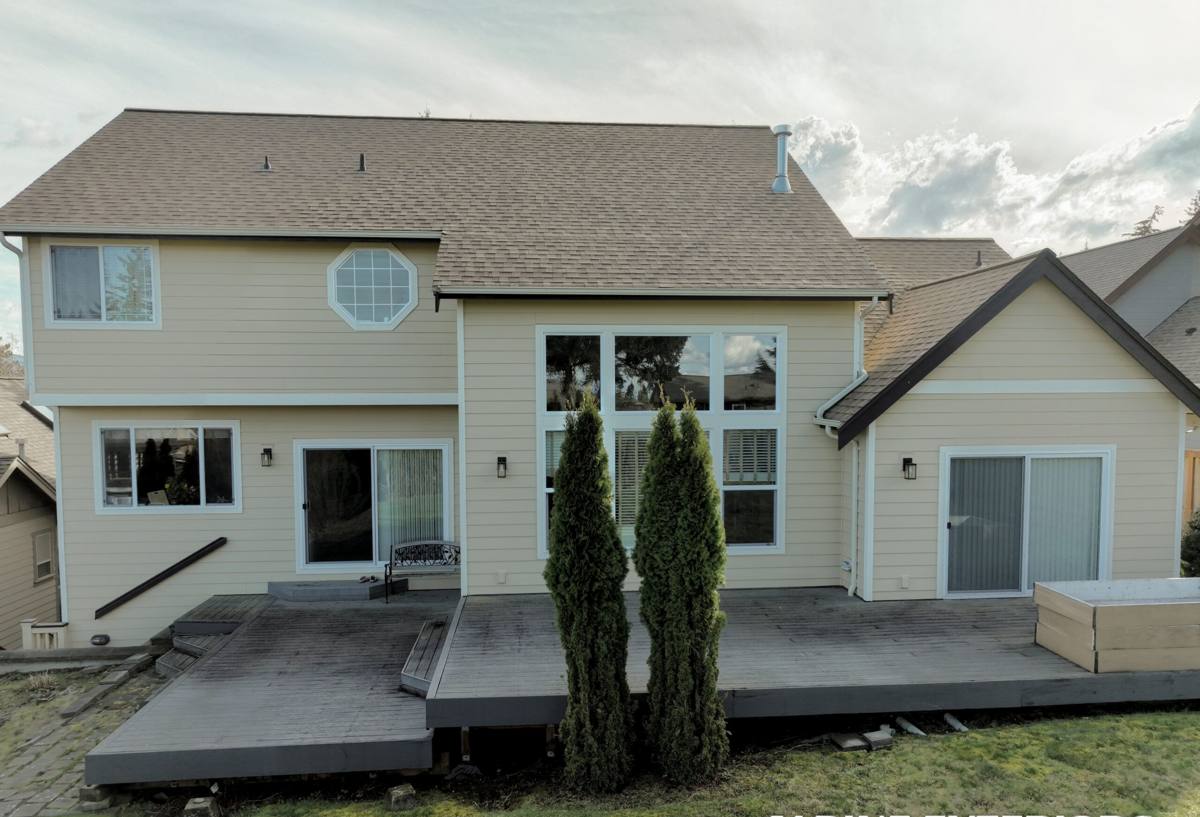
What Salt Air, Rain, and Moss Actually Do to a Deck
Salt Air and Metal Fasteners
Salt in the air accelerates corrosion on any exposed metal — screw heads, joist hangers, railing brackets, even the wrong grade of flashing. On a standard build, that corrosion is slow and cosmetic. Near the harbor, it moves faster, and once a fastener starts to corrode it can streak the decking around it and eventually weaken the connection. This is why the hardware spec matters as much as the decking brand.
Driving Rain and Water Intrusion
Rain that comes in at an angle off the water doesn't just fall on the deck surface — it gets driven under rail caps, into end-grain cuts, and behind ledger boards where the deck attaches to the house. If those points aren't flashed and sealed correctly, water works its way into the substructure long before it shows up as a visible problem on top.
Moss and Algae Growth
Whatcom County's damp shoulder seasons give moss and algae a long runway to establish themselves, especially on deck surfaces that stay shaded or don't drain well. Moss holds moisture against the board surface and turns a smooth composite deck into a slip hazard. It's manageable, but only if the deck was built with drainage and airflow in mind from the start — not bolted on after the fact.
Why Composite Makes Sense for This Location
Composite decking is a blend of wood fiber and recycled plastic, most commonly produced with a protective cap on the outer surface. That cap is the part that matters most near the water — it's what keeps moisture, salt, and UV from reaching the wood fiber core. Capped composite doesn't need refinishing, doesn't splinter, and resists the swelling and checking that solid wood decking develops when it cycles between wet and dry so often.
That doesn't mean composite is maintenance-free. It still needs to be cleaned periodically to stay ahead of moss and algae, and the substructure underneath it — the part homeowners never see — still has to be built to shed water and breathe. A composite deck installed over a poorly ventilated frame will trap moisture just as readily as a wood deck, even though the boards on top look fine.
Composite vs. Other Decking Materials Near the Harbor
| Material | Salt Air Behavior | Moss Resistance | Upkeep |
|---|---|---|---|
| Capped composite | Cap resists moisture and staining; core stays protected | Textured surfaces need periodic cleaning; smooth caps resist buildup best | Occasional wash, no staining or sealing |
| Pressure-treated wood | Absorbs moisture, accelerates fastener corrosion over time | Prone to moss in shaded, damp spots | Annual cleaning, periodic staining/sealing |
| PVC decking | Fully moisture-resistant, no wood fiber to absorb water | Smooth surface resists moss well | Occasional wash; can run hotter underfoot in direct sun |
| Cedar or other natural wood | Weathers quickly in salt air without diligent maintenance | Higher moss risk without regular treatment | Frequent sealing/staining to hold up |
We install composite as our standard recommendation for most Drayton Harbor projects because it strikes the right balance of low upkeep and long-term performance in this climate. We'll walk through PVC as an option too where it fits the project, but we don't push wood decking as a default here — the maintenance burden in a marine climate is simply higher than most homeowners want to sign up for.
What a Correct Composite Deck Install Actually Involves
Substructure First
Everything that matters long-term is under the boards. That means pressure-treated or corrosion-resistant framing, joist tape or flashing on top of the joists to keep moisture from wicking into the wood, proper joist spacing for the specific composite board being used (composite often requires tighter spacing than wood), and hardware rated for coastal exposure — stainless steel or heavy-duty coated fasteners, not standard galvanized.
Drainage and Airflow
A deck that sits low to the ground or backs up against a hillside needs a clear path for water to get out from underneath it, and enough airflow that the underside of the deck can dry out between rain events. On sites near Drayton Harbor with limited clearance, this sometimes means adjusting the framing height or adding drainage detailing that wouldn't be necessary on a drier, more open lot.
Board Layout and Fastening
Hidden fastener systems are standard on most composite installs now, and they matter more here than in a dry climate — exposed screw heads are the first thing salt air attacks. Proper gapping between boards also matters: too tight and the boards can't expand and contract normally; too wide and moss has more surface to take hold in the gaps.
Railing and Edge Details
Rail posts, cap rails, and stair stringers are where driving rain does the most damage if they're not flashed and capped correctly. We treat these connection points as carefully as the deck surface itself, because a leak at a post base can rot out framing that's otherwise protected.
Our Process for Drayton Harbor Deck Projects
- Site evaluation — we look at sun exposure, wind direction off the harbor, existing drainage, and how close the deck sits to grade or to shaded, moss-prone areas.
- Substructure plan — framing layout, hardware spec, and flashing details are set before any decking material is ordered.
- Material selection — we walk through composite board options and finishes based on the site conditions and your budget, not a one-size-fits-all recommendation.
- Installation — framing, flashing, decking, and railing installed to the spec set in step two, not adjusted on the fly.
- Walkthrough — we go over basic care for your specific deck, including what to expect during moss season and how to clean the surface without damaging the cap.
Living With a Composite Deck Near the Water
Even a well-built composite deck needs some seasonal attention in this climate. The good news is that it's simple, infrequent work — not the sanding, stripping, and staining cycle that wood decking demands.
- Sweep debris off the deck regularly, especially in fall when leaves and needles trap moisture against the boards
- Rinse the deck with a hose a few times a year to clear salt residue and prevent buildup in board grooves
- Use a soft-bristle brush and a composite-safe cleaner on any spots where moss or algae start to appear — catch it early rather than letting it establish
- Keep gutters and downspouts near the deck clear so runoff isn't dumping extra water onto the deck surface or the ground beneath it
- Check railing posts and stair connections once a year for any looseness, which can be an early sign of a moisture issue underneath
- Trim back any overhanging vegetation that keeps sections of the deck shaded and damp longer than the rest
Why Local Experience on This Type of Site Matters
A lot of decking contractors can install composite boards correctly on a typical inland lot. Fewer have spent real time building decks that face directly into harbor weather — where the framing spec, the fastener grade, and the drainage detailing all need to be adjusted from a standard build. We've worked enough Drayton Harbor and Semiahmoo-area properties to know which parts of a standard composite install need to be upgraded for this specific location, and which shortcuts show up as problems two or three winters later. That's the difference between a deck that looks good on install day and one that's still performing well after several seasons of salt air and driving rain.
Cost Factors to Expect
| Factor | Why It Affects Cost |
|---|---|
| Deck size and shape | More linear footage of board, framing, and edge detailing |
| Height above grade | Taller decks need more substantial framing, stairs, and railing |
| Board tier and finish | Composite lines range from mid-grade to premium multi-tone finishes |
| Substructure condition | Replacing or upgrading existing framing adds labor and material |
| Drainage or grading work | Sites with poor water flow under the deck may need added drainage detailing |
| Railing system | Composite, metal cable, or glass rail options vary widely in cost |
We don't quote composite decking off a square-footage rule of thumb alone — the substructure work and site conditions near the harbor can shift the number more than the decking material itself does. A site visit gives you an honest, specific number rather than a broad estimate that doesn't hold up once we're under the existing deck.
If you're planning a new composite deck or replacing one that hasn't held up to Drayton Harbor's weather, we're happy to take a look and give you a straightforward, no-pressure estimate — just fill out the form below.