 Semiahmoo
 Why Decks Around Wiser Lake Wear Differently
A deck built for a sunny, open lot doesn't behave the same way once it's tucked into the trees along Wiser Lake. Homes here sit closer to standing water and heavier tree cover than most in-town properties, which means more shade, more standing humidity, and a lot more time each day when the wood or composite surface simply doesn't dry out. Add in the marine-influenced air and driving rain that move through Whatcom County most of the year, and you've got a recipe for a deck that looks fine for a season or two and then starts showing problems fast — soft spots at the ledger, black staining between boards, and a surface that gets genuinely slick with moss by the second winter.
None of that means a deck can't hold up around Wiser Lake. It means the build has to account for moisture from day one instead of treating it as an afterthought. That's the difference between a deck that needs real attention every few years and one that just needs a normal cleaning.
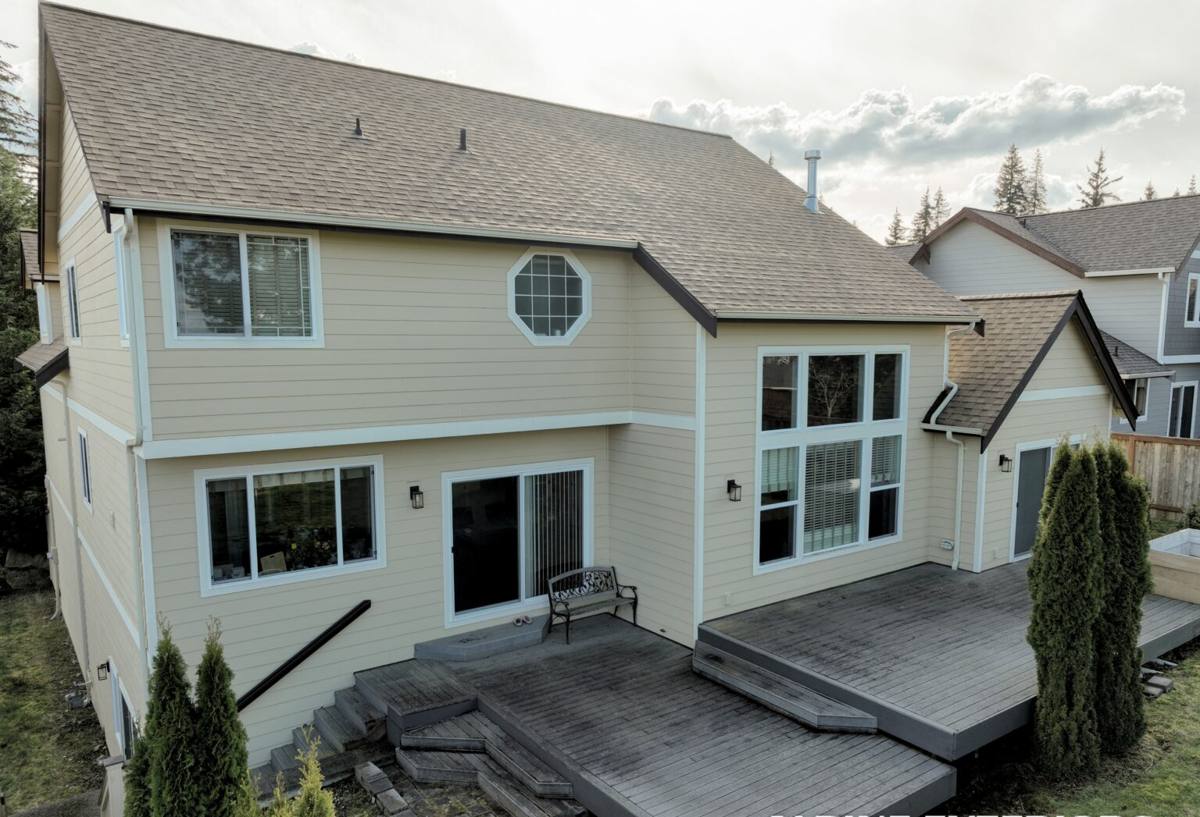
What a Correctly Built Deck Needs Near the Water
Footings that respect wet, shifting soil
Ground near a lake holds more water and moves more with the seasons than soil on higher, drier lots. Footings need to be sized and set to the depth the soil actually calls for, not just poured to a minimum spec and hoped for. On some Wiser Lake lots that means going deeper or wider than you'd expect for the deck's size, especially if the yard slopes toward the water or holds water after a heavy rain.
Ledger flashing — the single most important detail
Most deck failures we get called out to inspect don't start with the decking boards at all — they start where the deck ledger attaches to the house. If that connection isn't properly flashed to shed water away from the house band joist, moisture works its way in behind the siding and rots the framing from a spot you can't see until it's already a real repair. Around a humid lake property, a rushed or missing ledger flashing detail fails faster than it would on a drier in-town lot.
Fasteners and hardware rated for the exposure
Standard hardware corrodes faster in a damp, tree-shaded environment, and it corrodes even faster in contact with modern treated lumber, which reacts with plain steel. Structural connectors, screws, and bolts need to be hot-dip galvanized or stainless rated for treated-wood contact — not just "exterior grade" fasteners pulled off a general shelf.
Choosing Decking Material for a Lake Property
There's no single right answer here — it depends on how much shade the site gets, how much upkeep you're willing to do, and your budget. Here's how the common options actually perform once they're living under tree cover near Wiser Lake rather than in a catalog photo.
| Material | Moisture & moss behavior | Maintenance | Typical lifespan |
|---|---|---|---|
| Pressure-treated lumber | Absorbs and releases moisture; needs sealing to resist moss and cupping | Annual cleaning, resealing every 1-2 years in shaded spots | 10-15 years with upkeep |
| Cedar | Naturally rot-resistant but still needs sealing under heavy shade | Regular cleaning, periodic sealant refresh | 15-20 years with upkeep |
| Composite decking | Doesn't rot or cup, but can still grow surface moss/algae in deep shade | Periodic washing; no sealing or staining | 25-30 years |
| PVC decking | Fully moisture-resistant surface; least hospitable to organic growth | Occasional washing | 25-30+ years |
We don't push one product for every yard. A shaded, low-traffic lakeside deck is often a better fit for composite or PVC precisely because it removes the sealing schedule that a shady wood deck demands. A sunnier deck on the same street might do perfectly well in cedar or treated lumber for a fraction of the material cost. The honest answer depends on your specific lot, not a brand preference.
A word on lower-grade composite
Not all composite is built the same. Older or budget composite formulations can hold moisture inside the board core and are more prone to staining and mildew in shaded, damp settings — which is exactly the environment a lot of Wiser Lake decks sit in. We stick with capped composite or PVC products with a fully sealed outer shell for shaded lake lots, because an uncapped board in that environment tends to show its age early.
Railings, Guardrails, and Code Near the Water
Any deck attached to the house, and most decks of meaningful height, need a permit through Whatcom County before work starts — that's not a step worth skipping, both for your safety and for resale down the road. Washington's residential building code sets baseline guardrail requirements that apply regardless of neighborhood: guardrails are required once a deck surface sits more than 30 inches above grade, they need to be at least 36 inches tall, and baluster spacing has to be tight enough that a 4-inch sphere can't pass through. Stair railings have their own height and graspability rules.
On a lake lot, we also pay attention to footing placement relative to any setback from the water and to drainage grading around the posts, since standing water at the base of a post footing is one of the fastest ways to shorten its life.
Our Deck Building Process
- Site walk and assessment — we look at drainage, shade patterns, soil condition, and how the deck ties into the house before we talk materials.
- Design and material selection — sized to how you'll actually use the space, with material chosen for the specific amount of shade and moisture the site sees.
- Permit — we handle the Whatcom County permit submission so the design meets current guardrail and footing requirements before a shovel goes in the ground.
- Footings and framing — set to the depth the soil calls for, with ledger flashing done properly at the house connection.
- Decking and railing installation — proper board spacing for drainage and airflow underneath, which matters more here than on a dry, open lot.
- Final walkthrough — we go over the finished deck with you, including what maintenance it actually needs going forward.
Keeping Moss and Algae From Taking Over
A long moss season is just part of living in this part of Whatcom County, and a shaded lake lot gets more of it than most. The good news is that staying ahead of it is mostly routine, not dramatic.
- Sweep debris and standing leaves off the deck surface regularly through fall — trapped organic matter is what feeds moss and algae.
- Rinse or gently power-wash the surface at the start and end of the wet season, using a wide fan tip so you don't gouge softwood boards.
- Keep gutters and downspouts near the deck clear so runoff isn't dumping extra water onto the surface.
- Reseal wood decking on the schedule the product calls for — shaded boards often need it sooner than the label's general guidance assumes.
- Trim back overhanging branches where practical to let more light and airflow reach the deck surface.
- Check board spacing and drainage gaps each spring to make sure they haven't clogged with needles, leaves, or grime.
Common Problems We See on Wiser Lake Decks
A few issues come up more often on lake-adjacent decks than anywhere else in our service area:
Soft or spongy boards near the house. Almost always a sign the ledger flashing failed and water has been getting behind the siding. This one needs a proper repair, not just board replacement, because the framing underneath may be compromised.
Slick, dark staining on shaded sections. Usually algae or moss growth, not structural damage — but left untreated it accelerates wood breakdown and it's a real fall hazard on stairs and ramps.
Fastener staining or corrosion. Rust streaks bleeding from screw heads mean the original hardware wasn't rated for this environment. It's a maintenance annoyance at first and a structural concern later.
Why It Matters to Hire a Crew That Already Works Wiser Lake
A deck built to a generic spec sheet can still fail early if it ignores what the site actually experiences. Crews who already work around Wiser Lake and the broader Semiahmoo area know which lots hold water longest, which yards need deeper footings, and which permit details the county actually checks. That local pattern recognition is the difference between a deck that's designed for this climate and one that's just built to a minimum code and hoping the weather cooperates.
It also matters for timing. Pouring footings or setting ledger flashing during a stretch of driving rain isn't ideal, and a crew that works this area regularly knows how to plan around Whatcom County's wetter months rather than fighting them.
Ready to Talk About Your Deck?
If you're planning a new deck near Wiser Lake or trying to figure out whether an existing one needs repair or replacement, we're happy to take a look and give you a straight answer — no pressure, no sales script. Fill out the form below for a free estimate.