 Semiahmoo
 Why Peace Arch Homes Need Windows Built for This Coastline
Peace Arch sits close enough to the water and the border that its houses take a different kind of weather beating than homes even a few miles inland. You've got salt-laden air blowing off Semiahmoo Bay, long stretches of driving rain that comes in sideways more often than straight down, and a wet season that runs long enough to grow moss on anything that holds moisture. Windows are one of the first things on a house to show that wear — cloudy glass, swollen sashes, corroded hardware, drafts that weren't there five years ago.
Custom windows for this area aren't about fancy shapes or oversized glass, though we do plenty of that too. They're about matching the window — material, glazing, and installation detail — to what Whatcom County weather actually does to a house over a decade or two, not just what looks good on install day.
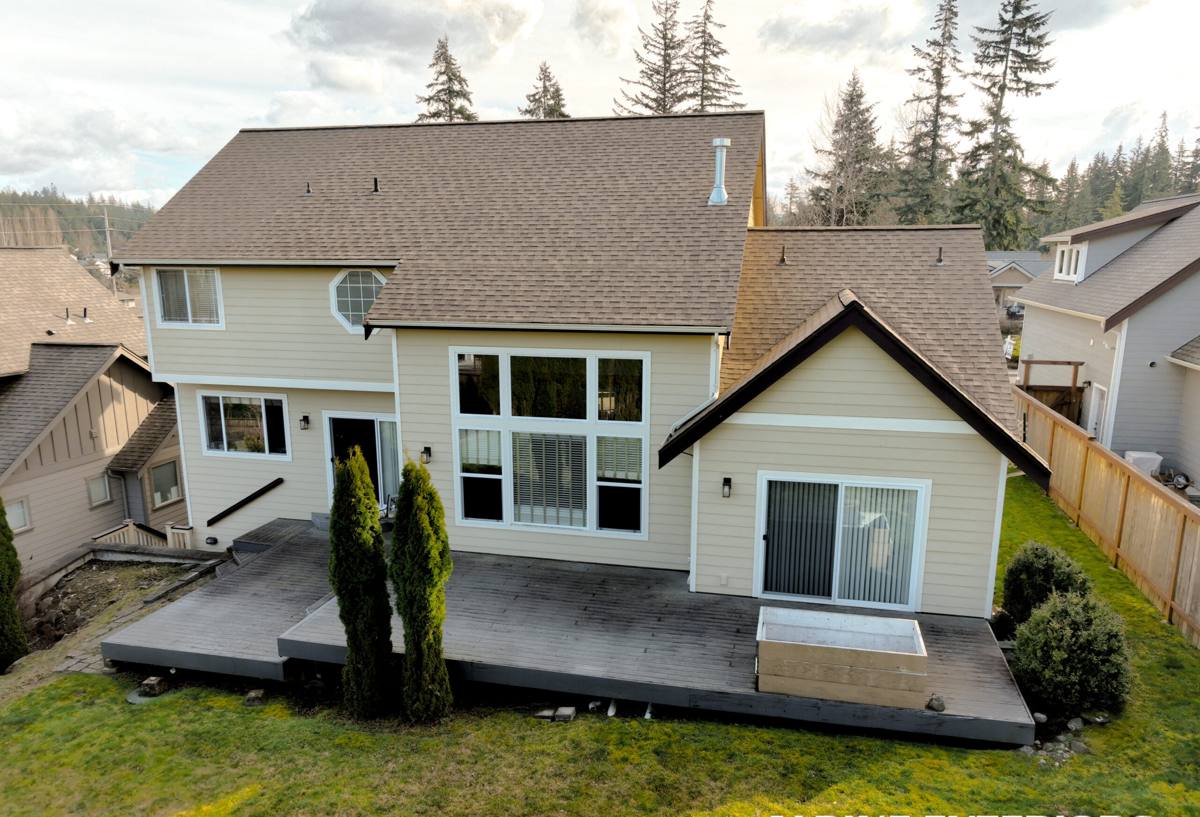
What Salt Air and Driving Rain Actually Do to a Window Over Time
Salt air is corrosive to bare metal. Aluminum hardware, uncoated fasteners, and some window frame components will pit and corrode faster here than they would in a drier, inland climate. It's slow — you won't see it in year one — but by year eight or ten, a window that wasn't spec'd for a marine-influenced climate can have hardware that binds, locks that won't seat, and streaking around the frame from corrosion runoff.
Driving rain is a different problem: it's about water intrusion, not corrosion. When rain hits a window at an angle instead of falling straight down, it pushes against seals, flashing, and weep systems that a mild climate might never test. A window that's caulked instead of properly flashed can look fine for years and then fail all at once during a hard winter storm, sending water into the wall cavity where you can't see it until there's a stain on the drywall or soft trim.
Long wet seasons add a third factor: sustained moisture exposure. Wood components that don't drain and dry between rain events are what grow rot and moss. It's less about any single storm and more about how many days a year a window assembly stays damp.
Choosing the Right Window Material for a Marine Climate
There's no single "best" window material — it depends on the house, the budget, and how much upkeep you want to do. Here's how the common options hold up specifically against salt air, rain, and moss:
| Material | Salt air performance | Moisture/rain handling | Maintenance |
|---|---|---|---|
| Vinyl | Good — won't corrode, UV-stable frames hold color | Good with proper flashing; frame itself doesn't absorb water | Low — occasional cleaning |
| Fiberglass | Very good — dimensionally stable, resists pitting | Very good; holds paint/finish longer than vinyl in coastal exposure | Low to moderate |
| Wood (unclad) | Poor without diligent upkeep — finish breaks down faster near salt air | Requires consistent sealing/painting to prevent rot | High — annual inspection recommended |
| Wood-clad (vinyl or aluminum exterior) | Good on the exterior face; interior wood still needs normal care | Good if cladding and flashing are detailed correctly | Moderate |
| Aluminum | Fair — needs a quality anodized or powder-coat finish to resist pitting | Prone to condensation without a thermal break | Moderate |
For most Peace Arch homes, we lean toward vinyl or fiberglass for straightforward replacements, and wood-clad when a homeowner wants a wood interior look with the house's original character. Bare wood exteriors aren't something we recommend on this stretch of coastline unless someone is genuinely committed to yearly maintenance — it's not that wood windows are bad, it's that this climate is unusually hard on an exposed wood exterior finish.
Glazing and Weatherproofing That Actually Matter Here
Glass Package
Dual-pane with a low-E coating and argon gas fill is the standard we install for this area, and it earns its keep — it cuts heat loss in the damp winter months and reduces interior condensation on cold, humid days, which is common in a marine climate where indoor and outdoor temperature swings are frequent. Triple-pane is worth discussing on north-facing rooms or homes closer to the water where wind exposure is higher, but it's not automatic — it adds cost and weight that isn't always justified.
Seals and Weep Systems
The glazing matters less than most homeowners assume; the seals and drainage path matter more. Every window needs a way for water that gets past the outer seal to drain back out rather than pooling in the frame. On a house that takes driving rain regularly, we check that weep holes are unobstructed and correctly placed — something that's easy to get wrong on a budget installation and invisible until it fails.
Condensation Resistance
Frames with a poor thermal break will "sweat" on cold mornings, and that condensation, if it runs down into the sill repeatedly over a wet season, is exactly the kind of sustained moisture that invites mold and eventually rot in the surrounding trim. A window rated for good condensation resistance is a real factor here, not a marketing spec.
What a Correct Installation Actually Involves
The window unit itself is maybe half the job. The other half is how it's tied into the wall. On a coastal, high-rain property, we treat these steps as non-negotiable:
- Remove and inspect the existing rough opening for hidden water damage or rot before anything new goes in
- Install proper flashing — sill pan flashing at minimum, integrated with the house's water-resistive barrier, not just caulked over
- Lap flashing correctly (top over sides over bottom) so water sheds outward instead of behind the window
- Use a sealant rated for the substrate and exposure, not a generic all-purpose caulk
- Confirm weep holes and drainage paths are clear and functioning before final trim goes on
- Shim and fasten per manufacturer spec so the frame isn't racked, which stresses seals prematurely
- Insulate the gap between frame and rough opening without over-packing, which can bow the frame
- Finish with exterior trim and caulk detail that sheds water rather than trapping it against the frame
Skipping the flashing step — or substituting caulk for it — is the single most common shortcut we see on prior installs when we're called out to fix a leaking window. It's also the least visible mistake, which is exactly why it's so common.
Our Process for a Peace Arch Custom Window Project
- On-site assessment — we look at existing window condition, wall assembly, exposure direction (which elevations take the worst of the driving rain), and any signs of past water intrusion.
- Material and glazing recommendation — based on the specific exposure of your house, not a one-size answer for the whole neighborhood.
- Custom measurement — each opening is measured individually; older homes in this area are rarely perfectly square, and a custom-fit window performs better than a stock size forced into an out-of-square opening.
- Removal and opening inspection — we check framing and sheathing condition before installing anything new, since this is the only point where hidden rot is visible and fixable.
- Installation with full flashing and sealing detail — as outlined above, done to manufacturer spec and adjusted for this climate's exposure.
- Interior and exterior finish work — trim, caulking, and touch-up so the install looks finished, not patched.
- Final walkthrough — we check operation, sightlines, and seal integrity with you before calling the job done.
Moss Season, Maintenance, and Keeping Windows Performing
Why Moss Shows Up Around Windows
Moss needs sustained damp shade to establish, and window sills, especially on north- and west-facing walls that don't get much sun, are prime real estate for it during the long wet stretch of the year. Moss holding moisture against a sill or trim board is a slow but real contributor to wood decay if it's left to build up season after season.
Simple Upkeep That Extends Window Life
A quick seasonal check goes a long way in this climate: clear debris and moss from sills and tracks, confirm weep holes aren't blocked, and look at exterior caulk lines once a year for cracking or separation. None of this is difficult, but it's the kind of thing that gets skipped, and skipping it is how a well-installed window still ends up with a moisture problem a decade later.
Cost Factors for Custom Window Projects in This Area
| Factor | Why it moves the price |
|---|---|
| Material choice | Vinyl is typically the most budget-friendly; fiberglass and wood-clad cost more upfront but hold up differently over time |
| Glazing package | Dual-pane low-E/argon is standard; triple-pane or specialty coatings add cost |
| Opening condition | Rot or framing repair discovered during removal adds labor and materials before the new window goes in |
| Custom sizing/shapes | Non-standard openings or shapes (arched, oversized) cost more than stock sizes |
| Number of openings | Whole-house projects typically bring a better per-unit cost than one-off replacements |
| Access and exposure | Upper-floor or hard-to-access windows can add labor time |
We don't quote window jobs off a phone call because too much of the real cost depends on what we find at the opening once the old window is out. What we can say honestly: budget in broad ranges rather than a fixed number until we've actually looked at your house, and be wary of any quote that skips a site visit entirely.
Why Hiring a Crew That Already Works Peace Arch Matters
A lot of window problems in this area trace back to installers who did competent work for a drier, calmer climate and applied the same standard here. Flashing details that are "good enough" fifty miles inland aren't necessarily good enough on a property taking regular wind-driven rain off the bay. A crew that works this specific stretch of Whatcom County knows which elevations of a house typically take the worst weather, what the moss and moisture patterns look like locally, and which shortcuts show up as callbacks two or three years later.
That local pattern recognition is worth more than it sounds like on paper. It's the difference between a window that's technically installed and one that's installed to actually hold up through another twenty Pacific Northwest winters.
If you're considering custom windows for a home in the Peace Arch area, we're glad to come take a look and give you a straightforward, no-pressure estimate — just fill out the form below.