 Semiahmoo
 Windows for a Coastline That Doesn't Let Up
Cherry Point sits right on the water in Whatcom County, close enough to Semiahmoo Bay and the Strait of Georgia that the weather off the water is part of daily life, not an occasional event. Homes here deal with a combination most inland Washington properties never see: salt-laden air moving in off the strait, wind-driven rain that hits window assemblies sideways instead of straight down, and a long, damp moss season that keeps everything shaded or north-facing wet for months at a stretch. Standard windows built for a typical Pacific Northwest suburb are not built for that combination. Windows here need to be selected, sealed, and installed with the coastline specifically in mind.
This page is about one thing: custom window installation and replacement for Cherry Point homes, and what it actually takes to get it right in this exact environment.
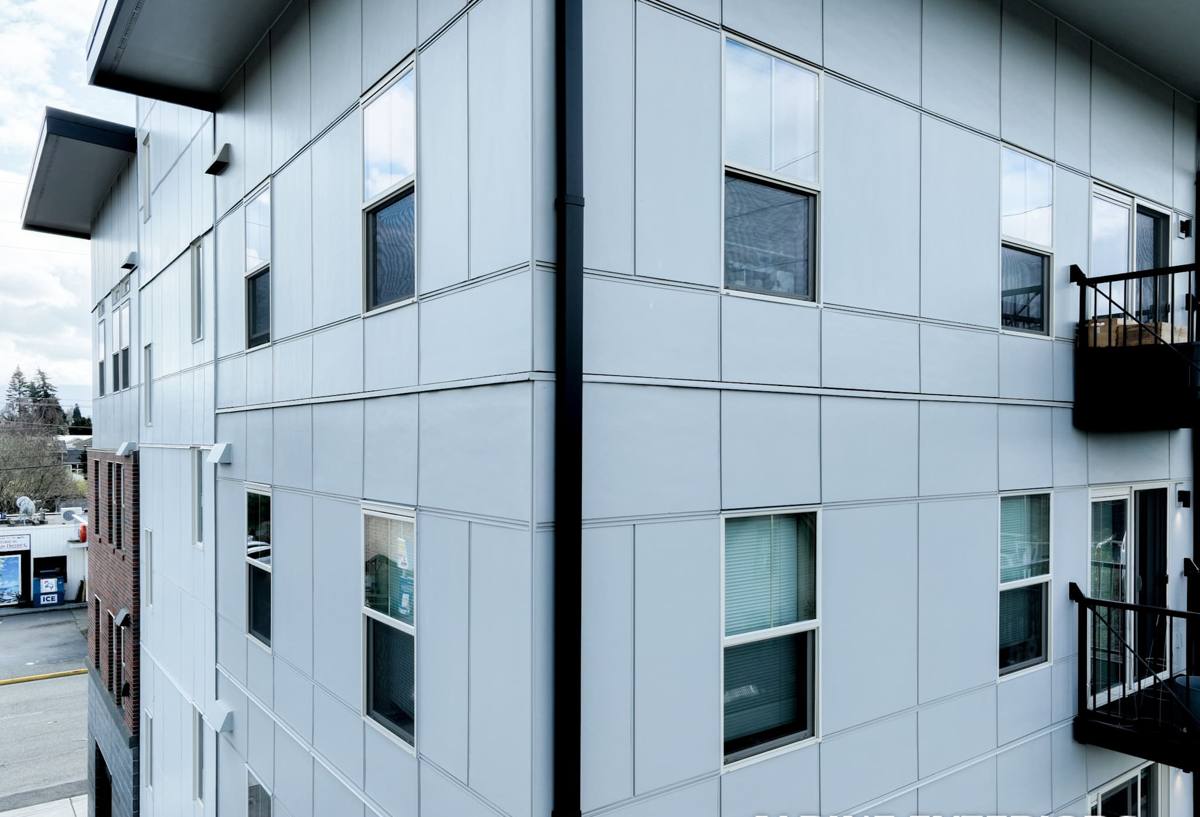
What Salt Air, Driving Rain, and Moss Season Actually Do to a Window
Salt Air
Airborne salt is corrosive to unprotected metal. On window assemblies, that means hardware, hinges, screen frames, and any exposed fasteners are at higher risk of pitting and corrosion than the same components would face a few miles inland. It also settles as a fine film on glass and frames, which sounds cosmetic but actually accelerates wear on finishes and seals over years of exposure if it's never rinsed off.
Driving Rain
Wind off the water doesn't just add moisture — it adds pressure. Rain that's being pushed sideways by wind finds any weak point in a window's flashing or sealant line far more aggressively than rain falling straight down. A window that would perform fine in a calm inland setting can leak at Cherry Point if the flashing detail underneath it isn't built for wind-driven water.
Moss Season
Whatcom County's wet season runs long, and shaded or north-facing exterior surfaces near the water can stay damp for months. That constant moisture is exactly what moss, algae, and mildew need to establish themselves on sills, trim, and the exterior face of window frames. Once organic growth takes hold, it holds moisture against the frame material even longer, which is a slow but real threat to wood trim and any sealant that isn't holding up.
Why "Just Replace the Glass" Isn't the Fix
A lot of window problems in this area get misdiagnosed as a glass issue — fogging, drafts, a sash that won't seat right — when the real problem is what's happening around the window, not in it. Failed flashing, a gap in the weather-resistive barrier, or a sill that was never sloped to shed water will keep causing damage no matter how good the replacement window is. Correct work here means treating the window as part of the wall assembly, not a standalone product.
- Old flashing removed and inspected, not just covered over
- Sheathing and framing checked for hidden moisture damage before anything new goes in
- New flashing integrated correctly with the existing weather-resistive barrier, shingle-lapped so water sheds outward and down
- Sill pan installed to catch and direct any water that gets past the primary seal
- Backer rod and a marine-grade or high-performance exterior sealant at the perimeter, not builder's-grade caulk
- Hardware and fasteners chosen for corrosion resistance given the salt air exposure
Choosing the Right Frame Material for This Environment
Frame material matters more here than in a lot of inland settings, because the material has to stand up to salt air and sustained dampness, not just temperature swings. There's no single "best" material for every home — it depends on the home's exposure, the look you're going for, and your maintenance appetite.
| Frame Material | Salt Air / Coastal Performance | Maintenance | Notes for Cherry Point Homes |
|---|---|---|---|
| Vinyl | Good — won't corrode or rot | Low; occasional rinse | Solid value option; check weld quality and reinforcement on larger openings |
| Fiberglass | Very good — dimensionally stable, resists moisture and corrosion | Low | Handles temperature and moisture swings near the water well; higher upfront cost |
| Aluminum | Fair — needs a quality corrosion-resistant finish given salt exposure | Moderate | Thermal performance is weaker unless thermally broken; more common in older coastal homes |
| Wood | Weakest against sustained coastal moisture unless well-clad or fully maintained | High | Needs consistent upkeep in a moss-prone, high-moisture setting like this one |
| Wood-clad (exterior clad in vinyl, fiberglass, or aluminum) | Good — cladding shields the wood from direct weather | Low to moderate | Popular choice when homeowners want a wood interior look with better coastal durability outside |
For most Cherry Point homes we work on, fiberglass and quality vinyl carry the least long-term risk against salt air and driving rain. Wood and aluminum aren't ruled out, but they come with maintenance and finish requirements that need to be taken seriously in this exposure, not treated as optional.
Signs Your Current Windows Are Already Losing the Fight
Because coastal window failure is often gradual, homeowners frequently live with early warning signs for a season or two before addressing them. Worth checking for:
- Fogging or moisture between panes on double- or triple-glazed units — a sign the seal has failed
- Soft or discolored trim and sill material, especially on north-facing or shaded windows
- Visible moss, algae, or dark staining building up on sills or lower frame edges
- Hardware that's stiff, pitted, or corroded rather than operating smoothly
- Drafts or a noticeable temperature difference near the window on windy days
- Peeling or bubbling interior paint or finish near the window frame — often a sign moisture is getting into the wall assembly, not just the window
Any one of these on its own isn't necessarily an emergency, but in combination — or on a window that's original to an older home near the water — they're worth having looked at before the next wet season.
Our Process for a Cherry Point Window Project
1. On-Site Assessment
We look at each window individually — not just the glass and frame, but the flashing, sill condition, and any signs of past water intrusion. Coastal homes rarely have uniform exposure; a window facing the water needs a different level of protection than one on a sheltered wall.
2. Material and Product Selection
We walk through frame material, glazing options, and hardware with the salt air and rain exposure specific to your home's orientation in mind, not a one-size answer for the whole property.
3. Removal and Structural Check
Old windows come out carefully so we can inspect the framing and sheathing underneath before anything new goes back in. This is where hidden moisture damage from years of driving rain typically shows up, and it needs to be dealt with before the new window is installed, not after.
4. Flashing, Sealing, and Installation
New flashing is integrated with the existing weather barrier, sill pans go in where called for, and the window is set, shimmed, and sealed to standard — with materials chosen to hold up against salt exposure over time.
5. Final Check and Walkthrough
We test operation, check the seal lines, and walk the finished work with you before we consider the job done.
What Drives Cost on a Coastal Window Project
There's no honest flat number for window work — cost depends on scope, materials, and what we find once the old window comes out. What generally moves the price:
| Factor | Why It Matters Here |
|---|---|
| Frame material chosen | Fiberglass and clad options cost more upfront but reduce coastal maintenance and failure risk |
| Number and size of openings | Larger or custom-shaped windows require more material and labor |
| Condition of framing and sheathing found during removal | Water-damaged framing near the water is common and needs to be repaired before installation, adding cost |
| Flashing and sill pan detailing required | Higher-exposure walls facing driving rain need more thorough flashing work |
| Glazing package | Impact-resistant or higher-performance glass costs more but pays off in a wind-and-rain-exposed setting |
We give a written estimate after the on-site assessment, not a phone-quote guess — the only way to price this kind of work honestly is to actually see the openings and what's around them.
Why It Matters That We Already Work This Stretch of Coastline
Window installation done for an inland Whatcom County home and window installation done for a Cherry Point home facing Semiahmoo Bay are not the same job, even if the products look identical in a showroom. A crew that already works this area knows which orientations take the worst of the driving rain, how aggressively salt air affects hardware and finishes here, and how long moss season really runs on shaded or waterside walls. That's not something you get from a manufacturer spec sheet — it comes from doing the work on homes in this exact exposure, season after season.
Hiring locally also means someone who understands the practical side: how weather windows for this kind of work actually line up with Whatcom County's wet season, and what corners genuinely cannot be cut on a coastal install without paying for it later in leaks or premature frame failure.
Keeping New Windows Performing Long-Term
Even a correctly installed window benefits from basic upkeep in this environment:
- Rinse salt film off glass and frames periodically, especially after storms off the water
- Keep sills and lower frame edges clear of moss, leaves, and debris that trap moisture
- Check exterior caulk lines once a year for cracking or separation
- Operate hardware regularly so corrosion-prone parts don't seize up unnoticed
- Watch for early signs of interior condensation or seal failure and address them before they spread
None of this is difficult, but skipping it in a salt-air, high-rainfall setting shortens the life of even a well-installed window.
Get a Free, No-Pressure Estimate
If you're dealing with drafty, foggy, or failing windows on a Cherry Point property, or planning ahead for a home near the water, we're happy to take a look and give you a straight assessment — no pressure, no obligation. Use the form below to request a free estimate.