 Semiahmoo
 Building a Deck That Can Handle California Creek's Climate
Homes near California Creek sit close enough to Semiahmoo Bay that salt air is a daily fact of life, not an occasional nuisance. Add in Whatcom County's long wet season and the moss that comes with it, and a deck out here works harder than one built twenty miles inland. A deck that looks great the first summer but starts showing rust streaks, soft spots, or slick green growth by the second winter wasn't built wrong on purpose — it was usually built to a generic spec instead of this specific one.
Custom decks for this area need to account for three things working against them at the same time: airborne salt that corrodes metal faster than normal, driving rain that gets pushed sideways under eaves and railings, and a moss season that can run from fall through spring in a shaded, damp yard. Get the design and materials right for those conditions and a deck out here can genuinely last decades. Get them wrong and you're looking at repairs inside five to seven years.
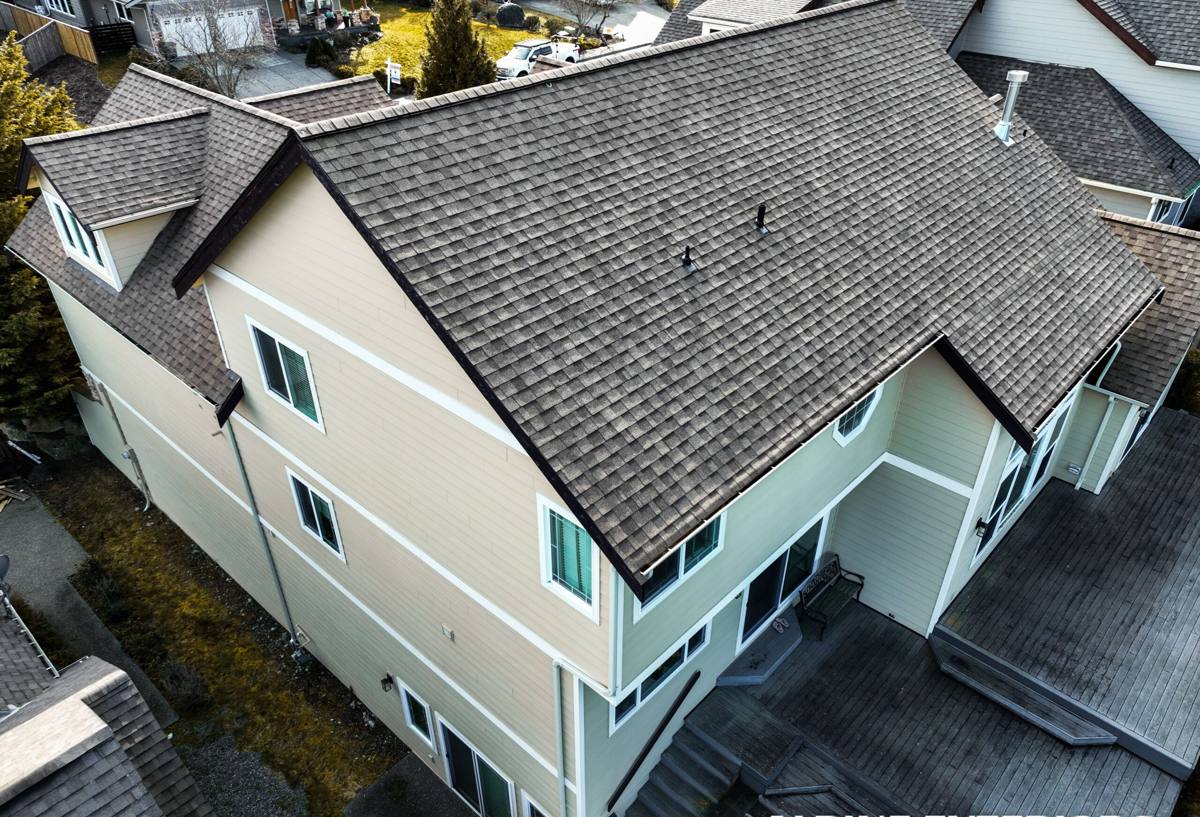
What Salt Air Actually Does to a Deck
Salt air doesn't just sit on the surface — it works into every joint, fastener, and connector on a deck, especially anything facing the water or exposed to prevailing wind off the bay. The visible damage is obvious once it starts: rust bleeding out of screw heads, streaking down composite boards, staining wood a dull orange-brown. The damage you don't see is worse — corroded joist hangers and structural screws that lose holding strength years before the wood around them looks like a problem.
This is why we treat fastener and hardware selection as a structural decision on every California Creek project, not a finish detail. It's one of the most common corners cut on decks built by crews who don't regularly work this close to salt water.
Where Salt Exposure Hits Hardest
- Railing posts and hardware facing open water or prevailing wind
- Joist hangers and structural screws in the framing below the deck boards
- Fasteners at board ends and butt joints, where moisture collects longest
- Any exposed metal that isn't stainless or a marine-rated coating
Driving Rain and Why Slope and Gapping Matter More Here
Rain in this part of Whatcom County rarely falls straight down. Wind off the water pushes it sideways, which means water gets driven under railings, into board gaps, and against ledger boards in ways a calmer climate doesn't test. A deck built without the right slope, drainage gaps, and flashing will hold water in exactly the spots you can't see — and that's where rot and hidden hardware failure start.
A correctly built deck sheds water fast and lets air move underneath so everything actually dries out between storms. That means proper slope away from the house, consistent board spacing sized for the material, and flashing at every point where the deck meets the structure — not caulk as a substitute for real flashing, which is a shortcut that fails quietly over a few seasons.
Moss: The Slow Damage Nobody Notices Until It's a Problem
Moss is more than a slip hazard, though on stairs and low-traffic corners it's absolutely that too. Moss holds moisture directly against the decking surface, which keeps wood damp far longer than open air would, and it works into the texture of composite boards in ways that are genuinely hard to clean once established. Shaded yards near tree cover — common around California Creek — see moss start earlier in the fall and hang on later into spring than a more open, sun-exposed lot.
Design choices matter here as much as maintenance does. Deck orientation, gaps between boards, and how much airflow the substructure gets all affect how fast moss takes hold. A deck built low to damp ground with tight board spacing and no airflow underneath will grow moss faster than an identical deck built with proper clearance and drainage, even a few hundred feet apart.
Choosing the Right Decking Material for This Climate
There's no single "best" decking material for every California Creek home — it depends on budget, how much upkeep you want to do, and how exposed the site is to wind and salt spray. Here's how the common options actually perform in this specific climate, based on what we see holding up (and what doesn't) on decks we maintain and rebuild in this area.
| Material | Salt Air Behavior | Moss/Moisture Resistance | Maintenance | Typical Cost Range |
|---|---|---|---|---|
| Pressure-treated wood | Fasteners are the weak point; wood itself holds up if sealed regularly | Needs regular cleaning and resealing to resist moss and gray-out | Annual cleaning, resealing every 1-2 years | Lowest upfront cost |
| Cedar | Naturally rot-resistant but fasteners still need to be corrosion-rated | Better natural resistance, still needs seasonal cleaning | Cleaning and oiling every 1-2 years | Mid-range |
| Composite decking | Boards themselves don't corrode; hardware underneath still needs to be rated for salt exposure | Resists rot but moss can still grow on the surface texture if shaded and damp | Periodic washing, no sealing or staining | Mid to upper range |
| PVC/capped decking | Fully resistant to salt-driven surface damage | Best moisture resistance of the group; moss still needs washing off | Lowest ongoing maintenance | Highest upfront cost |
Whichever decking material you choose, we don't treat the substructure as an afterthought. A high-end composite deck built on undersized, poorly protected framing will fail from the bottom up regardless of what the surface is made of. That's a standard we hold on every build, not an upsell.
Framing and Substructure: The Part You Don't See
The framing underneath a deck does the actual structural work, and it's the part most likely to get shortcut because it's invisible once the boards go down. For California Creek homes, we build the substructure with the same salt-and-moisture logic as the visible deck:
- Ledger board flashing installed correctly at the house connection, not caulked as a substitute
- Joist hangers and structural fasteners rated for corrosion resistance, not standard galvanized
- Footings sized and set for wet, sometimes soft ground conditions common near the creek
- Adequate clearance and airflow underneath the frame to keep it drying between rains
- Railing posts anchored into structure that can actually hold up to wind load off the water
None of this is visible once the deck is finished, which is exactly why it matters who builds it. A deck that looks identical to a neighbor's can have a completely different lifespan based on what's underneath.
Our Process for California Creek Deck Projects
We build decks in this area regularly enough that the climate factors above aren't a special add-on — they're just how we build here. The process is straightforward:
1. On-Site Assessment
We look at your specific lot: how exposed it is to wind and salt off the water, how much shade and moisture the site holds, drainage patterns, and the condition of any existing structure if this is a rebuild.
2. Design and Material Selection
We walk through decking material, railing style, and layout with your budget and how much maintenance you actually want to take on — not just what looks good in a catalog.
3. Permitting
Most deck projects in Whatcom County need a permit depending on size, height, and attachment to the house. We handle that process as part of the job rather than leaving it to you.
4. Build
Framing, flashing, and hardware go in to the standard outlined above, with decking and railings finished to match the design plan.
5. Walkthrough
We go over care and cleaning specific to the material you chose, so the maintenance side isn't a guessing game.
Maintenance That Actually Matters in This Climate
Every deck needs some upkeep, but out here the schedule and priorities shift compared to a drier, inland climate. This is the routine we recommend to California Creek homeowners regardless of who built the deck:
- Sweep off standing debris and leaves regularly — trapped organic matter is what feeds moss growth
- Wash the deck surface at least once or twice a year to clear salt residue and early moss
- Check railing hardware and visible fasteners annually for rust or corrosion starting
- Reseal wood decking on the schedule appropriate to the product — don't wait until it looks gray and dry
- Keep gutters and downspouts near the deck clear so runoff isn't dumping extra water onto it
- Address any soft spots, loose boards, or wobbly railings immediately rather than waiting a season
Why Local Experience on This Specific Area Matters
A deck contractor who mostly works inland, away from salt water, can still build a structurally sound deck — but they're often making material and hardware choices based on conditions that don't match what California Creek actually throws at a structure year-round. The difference shows up two or three years in, not on install day.
Working this area regularly means we already know which fastener grades hold up, how local drainage and ground conditions behave near the creek, and what moss and moisture patterns to design around from the start. That's not a marketing point — it's the difference between a deck that needs real repairs in five years and one that's still solid in twenty.
If you're planning a new deck or replacing one that's showing its age near California Creek, we're happy to come take a look and give you a straightforward, no-pressure estimate based on your specific site and what you actually want out of the space.