 Semiahmoo
 Siding Replacement Built for Custer's Weather, Not Generic Weather
Custer sits close enough to the water that homes here take a different kind of beating than siding a few miles inland. Salt-laden air off the Strait works into seams and fastener heads. Driving rain off Semiahmoo Bay hits walls sideways during winter storms, not just straight down. And the long, damp Whatcom County shoulder seasons — spring and fall especially — give moss, algae, and mildew months of cool, wet conditions to take hold on anything that stays even slightly damp. Siding that was never engineered for this combination fails here faster than the manufacturer's marketing suggests it should.
This page is about one job, done right, in this one area: replacing siding on a Custer home with a product and process that actually accounts for what the local climate does to a wall over 20 or 30 years, not just what it looks like on installation day.
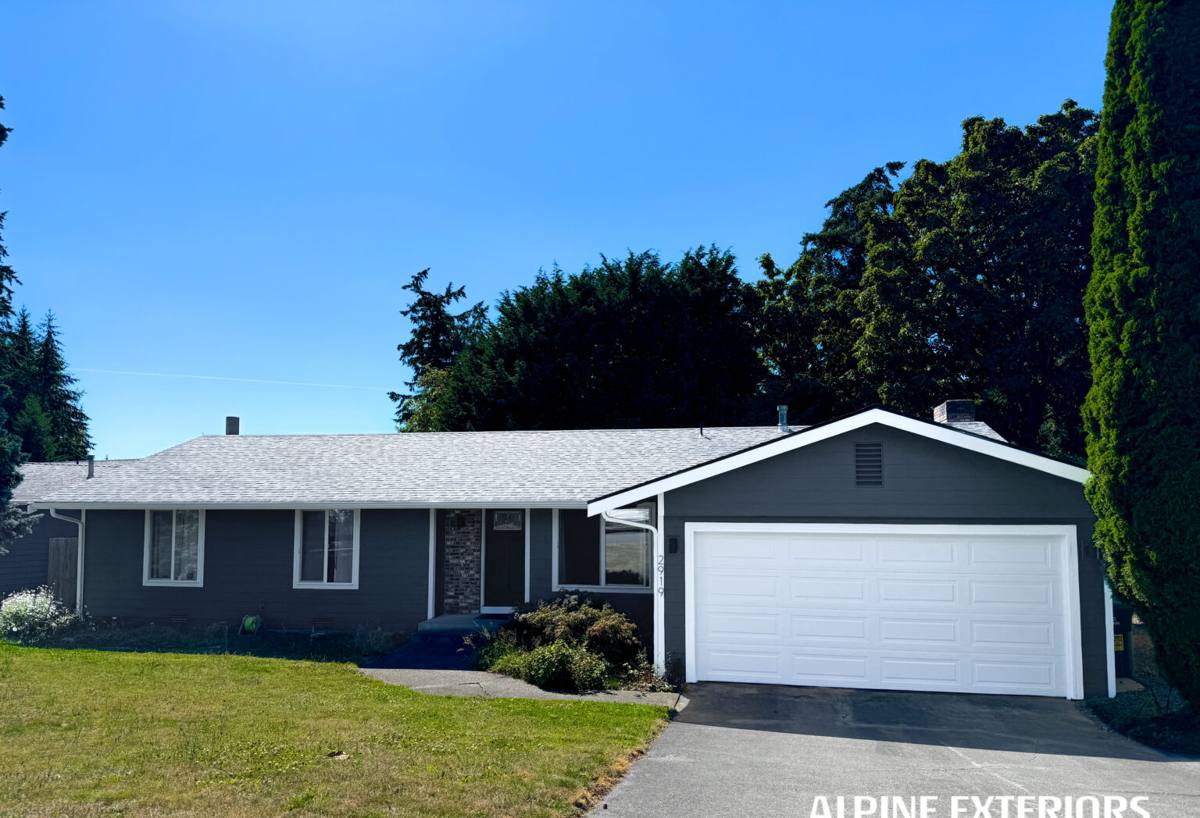
How Local Conditions Actually Damage Siding
It helps to understand the specific failure paths, because they explain almost every decision that goes into a correct replacement job here.
Salt air and corrosion
Airborne salt accelerates corrosion on fasteners, flashing, and any exposed metal trim. Once a fastener head starts to rust, it can telegraph through paint or streak the siding face below it, and a compromised fastener no longer holds siding as tightly against the wall — which opens the door to water intrusion.
Driving, wind-driven rain
Semiahmoo-area storms don't just drop rain, they push it. Wind-driven rain finds any gap in a wall assembly — a poorly lapped seam, a missing piece of flashing, a caulk joint doing a job it was never meant to do — and works water behind the siding rather than off of it. Once moisture gets behind cladding, it can sit against sheathing and framing far longer than it takes to dry from a normal rainstorm.
Extended moss and algae season
Shade, moisture, and moderate temperatures are what moss and algae need, and Whatcum County supplies all three for a good chunk of the year. Wood-based and wood-look siding products absorb moisture and give organic growth something to root into. Once moss and mildew get a foothold, they hold additional moisture against the siding surface, which speeds up whatever decay or delamination process is already underway.
Signs a Custer Home Needs Siding Replacement, Not Just Repair
Not every siding problem means a full replacement. But in this area, certain signs usually mean the underlying material or the original installation has failed in a way that patching won't fix.
- Soft, spongy, or crumbling spots when you press on the siding — usually water-damaged substrate underneath
- Persistent black or green staining that returns within weeks of washing, especially on north- and west-facing walls
- Visible cupping, warping, or buckling panels
- Paint that won't hold — blistering, peeling, or flaking back within a year or two of a repaint
- Soft trim or fascia boards near siding seams, a sign moisture has already migrated into the wall assembly
- Rusting fastener heads bleeding rust streaks down the face of the siding
- Rot found at the bottom courses, near grade, or around window and door flashing
If you're seeing more than one of these on a home in Custer, it's worth having someone look at the wall assembly itself, not just the paint.
What a Correct Siding Replacement Actually Involves
Siding replacement isn't just pulling off old boards and nailing up new ones. In a climate that pushes water sideways and keeps things damp for months, the assembly behind the siding matters as much as the siding itself.
Full tear-off and inspection
We remove the existing siding down to the sheathing so the wall can actually be inspected, not guessed at. This is when rot, soft sheathing, or prior water damage gets found and addressed — patching over a compromised wall just locks the problem inside.
Water-resistive barrier and flashing
A correctly lapped weather-resistive barrier, properly integrated window and door flashing, and correctly sequenced flashing at every horizontal transition are what actually keep wind-driven rain out of the wall. Siding is the visible layer; the barrier and flashing behind it are what does the real work during a Semiahmoo winter storm.
Fastening and gapping to spec
Every siding product has manufacturer-specified fastener types, spacing, and gapping requirements. In a salt-air environment, using corrosion-resistant fasteners at the specified pattern isn't optional — it's the difference between trim that holds for decades and fastener heads that start bleeding rust in a few years.
Finish and detailing
Caulking only the joints designed to be caulked, proper clearance from grade and roof lines, and correctly finished cut edges all reduce the number of places moisture can get a foothold.
Why We Install James Hardie Fiber Cement — and Only That
We standardized on James Hardie fiber cement siding, and we don't install vinyl, LP SmartSide, or other engineered wood, primed spruce, cedar, or fiber cement alternatives like Cemplank or Allura. That's a deliberate call, and in a place like Custer it matters more than in a drier, calmer climate.
Fiber cement is non-combustible and doesn't feed on moisture the way wood-based products can — it isn't a food source for the fungi and moss that thrive in this area's damp shoulder seasons. James Hardie's HZ5 product line is specifically engineered for climates that see significant moisture exposure, which describes Whatcom County well. The ColorPlus factory finish is baked on under controlled conditions, so it resists the fading, chalking, and peeling that field-applied paint struggles with here, especially on walls that take direct salt air and driving rain. And the warranty is backed by a large, established manufacturer with decades of Pacific Northwest installations behind it — not a smaller or newer product line with a shorter track record in this climate.
We're not saying every other product is unusable everywhere. We're saying that for the specific conditions Custer and Semiahmoo homes face — salt air, wind-driven rain, extended moss season — fiber cement installed to spec gives homeowners the best combination of durability, low maintenance, and long-term value, and it's the only thing we're willing to put our name behind.
Our Process, Start to Finish
| Step | What Happens |
|---|---|
| Free estimate | We walk the home, look at current siding condition, take measurements, and talk through product and color options — no pressure, no obligation. |
| Wall inspection during tear-off | Old siding comes off, sheathing is checked, and any rot or damage is flagged before anything new goes up. |
| Barrier and flashing installation | Weather-resistive barrier and flashing are installed and lapped correctly at every seam, window, and door. |
| Hardie siding installation | Panels or lap siding installed to manufacturer fastening and gapping specifications, with corrosion-resistant fasteners. |
| Trim, caulking, and detail work | Trim boards, corners, and the caulk joints that actually need caulking are finished out. |
| Final walkthrough and cleanup | Site is cleaned up and we walk the finished job with you before calling it done. |
Cost Factors for Custer Siding Replacement
Every home is different, so exact numbers depend on your specific project, but these are the main factors that move the price up or down.
| Factor | Why It Matters |
|---|---|
| Home size and wall complexity | More square footage, more corners, and more window/door openings all add labor and material. |
| Current siding condition | Rot or sheathing damage found during tear-off adds repair work before new siding can go on. |
| Siding profile and trim level | Lap siding, panel systems, and trim board choices carry different material costs. |
| Access and site conditions | Steep grades, tight setbacks, or limited equipment access can add time. |
| Color and finish | Factory ColorPlus finishes vary in cost by color and coating option compared to field-primed products. |
The only way to get real numbers is a walk-through of your specific home, which is what the free estimate is for.
Why Hiring a Crew That Already Works Custer Matters
Siding work in this part of Whatcom County isn't identical to siding work fifty miles inland. A crew that's already installed Hardie siding on homes exposed to Semiahmoo's salt air and winter storms knows where wind-driven rain tends to find its way in on a coastal wall, how much clearance to leave near grade in a spot that stays damp longer into the season, and which flashing details actually hold up here versus ones that look fine on paper but fail in practice. That experience shows up in fewer callbacks and a wall assembly that's actually built for the conditions it has to survive, not a generic installation dropped into a coastal environment.
It also means a straighter answer up front. A crew that works this area regularly can tell you honestly whether a wall just needs a repair or genuinely needs full replacement, instead of defaulting to whichever answer is easier to sell.
Protecting Your Investment After Installation
Correctly installed James Hardie siding is low-maintenance, but "low-maintenance" isn't "no-maintenance," especially this close to the water.
- Rinse siding periodically to clear salt residue and organic buildup, particularly on shaded or north-facing walls
- Keep gutters clear so water sheets off the roof instead of running down the wall face
- Trim back vegetation and landscaping that keeps siding shaded and damp
- Watch caulk joints around windows and doors for cracking or separation and have them addressed before they fail
- Have any impact damage or cracked panels repaired promptly rather than left exposed
A few minutes of upkeep a couple of times a year goes a long way toward getting the full service life out of the material.
Get a Straight Answer on Your Custer Home
If your siding is showing staining that won't wash off, soft spots, failing paint, or you're just planning ahead for a home in Custer or the greater Semiahmoo area, we're glad to take a look. The estimate is free, there's no pressure, and you'll get a straight answer about whether you need a repair or a full replacement — and what that would actually involve. Use the form below to get started.