 Semiahmoo
 Why Roofs in Custer Wear Differently Than Roofs Inland
Custer sits close enough to Semiahmoo Bay and Drayton Harbor that homes here deal with a mix of conditions that inland Whatcom County properties don't face as heavily. There's salt-laden air blowing in off the water, long stretches of driving rain through fall and winter, and a moss season that can run eight months or more in a wet year. None of these are dramatic on their own, but stacked together over a decade or two, they age a roof faster than most homeowners expect. A roof that looks fine from the driveway can be losing granules, holding moisture in the underlayment, or hosting moss colonies working their way under the shingle tabs — all before a single leak shows up inside the house.
A roof replacement done right in this area isn't just about swapping old shingles for new ones. It's about building a roof system that's set up to shed water fast, resist the salt exposure common near the bay, and stay ahead of moss rather than fighting it every spring.
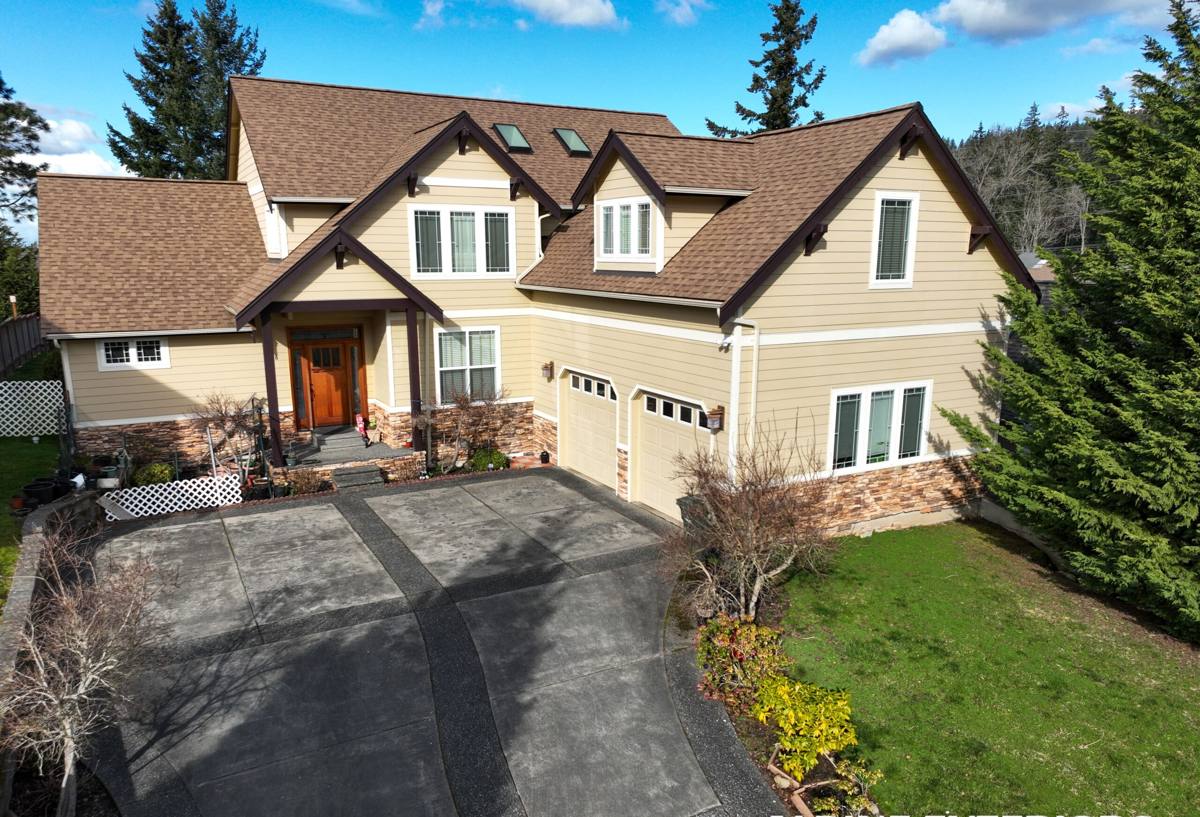
What a Correct Roof Replacement Actually Involves
"Roof replacement" gets used loosely, and it's worth being specific about what a full, correct job includes — because half of what protects a Custer home from our climate is underneath the shingles, not on top of them.
Full Tear-Off, Not a Layover
We remove the existing roofing down to the deck rather than layering new shingles over old ones. A layover traps moisture between layers, hides deck damage, and voids most manufacturer warranties. It also means we can't properly inspect the one thing that matters most: the wood underneath.
Deck Inspection and Repair
Once the old roofing is off, we check the sheathing for soft spots, delamination, and water staining — common in areas that see prolonged damp weather, especially around old flashing points, valleys, and any spot where moss has been sitting against the wood. Any bad decking gets replaced before anything new goes down. Skipping this step is the single most common shortcut in cheap roof jobs, and it's the one that causes the most expensive problems later.
Underlayment Built for Driving Rain
Wind-driven rain off the water can push water sideways under standard felt in exposed spots. We use synthetic underlayment across the field and self-adhered, waterproof underlayment at vulnerable areas — eaves, valleys, and low-slope transitions — where wind-blown rain and ice are most likely to find a way in.
Flashing Done Properly
Flashing around chimneys, skylights, sidewalls, and roof-to-wall transitions is where most leaks actually start, not in the open field of shingles. We install new flashing rather than reusing old, bent, or rusted pieces, and we seal transitions with materials rated for long-term exposure to salt air and moisture.
Material Choices That Make Sense for a Semiahmoo-Area Climate
There's no single "best" roofing material for every home — it depends on the roof's pitch, the home's style, and how much long-term maintenance the owner wants to take on. Here's how the common options stack up for a coastal Whatcom County property.
| Material | Moss & Moisture Behavior | Salt Air Durability | Maintenance |
|---|---|---|---|
| Standard asphalt shingle | Prone to moss growth without treatment; needs periodic cleaning | Good with quality granule coating | Moderate |
| Algae/moss-resistant shingle | Copper-infused granules slow moss and algae growth | Good | Lower than standard shingle |
| Metal roofing (standing seam) | Sheds moisture fast; moss struggles to root | Excellent with proper coating/fasteners | Low |
| Cedar shake | Absorbs moisture, high moss/moss-rot risk in this climate | Requires ongoing treatment | High |
Most homes we replace roofs on in this area do well with a quality architectural asphalt shingle carrying algae-resistant granules — it's a reasonable middle ground on cost and performance. Metal is worth a serious look for homes with simpler rooflines or owners who want to minimize moss maintenance long-term, though it carries a higher upfront cost. We don't push cedar shake in this specific climate — it's not that the material is bad, it's that the moisture retention and moss-rot risk near the water mean it demands a maintenance schedule most homeowners underestimate.
Ventilation: The Part of the Roof System People Forget
A new roof surface won't perform well if the attic underneath can't breathe. In our climate, poor ventilation traps humid air against the underside of the deck, which accelerates rot from the inside and can void shingle warranties even on a brand-new roof. Part of a correct replacement is checking intake (soffit vents) and exhaust (ridge or box vents) are balanced for the attic's size — not just installing new shingles over an old, undersized ventilation setup.
How We Approach a Roof Replacement in Custer
- On-site inspection: We walk the roof and attic, not just look from the ground, to check deck condition, ventilation, and flashing points.
- Written estimate: A clear scope and price, including tear-off, any deck repair, materials, and disposal — no vague allowances.
- Scheduling around weather: We plan installs for dry windows and can move quickly if a storm has already caused damage.
- Tear-off and deck repair: Old roofing removed, deck inspected and repaired as needed before anything new goes on.
- Installation: Underlayment, flashing, and roofing material installed to manufacturer spec, with attention to the details that matter in this climate.
- Cleanup and walk-through: Full site cleanup, including a magnetic sweep for nails, and a final walk-through so you know exactly what was done.
Timing a Replacement Around Our Wet Season
Whatcom County's weather doesn't offer a huge dry window, but there's still a meaningful difference between scheduling a tear-off during a settled stretch versus gambling on a job mid-storm. We track short-range forecasts closely for tear-off day specifically, since that's the point where a roof is most exposed. If your roof is already failing and can't wait for ideal weather, we can sequence the work in sections and use temporary dry-in materials to keep the house protected until the full replacement is complete.
Signs a Custer Home Needs Replacement, Not Repair
Not every roof problem means a full replacement. But a few signs usually mean patching won't hold for long:
- Shingles that are cupping, cracking, or losing granules across large sections, not just one spot
- Moss established thick enough that it's lifting shingle edges rather than just sitting on the surface
- Daylight visible through the roof deck from inside the attic
- Soft or spongy spots when walking the roof
- Repeated leaks in different locations after previous repairs
- A roof already past or near the end of its rated lifespan with visible wear
- Flashing that's rusted, separated, or was never properly installed to begin with
What Drives Cost on a Roof Replacement
| Factor | Why It Matters |
|---|---|
| Roof size and pitch | More square footage and steeper pitches mean more material and labor time |
| Number of layers to remove | Tearing off multiple old layers adds disposal cost and labor |
| Deck condition | Rotted sheathing found during tear-off requires repair before install |
| Material choice | Standard shingle, algae-resistant shingle, and metal carry different material costs |
| Roof complexity | Valleys, dormers, chimneys, and skylights add flashing work and time |
| Access | Steep sites or limited driveway/yard access can affect equipment and staging |
We don't quote roof replacements off a phone call — every one of those factors needs an actual look at the roof and attic to price accurately, which is why our estimates start with an inspection, not a guess.
Why a Crew That Already Works Custer Is Worth Choosing
A roofing crew that regularly works this specific stretch of Whatcom County already knows what to expect before the tear-off starts — how moss tends to establish on local rooflines, which flashing details tend to fail first in homes exposed to wind off Semiahmoo Bay, and how to sequence a job around a weather pattern that doesn't give you many dry weeks in a row. That's not something a crew driving in from outside the area picks up on the first visit. It also means we're reachable if something needs a second look after the job is done — we're not disappearing to the next region once the invoice is paid.
If your roof is showing its age, or you just want an honest read on how many years it's got left, we're happy to take a look. Reach out for a free, no-pressure estimate using the form below — we'll walk the roof, explain what we find in plain terms, and give you a clear price if replacement makes sense.