 Semiahmoo
 Custer's Coastal Weather Is Hard on a Roof
Custer sits close enough to the water that homes here deal with a different combination of stresses than roofs twenty or thirty miles inland. Salt-laden air moves through with the marine wind off the Strait and Semiahmoo Bay, driving rain comes in sideways during winter storms instead of falling straight down, and the long stretch of grey, damp months between fall and spring gives moss and algae months on end to get established on north-facing slopes and shaded valleys. None of these things alone is unusual for Whatcom County. Together, on the same roof, year after year, they shorten the life of materials and fasteners that weren't chosen or installed with that combination in mind.
A roof built for a dry inland climate will often survive here for a while, but it usually shows problems earlier than it should — corroded fasteners, moss working under shingle tabs, soffit and ridge vents that let wind-driven rain in rather than just letting air out. A correct installation in Custer accounts for all of that from the start, not as an afterthought.
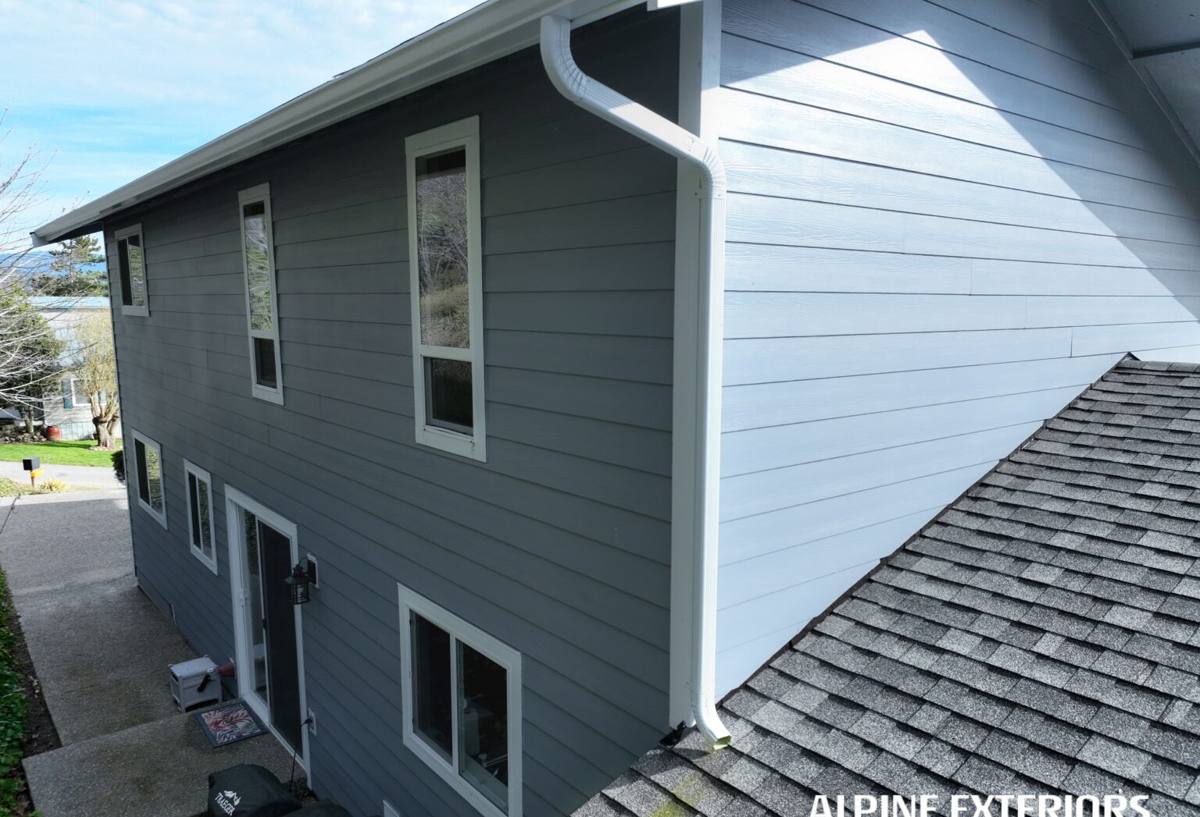
What "Correct" Actually Means for a New Roof Here
Deck Condition Comes First
Every new roof installation starts with a full tear-off to the deck, not an overlay. That's the only way to actually see what's underneath — soft spots from long-term moisture intrusion, delaminated sheathing, or old flashing that was never properly integrated. In a climate with this much sustained moisture, skipping this step just buries a problem under new material.
Underlayment and Water-Shedding Details
Driving rain doesn't respect the simple gravity assumptions a roof is often designed around. Eaves, valleys, and any low-slope transitions need self-adhered ice-and-water membrane, not just felt, because wind-driven rain can push water up and under shingles in ways straight-down rain never would. Every penetration — plumbing vents, chimneys, skylights — needs flashing that's mechanically correct, not just caulked and hoped for.
Ventilation That Actually Balances
Moss and premature shingle failure are often as much a ventilation problem as a weather problem. If intake at the soffits doesn't match exhaust at the ridge, moisture gets trapped in the attic, condenses, and works its way back into the deck from underneath — which accelerates rot and gives moss and algae an easier foothold on the roof surface itself. Getting the intake-to-exhaust ratio right is part of a correct install, not an upgrade.
Fasteners and Flashing Rated for Salt Air
Standard electro-galvanized fasteners corrode faster this close to salt air than most homeowners expect. Stainless steel or hot-dip galvanized fasteners and flashing cost more up front and are worth it — a roof is only as strong as the nails holding it down, and a fastener that rusts through in twelve years instead of thirty undermines everything else that was done right.
Comparing Roofing Materials for a Custer Home
There's no single "best" material for every house — slope, budget, and how much maintenance a homeowner wants to do all matter. Here's how the common options actually perform under Custer's specific conditions:
| Material | Moss/Algae Resistance | Salt Air Durability | Typical Lifespan | Maintenance |
|---|---|---|---|---|
| Standard 3-tab asphalt | Low — needs regular treatment | Fair with proper fasteners | 15–20 years | Moderate to high |
| Architectural (laminate) asphalt | Moderate; algae-resistant granules help | Good with stainless fasteners | 25–30 years | Moderate |
| Standing-seam metal | High — sheds moss and debris well | Very good with coated fasteners | 40–50+ years | Low |
| Composite/synthetic shingle | Moderate to high | Good | 30–50 years | Low to moderate |
Architectural asphalt remains the most common choice in this area because it balances upfront cost with reasonable durability, especially when paired with copper or zinc strips near the ridge to slow moss growth. Metal roofing costs more initially but sheds moisture and debris fast enough that moss rarely gets a foothold, which matters a lot on shaded, north-facing roof planes common on wooded Custer lots.
Our Process, Start to Finish
- On-site inspection: We walk the roof and attic, check deck condition, ventilation, and flashing details, and photograph anything relevant before quoting.
- Written estimate: Material options, labor, disposal, and any deck repair contingencies are spelled out — no vague allowances.
- Material selection: We walk through the trade-offs in the table above based on your roof's exposure and your budget, not a one-size answer.
- Tear-off and deck repair: Full removal to the sheathing, with any soft or damaged decking replaced before anything new goes down.
- Underlayment, flashing, and installation: Ice-and-water membrane at vulnerable areas, correct flashing at every penetration, then the field material installed to manufacturer specification.
- Ventilation check: Intake and exhaust are verified as balanced, not just present.
- Final walkthrough and cleanup: Magnetic sweep for stray fasteners, full site cleanup, and a final inspection with the homeowner before we consider the job done.
Living With a Wet-Climate Roof After Installation
A correct installation buys you decades, but a few habits extend that further in a climate like this one:
- Keep gutters clear — clogged gutters back up water under the roof edge, especially during heavy fall rain.
- Trim back overhanging branches where practical; shade and falling debris are two of the biggest contributors to moss growth.
- Have zinc or copper control strips installed near the ridge if your material doesn't already include algae-resistant granules.
- Schedule a light inspection every couple of years rather than waiting for a visible leak — small flashing issues are cheap to fix early and expensive once they've caused deck damage.
- Avoid pressure-washing a roof directly; it can strip granules and force water under shingles. Soft washing or manual moss removal is safer.
Signs Your Custer Roof May Need Replacement, Not Repair
- Granules collecting heavily in gutters or at downspout outlets
- Shingles that are curling, cupping, or visibly lifting at the edges
- Moss established thickly enough that it's lifting tabs rather than just sitting on the surface
- Daylight visible through the roof deck from inside the attic
- Soft or spongy spots when walked on, or staining on interior ceilings after heavy rain
- A roof approaching or past 20–25 years old with asphalt shingles, especially if the original installation didn't include upgraded underlayment
One or two of these might mean a repair is enough. Several at once usually means the underlying materials are past the point where patching makes financial sense.
Why a Crew That Already Works Custer Matters
A roofing crew based in the Semiahmoo area and familiar with Custer isn't just convenient for scheduling — it changes the quality of the work. We already know which roof orientations in this area tend to hold moss longest, which older homes in the neighborhood were built with ventilation that doesn't meet current standards, and what wind-driven rain actually does to flashing details over a Whatcom County winter, because we've opened up enough of these roofs to have seen it firsthand. That local pattern recognition means fewer surprises during tear-off and a roof that's built for the conditions it will actually face, not generic conditions from a manufacturer spec sheet written for a different climate entirely.
It also means accountability. A crew that works this area regularly has a reason to stand behind the work — we're not driving in from out of the region for one job and disappearing.
What Affects the Cost of a New Roof
Every roof is priced individually, but the main variables are consistent:
| Factor | Why It Matters |
|---|---|
| Roof size and pitch | Steeper roofs take longer and require more safety setup and labor |
| Number of existing layers | Removing multiple old layers adds tear-off time and disposal cost |
| Deck condition | Rotted or soft sheathing found during tear-off requires repair before install |
| Material choice | Asphalt, metal, and composite carry different material and labor costs |
| Access and site conditions | Tight lots, tree cover, or difficult staging areas affect labor time |
| Ventilation upgrades | Adding or correcting intake/exhaust vents is often worthwhile long-term but adds to the scope |
We don't quote a flat per-square number without seeing the roof, because the honest range for a new roof installation swings widely based on the factors above. What we can promise is a written estimate that breaks these out clearly so you know exactly what you're paying for and why.
If your Custer home is due for a new roof, or you're just not sure whether repair or replacement makes more sense, we're happy to take a look. The estimate is free, there's no pressure, and you'll get a straight answer about what your roof actually needs — just fill out the form below to get started.