 Semiahmoo
 What Custer's Coastal Climate Does to Siding Over Time
Custer sits close enough to the Semiahmoo shoreline and the Strait of Georgia that homes here deal with a different set of stresses than siding a few miles inland has to handle. Salt-laden air works its way into seams, fasteners, and any spot where a coating is thin or a joint isn't sealed right. Add Whatcom County's long stretch of driving rain — often coming in sideways off the water — and you've got a climate that tests every gap, lap, and butt joint in a siding system almost year-round.
Then there's moss. The combination of shade, moisture, and mild temperatures that makes this corner of Washington so green also makes it one of the better environments for moss and algae growth on exterior surfaces. On the wrong siding material, that growth doesn't just look bad — it holds moisture against the wall longer, which accelerates rot, paint failure, and fastener corrosion underneath.
None of this means siding in Custer is a lost cause. It means the material and the installation details matter more here than they would in a drier climate, and cutting corners on either one shows up faster than a homeowner might expect.
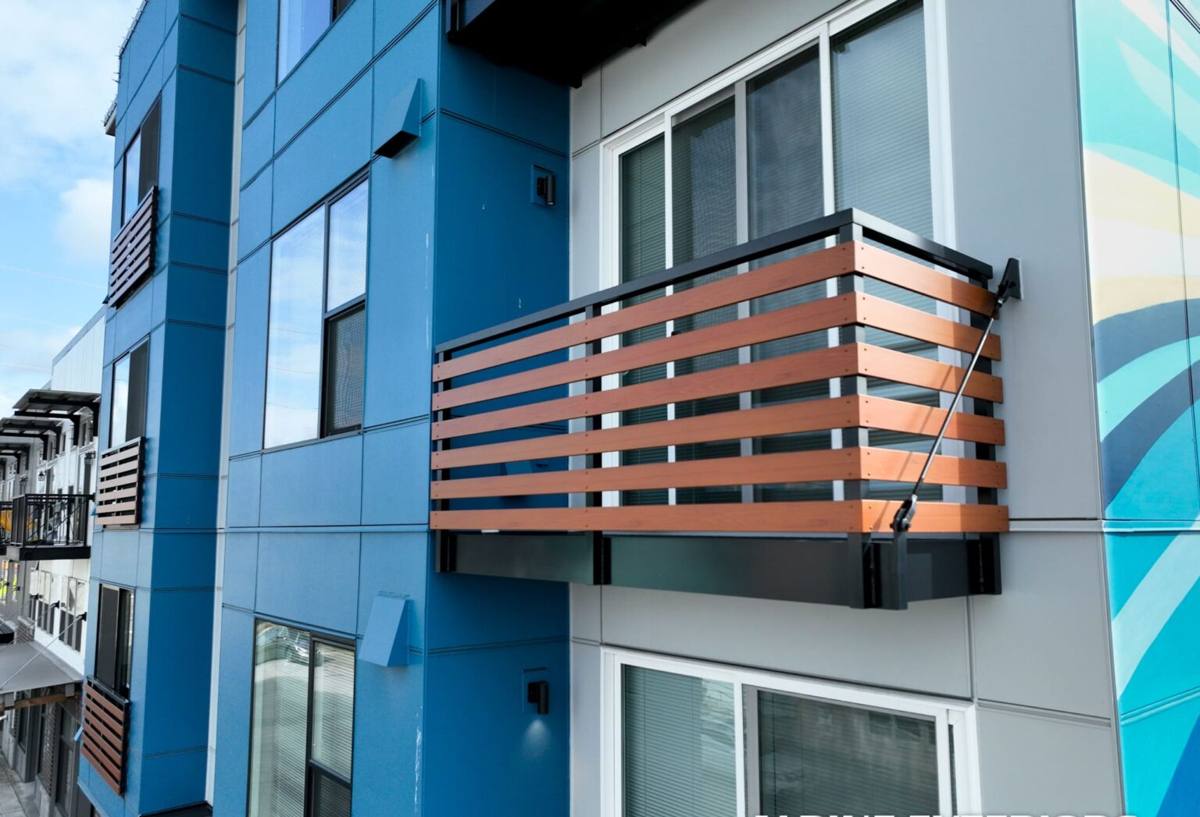
What a Correct Fiber Cement Installation Actually Involves
Fiber cement siding is only as good as the installation behind it. The board itself is a non-combustible, engineered product, but the water-management system built around it — the parts you don't see once the job is done — is what actually keeps a Custer home dry.
The details that matter most in this climate
- Proper weather-resistive barrier and rainscreen gap so any water that gets behind the siding can drain and the wall can breathe
- Correct starter strip and flashing at every window, door, and roof-to-wall transition — the places rain actually finds its way in
- Manufacturer-specified fastener spacing and depth, matched to the substrate, so boards stay secure without cracking or "hardware burn"
- Minimum clearance from grade, decks, and roof lines so siding isn't sitting in standing moisture
- Caulked and sealed joints only where the manufacturer calls for sealant — not as a substitute for proper flashing
- Factory-cut and factory-primed edges wherever possible, since field-cut edges need to be sealed to stay protected
Skip any one of these and the siding can still look fine for a year or two. In a climate like Custer's, the problems that come from a rushed install don't show up on day one — they show up as trapped moisture, staining, or soft trim two or three winters later.
Why We Install James Hardie — and Only James Hardie
We made a decision as a company to install James Hardie fiber cement exclusively. We don't install vinyl, LP SmartSide, Cemplank, Allura, primed spruce, or cedar, and we're upfront about why: after years of siding homes in this region, Hardie is the product we trust to hold up to salt air and sustained wet weather without the maintenance headaches or moisture risks that come with the alternatives.
That's not a knock on every other product on the market — vinyl is inexpensive and low-maintenance in the right climate, cedar has real curb appeal for the right homeowner, and engineered wood products have their place. But we're not going to put something on a Custer home that we don't believe will perform for the next 30-plus years in this specific environment. Hardie is non-combustible, it's engineered specifically for damp climates, and it holds a factory-applied finish far longer than field-painted alternatives — which matters a lot when the weather here gives paint so many chances to fail.
What Hardie gets right for this area
Fiber cement resists moisture absorption far better than wood-based products, so it doesn't swell, warp, or invite rot the way an OSB-core product can if water finds a way in. It doesn't feed moss and algae growth the way untreated wood surfaces can. And because it's cement-based, it doesn't attract the pests that go after wood siding in wooded, semi-rural areas like Custer.
Choosing the Right Hardie Product Line for a Custer Home
James Hardie builds different product lines engineered for different climate zones, and for the Pacific Northwest that generally means their HZ5 formulation — engineered specifically for regions with sustained moisture and freeze-thaw cycles, as opposed to the HZ10 line built for hot, humid Southern climates. Getting this match right isn't cosmetic; it affects how the product is formulated to handle the exact kind of weather Custer sees.
Beyond the climate-zone engineering, homeowners choose between a few board profiles and finish options:
- Lap siding — the most common choice, available in different exposure widths and smooth or cedar-textured finishes
- Board and batten (vertical panels) — a popular look for accent walls, gables, or a more modern elevation
- Shingle-style panels — for homes going for a Craftsman or coastal cottage look
- ColorPlus factory finish vs. field-painted — ColorPlus is baked on at the factory under controlled conditions and carries its own finish warranty, which matters in a climate where field-applied paint gets more weather exposure to fail against
Fiber Cement vs. Other Siding Options in This Climate
We get asked often enough why we won't quote vinyl or LP for a Custer home that it's worth laying it out plainly.
| Factor | James Hardie Fiber Cement | Vinyl | Cedar | LP SmartSide / OSB-Based |
|---|---|---|---|---|
| Moisture resistance | Cement-based, doesn't absorb and swell | Won't absorb water, but seams and gaps can trap moisture behind it | Natural wood — absorbs moisture without diligent maintenance | Engineered wood core; vulnerable if the outer coating is breached |
| Moss/algae resistance | Doesn't feed organic growth; factory finish sheds it more easily | Doesn't feed growth, but traps moisture against the wall behind it | Prone to moss and mildew without regular treatment | Wood-based surface can support growth if coating wears |
| Fire rating | Non-combustible | Combustible | Combustible | Combustible |
| Finish longevity | ColorPlus factory finish rated for long-term color retention | Color molded in, but can fade and become brittle over decades | Needs repainting/staining every few years | Factory-primed; still needs a paint schedule |
| Upfront cost | Mid-to-higher | Lowest | Mid-to-higher | Mid |
| Long-term maintenance cost | Low when installed correctly | Low, but limited repair options once damaged | Ongoing — sealing, staining, pest checks | Moderate — coating maintenance is not optional |
Vinyl's biggest weakness in this climate isn't the material itself — it's what happens at the seams and behind it over time, where trapped moisture has nowhere to go and no way to be inspected without removing panels. Cedar and OSB-based products both depend heavily on an intact surface coating to stay dry; once that coating is compromised by driving rain or prolonged dampness, the substrate underneath is exposed. Fiber cement doesn't eliminate the need for good flashing and drainage details, but the material itself isn't the weak link the way it can be with wood-based alternatives.
Our Process, Start to Finish
1. On-site assessment
We walk the home, check the current siding and any moisture damage already present, and look at the specific exposure — how much direct weather a given wall sees, proximity to grade, roof lines, and existing flashing conditions.
2. Product and profile selection
We go through the HZ5 line options, profiles, and ColorPlus colors, and talk through what fits the home's style and the homeowner's budget.
3. Tear-off and substrate check
Old siding comes off and we inspect the sheathing underneath for rot or existing moisture damage before anything new goes up — this is the point where problems from a prior install, if there are any, get caught and fixed rather than covered over.
4. Weather barrier and rainscreen installation
This is the step that does the most work over the life of the siding. We install the drainage plane and rainscreen gap correctly the first time, since it's the layer that manages any water that does get past the surface.
5. Siding, trim, and flashing installation
Installed to Hardie's fastening and clearance specifications, with flashing detailed at every penetration and transition.
6. Final walkthrough
We go over the finished work with the homeowner before calling the job done.
Living With Fiber Cement Siding in Whatcom County
Correctly installed Hardie siding is genuinely low-maintenance, but "low-maintenance" isn't "no-maintenance" — especially in a climate that gives moss and moisture this many chances. A short annual checklist keeps a Custer home's siding performing the way it's supposed to:
- Rinse siding annually with a garden hose and soft brush — avoid high-pressure washing, which can drive water behind panels or damage joints
- Keep gutters clear so overflow isn't running down the siding face
- Trim back landscaping and tree limbs that keep a wall shaded and damp — a major contributor to moss growth
- Check caulked joints (around trim, windows, and penetrations) once a year for cracking or separation
- Look at ground-level clearance periodically, especially after landscaping or mulch work, to make sure siding hasn't ended up too close to grade
- Watch for any staining, soft spots, or discoloration near flashing points and have them checked early rather than waiting
None of this is heavy lifting, but skipping it in a climate this wet lets small issues turn into bigger ones.
Why a Crew That Already Works Custer Matters
Siding detail work that's correct in a dry inland climate isn't automatically correct here. Flashing laps, rainscreen gaps, and clearance details all need to account for how much sustained moisture and salt exposure a Custer home actually sees over a Whatcom County winter. A crew that installs siding across a range of climates without adjusting for that ends up leaning on generic specs instead of what this specific coastal environment demands.
Working in this area regularly also means we're familiar with the building department requirements and permitting that apply locally, and we've seen firsthand what happens to siding installed with shortcuts once a few wet seasons go by. That's not abstract for us — it's the deciding factor in why we standardized on one product and one set of installation practices instead of trying to be everything to everyone.
If you're planning a siding project in Custer and want a straight assessment of what your home needs — no pressure, no upsell on a product we don't believe in — we're happy to take a look and put together a free estimate.