 Semiahmoo
 Asphalt Shingle Roofing Built for Custer's Climate
Custer sits close enough to Semiahmoo Bay and the Strait of Georgia that homes here deal with a combination most inland roofers rarely think about: salt-laden air, wind-driven rain that comes in sideways off the water, and a moss season that can run eight or nine months out of the year under the tree cover common to this part of Whatcom County. An asphalt shingle roof that's installed correctly for these conditions will hold up for decades. One that's installed the way it might be in a drier, calmer climate will show problems early — curling edges, granule loss, moss bridging the shingle courses, and leaks at valleys and flashings within the first several winters.
This page is specifically about asphalt shingle roofing for homes in and around Custer. It's not a general roofing overview — it's what actually matters for a roof that has to perform in this microclimate, year after year.
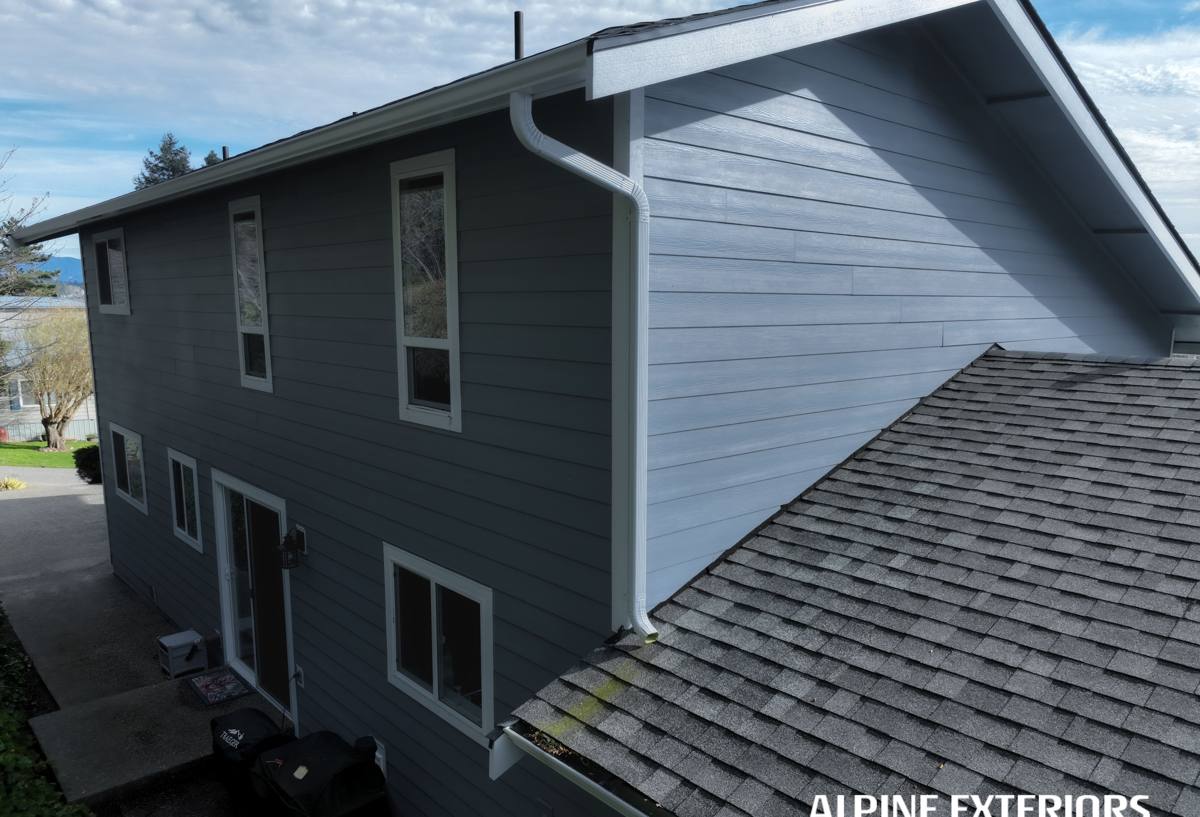
What Custer's Climate Actually Does to a Roof
Salt Air and Moisture
Proximity to Semiahmoo Bay means airborne salt settles on roofing surfaces over time. It doesn't destroy asphalt shingles the way it corrodes bare metal, but it does accelerate wear on exposed fasteners, flashing, and any unpainted metal components if they're not the right grade. Combined with near-constant moisture, salt air keeps roof surfaces damp longer after a rain, which is exactly the condition moss and algae need to take hold.
Driving Rain
Rain in this part of Whatcom County often arrives with wind behind it, pushed in off the water rather than falling straight down. That matters more than most homeowners realize: driving rain can work its way under shingles that are correctly overlapped for vertical rain but not sealed and fastened for wind-driven moisture. Valleys, eaves, and any roof-to-wall transition are where this shows up first as a leak.
A Long Moss Season
Shade from mature trees, consistent moisture, and mild temperatures add up to a moss season that barely pauses here. Moss isn't just cosmetic — it holds water against the shingle surface, lifts shingle edges as it grows, and works its way under tabs, which shortens the life of the roof significantly if it's left unmanaged.
What a Correctly Installed Roof Needs in This Area
A shingle roof that's going to hold up in Custer needs a few things done right that are easy to skip or shortcut:
- Algae-resistant (AR) shingles with copper or zinc-infused granules, which slow moss and algae growth far better than standard shingles.
- Synthetic underlayment rather than old-style felt, since it holds up better to the extended damp periods common here.
- Ice-and-water shield at eaves, valleys, and around any roof penetration — not just in colder inland areas, but here specifically because of how much wind-driven rain the roof sees.
- Correct nailing patterns for wind exposure, with enough fasteners placed exactly where the manufacturer specifies, not just "close enough."
- Balanced attic ventilation so moisture from inside the house doesn't condense against the roof deck and encourage rot from underneath.
- Properly formed flashing at chimneys, skylights, and wall intersections, since this is where driving rain finds its way in first.
Signs a Custer Roof Needs Attention
Because moss and salt air work slowly, a lot of homeowners don't notice a problem until it's already inside the attic. Worth checking for periodically:
- Moss visible on the roof surface, especially on shaded north- or west-facing slopes
- Granules collecting in gutters or at the base of downspouts
- Shingle edges that look curled, cupped, or lifted rather than lying flat
- Dark streaking that doesn't wash off with rain (algae staining, not just dirt)
- Soft spots, sagging, or discoloration on the underside of the roof deck if visible from the attic
- Daylight visible through the roof deck at eaves or ridges
- Higher-than-usual heating bills, which can point to attic moisture or failing ventilation
Choosing the Right Shingle for This Area
Not every asphalt shingle product performs the same way in a coastal, moss-heavy climate. Here's how the common tiers compare for a Custer application:
| Shingle Type | Typical Lifespan | Moss/Algae Resistance | Wind Rating | Best Fit |
|---|---|---|---|---|
| 3-tab (standard) | 15-20 years | Low unless AR-rated | Lower end of range | Budget projects, secondary structures |
| Architectural/laminate | 25-30 years | Good with AR granules | Mid-to-high | Most Custer homes — best balance of cost and durability |
| Premium/designer | 30+ years | Very good with AR granules | High | Exposed or high-wind lots, homeowners planning to stay long term |
For most homes in this area, we steer people toward algae-resistant architectural shingles. They cost more up front than 3-tab, but the moss resistance alone often pays for the difference by cutting down on cleaning and premature replacement. We generally don't recommend standard 3-tab without AR granules for anything with tree cover or bay-facing exposure — it's not that the product is bad, it's that it isn't built for this specific climate, and the maintenance burden ends up higher than most homeowners expect.
Our Installation Process
1. Inspection and Estimate
We start by walking the roof (weather permitting) or inspecting from the attic and eaves, checking deck condition, ventilation, flashing, and the extent of any moss or moisture damage. You get a written estimate with the scope, materials, and timeline spelled out.
2. Tear-Off and Deck Inspection
Old roofing comes off down to the deck. This is the point where hidden problems — soft plywood, rot around penetrations, prior water damage — become visible and get addressed before anything new goes down. Covering up a bad deck is one of the most common shortcuts in this trade, and it's the one that causes the most expensive repeat failures.
3. Underlayment and Water-Entry Protection
Synthetic underlayment goes down across the full deck, with ice-and-water shield at eaves, valleys, and penetrations — the areas most exposed to Custer's wind-driven rain.
4. Flashing and Drip Edge
New drip edge and flashing at chimneys, skylights, and wall transitions. This step gets rushed on low-cost jobs; done right, it's one of the biggest factors in whether a roof stays dry through its first few coastal winters.
5. Shingle Installation
Shingles go on with manufacturer-specified nailing patterns and exposure, starting with a starter course at the eaves and finishing with ridge cap. Ventilation components (ridge vents, baffles) are installed or verified as part of this step, not treated as an afterthought.
6. Cleanup and Walk-Through
Job site and yard get cleaned of debris and nails, and we walk the finished roof with you before calling the job done. Manufacturer warranty paperwork gets registered where applicable.
What Drives the Cost
Every roof is priced individually, but the same handful of factors move the number up or down on most Custer jobs:
| Factor | Why It Matters |
|---|---|
| Roof pitch and complexity | Steeper roofs and multiple valleys or dormers take longer and need more safety setup |
| Number of existing layers | Tear-off of two layers costs more than one; some jurisdictions limit how many layers can be left |
| Deck condition | Rotted or soft decking found during tear-off needs repair or replacement before new roofing goes on |
| Shingle tier chosen | 3-tab, architectural, and premium products carry different material costs |
| Access and site conditions | Tree cover, steep lots, or limited driveway access can affect setup time |
| Ventilation upgrades | Adding or correcting ridge and soffit ventilation adds labor but extends roof life |
We'll walk through which of these apply to your roof specifically during the estimate, so there aren't surprises once tear-off starts.
Maintenance in a Long Moss Season
Even a well-installed roof benefits from periodic upkeep in this climate. A few habits go a long way:
- Keep gutters clear so water isn't backing up under the eaves
- Trim back overhanging branches to cut down on shade and debris buildup
- Have moss physically removed rather than pressure-washed, which can strip granules and shorten shingle life
- Check attic ventilation isn't blocked by insulation, especially after any attic work
- Have the roof looked at after major windstorms, particularly if you notice missing granules in the gutters
Why Hire a Crew That Already Works Custer
Roofing crews that mostly work drier, inland areas don't always think about salt exposure, wind-driven rain direction, or how aggressive moss growth gets under the tree cover typical of this part of Whatcom County. A crew that already works in and around Custer knows which slopes on a given lot tend to hold moss longest, where wind off the bay tends to drive rain hardest, and which shingle and underlayment combinations actually hold up here rather than just on paper. That local familiarity shows up in fewer callbacks and a roof that's still doing its job well past the point a poorly matched installation would have started failing.
If you're weighing repair versus replacement, or just want an honest read on how much life is left in your current roof, we're happy to take a look. Reach out for a free, no-pressure estimate using the form below.