 Semiahmoo
 Why Cherry Point's Climate Is Tough on Siding
Cherry Point sits close enough to the water that homes here deal with a combination most inland Whatcom County houses never see: near-constant salt-laden air, wind-driven rain coming off the Strait, and long stretches of gray, damp weather that never quite dries the exterior out. Add in the shaded, moisture-holding conditions that let moss and algae take hold on north- and west-facing walls, and you have a climate that is genuinely harder on siding than most manufacturers' generic warranty language accounts for.
Salt air is corrosive to exposed metal fasteners and fixtures, and it also accelerates the breakdown of coatings that aren't formulated to resist it. Driving rain doesn't just fall straight down here — it gets pushed sideways into every seam, lap, and butt joint, which means a siding job that would hold up fine in a drier part of the state can fail at the details in Cherry Point. And moss doesn't just look bad; where it takes hold on wood-based or improperly finished products, it holds moisture against the surface and speeds up rot and paint failure.
None of this means siding is a lost cause out here — it means the material and the installation both have to be matched to the exposure. That's the whole basis of this page.
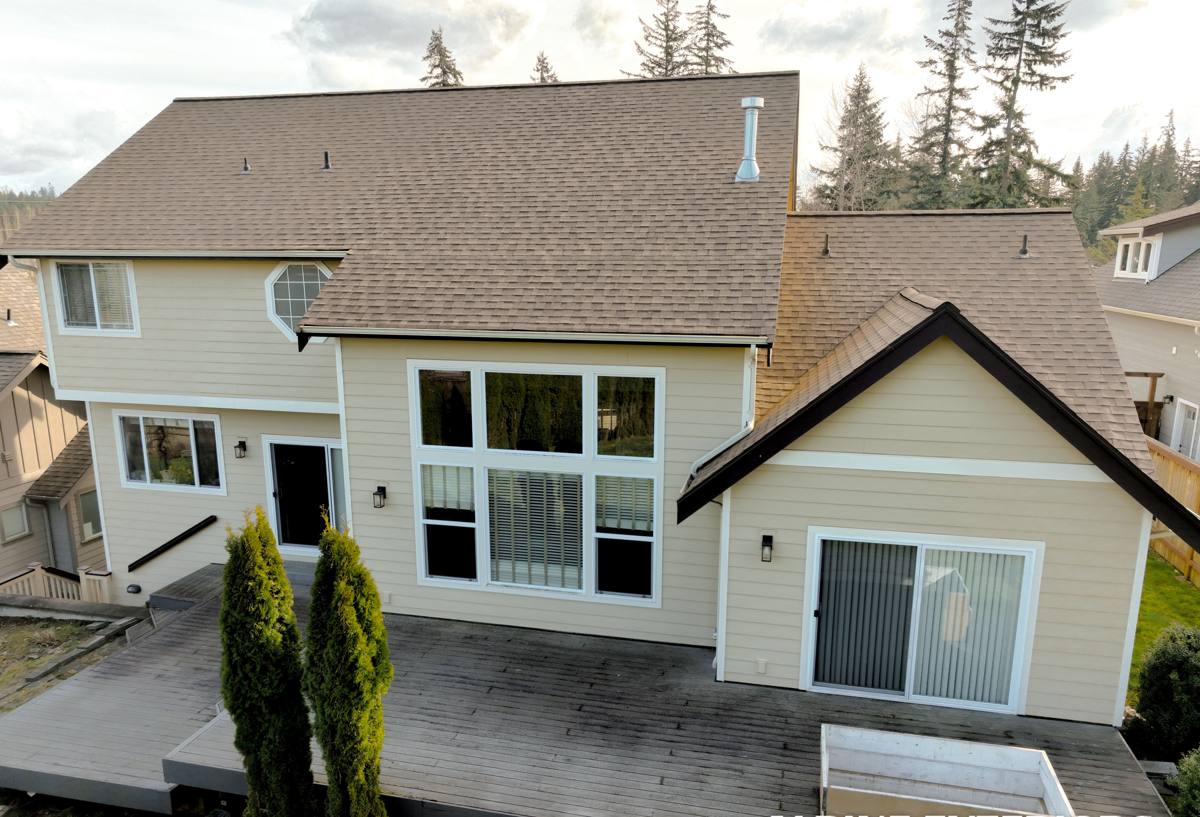
Why We Install Only James Hardie Fiber Cement
We standardized on James Hardie fiber cement siding and don't install vinyl, LP SmartSide, Cemplank, Allura, or bare cedar or primed spruce. That's not a marketing position — it's a response to what actually holds up on homes exposed to marine air and heavy, sideways rain for years at a stretch.
Built for Marine Exposure
James Hardie engineers its siding by climate zone rather than selling one product nationwide. For coastal and high-moisture regions like Whatcom County, that means product formulated to resist moisture damage and hold its factory finish in humid, salt-exposed conditions better than a generic all-climate board. Fiber cement itself — a mix of cement, sand, and cellulose fibers — doesn't absorb water the way wood-based siding does, and it doesn't warp, swell, or delaminate the way some engineered wood products can when a seam gets wet and stays wet.
Non-Combustible, and a Finish That's Baked On
Fiber cement is non-combustible, which matters to a lot of homeowners regardless of climate. Just as important for a place like Cherry Point is the factory-applied ColorPlus finish: it's cured onto the board under controlled conditions before it ever reaches the job site, so it resists fading and chalking from sun and salt exposure far better than a field-applied paint job would, and it comes backed by its own finish warranty separate from the substrate warranty.
What a Correct Fiber Cement Installation Actually Requires
Fiber cement siding is only as good as the installation behind it. Most of the siding failures we get called out to inspect on older homes near the water aren't a material problem — they're a detailing problem. Rain got behind the siding somewhere it shouldn't have, and nobody gave it a way back out.
Drainage Plane and Flashing
Every correct installation starts with a weather-resistive barrier and, on most jobs, a rainscreen gap that lets any moisture that does get behind the siding drain and dry out instead of sitting against the sheathing. Flashing at windows, doors, deck ledgers, and roof-to-wall transitions has to be layered correctly — upper pieces overlapping lower ones — so wind-driven rain can't work its way in sideways, which is exactly the kind of rain Cherry Point gets off the water.
Fastening, Gaps, and Caulking
James Hardie specifies exact fastener types, spacing, and placement, along with minimum clearances from the ground, roofline, and horizontal surfaces like decks and patios. Boards need proper gaps at butt joints and around penetrations, sealed with the right sealant — not just caulked over — so the assembly can move slightly with temperature and moisture changes without cracking the seal. Skipping these details is the single most common reason siding that's rated for a climate like ours still fails prematurely.
Our Installation Process, Start to Finish
- Exterior assessment — we inspect existing siding, sheathing, and trim for hidden moisture damage before quoting anything, since that changes the scope.
- Tear-off and prep — old siding comes off, sheathing is checked and repaired as needed, and the weather barrier and rainscreen system go on correctly the first time.
- Flashing and trim — windows, doors, and all penetrations get flashed before a single course of siding goes up.
- Installation — Hardie boards, panels, or shingle siding installed to manufacturer fastening and clearance specs.
- Final inspection and cleanup — we walk the job looking specifically for anything that could let water in over time, then clear the site.
Product and Color Choices for a Coastal Look
James Hardie's lineup gives Cherry Point homeowners real range without leaving the fiber cement system. HardiePlank lap siding is the standard choice for most homes and comes in several widths and textures, from smooth to a more traditional cedar-grain look. HardieShingle siding is a common choice for gable accents or a full shingle-style exterior, and HardieTrim boards handle corners, fascia, and window and door surrounds in a material that matches the siding's moisture behavior instead of a mismatched wood trim that ages differently.
ColorPlus finishes come in a range of tones that hold up well against sun and salt exposure; darker, saturated colors and traditional coastal neutrals are both well represented, and factory-matched caulk and touch-up kits are available so repairs don't stand out.
Cost Factors for Cherry Point Homes
Every home is different, so we don't quote off square footage alone. These are the factors that most often move a Cherry Point project up or down from a baseline estimate:
| Factor | Typical Impact | Why It Matters Here |
|---|---|---|
| Existing siding removal | Moderate to High | Multiple layers or wood siding with hidden rot add tear-off and repair time |
| Sheathing/moisture repair | Variable, found during tear-off | Coastal humidity and past leaks sometimes mean rot isn't visible until old siding is off |
| Trim and architectural detail | Moderate | Gables, dormers, and shingle accents take more labor than plain lap runs |
| Home height and access | Low to Moderate | Multi-story walls and tight lot access affect staging and safety equipment |
| Flashing and drainage upgrades | Low to Moderate | Bringing an older wall assembly up to a proper rainscreen standard is worth the cost near the water |
We walk every home and give a written estimate before any work starts — no guessing over the phone.
Fiber Cement vs. Other Siding Materials in This Climate
We're often asked why we don't offer vinyl or wood alongside Hardie. Here's the honest comparison for a marine-exposed property like the ones we work on near Semiahmoo:
| Material | Salt Air / Moisture Behavior | Fire Resistance | Long-Term Maintenance |
|---|---|---|---|
| James Hardie fiber cement | Engineered for humid/coastal climate zones; doesn't absorb water like wood | Non-combustible | Factory finish reduces repainting; occasional caulk/touch-up |
| Vinyl | Can warp or become brittle with temperature swings and UV/salt exposure over time | Combustible | Low upkeep but color and material can't be refinished, only replaced |
| Untreated wood/cedar | Absorbs moisture; prone to rot and moss growth in shaded, damp conditions | Combustible | Regular refinishing/sealing required to keep ahead of moisture |
This isn't a knock on the other materials for every application — it's why we chose to specialize rather than install everything.
Signs Your Current Siding Is Already Losing the Fight
If your home is in or near Cherry Point, these are worth checking before winter's rains set in again:
- Persistent moss or dark streaking on north- or west-facing walls that comes back soon after cleaning
- Soft or spongy spots when you press on siding near the bottom edges or around windows
- Paint that's bubbling, peeling, or chalking faster than it used to
- Visible gaps, warping, or separation at butt joints and corners
- Rust streaks below fasteners or trim, a sign metal components are corroding from salt exposure
- Musty smell or visible staining on interior walls that share an exterior wall with problem siding
Any one of these on its own might be minor. Several together usually mean moisture has been getting behind the siding for a while.
Why Hiring a Crew That Already Works Cherry Point Matters
A siding crew that mostly works drier, inland parts of Washington will build to a general code minimum. A crew that regularly works properties exposed to Semiahmoo Bay and the Strait treats flashing, rainscreen gaps, and fastener corrosion resistance as non-negotiable, because they've seen what happens when those details get skipped on a home taking direct salt spray and driving rain. That local pattern recognition — knowing which walls on a coastal Whatcom County home take the worst weather and detailing accordingly — is the difference between siding that looks fine for a few years and siding that actually performs for decades.
If you're weighing a siding replacement or repair on a Cherry Point property, we're happy to take a look and give you a straight assessment — no pressure, no upsell to a product we wouldn't put on our own homes. Fill out the form below for a free estimate.