 Semiahmoo
 Why California Creek Homes Are Tough on Siding
The California Creek area sits close enough to Semiahmoo Bay and the surrounding wetlands that homes here take on a mix of weather stresses most inland Whatcom County properties never see. You've got the tidal air coming off the water, a tree canopy along the creek corridor that keeps whole walls in shade for months at a time, and the steady, sideways rain that defines a Pacific Northwest winter. Any one of those would shorten the life of an average siding job. Together, they're why generic siding work doesn't hold up well out here and why the approach has to be deliberate from the first flashing detail to the final coat of finish.
Salt Air Off the Bay
Homes within reach of Semiahmoo Bay's salt air deal with corrosion that inland properties simply don't. Fasteners, trim flashing, and any exposed metal take a slow beating, and siding materials that rely on paint film alone for protection tend to chalk, fade, and lose their seal faster in this environment. It's not dramatic — it's cumulative, showing up as premature fading, rust bleed at nail heads, and caulk joints that fail years ahead of schedule.
Driving Rain and Wind-Driven Moisture
Storms rolling in off the water don't fall straight down — they drive sideways into west- and southwest-facing walls with real force. That kind of wind-driven rain finds every gap in a lap joint, every under-caulked window flange, and every place where siding was nailed tight against sheathing with no way for moisture to escape. On a lot of older homes in this area, that's exactly what's happening behind the siding right now, invisible until the wall starts to fail.
Moss, Algae, and a Long Shaded Season
Because so many California Creek properties sit under mature trees along the creek corridor, north-facing and shaded walls stay damp far longer after each rain than a wall in full sun would. That extended damp period is exactly what moss and algae need to take hold. Once organic growth establishes on a wall, it holds moisture against the surface even longer, and on materials that aren't built to shrug off sustained dampness, that's a direct path to rot, delamination, or coating failure.
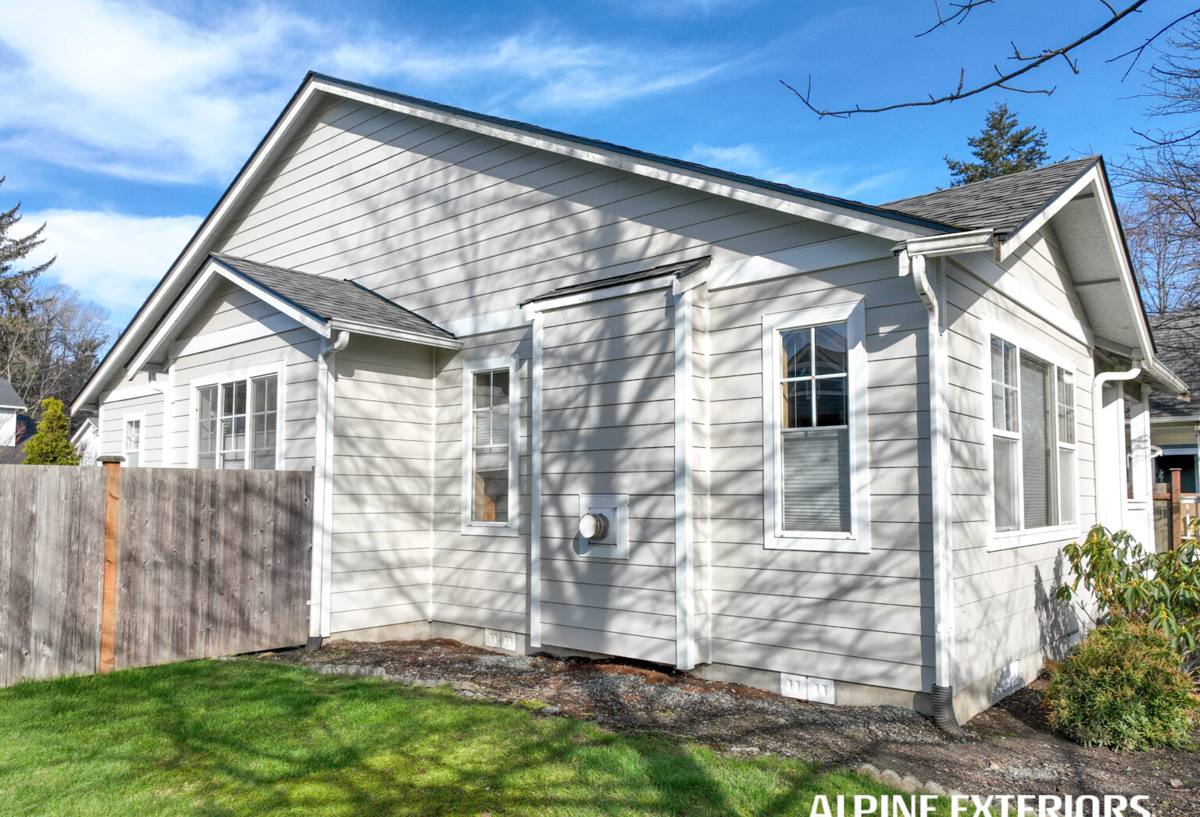
Signs Your Siding Has Reached the End of Its Useful Life
Most siding failure out here doesn't announce itself with a hole in the wall. It shows up gradually, and by the time it's obvious, there's usually water damage behind it. Here's what we look for, and what you should too:
- Soft or spongy spots when you press on the siding, especially near the bottom courses and around window and door trim
- Persistent moss or algae staining that comes back within weeks of being cleaned
- Paint that's peeling, bubbling, or chalking heavily rather than just fading evenly
- Visible warping, cupping, or separation at panel seams and lap joints
- Caulk joints that are cracked, shrunken, or missing around windows, corners, and trim
- A musty smell in interior rooms along exterior walls, or rising energy bills with no other explanation
- Nail heads that are rusting, popping, or leaving streaks down the face of the siding
Any one of these on its own might be a minor repair. Several together, especially on a shaded or water-facing wall, usually means the siding system as a whole has stopped doing its job.
What a Correct Siding Replacement Actually Involves
Tear-Off and What's Underneath Matters Most
A siding replacement is only as good as what happens after the old siding comes off and before the new siding goes on. On a California Creek home, that in-between stage is where we find out what the salt air and shade have actually been doing to the wall — soft sheathing, saturated insulation, rusted flashing, framing that needs to dry out or be repaired before anything new gets fastened to it. Skipping a real inspection at this stage, or rushing to cover it back up, just seals the existing problem behind a new surface.
Moisture Management: WRB, Flashing, and a Drainage Gap
Given how much wind-driven rain this area sees, the weather-resistive barrier and flashing details matter as much as the siding itself. Every window, door, and penetration gets flashed and lapped correctly so water sheds outward instead of tracking behind the barrier. On walls that see heavy shade or driving rain, we also build in a drainage gap behind the siding so any moisture that does get past the outer layer has somewhere to go instead of sitting against the wall. That gap is also what keeps a shaded wall drying out between storms instead of staying damp for weeks.
Fastening, Caulking, and Finish Details
Fastener spacing, nail set depth, and caulk selection aren't small details — they're what determines whether the assembly performs for twenty years or five. Overdriven or underdriven fasteners crack panels or leave gaps for water. The wrong caulk in a salt-air environment breaks down early and opens a path for moisture right where you least want it, at trim and joints. We follow manufacturer installation specs closely because that's what keeps the material's warranty valid and, more practically, what keeps water out of your walls.
Why We Install Only James Hardie Fiber Cement
We made a decision as a company to install James Hardie fiber cement siding exclusively, and it comes directly from what we see on homes in this climate. Vinyl siding can warp and gap over time and doesn't stand up well to sustained damp shade. Cedar and primed spruce look great going up but demand a maintenance schedule most owners can't keep pace with once moss and salt air are working against the finish. Engineered wood products like LP SmartSide perform better than raw wood but are still wood-based, meaning edge swelling and moisture sensitivity remain real considerations in a wet, shaded environment. James Hardie's fiber cement is non-combustible, engineered specifically for wet climates in its HZ5 product line, and finished at the factory with ColorPlus technology, so the color coat is baked on and warrantied rather than applied on site where weather and timing can affect the result. It doesn't rot, it resists moss and algae far better than wood-based products, and it holds its finish through the kind of salt air and driving rain that wears other materials down early. That's why it's the only siding we put on homes, full stop — not because every alternative is bad, but because it's consistently the material that performs the way homeowners here actually need it to.
How James Hardie Compares to Other Siding Options Here
| Factor | James Hardie Fiber Cement | Vinyl | Cedar / Primed Wood | Engineered Wood (LP SmartSide) |
|---|---|---|---|---|
| Moisture and rot resistance | Excellent — cement-based, doesn't absorb and swell | Won't rot, but can warp and gap | Prone to rot without diligent upkeep | Better than raw wood, still moisture-sensitive at edges |
| Moss and algae resistance | Strong, especially with factory finish | Moderate; growth still occurs on shaded surfaces | Poor in shaded, damp conditions | Moderate |
| Performance in salt air | Holds finish and integrity well | Can chalk and become brittle over time | Finish breaks down faster near salt air | Coating can degrade faster near the coast |
| Fire resistance | Non-combustible | Melts/deforms under heat | Combustible | Combustible |
| Maintenance | Occasional wash; factory finish holds for years | Low, but repairs are hard to color-match | Regular painting/staining required | Periodic paint and caulk maintenance |
| Typical warranty | Long-term, transferable product warranty | Varies widely by manufacturer | Manufacturer warranty, workmanship-dependent | Manufacturer warranty, moisture exclusions common |
What Drives the Cost of a Siding Replacement Project
Every home is different, and we won't quote a number without seeing the house, but these are the factors that move the price up or down on a California Creek project:
| Cost Factor | Why It Matters Here |
|---|---|
| Square footage and wall complexity | More corners, gables, and trim details mean more labor and material waste |
| Condition of the sheathing underneath | Salt air and shaded moisture increase the odds of hidden repair work being needed |
| Tear-off and disposal | Full removal of old siding, especially failing wood or vinyl, adds labor and haul-away cost |
| Trim and window detail work | Careful flashing and trim work around openings takes more time but is where leaks start if rushed |
| Product line and profile selection | James Hardie offers multiple plank widths, textures, and panel styles at different price points |
| Site access | Tree cover, tight lot lines, or difficult staging areas near the creek can affect labor time |
Our Process, Start to Finish
- Walkthrough and assessment — we inspect the current siding, look for signs of moisture damage, and talk through what we find in plain terms
- Written estimate — a clear scope of work and cost based on your home, not a generic per-square-foot guess
- Tear-off and inspection — old siding comes off and we evaluate the sheathing and framing before covering anything back up
- Repairs as needed — any soft sheathing, damaged flashing, or rot gets addressed before new material goes on
- Weather barrier and drainage installation — WRB, flashing, and drainage gap installed to manage the moisture this area sees
- James Hardie installation — installed to manufacturer spec for fastening, spacing, and sealing
- Final walkthrough — we go over the finished work with you before calling the job done
Why a Crew That Already Works California Creek Matters
Siding contractors who mostly work inland or in drier neighborhoods don't always think about drainage gaps, shaded-wall moss patterns, or salt-air fastener choices the way a crew that regularly works closer to the water does. It's not a matter of one crew being more skilled in general — it's that the failure points on a California Creek home are specific to this microclimate, and a crew that's seen them repeatedly knows where to look and what to build in before it becomes a problem. That local pattern recognition, paired with sticking to a single, well-understood product system in James Hardie, is what keeps a siding job from becoming a five-year repeat call.
Living With Your New Siding: Maintenance in This Climate
Even the right material still needs basic upkeep in this environment. An occasional rinse to keep salt residue and organic buildup from settling into the finish goes a long way, particularly on shaded walls facing the creek and tree line. Keeping gutters clear and trimming back branches that overhang the roofline reduces the standing moisture that feeds moss growth in the first place. James Hardie's factory-applied ColorPlus finish is built to hold up with minimal attention, but a home surrounded by trees and close to salt air will always benefit from a homeowner who keeps an eye on caulk joints and trim over the years rather than waiting for a problem to show itself.
If your California Creek home is showing any of the signs above, or you're simply due for a siding replacement and want it done right the first time, we're happy to take a look and walk you through what we find. Reach out for a free, no-pressure estimate using the form below.