 Semiahmoo
 Why California Creek Siding Wears Differently Than Siding Inland
California Creek sits close enough to the water that homes here take a different kind of beating than a house twenty minutes inland. It's not one big event that damages siding out here — it's the slow accumulation of small ones. Salt-laden air off the water works into fastener heads and cut edges. Driving rain, pushed sideways by wind off the Strait, finds every gap in flashing and trim. And the long, damp Whatcom County shoulder seasons give moss, algae, and mildew months at a time to get established on north- and west-facing walls before anything dries out enough to stop them.
None of that means siding here is doomed — it means repairs have to account for causes, not just symptoms. Patching a stain without fixing the moisture source, or caulking a gap without checking what's happening behind it, buys a homeowner a year or two before the same spot fails again. A repair done right in this area holds up for the long haul; one done generically usually doesn't.
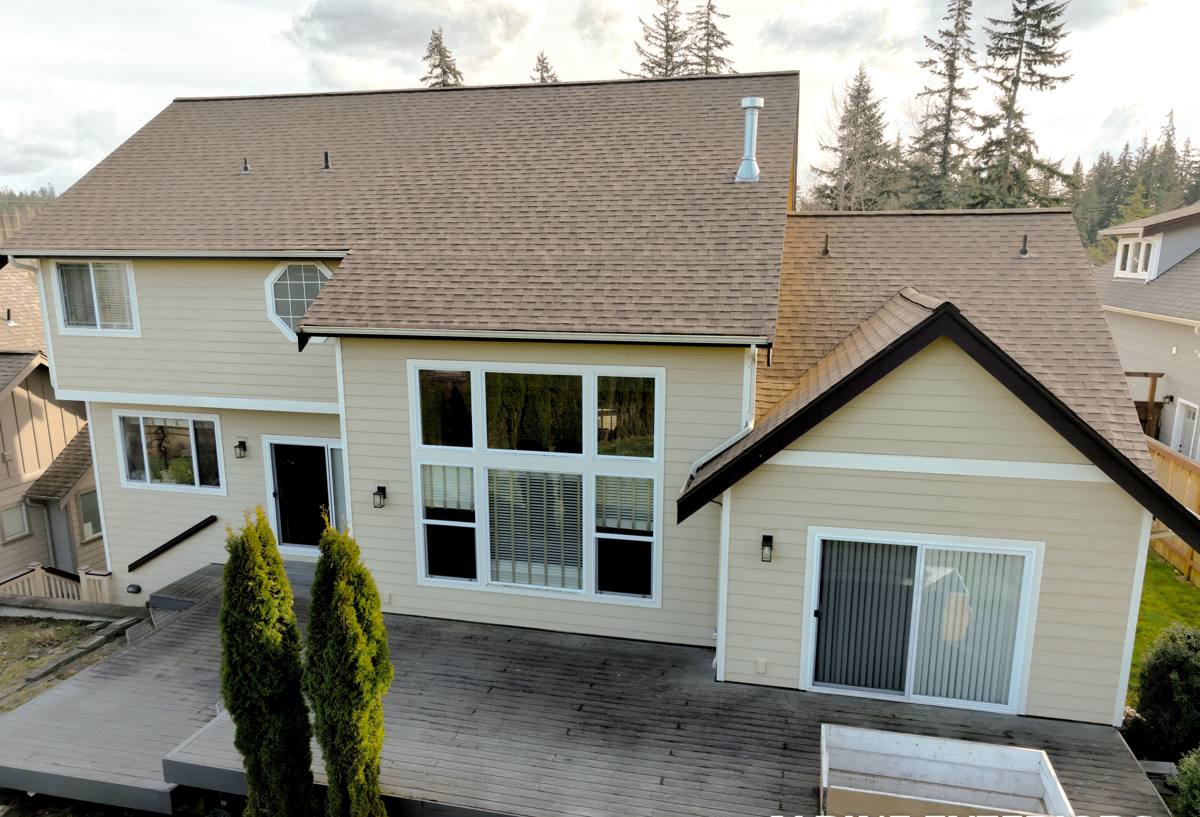
What Salt Air, Rain, and Moss Actually Do to Siding
Salt Air and Corrosion
Homes within a mile or two of saltwater deal with accelerated corrosion on anything metal — nail heads, flashing, screws, and staples. Once a fastener starts to corrode, it loses its grip, and siding panels or trim boards begin to work loose. Loose siding then lets water behind the assembly, which is where the real damage starts.
Driving Rain and Wind-Driven Moisture
Semiahmoo's exposure means rain doesn't always fall straight down — it gets pushed horizontally into wall assemblies, especially around window and door trim, corner boards, and anywhere two materials meet. Caulk and sealant joints that would last a decade in a sheltered inland location can fail here in half that time under constant wind-driven wetting and drying cycles.
Moss, Algae, and the Long Damp Season
Whatcom County's wet stretch runs long, and shaded or north-facing walls in California Creek often stay damp for days after a storm passes. That's ideal conditions for moss and algae to take hold on siding surfaces and in seams. Left alone, organic growth holds moisture against the substrate and can accelerate rot at the exact spots where panels overlap or meet trim.
Signs Your Siding Needs Repair Now
Most siding failures give warning signs well before they become structural. Catching these early is what keeps a repair a repair, instead of turning it into a full replacement.
- Soft or spongy spots when you press on siding near the bottom edge or around windows
- Visible gaps, warping, or buckling in panels or boards
- Paint that's bubbling, peeling, or failing in one specific area rather than uniformly
- Dark streaking, green or black staining, or moss buildup concentrated at seams and corners
- Cracked, shrunken, or missing caulk at trim, window, and door joints
- Rust streaks below nail heads or fasteners
- A musty smell or visible staining on interior walls that back up to exterior siding
- Small holes, cracks, or impact damage from debris, hail, or yard equipment
What a Correct Siding Repair Actually Involves
Diagnosis Before Demolition
A proper repair starts by figuring out why the damage happened, not just where it shows. That means checking the flashing above and below the affected area, inspecting the house wrap or building paper if the siding has to come off, and confirming the fastening pattern is sound before anything gets patched over. Repairing the visible symptom without addressing water intrusion at its source is the single most common reason siding repairs don't last in this climate.
Matching Materials, Not Just Covering Gaps
On a fiber cement home, a correct repair uses fiber cement — cut, primed, and finished to match the existing panels — not a mismatched patch material that expands and contracts differently or weathers at a different rate. Color-matching factory-finished siding takes more care than matching field-painted siding, and it's worth doing right so the repair doesn't stand out for the next fifteen years.
Sealing and Flashing Details
Every repair is an opportunity to correct flashing and sealant details that were done poorly the first time. In a location that takes as much wind-driven rain as California Creek does, the quality of the flashing and caulk work at trim and penetrations matters as much as the siding panel itself.
Common Repair Scenarios We See in California Creek
| Issue | Typical Cause Here | What a Correct Fix Involves |
|---|---|---|
| Rot at bottom courses | Splash-back, poor grade slope, or failed caulk letting water track down | Remove damaged material, correct drainage path, replace with matched fiber cement, reseal properly |
| Rust streaking at fasteners | Salt air corroding exposed or improperly set nail heads | Remove corroded fasteners, refasten with corrosion-resistant hardware to spec, spot-finish |
| Moss/algae staining at seams | Extended damp periods on shaded walls | Clean surface without damaging finish, inspect seam integrity, address shading/airflow where possible |
| Trim and corner gaps | Wind-driven rain cycling caulk joints faster than inland exposure | Remove failed sealant, inspect substrate for hidden moisture, reseal with appropriate exterior sealant |
| Impact damage (cracks, holes) | Debris, storms, yard equipment | Replace the affected panel section with matched material rather than patch-filling |
Repair or Replace? How We Help You Decide
Not every damaged section means the whole wall needs to come off. But repair isn't always the cheaper long-term answer either. A few honest factors guide that call:
- Extent: Isolated damage on an otherwise sound wall is usually a repair. Damage recurring across multiple walls often points to a systemic moisture or installation issue worth addressing comprehensively.
- Age and condition of the rest of the siding: Repairing one section of siding that's near the end of its service life elsewhere on the house is a short-term fix. We'll tell you if that's the case rather than sell you a patch we don't believe in.
- What's behind the siding: If house wrap, sheathing, or framing has taken on water damage, that needs to be resolved regardless of what the exterior finish material is.
- Cosmetic match: On older or discontinued color and profile combinations, an exact match may not be possible, which factors into whether a repair will look right or whether a larger section should be addressed together.
Our Process for California Creek Repairs
1. On-Site Inspection
We look at the damaged area and the surrounding assembly — not just the spot you called about. Salt air and wind-driven rain damage often extends further than what's visible from the ground.
2. Straight Answer on Repair vs. Replace
You get an honest recommendation, including if a repair isn't the right long-term call, before any work starts.
3. The Repair Itself
Removal of damaged material, correction of the underlying cause where one exists, replacement with properly matched fiber cement, and correct fastening, flashing, and sealing at every joint we touch.
4. Finish Match
We match factory finish as closely as the product line allows so the repair blends in rather than becoming the new thing you notice every time you pull into the driveway.
Why We Only Repair With Fiber Cement — and Why That Matters Here
We install and repair with James Hardie fiber cement exclusively. In a salt-air, high-moisture environment like Semiahmoo, that's not a brand preference — it's a practical one. Fiber cement doesn't rot, doesn't attract the moss and algae growth that softer wood-based products can hold onto, and its factory-applied ColorPlus finish is engineered to hold up under the UV and moisture cycling this coastline delivers. Patching a fiber cement wall with a different material — vinyl trim pieces, primed wood, or a different fiber cement brand — creates a seam of mismatched materials that age at different rates and often becomes the next repair. When we work on a Hardie wall, we repair it with Hardie. When we're asked to patch a different siding material, we'll say plainly what its long-term limitations are so you can make an informed call about the repair versus a future replacement.
Why Local Experience in California Creek Matters
A repair crew that already works this stretch of Whatcom County knows which walls take the worst of the wind-driven rain, how far salt exposure typically travels inland from the water, and which fastening and flashing details actually hold up here versus what a generic spec sheet assumes for a drier climate. That local pattern recognition is the difference between a repair that addresses root cause and one that just covers up today's symptom.
If you're seeing staining, soft spots, gaps, or corrosion on your California Creek home's siding, we're happy to take a look and give you a straight assessment — no pressure, no upsell, just what we'd actually recommend if it were our own house. Reach out for a free estimate using the form below.