 Semiahmoo
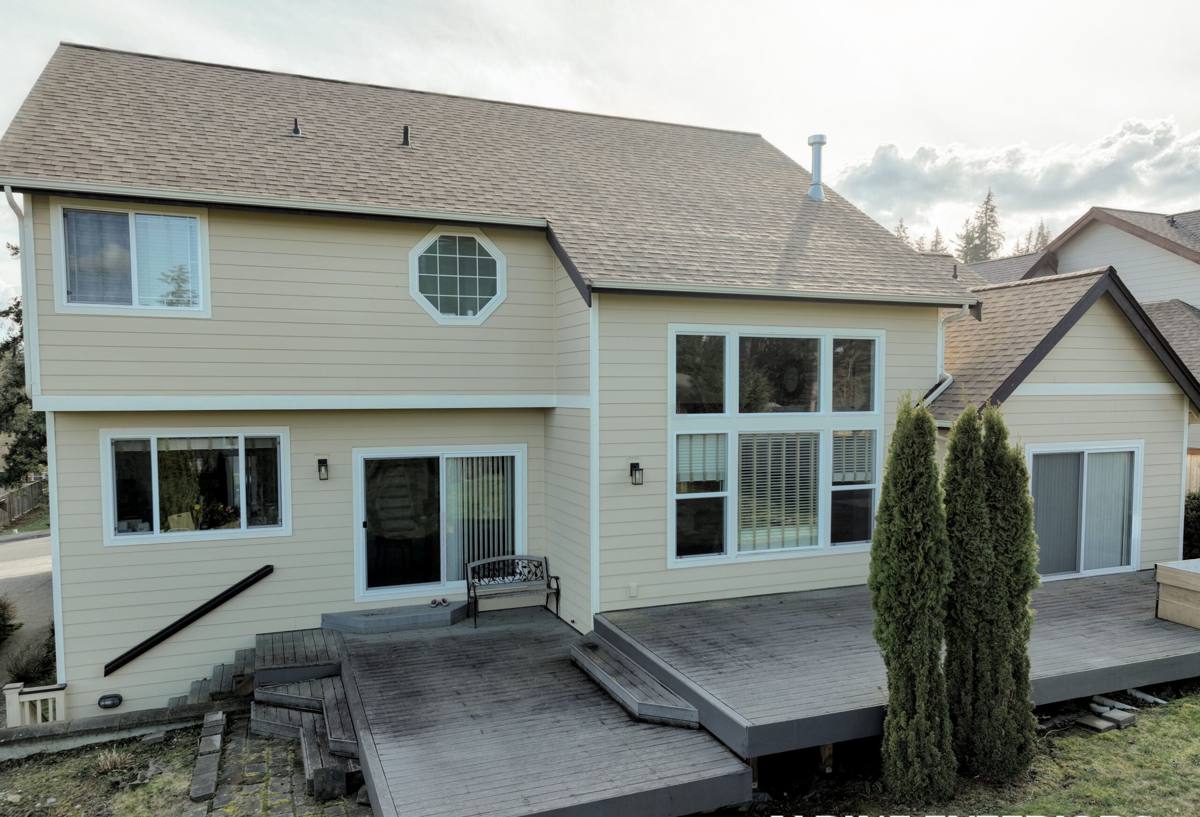
 Decks in California Creek take a beating that inland decks never see. Sitting close to the water off Semiahmoo, homes here deal with salt-laden air, wind-driven rain that gets pushed sideways under railings and into ledger boards, and a moss season that can run from October through May. A deck that would need minor upkeep in a drier part of Whatcom County can develop real structural problems here in a fraction of the time. This page covers what deck repair actually involves for California Creek homes, how we approach it, and what to look for before you hire anyone to work on the structure holding up your outdoor living space.
Why California Creek Decks Wear Differently
Three things drive deck deterioration in this pocket of Whatcom County, and they compound each other:
- Salt air corrosion: Metal fasteners, joist hangers, and structural screws corrode faster near the water. Even coated or galvanized hardware has a shorter working life here than it does a few miles inland, and corroded fasteners are one of the most common hidden failures we find when we pull up decking boards.
- Driving rain: Storms off the water don't fall straight down — wind pushes rain horizontally into railing posts, under flashing, and against the house where the ledger board attaches. That's the connection point that carries the most load on most decks, and it's also the one most exposed to wind-driven moisture.
- Extended moss season: Moss and algae hold moisture against wood and composite surfaces for months at a time. On flat or low-slope deck surfaces, that moisture doesn't just sit on top — it works into board edges, fastener holes, and any spot where the original finish has worn through.
None of these forces cause a deck to fail overnight. They cause slow, often invisible damage — softened wood under a solid-looking surface, a ledger connection that's lost integrity, or joists that have been wet more often than dry for years. That's why deck repair here isn't just about replacing a board that looks bad. It's about checking the structure underneath it.
What a Correct Deck Repair Actually Involves
A repair job that only addresses the visible symptom — a soft board, a wobbly rail — without checking what's underneath is a repair that fails again within a season or two. We treat every repair call as a chance to look past the surface.
Structural Inspection First
Before we touch anything, we check the framing: joists, beams, posts, and — most importantly — the ledger board where the deck attaches to the house. In this climate, the ledger connection is where we find the most serious hidden problems, because it's shielded from view by the decking above and often wasn't flashed correctly when the deck was built. We also check post bases and any concrete footings for movement, rot at ground contact, and fastener corrosion.
Board-Level Repair
Once we know the structure is sound, we address the surface: soft, cupped, or split boards; loose or popped fasteners; and any board showing the early graying and checking that comes from repeated wet-dry cycling. We replace boards to match existing material where possible, and we'll tell you honestly when a board-by-board approach no longer makes sense versus a fuller resurface.
Railing and Stair Safety
Railings and stair stringers take direct wind-driven rain and see more freeze-thaw stress at connection points. Loose railings are one of the most common safety issues we find on older decks in this area, and we check post attachment, not just whether the rail itself feels solid to the hand.
Fastener and Hardware Upgrades
If we find corroded fasteners or undersized joist hangers, we upgrade to hardware rated for coastal/marine-adjacent exposure as part of the repair, not as an upsell. Using the same hardware that failed the first time doesn't make sense in this environment.
Signs Your California Creek Deck Needs Attention
| What You Notice | What It Often Means |
|---|---|
| Soft or spongy spots underfoot | Moisture has broken down the wood fiber; may be surface-only or may reach the joist below |
| Rust streaks around fasteners | Hardware corrosion, common where salt air reaches exposed screws and nails |
| Persistent moss or green film | Poor drainage or airflow under boards, common on north-facing or shaded sections |
| Railing that flexes or shifts | Loosened post connection, a safety issue that should not wait |
| Gap or dark staining where deck meets house | Possible ledger board flashing failure — the highest-priority item to check |
| Boards cupping or splitting at the ends | Repeated wet-dry cycling breaking down the wood, typical after several moss seasons |
Repair vs. Replacement: How We Help You Decide
Not every deck problem calls for a full rebuild, and not every deck is worth patching. We give you a straight answer based on what we actually find, not a default toward the bigger job.
- Repair usually makes sense when: the framing is sound, damage is limited to a few boards or a section of railing, and the ledger connection checks out.
- Replacement is usually the honest recommendation when: we find rot at multiple structural points, the ledger flashing has failed and water has been getting behind the siding, or the deck is old enough that matching materials and finding sound wood to attach new boards to becomes impractical.
- A hybrid approach — replacing the substructure while keeping usable surface material, or resurfacing over a solid frame — is sometimes the most cost-effective path, and we'll walk you through that option when it applies.
We'd rather tell you a repair will hold up for years than sell you a rebuild you don't need — and we'd rather tell you upfront that a repair is a short-term fix than let you find out the hard way next winter.
Our Deck Repair Process
- On-site assessment. We walk the full deck, check framing where accessible, probe suspect boards, and inspect the ledger connection and post bases.
- Written scope and estimate. You get a clear breakdown of what needs repair now, what's worth watching, and what it costs — no surprise change orders for problems we should have caught up front.
- Repair work. Structural issues are addressed first, then decking, then railings and stairs. We use fasteners and hardware suited to this coastal-adjacent environment.
- Final check. We walk the deck with you before we consider the job done, and point out any maintenance items — like drainage or moss-prone spots — worth keeping an eye on.
What to Have Ready Before an Estimate Visit
- Rough age of the deck, if known
- Any areas of known concern — soft spots, sagging, past repairs
- Whether the deck was built with the house or added later (affects how the ledger was likely attached)
- Access to the underside of the deck if there's a crawlspace or open area below
Cost Factors for Deck Repair in This Area
Every deck is different, so we don't quote blind — but the biggest cost drivers we see locally are consistent:
| Factor | Why It Affects Cost |
|---|---|
| Ledger board condition | If flashing has failed and water reached the house framing, the repair scope grows beyond the deck itself |
| Extent of framing damage | Surface repairs are far less involved than replacing joists or beams |
| Material match | Older or discontinued decking can be harder to match, sometimes pushing toward a broader resurface |
| Deck height and access | Elevated decks or limited underside access add labor time for inspection and repair |
| Hardware upgrades needed | Replacing corroded fasteners and hangers with coastal-rated hardware adds material cost but reduces repeat repairs |
Maintenance That Extends the Life of a Repair
A good repair buys you years, but a few habits stretch that further given what California Creek's climate does to exterior wood and hardware:
- Clear moss and debris from board gaps and drainage channels at least once each fall before the wet season sets in
- Rinse salt residue off deck surfaces and railings periodically, especially after windy storms off the water
- Check railing posts for movement once a year — catching a loosening post early is a small fix; catching it late can mean replacing the post
- Keep an eye on the ledger area where the deck meets the house for staining, gaps, or peeling paint, which can signal a flashing problem starting
- Reseal or refinish wood decking on the schedule the product calls for — skipping a cycle in this climate shows up faster than it would inland
Why Local Experience Matters for This Job
Deck repair isn't a one-size-fits-all trade. A crew that mostly works drier, inland areas may not know to prioritize the ledger inspection the way a crew that works Semiahmoo and California Creek regularly does, because they don't see wind-driven rain failures as often. We work exterior projects throughout this part of Whatcom County, so we know which connection points fail first in this climate, which fastener choices hold up near the water, and which repairs are worth doing versus which ones are just delaying a bigger job. That local pattern recognition is what separates a repair that lasts from one that needs redoing in two years.
If you've noticed soft spots, a shifting railing, or staining where your deck meets the house, it's worth having it looked at before the next wet season adds to the damage. We offer free, no-pressure estimates for deck repair in California Creek and throughout the Semiahmoo area — use the form below to get one scheduled.