 Semiahmoo
 Board & Batten in a Marine Climate: Why the Details Matter More Here
California Creek sits close enough to the water that homes take a steady diet of marine air, wind-driven rain, and the kind of gray, damp stretches that make moss the default groundcover on anything that stays wet too long. Board and batten siding — vertical panels with narrow battens covering the seams — has a clean, tailored look that a lot of homeowners in this part of Whatcom County want. But it's also a style with more vertical joints and more fastening points per square foot than horizontal lap siding, and every one of those joints is a place water can get in if it isn't detailed correctly. In a climate that stays wet for months at a stretch, "close enough" installation work shows up as staining, soft trim, and moss colonies within a few winters. Correct work doesn't.
This page is about that one job — board and batten siding, done right, for homes in California Creek — not a general overview of siding options.
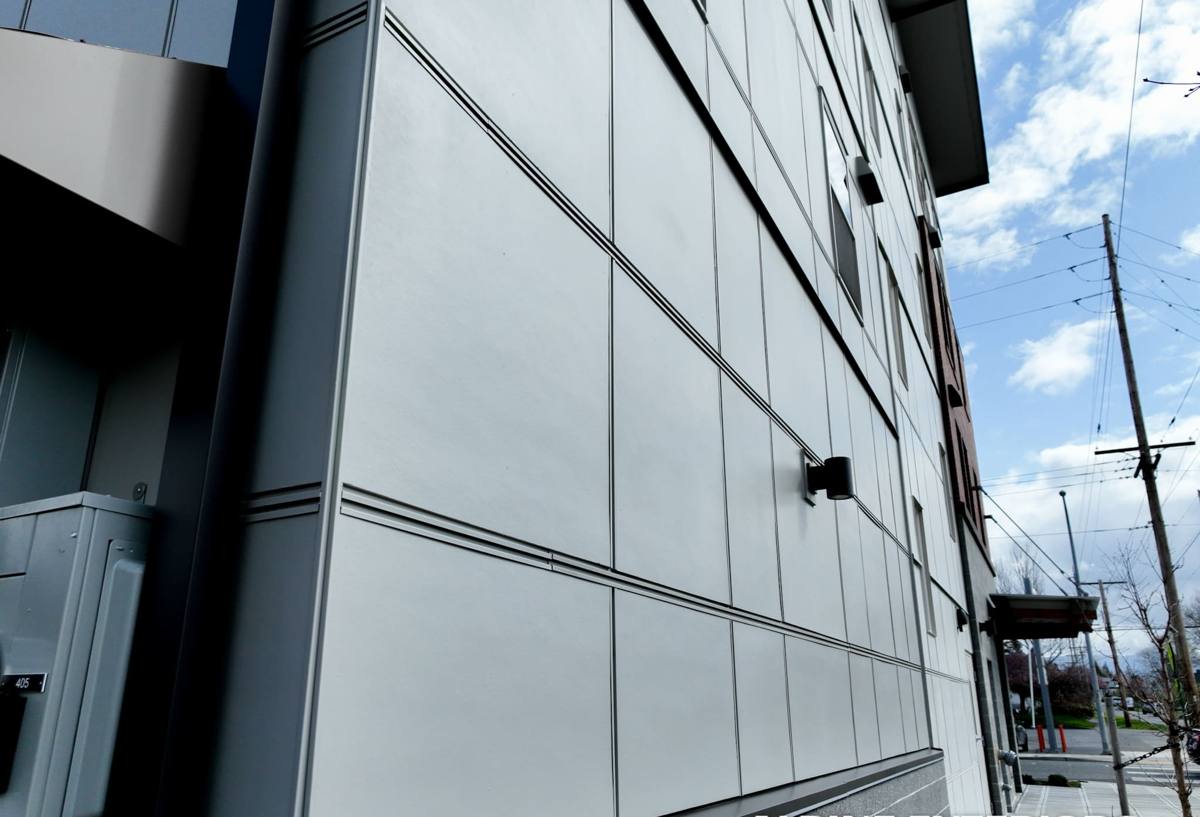
What This Climate Actually Does to Vertical Siding
Salt-laden air
Homes near Semiahmoo Bay and the surrounding waterways deal with airborne salt that settles on every exterior surface. It doesn't damage fiber cement, but it does accelerate corrosion on the wrong fasteners and it breaks down cheap paint films faster than inland exposure would. Fastener choice and finish quality matter more here than they would forty miles inland.
Driving, wind-borne rain
Rain that falls straight down is easy to shed. Rain that's being pushed sideways by wind off the water finds its way under battens, into unsealed board ends, and behind trim that wasn't flashed. Vertical siding depends entirely on its drainage plane and flashing details to handle that — the board and batten itself is really just the visible layer.
A long moss season
Whatcom County's wet season runs long, and any siding assembly that traps moisture behind it — rather than letting it drain and dry — becomes a moss and mildew farm on the north and shaded sides of the house. That's a maintenance and appearance problem first, but left long enough it becomes a rot problem for the sheathing underneath.
What Correct Board & Batten Installation Involves
The board and batten look is simple. The assembly behind it isn't, and this is where most of the failures we get called out to fix actually started.
- A drainage gap behind the siding. A rain screen or furring strip system lets any water that gets past the boards drain out and lets the wall assembly dry, instead of sitting against the sheathing.
- A continuous weather-resistive barrier installed shingle-style (upper courses overlapping lower ones) so water is always directed outward and down, never into a seam.
- Flashing at every horizontal transition — window and door heads, roof-to-wall intersections, and any trim board that interrupts the wall plane.
- Corrosion-resistant fasteners rated for the coastal exposure, placed and spaced to the manufacturer's engineering — not just "close enough."
- Properly gapped board ends and butt joints, caulked or flashed per spec, so the vertical boards can move slightly with moisture and temperature without opening a gap.
- Battens sized and fastened to actually cover the joint under all conditions, not just when the boards are perfectly straight off the stack.
Skip any one of these and the siding can look fine for a year or two while the assembly behind it is already taking on water.
Why We Only Install James Hardie for This Application
Board and batten gets specified by homeowners for its look, but the material behind that look is what determines how it holds up in a wet, salt-air climate. We install James Hardie fiber cement exclusively, and for vertical siding in this environment it's a deliberate choice, not a default one.
Fiber cement doesn't absorb water the way wood does, so board ends and butt joints aren't racing against rot the way a primed spruce or cedar board and batten system is. Hardie's ColorPlus factory finish is baked on under controlled conditions and backs onto the board before it ever reaches the coast, so the color layer isn't relying on field-applied paint to hold up against salt air and UV. And Hardie engineers specific product lines — the HZ5 formulation — for climates that see the freeze-thaw and moisture cycling this region gets, versus a one-size-fits-all product. It's also non-combustible, which matters for a material that will be on the house for decades regardless of what's happening with wildfire risk regionally.
We won't install board and batten in vinyl, LP SmartSide, or a primed wood product on a home in this area. That's not a knock on every use case those products have elsewhere — it's a reflection of what actually holds up joint-for-joint, year after year, against sideways rain and salt air, and what we're willing to warranty our labor against.
Material Comparison for Vertical Siding in This Climate
| Material | Moisture / Salt Air Behavior | Maintenance Over Time | Typical Lifespan Here |
|---|---|---|---|
| James Hardie fiber cement | Does not absorb water or rot; factory finish resists salt/UV breakdown | Occasional wash-down; no repainting on the standard cycle | Decades, backed by a transferable warranty |
| Primed wood (spruce/cedar) | Absorbs moisture at joints and ends; prone to swelling and rot in wet climates | Regular repainting and caulk maintenance | Shorter, highly dependent on upkeep |
| Vinyl board and batten | Doesn't rot but can warp/distort with sun and temperature swings; seams rely on lap-fit, not sealed joints | Low, but replacement panels can be hard to color-match years later | Variable; UV and impact sensitive |
Our Process for California Creek Homes
- On-site assessment. We look at the existing wall assembly, current siding condition, moss/moisture patterns, and any trouble spots — north-facing walls, areas below rooflines, spots that catch wind-driven rain — before we talk product.
- Tear-off and sheathing check. We remove the old siding and inspect the sheathing underneath. Any soft or water-damaged sheathing gets addressed before anything new goes up — covering a problem is worse than finding it.
- Weather-resistive barrier and drainage plane. Installed correctly and inspected before board and batten goes on, not assumed.
- Flashing and trim details. Every window, door, and horizontal transition gets flashed before the field siding covers it.
- Board and batten installation to spec, with fastener spacing, gapping, and batten placement following Hardie's published installation guidelines for this climate zone.
- Final walk-through. We go over the finished job with the homeowner and point out anything they should know for upkeep going forward.
Maintenance That Actually Matters in This Climate
Board and batten done right is low-maintenance, not no-maintenance. In a wet, mossy climate, a little seasonal attention keeps it that way for decades.
- Keep gutters clear so overflow isn't running down the siding face during heavy rain.
- Rinse moss and algae growth off shaded or north-facing walls before it establishes and holds moisture against the surface.
- Trim back vegetation and tree cover that keeps siding damp and shaded longer than it needs to be.
- Check caulking at board ends and around penetrations (vents, fixtures, hose bibs) annually and touch up as needed.
- Watch for staining or discoloration at joints and trim intersections — it's usually the first visible sign of a flashing or sealant issue, and it's far cheaper to fix early.
Why It Matters That We Already Work in This Area
A crew that's worked board and batten jobs throughout California Creek and the surrounding Semiahmoo area already knows which walls take the worst of the wind-driven rain, which lots hold moisture longer because of tree cover or drainage, and how the local moss season actually behaves against different orientations. That's not something you get from a spec sheet — it's what changes how carefully you detail the north wall versus the south wall, and where you spend the extra ten minutes on flashing that a homeowner will never see but will absolutely benefit from in year six.
We also know the practical side of working in this area: permitting expectations in Whatcom County, typical site access on local lots, and what inspections tend to focus on. None of that shows up in the finished look of the siding, but all of it affects how smoothly the project goes.
What This Costs to Do Right
Board and batten typically runs somewhat higher in labor than horizontal lap siding of the same material, because of the additional battens, fastening points, and joint detailing involved. Exact numbers depend on the size of the home, the condition of the existing wall assembly, tear-off scope, and trim complexity. We'll walk your specific home and give you a real number rather than a generic range that doesn't reflect what your project actually needs.
If you're considering board and batten siding for a home in California Creek, we're glad to come take a look and walk you through what your specific house needs — no pressure, no obligation. Reach out using the form below to set up a free estimate.