 Semiahmoo
 Building a Deck That Actually Belongs at Blaine Harbor
A deck at Blaine Harbor lives a different life than one ten miles inland. It sits closer to open water, catches more wind-driven rain off the Strait, and spends a good chunk of the year under a damp, shaded moss season that inland Whatcom County decks barely deal with. None of that means a deck here has to fail early or look tired after five winters — it means the build has to account for salt air, standing moisture, and slow-drying wood from the first framing decision, not as an afterthought once boards start cupping or fasteners start weeping rust.
This page is about one job in one place: deck building for homes in and around Blaine Harbor. We're not going to give you a generic "decks 101" rundown. We're going to walk through what actually changes when a deck sits this close to Semiahmoo Bay, what a correctly built one looks like structurally and materially, and how we run the job from first look to final walkthrough.
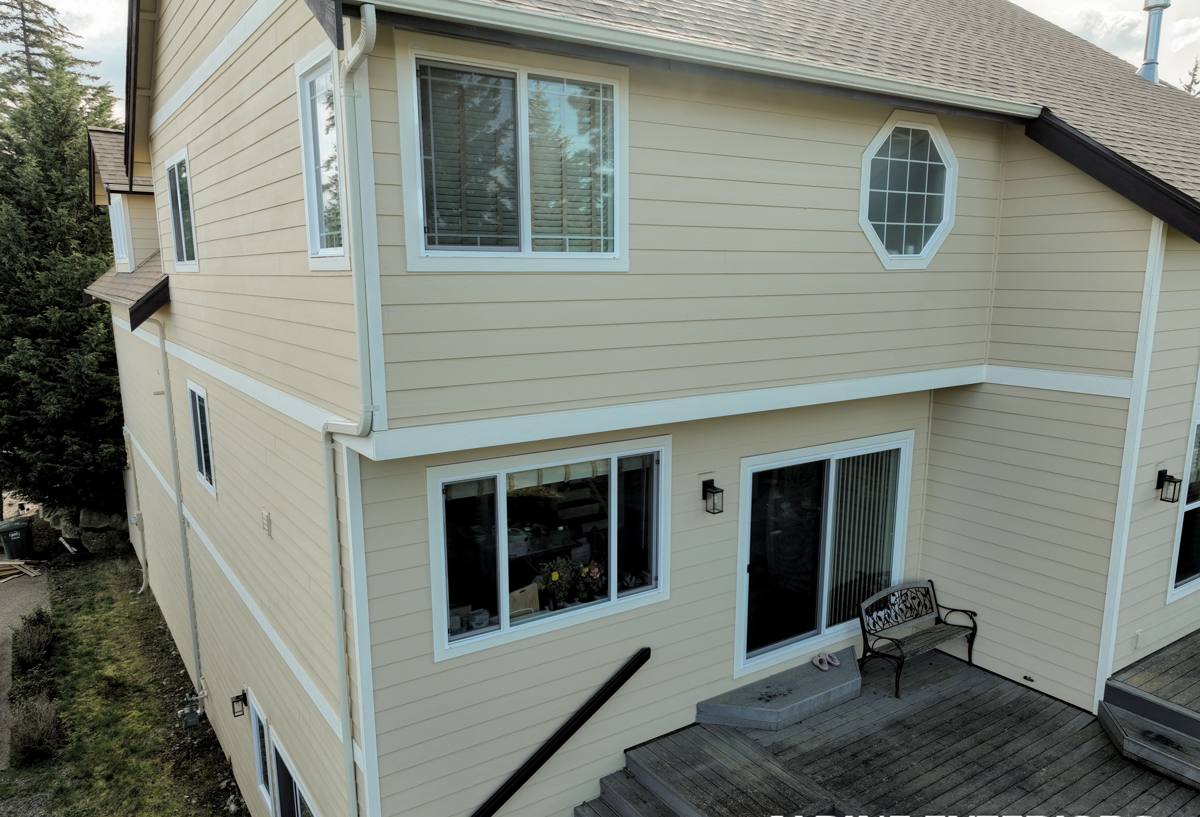
What Salt Air, Driving Rain, and Moss Actually Do to a Deck
Salt Air
Airborne salt from Semiahmoo Bay settles on every exposed surface — decking, railings, fasteners, and hardware. It accelerates corrosion on anything that isn't rated for a marine or coastal environment, and it's the single biggest reason we see premature fastener failure, streaking, and hardware pitting on decks near the water. Standard interior-grade or even generic exterior screws and brackets don't hold up the same way here as they would on a deck fifteen miles inland.
Driving Rain
Weather off the water tends to come in sideways, not straight down. That matters for ledger flashing, for how decking boards are gapped and drained, and for whether water gets pushed up under railings and fascia instead of running off the edge. A deck detailed for average Pacific Northwest rain isn't automatically detailed for wind-driven rain hitting it at an angle off the bay.
Moss Season
Whatcom County's long, mild, wet stretch from fall through spring means shaded and low-airflow parts of a deck stay damp for weeks at a time. Moss and algae don't just look bad — they hold moisture against the board surface, and on wood decking that moisture cycle is what drives rot, splintering, and slick, unsafe walking surfaces. A deck with poor airflow underneath or tight board spacing will grow moss faster here than almost anywhere else in the region.
What a Correctly Built Blaine Harbor Deck Requires
Given all three of those factors working on a deck at once, a build here needs a few things that a generic deck spec doesn't always call for:
- Corrosion-resistant fasteners and structural hardware rated for coastal or marine exposure — not just standard hot-dip galvanized, which can still pit and streak near salt water over time
- Ledger flashing and house-wrap integration detailed for wind-driven rain, not just gravity-fed runoff
- Board spacing and joist layout that promotes real airflow underneath, so the deck can actually dry out between rain events instead of staying damp for days
- Decking material chosen with moss and algae resistance in mind, not just looks
- Railing and post hardware that won't corrode faster than the structure around it
- A drainage plan for the substructure itself, not just the surface — water that gets under the deck needs somewhere to go
Skip any one of these and the deck will still look fine on install day. The problems show up in year two or three, usually as rust streaks bleeding through decking, soft spots near the ledger, or a slick green film that never fully goes away no matter how often it's pressure washed.
Decking Material Options for a Coastal Site
There's no single "best" decking material for every Blaine Harbor property — it depends on budget, how much upkeep you want to do, and how close and exposed the site is. Here's how the common options actually compare in this specific environment:
| Material | Salt Air Behavior | Moss/Algae Resistance | Maintenance |
|---|---|---|---|
| Pressure-treated wood | Fasteners and hardware corrode faster than the wood itself if not upgraded | Low — needs regular cleaning and periodic sealing | Highest — annual cleaning, refinishing every 2-3 years |
| Cedar | Naturally rot-resistant but still needs coastal-rated fasteners | Moderate — better than treated pine but still grows moss in shaded areas | High — regular oiling/sealing to hold color and resist moisture |
| Composite (capped) | Board itself is inert; hardware is still the weak point | Good — much harder for moss to root into the surface | Low — periodic washing, no sealing or staining |
| PVC decking | Fully inert to salt exposure | Best of the common options — smooth, non-porous surface | Lowest — occasional washing only |
We'll talk through this table honestly with you rather than steering you toward whatever's easiest for us to install. Wood costs less up front and some homeowners genuinely prefer the look and feel — that's a legitimate choice as long as you go in knowing the maintenance commitment. Composite and PVC cost more initially but shift a lot of that long-term upkeep burden off your plate, which matters more here than in a drier inland yard.
Substructure and Fasteners: Where Coastal Decks Actually Fail First
Almost every early deck failure we get called out to inspect near the water traces back to the substructure or the fasteners, not the decking surface itself. A few specifics worth understanding:
Ledger Attachment
The ledger board — where the deck attaches to the house — is the single highest-risk connection point for water intrusion. It needs proper flashing that integrates with the house's water-resistive barrier, installed so wind-driven rain off the bay can't get pushed up and behind it. This is also a structural connection carrying real load, so it has to be both watertight and mechanically sound.
Joist Protection
Joist tops take standing water even when the decking above sheds it fine, because fasteners create small penetration points. Joist tape or an equivalent capping product over the joist tops keeps water from soaking into end grain and cut edges — the parts of a joist most prone to rot.
Fastener and Hardware Grade
This is the one that gets skipped most often on lower-bid jobs. Standard exterior screws and brackets are rated for general outdoor use, not sustained salt air exposure. On a Blaine Harbor build we spec fasteners and structural connectors rated for coastal or marine conditions — it costs more per box, but it's the difference between hardware that's still sound in ten years and hardware that's streaking rust through your decking in three.
How We Run the Job
- On-site assessment — we look at sun exposure, prevailing wind and rain direction, existing drainage, and how close the site sits to the water, since all of that changes the detailing
- Material walkthrough — we go over decking, railing, and hardware options against your budget and maintenance tolerance, using real trade-offs rather than a sales pitch
- Permitting — decks over a certain height or attached to the structure typically require a permit through the applicable jurisdiction; we handle that process rather than leaving you to figure it out
- Demo and structural prep — removing any failing existing deck and confirming footings and ledger attachment meet current structural and flashing standards
- Framing and flashing — joist layout for airflow, ledger flashing detailed for wind-driven rain, joist top protection
- Decking, railing, and hardware install — using the coastal-rated fasteners and hardware discussed up front, not swapped out for standard-grade parts to save time
- Final walkthrough — we go over drainage, board spacing, and maintenance expectations so you know what to watch for as the deck settles in through its first wet season
Railings and Hardware: Why the Small Parts Matter Most
On an inland deck, railing hardware is almost an afterthought — screws and brackets rarely become the weak point. Near Semiahmoo Bay, they often are. Standard zinc-plated or basic galvanized fasteners can start showing rust bleed within a couple of seasons in this exposure. Stainless steel fasteners and connectors cost more, but on a coastal build that cost difference is small compared to the cost of re-fastening or replacing streaked decking a few years down the road. The same logic applies to post bases, joist hangers, and any structural bracket — we spec hardware for the environment the deck actually sits in, not the environment a generic spec sheet assumes.
Maintenance Checklist for a Blaine Harbor Deck
Even a well-built coastal deck needs some seasonal attention. This is a realistic list, not a chore-heavy one:
- Rinse salt film off decking and railings a few times a year, especially after storms with onshore wind
- Clear leaves and debris from board gaps before moss season sets in each fall
- Check under-deck airflow paths for blocked vents or built-up debris that traps moisture
- Inspect visible fasteners and hardware annually for early rust streaking — catching it early is a quick fix, not a rebuild
- For wood decking, reseal or refinish on the schedule the product calls for — skipping a cycle in this climate shows up fast
- Keep an eye on the ledger flashing line where the deck meets the house; that's the first place a leak will show
Permitting and Local Considerations
Deck projects in Whatcom County generally need a permit once you're above a certain height off grade or attached to the home's structure — the exact thresholds depend on your specific property and jurisdiction. Properties closer to the shoreline can also fall under additional review depending on setback and shoreline management rules. We handle the permitting conversation as part of the job rather than leaving it as a surprise step, so you know what's required before work starts, not after.
Why a Crew That Already Works Blaine Harbor Matters
A lot of deck problems we get asked to diagnose near the water didn't come from bad workmanship in any obvious sense — they came from a build that would have been perfectly fine ten miles inland but wasn't detailed for salt air, wind-driven rain, and a long moss season. That's not a knock on the trade in general; it's just what happens when standard specs meet a non-standard environment. Working Blaine Harbor regularly means we're not guessing at fastener grades or flashing details for this exposure — it's what we spec by default, because we've seen what happens when it's skipped.
If you're planning a new deck or looking at replacing one that's showing its age, we're happy to come take a look and walk the property with you. There's no pressure and no cost to get our honest read on what your site needs — just fill out the form below and we'll set up a time.