 Semiahmoo
 Windows on Semiahmoo Bay Face a Different Set of Problems
Blaine Harbor sits right where the weather comes off Semiahmoo Bay and the Strait of Georgia, and that changes what a window has to survive here compared to a house even a few miles inland in Whatcom County. Salt-laden air corrodes hardware and fasteners faster than plain rain does. Wind-driven rain doesn't just hit the glass — it gets pushed sideways and upward into gaps that a window on a calmer site would never test. And the long, damp moss season that runs from fall through spring keeps wood trim, sills, and frame corners wet for weeks at a time instead of drying out between storms.
Custom windows for a Blaine Harbor property aren't about fancy shapes or oversized glass for its own sake. "Custom" here mostly means matching the window unit, the frame material, and the installation detail to a harbor-side exposure — something a generic big-box window, installed with generic flashing, usually isn't built to do for long.
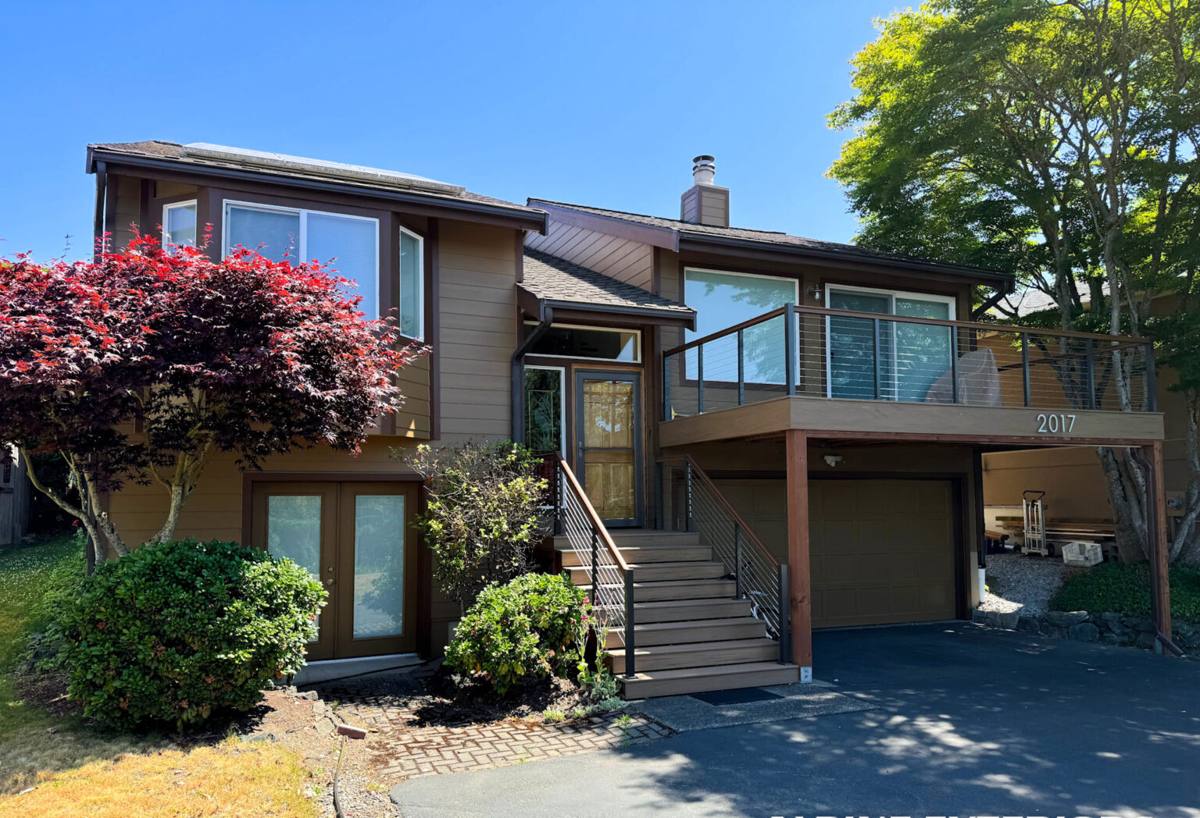
What "Custom" Actually Means for a Semiahmoo Property
Most of the custom work we do in this area falls into a few categories:
- Non-standard openings — older Blaine-area homes, additions, and remodels often have rough openings that don't match current stock sizes, so units get built to the actual opening rather than forcing the wall to fit a standard size.
- Replacement into existing siding — matching a new window's exterior profile and trim to what's already there so the reveal, casing, and flashing lines look intentional, not patched.
- Material upgrades for exposure — swapping a wood or aluminum frame that's struggling with corrosion or rot for a material better suited to a bay-front or near-bay lot.
- Glass package changes — upgrading glazing for wind load, sound, and condensation control without changing the frame size or the home's look.
None of that requires exotic products. It requires taking the time to measure and detail each opening correctly, which matters more on a harbor lot than almost anywhere else in the county.
Frame Material: What Holds Up Near Salt Air
We get asked constantly which frame material is "best." The honest answer is that it depends on exposure, budget, and how much upkeep the homeowner wants to take on. Here's how the common options actually compare for a Blaine Harbor setting:
| Material | Salt air / corrosion behavior | Moisture behavior | Upkeep |
|---|---|---|---|
| Vinyl | Doesn't corrode; hardware is the weak point over time | Won't rot; seams and welds are what to watch | Low — occasional cleaning |
| Fiberglass | Very stable, minimal corrosion risk, holds paint well | Dimensionally stable in wet/dry cycling | Low to moderate |
| Wood / wood-clad | Cladding protects wood, but any breach lets salt-driven moisture in fast | Needs consistent finish maintenance to resist rot in a long moss season | Highest — regular inspection and refinishing |
| Aluminum | Prone to pitting and corrosion in salt air unless properly coated | Conducts cold, prone to condensation | Moderate to high |
We don't push one brand over another as a matter of policy — we size the material to the exposure. A window facing the bay directly gets a different recommendation than one on a sheltered side of the same house, and we'll say so plainly rather than sell the same package to every wall.
Why We're Cautious with Standard Aluminum and Bare Wood Here
This isn't a knock on either material generally — both have legitimate uses. Our standard for Blaine Harbor jobs is simply that uncoated aluminum and unclad wood carry more maintenance risk in a salt-air, high-moisture environment than most homeowners want to sign up for. If a homeowner wants either material anyway, we'll install it correctly and explain the maintenance schedule that comes with that choice.
Glass and Glazing: Built for Wind-Driven Rain
The glazing package matters as much as the frame on a harbor lot. A few things we look at on every Blaine Harbor job:
- Dual vs. triple pane — dual-pane with a good low-E coating covers most homes here; triple-pane earns its keep on bay-facing walls or where road and wind noise is a real complaint.
- Low-E coatings and argon fill — help with condensation control, which matters when humid harbor air meets a cold pane in winter.
- Structural rating — glass and frame combinations rated for higher wind and water pressure hold up better against the gusts that come off open water.
- Weep system design — the small drainage paths built into a window's bottom track need to actually work, or driving rain that gets past the outer seal has nowhere to go but into the wall.
Installation Detail Is Where Most Window Failures Actually Start
In our experience, a window that fails early in this climate almost never failed because the unit itself was bad — it failed because of how it was flashed and sealed into the wall. On a Blaine Harbor home, wind-driven rain will find any gap in the weather-resistive barrier, any short flashing lap, or any sealant joint that was rushed. Once water gets behind the trim, the long moss season keeps that area wet for months, and rot or hidden mold sets in long before it's visible from outside.
A correct installation, regardless of window brand, includes:
- Removing and inspecting the existing opening down to the sheathing, not just pulling the old sash and dropping in a new frame.
- Repairing any rot, soft sheathing, or compromised house wrap found in the opening before the new window goes in.
- Installing sill pan flashing that sheds water back out of the wall, not just a bead of caulk under the sill.
- Lapping the weather-resistive barrier and flashing tape in the correct shingle-style order so water is directed outward at every layer.
- Setting the window level, plumb, and square, then insulating the gap without over-packing it, which can bow the frame.
- Sealing and trimming the exterior with materials rated for sustained UV and salt exposure, not standard interior-grade caulk.
Skip any one of those steps and the window itself becomes almost irrelevant — water finds the shortcut.
Our Process for a Blaine Harbor Window Job
We keep the process straightforward and don't add steps that don't earn their place:
- On-site assessment — we look at each opening's exposure (bay-facing vs. sheltered), current frame condition, and any existing moisture or rot signs before recommending anything.
- Measurement and material selection — openings are measured individually; material and glazing recommendations are matched to that specific wall's exposure, not a one-size answer for the whole house.
- Written scope — what's being replaced, what flashing detail will be used, and what happens if we find hidden rot once the old window is out.
- Removal and opening inspection — this is the step that actually determines whether the new window will last; we don't skip it to save time.
- Installation and flashing — following the sequence above, on every opening, every time.
- Exterior and interior finish — trim, caulking, and paint or finish matched to the house.
- Walkthrough — operation check on every window and a plain explanation of any maintenance the chosen material needs going forward.
What Drives Cost on a Job Like This
Every Blaine Harbor project prices out differently, but the same handful of factors move the number up or down:
| Factor | Why it matters here |
|---|---|
| Frame material | Fiberglass and higher-end vinyl cost more up front but carry lower long-term upkeep near salt air |
| Glazing package | Triple-pane or higher wind-load-rated glass adds cost but pays off on bay-facing exposures |
| Opening condition | Rot or moisture damage found once the old window is out adds repair scope before the new unit can go in |
| Number and size of openings | Larger or non-standard openings take more time to fabricate and install correctly |
| Exterior trim and siding match | Matching existing siding and trim profiles takes more labor than a bare swap |
We'd rather walk a homeowner through these factors honestly during the estimate than quote a flat number that doesn't reflect what their specific openings need.
Maintaining Custom Windows in a Salt-Air, High-Moss Climate
Even a well-installed window needs some upkeep in this environment. A simple seasonal checklist we give Blaine Harbor homeowners:
- Rinse frames and tracks periodically to clear salt residue, especially on bay-facing sides of the house.
- Check and clear weep holes so drainage paths don't clog with debris or moss.
- Inspect exterior caulk and sealant joints once a year for cracking or separation.
- Watch for moss or algae buildup on sills and trim, and clean it before it holds moisture against the surface.
- Test hardware (locks, hinges, cranks) annually — this is usually the first thing salt air affects, even on frames that are otherwise holding up fine.
Why Local Experience on Blaine Harbor Actually Matters
A window crew that mostly works inland jobs in Whatcom County can install a technically fine window and still get the flashing detail wrong for a bay-front exposure, simply because they haven't had to solve for driving rain at this intensity or a moss season this long. Working Blaine Harbor and the surrounding Semiahmoo area regularly means we've seen which details actually hold up on these lots over multiple wet seasons, not just on paper. That's the difference between a window that looks right on install day and one that's still performing five winters later.
If you're planning custom window replacement or a new installation on a Blaine Harbor property, we're happy to take a look and give you a straight assessment — no pressure, no upsell. Fill out the form below to schedule a free estimate.