 Semiahmoo
 Why Birch Bay Roofs Take a Different Kind of Beating
A roof in Birch Bay works harder than a roof fifteen miles inland. Homes along this stretch of Whatcom County sit close to open water, which means more wind exposure, more wind-driven rain, and a steady dose of salt air that inland roofs never deal with. Add in the Pacific Northwest's long, wet moss season and you've got a roof that's fighting three separate battles at once: physical storm damage, corrosion, and biological growth. Repairing storm damage here isn't just about patching what broke — it's about putting materials and details back that can survive the next round.
We've built our repair process around that reality. A patch job that would hold up fine in a sheltered inland neighborhood can fail within a season on a Birch Bay roof if it ignores salt exposure or wind uplift risk. That's the difference we focus on.
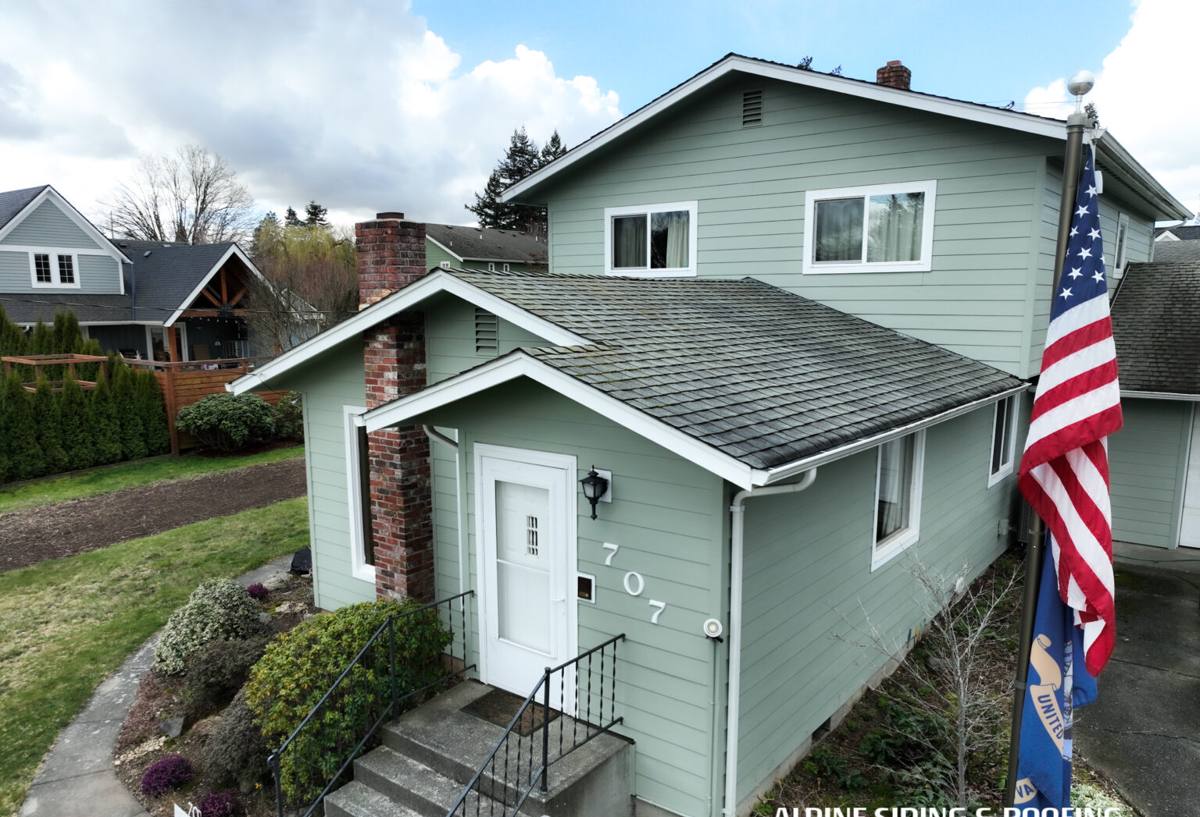
What Actually Counts as Storm Damage
Storm damage isn't always a dramatic hole in the roof. In this area, most of what we get called out for falls into a few categories:
- Wind uplift and lifted shingles — tabs or shingle edges pried loose by gusts, especially on roof edges and ridges where wind pressure concentrates.
- Wind-driven rain intrusion — water pushed sideways under shingles, flashing, or siding-to-roof transitions during a storm, rather than simply running off.
- Impact damage — broken or cracked tree limbs, and occasionally debris carried by strong gusts off the water.
- Flashing failure — around chimneys, vents, and roof-to-wall junctions, often worsened by corrosion rather than a single storm event.
- Granule loss and surface erosion — accelerated by repeated wind and rain cycles, which shortens the life of asphalt shingles even when nothing looks visibly broken.
The tricky part is that wind-driven rain and flashing failures often show up as an interior leak days or weeks after the storm that caused them, not during it.
The Damage You Can't See From the Ground
Salt air is corrosive to metal, and every roof has metal in it — nails, flashing, drip edge, vent stacks, valley metal. In a sheltered inland location, standard galvanized fasteners and flashing can last the life of the roof. Close to Birch Bay's waterfront, that same hardware can start showing rust streaks and pinholing years earlier than the shingles around it wear out. A storm that seems to have only lifted a few shingles may have exposed corroded fasteners or flashing seams that were already weakened, which is why a proper storm damage inspection looks past the obvious spot and checks the surrounding hardware, not just the visible tear.
Moss is the other quiet damage source. A moss mat holds moisture against the shingle surface long after a storm has passed, which softens the mat, lifts edges, and gives wind a place to grab. A storm-damaged section that's also moss-covered typically needs the moss cleared and the deck checked for moisture before any repair goes back on — otherwise you're repairing over a problem that caused the damage in the first place.
Signs worth a second look
- Granules collecting in gutters or at downspout outlets after a storm
- Rust-colored streaking below flashing or nail heads
- Soft or spongy moss patches, especially on north-facing or shaded slopes
- Daylight visible around vent boots or chimney flashing from the attic
- Ceiling stains that appear a few days after — not during — a windstorm
Repair or Replace? What Actually Tips the Decision
Not every storm-damaged roof needs full replacement, and not every "small leak" is actually small once you're up there. We make this call based on the roof's age, the extent of the damage, and how much of the underlying deck and hardware has already been compromised by salt exposure or long-term moss growth — not by which option is more profitable for us.
| Factor | Points Toward Repair | Points Toward Full Replacement |
|---|---|---|
| Roof age | Under 12–15 years, otherwise sound | Nearing or past expected shingle life |
| Extent of damage | Isolated section or single slope | Multiple slopes or widespread granule loss |
| Decking condition | Solid, dry sheathing under the damage | Soft, delaminated, or water-stained decking |
| Flashing/fastener condition | Hardware still sound elsewhere | Corrosion showing broadly, not just at the damage site |
| Moss history | Light, recently treated | Heavy, long-term growth with visible mat buildup |
| Insurance scope | Claim covers a defined repair area | Adjuster scopes full slope or full roof |
When a roof lands in the middle of that table, we'll say so plainly and walk through the trade-offs rather than pushing toward the bigger job.
Our Storm Damage Repair Process
- Stabilize first. If there's active water intrusion, our first priority is stopping it — temporary tarping or sealing to prevent further damage to the deck, insulation, and interior finishes.
- Full-roof inspection, not just the damaged spot. We check the whole roof for related wind or water damage, plus flashing, fasteners, and moss condition, since storms rarely damage only the one area a homeowner noticed.
- Document for insurance. Photos and a written scope of the damage, useful whether you're filing a claim or just want a clear record of what was found and why.
- Honest repair-vs-replace recommendation. Based on age, deck condition, and hardware condition — see the table above.
- Repair with materials matched to the exposure. Corrosion-resistant fasteners and flashing, proper underlayment at repair edges, and shingle tie-in that matches the surrounding course lines rather than a visibly patched look.
- Final check and cleanup. We confirm the repair is watertight, clear debris, and leave the roof — and the yard — the way we found it.
Materials That Hold Up in Salt Air and Driving Rain
Our standard for coastal exposure is stricter than what's minimally required by code, because "meets code" and "holds up near the water" aren't always the same thing.
| Component | Standard Approach | Our Standard for Birch Bay Exposure |
|---|---|---|
| Fasteners | Electro-galvanized | Hot-dip galvanized or stainless where corrosion risk is higher |
| Flashing metal | Painted steel | Aluminum or heavier-gauge galvanized, matched to what's already on the roof |
| Underlayment | Standard felt | Synthetic underlayment for better wind-driven rain resistance |
| Shingle granules | Standard architectural | Algae-resistant granules where moss/algae history is heavy |
| Sealants | General-purpose roofing cement | Products rated for prolonged moisture and UV/salt exposure at flashing details |
We're not making brand claims here — the point is the specification, not the label. The trade-off for using better hardware is a modest upfront cost difference; the trade-off for skipping it is redoing the same repair sooner, often after it's already caused secondary damage.
Why we're selective about certain products near the water
Some flashing and fastener products that perform fine in drier, inland conditions have a real maintenance burden in a marine environment — they need more frequent inspection, they show cosmetic corrosion sooner, and their warranty terms often exclude coastal or "severe exposure" locations outright. That's not a defect in those products; it's a mismatch with this specific climate. Our job is choosing the specification that fits Birch Bay conditions, not the cheapest one that technically meets code.
What to Do in the First 48 Hours After a Storm
- Check the attic (if accessible) for damp insulation, daylight through the roof deck, or fresh water staining
- Look at ceilings and upper walls for new stains, even faint ones
- Photograph any visible shingle damage, displaced flashing, or debris on the roof from the ground — don't climb up after a storm
- Clear downspouts and gutters if it's safe to do so; blocked drainage makes any existing leak worse
- Call for an inspection promptly — wind-driven rain damage tends to get worse with the next storm, not better on its own
- If you plan to file an insurance claim, avoid permanent repairs before the adjuster's inspection, but temporary tarping to stop active leaking is reasonable and often expected
Why a Crew That Already Works Birch Bay Matters
A roofer who mostly works inland neighborhoods can still do a technically fine repair and still get the specification wrong for this location — the wrong fastener grade, underlayment that isn't rated for the wind-driven rain this area actually sees, or a repair that ignores an active moss problem sitting right next to it. Working this stretch of Whatcom County regularly means knowing which roof orientations take the worst of the weather off the water, which materials hold up and which need upgrading, and how local permitting and inspection expectations actually run — not learning it on your roof.
It also means faster response after a storm. When a windstorm moves through the area, demand for emergency tarping and inspections spikes all at once, and a crew already familiar with the area's typical damage patterns can move faster than one starting from scratch.
Living With Moss Season: Keeping the Repair From Becoming the Next Repair
Whatcom County's wet season runs long, and shaded or north-facing roof slopes in Birch Bay can stay damp for weeks at a stretch — ideal conditions for moss. A storm repair that doesn't account for moss growth nearby is a repair that may need attention again sooner than it should. A few habits extend the life of both the repair and the roof around it:
- Keep overhanging branches trimmed back to reduce shade and debris buildup on the roof
- Have moss physically removed rather than just treated chemically on heavily-affected slopes
- Schedule a roof check after the first major storm of the season and again toward its end
- Keep gutters clear year-round — standing water at the eaves accelerates both moss growth and fastener corrosion
None of this prevents storms from happening. It just keeps a roof from accumulating the kind of hidden weakness that turns an ordinary windstorm into an expensive one.
If a recent storm left you with a leak, missing shingles, or just questions about what you're looking at, we're happy to take a look. We offer a free, no-pressure estimate and inspection — use the form below to get one scheduled.