 Semiahmoo
 Why Birch Bay Roofs Wear Differently Than Roofs Inland
A roof in Birch Bay works harder than a roof twenty miles inland, even though it's covered by the same manufacturer's warranty and installed with the same basic materials. The difference is exposure. Homes along this stretch of Whatcom County sit close to Semiahmoo Bay and the Strait of Georgia, which means wind-driven rain, near-constant salt-laden air, and a mild, wet climate that keeps moss and algae growing on roofs for most of the year. None of that shows up on a spec sheet, but it shows up on the roof itself after a few winters if the installation didn't account for it.
When we talk about a "correct" roof installation in Birch Bay, we mean one that's built for this specific combination of conditions, not a generic install that happens to be located here. That distinction matters more on a roof than almost anywhere else on the house, because a roof failure doesn't just mean a cosmetic problem — it means water in the attic, rot in the decking, and damage that spreads before anyone notices.
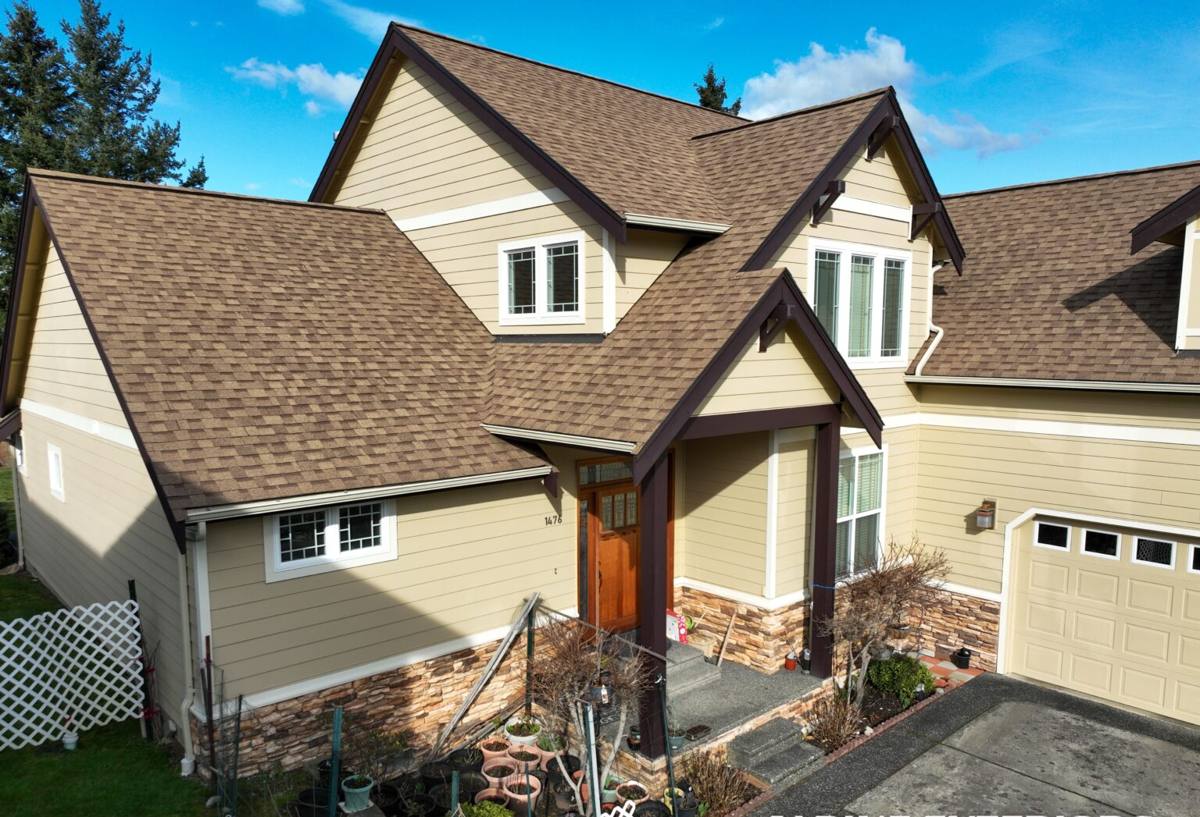
What the Local Climate Actually Does to a Roof
Salt Air and Metal Components
Every roof has metal in it somewhere — flashing, fasteners, drip edge, vents, sometimes a metal roof panel itself. Salt air accelerates corrosion on unprotected or poorly matched metal, which is why fastener and flashing selection matters more here than it would twenty miles inland. Galvanized fasteners that would be fine in a dry inland town can start showing rust streaks on a coastal roof within a few years if they're not rated for the exposure.
Driving Rain and Wind
Storms coming off the water don't just drop rain straight down — they push it sideways under shingle tabs, around poorly sealed flashing, and into any gap in the underlayment. A roof that would shed vertical rain just fine can still leak under wind-driven rain if the underlayment, flashing laps, and fastening pattern weren't built with that in mind.
The Long Moss Season
Whatcom County's mild, wet stretch from fall through spring is exactly what moss and algae need to establish themselves on a roof. Once moss gets a foothold, it holds moisture against the roofing material, lifts shingle edges, and works its way toward the deck. A roof installed without moss-resistant details or the right surface treatment will need moss removal and treatment far more often than one installed correctly the first time.
What Goes Into a Correct New Roof Installation Here
A new roof is more than shingles and nails. The parts homeowners rarely see are usually what determines whether a roof performs for its full expected life or starts causing problems in year six or seven. For a Birch Bay home, we pay particular attention to:
- Underlayment: A synthetic or self-adhering underlayment rated for high-wind, high-moisture climates, with full coverage and properly lapped seams — not just the minimum required by code.
- Ice and water shield at vulnerable points: Eaves, valleys, and roof-to-wall transitions get self-adhering membrane, since these are the spots where wind-driven rain finds its way in first.
- Flashing: New step flashing, counter-flashing, and valley flashing at every penetration and transition — chimneys, skylights, sidewalls — rather than reusing old flashing that's already corroding.
- Fasteners rated for coastal exposure: Corrosion-resistant nails and screws suited to salt air, not standard-grade fasteners that will start rusting early.
- Ventilation that actually balances: Matched intake at the soffits and exhaust at the ridge, sized to the attic, so moisture doesn't get trapped under the deck.
- Deck inspection and repair: Any soft, delaminated, or water-stained decking gets replaced before new roofing goes down — covering bad decking with new shingles just hides the problem.
Comparing Roofing Materials for a Birch Bay Home
There's no single "best" roofing material for every home — the right choice depends on your roof's exposure, your home's style, and how much long-term maintenance you want to take on. Here's how the common options compare for this specific climate:
| Material | Coastal Performance | Moss Resistance | Typical Lifespan Here |
|---|---|---|---|
| Architectural asphalt shingle | Good, with proper underlayment and flashing | Moderate — benefits from algae-resistant granules | 20–30 years |
| Standing seam metal | Very good when fasteners and coatings are salt-rated | High — sheds moss more easily than shingle | 40–50+ years |
| Cedar shake | Requires diligent maintenance in wet, mossy conditions | Low without regular treatment | 20–30 years with upkeep |
| Synthetic composite shingle | Good, consistent performance in wet climates | Moderate to high depending on product | 30–50 years |
We'll walk through these trade-offs honestly during your estimate — including where a lower-maintenance material might cost more up front but save you money and hassle over the life of the roof.
Our Installation Process, Start to Finish
1. On-Site Assessment
We inspect the existing roof, attic ventilation, and decking condition, and talk through what's driven you to consider a new roof — an active leak, visible wear, moss buildup, or simply age.
2. Material and Scope Discussion
We go over material options suited to your home and exposure, give you a clear, written scope of work, and explain what's included — tear-off, disposal, decking repair allowances, underlayment type, flashing, and ventilation work.
3. Tear-Off and Deck Inspection
Old roofing comes off down to the deck so we can actually see what's there. Any damaged or rotted decking is identified and repaired before anything new goes down — this step gets skipped by crews trying to move fast, and it's the step that determines whether the new roof lasts.
4. Underlayment, Flashing, and Ventilation
This is where the coastal-specific details go in: full underlayment coverage, ice-and-water membrane at vulnerable areas, new flashing at every penetration, and a balanced intake/exhaust ventilation system.
5. Roofing Installation
The finish material goes on according to manufacturer specifications and local code, with attention to fastening pattern and exposure — details that matter more here given the wind and rain load.
6. Final Walkthrough and Cleanup
We walk the finished roof with you, cover care and maintenance specific to the material you chose, and make sure the site is cleared of debris and old materials before we consider the job done.
What Drives the Cost of a New Roof in Birch Bay
Every roof is priced individually after an on-site look, but the main factors that move the number are consistent:
| Cost Factor | Why It Matters |
|---|---|
| Roof size and pitch | More surface area and steeper pitches take longer and require more material and safety setup |
| Number of layers to remove | Tear-off of multiple old layers adds labor and disposal cost |
| Deck condition | Rotted or soft decking found during tear-off requires repair before new roofing goes on |
| Material choice | Asphalt, metal, and composite options carry different material and labor costs |
| Roof complexity | Valleys, dormers, skylights, and chimneys each add flashing work and time |
| Access and site conditions | Tight lots, tree cover, or difficult staging can affect labor time |
We'd rather give you a number based on an actual look at your roof than a rough guess over the phone — too many of these factors only become clear once tear-off starts.
Signs a Birch Bay Roof May Need Replacement, Not Repair
Not every roof problem means a full replacement — sometimes a repair is genuinely the right call, and we'll tell you when that's the case. But certain signs point toward replacement being the more honest recommendation:
- Shingles that are curling, cupping, or losing significant granules across large sections of the roof
- Heavy, persistent moss growth that keeps returning after cleaning
- Multiple active leaks, or leaks appearing in new locations each season
- Visible sagging in the roofline, which can indicate deck or structural issues
- A roof approaching or past its material's expected lifespan, especially with coastal exposure
- Repeated repairs to the same areas without lasting results
Why It Matters That We Already Work in Birch Bay
A crew that regularly works this part of Whatcom County already knows which details are non-negotiable here — coastal-rated fasteners, full underlayment coverage, proper ventilation balance, and moss-resistant surface options. That's not a sales pitch, it's just what repeated exposure to the same climate teaches a crew over time. It also means we're familiar with local permitting requirements and can plan around this area's weather windows rather than working around them after the fact.
A roof installed to a generic standard might look fine on installation day. Whether it holds up through several winters of driving rain and another moss season is where the difference between a correct install and an adequate one actually shows up.
If your roof is showing its age, dealing with persistent moss, or simply due for replacement, we're happy to take a look and give you a straightforward, no-pressure estimate — just fill out the form below.