 Semiahmoo
 Roofing in a Salt-Air, Moss-Heavy Climate
Birch Bay sits right on the water in Whatcom County, and that location shapes everything about how a roof ages here. Salt-laden air blows in off the water year-round, wind-driven rain comes at roofs sideways during winter storms, and the deep shade under fir and cedar canopies keeps north-facing slopes damp for months at a time. Put those three things together and you get a roofing environment that is noticeably harder on asphalt shingles than what you'd find twenty miles inland.
None of this means asphalt shingles are the wrong choice for Birch Bay — they're still the most practical, cost-effective roofing material for the vast majority of homes here. It means the details of the installation matter more than they would in a milder climate. A roof put on the same way you'd build it further inland will not perform the same way in Birch Bay.
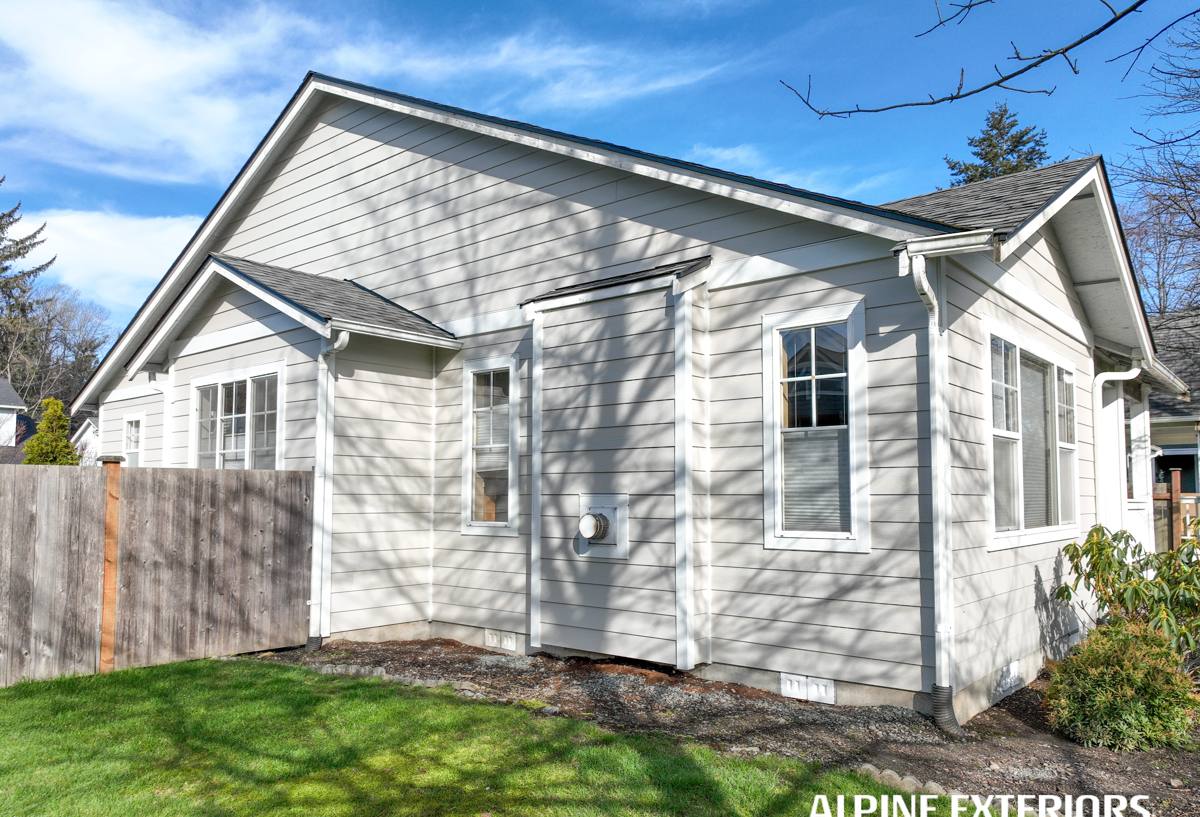
What Salt Air, Rain, and Moss Actually Do to a Roof
Salt air and metal components
Salt spray accelerates corrosion on any exposed metal — nail heads, flashing, drip edge, and vent caps. Cheaper or under-coated fasteners and flashing can start rusting years before they would inland, which shows up as streaking on the shingles and, eventually, as leaks at the weak point long before the shingles themselves are worn out.
Driving, wind-blown rain
Storms off the water don't just fall straight down — they push rain sideways and up under shingle tabs, into valleys, and around any penetration that isn't sealed correctly. A roof that would shed water fine in a calm rain can leak in a Birch Bay windstorm if the underlayment, valley protection, and flashing details weren't built for wind-driven water in the first place.
Moss, algae, and the long wet season
Whatcom County's wet season runs long, and shaded, north-facing roof planes in Birch Bay can stay damp for weeks between dry spells. That's exactly the environment moss and algae need. Moss doesn't just look bad — its root structure lifts shingle edges, holds water against the roof deck, and speeds up granule loss. Left alone long enough, a mossy section can fail years before the rest of the roof.
Signs a roof needs a closer look
Most roofing problems here give warning signs well before a leak shows up inside the house. Granules collecting in gutters mean shingles are wearing down and losing the coating that protects them from UV and moisture. Dark streaking is usually algae rather than dirt, and it spreads faster on shaded planes. Visible moss along ridge lines or in valleys means moisture is already being held against the deck. Curling or lifted shingle edges are often the first visible sign of wind or moisture damage at the tab line, and soft spots felt underfoot during an inspection point to deck damage that needs attention regardless of how the shingles above look. Catching any of these early is almost always cheaper than waiting for an interior leak to show up.
What a Correct Asphalt Shingle Job Looks Like Here
A roof built for Birch Bay's conditions isn't a different product line — it's the same asphalt shingle system installed with the details that matter locally given extra attention. That includes:
- Ice-and-water shield membrane in all valleys and along eaves, not just the minimum code strip
- Corrosion-resistant flashing and fasteners at every penetration, chimney, and wall intersection
- Wider, sealed underlayment coverage on shaded or low-slope sections that hold moisture longer
- Shingles rated for higher wind exposure, properly nailed to the manufacturer's pattern — not just tacked down
- Balanced intake and exhaust ventilation so the underside of the deck can dry out between storms
- Algae-resistant shingle granules on any section that sits in regular shade
Skip any one of these and the roof will likely still look fine on installation day — the problems show up two, five, or ten years later, usually as a leak that traces back to a shortcut nobody can see from the ground.
Choosing Shingles for a Birch Bay Roof
Not every asphalt shingle line is built the same way, and the differences matter more here than in a drier climate. The table below covers the practical trade-offs we walk homeowners through.
| Shingle Type | Typical Lifespan | Moss/Algae Resistance | Best Fit For |
|---|---|---|---|
| Standard 3-tab | 15–20 years | Low unless treated | Budget rebuilds, sunnier roof planes with less shade |
| Architectural (laminated) | 25–30 years | Moderate to good with algae-resistant granules | Most Birch Bay homes — better wind rating, better look |
| Premium/designer architectural | 30+ years | Good, often with enhanced algae-resistant coating | Shaded, moss-prone slopes and street-facing elevations |
For most homes here we lean toward architectural shingles with algae-resistant, often copper- or zinc-infused, granules, especially on north-facing or tree-shaded planes. The upcharge over standard 3-tab is modest compared to the cost of repeated moss treatments or a shortened roof life.
Underlayment and wind rating
Because of the exposure Birch Bay gets off the water, we don't treat wind rating as an afterthought. Synthetic underlayment paired with a shingle rated for higher wind speeds, installed with the correct nailing pattern, is the baseline we work from rather than an upgrade option.
Our Process for Birch Bay Roofing Jobs
- On-site inspection. We look at slope, shade patterns, existing moss or algae staining, flashing condition, and ventilation before quoting anything — every roof in Birch Bay has a slightly different exposure profile depending on how close it sits to the water and how much tree cover it has.
- Written scope and shingle selection. You get a clear breakdown of tear-off, deck repair allowances if needed, underlayment, flashing, and the shingle line we're recommending and why.
- Tear-off and deck check. Old material comes off down to the deck so we can check for soft spots or water damage that's invisible from above — this is often where a moss-covered roof reveals damage that wasn't obvious from the ground.
- Underlayment and valley protection. Ice-and-water membrane goes in valleys, eaves, and any low-slope or shaded section first, then synthetic underlayment across the rest of the deck.
- Flashing and penetrations. New corrosion-resistant flashing at chimneys, walls, vents, and skylights — this is the step most likely to be shortcut on a lower-bid job, and it's the step that causes the most leaks over time.
- Shingle installation. Installed to the manufacturer's nailing pattern and exposure spec, not a faster shortcut pattern, so the wind rating and warranty actually hold.
- Ventilation check. We confirm intake and exhaust venting are balanced so moisture doesn't get trapped against the underside of the new deck.
- Final walkthrough. We go over the finished roof, warranty paperwork, and basic care with you before we consider the job done.
Living With Moss and Algae After the Job Is Done
No shingle is permanently moss-proof in a climate this wet — the goal is to slow it down dramatically and make upkeep easy. A few habits keep a Birch Bay roof looking and performing the way it should for its full service life:
- Keep overhanging branches trimmed back so shaded roof planes get more airflow and light
- Clear gutters and valleys of needles and debris at least twice a year — clogged valleys hold water against the shingles
- Have moss growth treated or gently removed before it spreads, rather than waiting until it's visible from the street
- Avoid pressure washing shingles — it strips protective granules and shortens shingle life; soft-wash or manual removal is the safer approach
- Schedule a walk-on inspection every few years, especially after a hard winter, to catch lifted shingles or flashing issues early
Repair, Recover, or Full Replacement?
Not every roofing problem in Birch Bay means a full tear-off. We look at three factors before recommending a path: how much of the roof deck underneath is still sound, how many years of granule life are left on the existing shingles, and whether the flashing and ventilation are salvageable. A roof with isolated storm damage or a failed section of flashing is usually a repair. A roof with widespread moss damage, multiple leak points, or shingles past their rated life is usually better replaced outright — patching an old roof rarely saves money once you account for repeat service calls.
Why a Local Birch Bay Crew Makes a Difference
Roofing crews who work Whatcom County's coastal communities regularly know which roof orientations in Birch Bay hold moss the longest, which older homes tend to have undersized ventilation, and how far wind-driven rain actually travels up under a poorly lapped shingle in a real winter storm — not a textbook one. That local pattern recognition shows up in small decisions during a job: where we add extra underlayment even though code doesn't require it, which flashing details we won't compromise on, and which shingle lines actually hold up to salt air over the long run versus which ones just look good on a sample board. It also means someone is nearby if a question comes up later — you're not waiting on a crew that has to drive in from out of the area.
Warranties and who stands behind the work
Manufacturer warranties on asphalt shingles look similar on paper no matter where you live, but coastal salt air and heavy moss exposure make some terms more relevant in Birch Bay than they'd be inland. Algae-resistance coverage, for example, is worth reading closely here since this is exactly the climate that puts it to the test. It's also worth understanding the difference between a material-only warranty, which covers defects in the shingle itself, and a workmanship warranty, which covers installation errors. Most roof failures we see in this area trace back to installation details, not defective shingles — which is why we stand behind our own workmanship separately from whatever the shingle manufacturer covers. Ask any contractor bidding your roof to spell out both in writing.
Cost Factors for Birch Bay Asphalt Shingle Roofing
Every roof is priced on its own specifics, but the factors that move the price in Birch Bay tend to be consistent:
| Factor | Why It Matters Locally |
|---|---|
| Roof size and pitch | Steeper pitches and multiple planes take longer and use more material |
| Shingle line chosen | Standard vs. architectural vs. premium algae-resistant options |
| Deck condition | Moss-related moisture damage sometimes means replacing sections of decking |
| Number of valleys and penetrations | Each one needs extra membrane and flashing labor |
| Existing ventilation | Older Birch Bay homes sometimes need added intake or exhaust vents |
| Access and tear-off complexity | Tree cover, steep lots, and layered old roofing affect labor time |
We give straightforward, itemized quotes rather than a single lump number, so you can see exactly what you're paying for and where — including where the coastal-climate details add cost and where they don't.
If you're dealing with moss buildup, a leak you can't locate, or a roof that's simply due, we're happy to take a look and give you an honest read on repair versus replacement — no pressure either way. Reach out for a free estimate and we'll walk your roof with you before recommending anything.