 Semiahmoo
 Why Sumas Decks Wear Out Faster Than Homeowners Expect
A deck in Sumas doesn't fail because the lumber was bad or the builder was careless. It fails because Whatcom County weather is relentless on horizontal wood surfaces. Long stretches of driving rain soak into end grain and fastener holes, salt-laden air off the Strait works into metal connectors and hardware, and a moss season that can run from October through May keeps every shaded board damp for weeks at a time. None of that shows up as a dramatic failure. It shows up as soft spots near the house, corroded screws that won't back out, and a green film that never fully dries.
Most of the decks we get called out for in Sumas aren't collapsing. They're still functional, but a specific area has gone bad — usually the ledger connection, a stair stringer, or a shaded run of boards under a tree line — while the rest of the structure is fine. That's actually good news: it means targeted repair, not a full tear-off, is usually the right call.
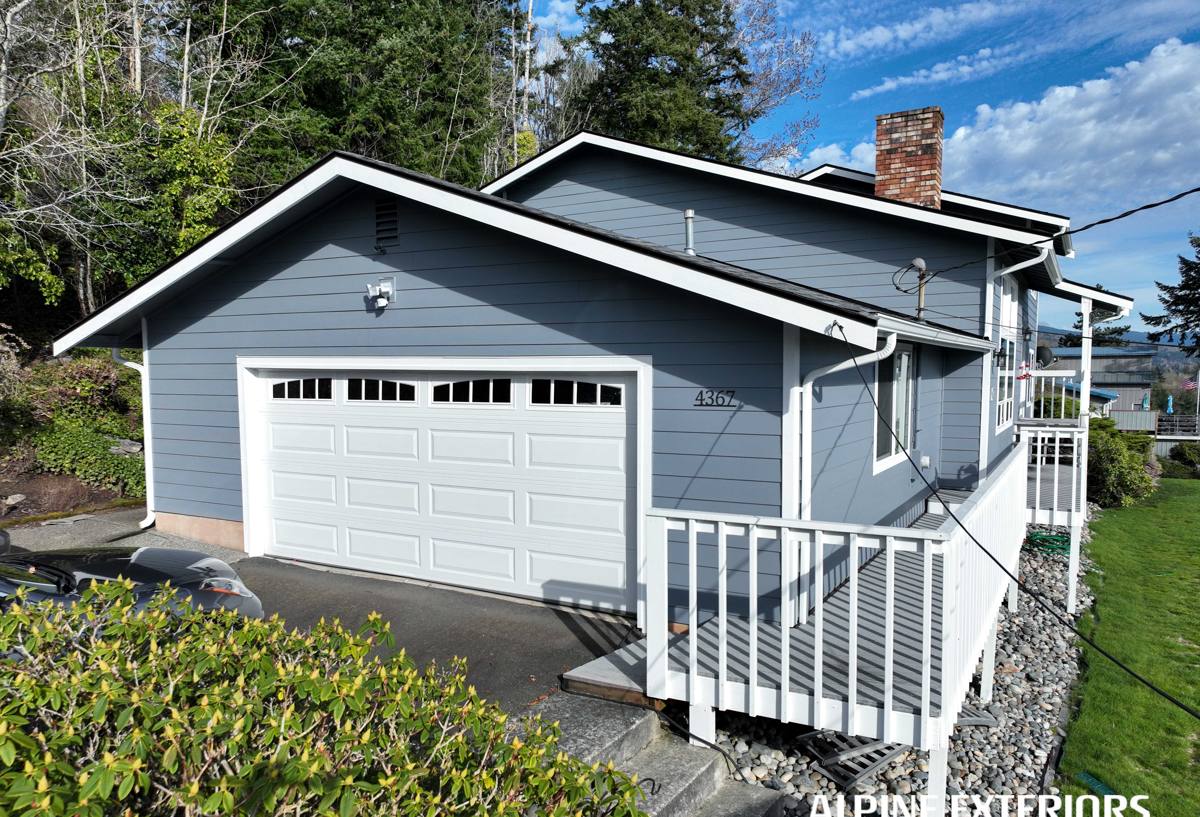
The Deck Problems We See Most Often Here
A few patterns repeat on almost every service call in this part of Whatcom County:
- Ledger board rot — where the deck attaches to the house is the single most common failure point, especially if the original flashing wasn't detailed to shed water away from the siding.
- Corroded or "frozen" fasteners — screws and joist hangers that were never rated for coastal-influenced moisture, now rusted enough that boards squeak, lift, or won't stay flat.
- Moss and algae buildup — cosmetic at first, but it holds moisture against the wood surface and accelerates rot in shaded or north-facing sections.
- Cupped, split, or spongy boards — individual decking boards that have absorbed water repeatedly through end grain or checking cracks.
- Loose or undersized railing posts — a safety issue more than a cosmetic one, and one of the first things we check on any repair call.
What a Correct Repair Actually Involves
Structural Inspection First
Before we touch a single board, we check what's underneath and behind it: the ledger connection, the joists, the posts and footings, and any flashing that's currently in place. A repair that only replaces surface boards but leaves rotten framing or a bad ledger flashing detail is a repair that fails again within a couple of seasons. We probe suspect areas with an awl rather than guessing from the surface — wood that looks fine on top can be soft an inch below.
Matching Materials the Right Way
Repairs get weaker, not stronger, when mismatched materials are used to patch them. Fastening new pressure-treated framing to old lumber with the wrong screw grade, or capping a wood deck repair with a different composite lot, creates its own set of problems down the line. We match species and treatment level for structural repairs and are upfront when an exact decking match isn't available — sometimes the more honest fix is replacing a full run of boards rather than a single obviously mismatched one.
Repair or Replace? How We Make That Call
This is the question every homeowner actually wants answered, and it depends on where the damage is and how much of the structure it's reached.
| Factor | Usually Repairable | Usually Needs Replacement |
|---|---|---|
| Location of damage | Isolated boards, single stair, one railing section | Ledger, multiple joists, or widespread framing rot |
| Age of deck | Under 15 years, otherwise sound | Original fasteners and framing near end of service life |
| Fastener condition | Localized corrosion | Rust throughout most connections |
| Moss/moisture history | Recent, surface-level | Years of untreated moss holding moisture against framing |
| Cost pattern | Low hundreds to low thousands | Multiple thousands, comparable to partial rebuild |
Neither answer is automatically the "better" one — a well-built deck with one bad ledger connection doesn't need to be torn out any more than a mostly-rotted structure should be patched to save money in the short term. We'll tell you honestly which category your deck falls into and why, including if the honest answer is "this needs more than repair."
Our Process on a Sumas Deck Repair
- On-site assessment — we walk the full deck, probe suspect boards and connections, and check the ledger and framing, not just what's visible from the top.
- Written scope — what's being replaced, what's being reinforced, and what materials and fasteners we're using, before any work starts.
- Demo of the affected area only — we don't remove more than the repair requires, but we won't stop short of sound wood either.
- Structural correction — framing, flashing, and connection repairs happen before any new decking goes down, since that's the part that fails silently if skipped.
- Board and hardware replacement — matched materials, corrosion-resistant fasteners rated for this climate, and attention to drainage and airflow so the repair doesn't just fail again.
- Final walkthrough — we show you what was found, what was fixed, and what to keep an eye on going forward.
Materials and Fasteners We Use, and Why
Every fastener in a Sumas deck repair is a maintenance decision, whether homeowners realize it or not. We use hot-dip galvanized or stainless connectors and screws rated for treated lumber and coastal-influenced moisture — not because standard hardware is defective, but because in this climate the maintenance burden of undersized or mismatched fasteners shows up early, as staining, loosening, or the exact corrosion problems we're called out to fix. The same logic applies to flashing at the ledger: it's inexpensive relative to the rest of the job and it's the single detail most responsible for whether a repair lasts five years or fifteen.
For decking material itself, both wood and composite have a place, and the right choice depends on the existing deck, your budget, and how much upkeep you want going forward.
| Wood (cedar/treated) | Composite | |
|---|---|---|
| Upfront repair cost | Generally lower | Generally higher |
| Moss/algae resistance | Needs periodic cleaning and sealing | Resists staining but still needs occasional washing |
| Matching old material | Usually possible with the right species/grade | Depends on whether the original line/color is still made |
| Long-term upkeep | Re-sealing every 1–2 years in this climate | Minimal sealing, occasional cleaning |
Maintenance Checklist for Whatcom County Deck Owners
A few habits go a long way toward keeping a repair from becoming a recurring one:
- Sweep leaves and debris off the deck surface regularly through fall — trapped organic material is what feeds moss and holds moisture against boards.
- Check and clean gutters and downspouts that drain near or onto the deck; misdirected runoff is a common cause of localized rot.
- Inspect the ledger flashing and the gap between the house and deck framing once a year for gaps or trapped debris.
- Walk the deck seasonally and press on any board that feels soft, springy, or different from its neighbors.
- Re-seal wood decking on the schedule appropriate for the product — don't wait until graying and checking are already visible.
- Address a soft board or loose railing post as soon as you notice it; a small, cheap repair now is what prevents a structural one later.
Why a Crew That Already Works Sumas Makes a Difference
Deck repair done right depends on reading the specific damage pattern correctly, and that pattern in Sumas and the rest of Whatcom County is shaped by the same conditions year after year: a long wet season, heavy moss growth in shaded areas, and salt-influenced air that's harder on hardware than most manufacturers' generic recommendations account for. A crew that works this area regularly isn't guessing at which fastener grade or flashing detail holds up here — we've already seen what fails and what doesn't. That local pattern recognition is what separates a repair that gets it right the first time from one that has to be revisited in a year or two.
Being based in Semiahmoo also means we're not driving in from out of the region to give you a rushed estimate and disappear. If a repair needs a follow-up visit, or if something looks different once the boards come off than it did from the surface, we're a short trip away, not a scheduling headache.
Get a Straightforward Assessment
If you've got a soft spot near the house, a stair that's started to give, or boards that stay green longer than they used to, it's worth having someone look before it spreads. Fill out the form below for a free, no-pressure estimate — we'll tell you honestly whether you're looking at a targeted repair or something bigger, and what it actually involves.