 Semiahmoo
 Why Blaine Homes Wear Out Siding Faster Than Most
Blaine sits about as close to the water and the border as a Washington town gets, and that location comes with a specific set of siding problems. Homes here take a steady diet of salt-laden air off the Strait of Georgia and Semiahmoo Bay, wind-driven rain that hits walls sideways instead of falling straight down, and a wet season that stretches long enough for moss and algae to get a real foothold on north- and west-facing walls. None of that is unique to any one street or subdivision in Blaine — it's the shared reality of everything close to Semiahmoo, and it shows up in the same places on house after house: butt joints that have opened up, paint that's chalking or peeling years ahead of schedule, and soft, dark-stained siding low on the wall where splashback and standing moisture never fully dry out.
If you're looking at your own siding and seeing any of that, you're not dealing with a cosmetic problem. You're dealing with a material that's losing its fight against the specific climate stresses this part of Whatcom County throws at it. Replacement done right accounts for that climate from the start, not as an afterthought.
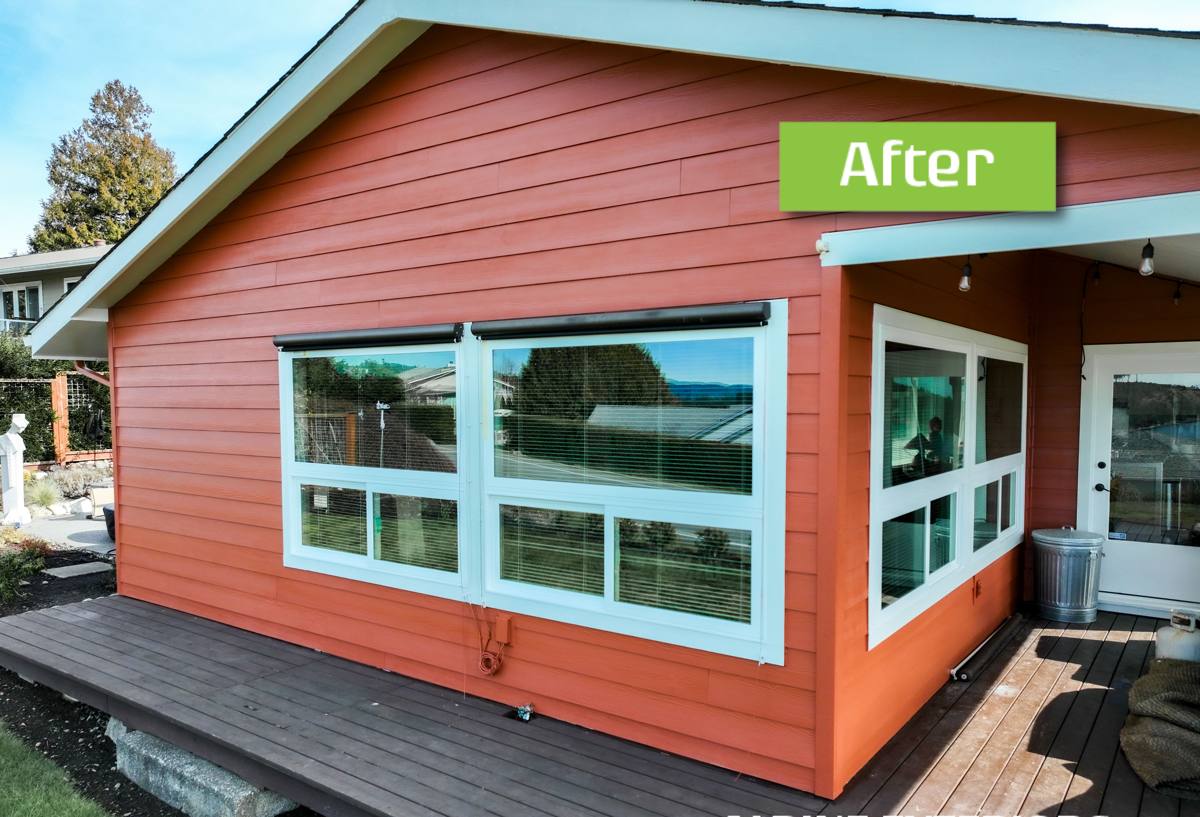
What "Correct" Siding Replacement Looks Like Here
A siding replacement isn't just stripping old material off and nailing up new panels in the same pattern. In a marine, high-moisture environment like Blaine, the work that happens underneath the siding matters as much as the siding itself.
The Water Management Layer
Every wall assembly needs a plan for the water that inevitably gets past the outer surface — because in driving rain, some always does. That means a properly lapped weather-resistive barrier, correctly integrated flashing at every window, door, and roofline intersection, and a drainage plane that lets any incidental moisture find its way back out instead of sitting against the sheathing. Skipping or rushing this layer is the single biggest reason siding jobs fail early near the water, regardless of what brand of siding goes on top.
Trim, Joints, and Penetrations
Butt joints, corner boards, and every point where siding meets a window, vent, or hose bib are where wind-driven rain finds its way in. These details need to be caulked, flashed, and fastened to spec — not eyeballed. On a home exposed to Semiahmoo's wind patterns, a shortcut at one joint can undo the protection of an otherwise well-installed wall.
Ventilation and Drying Capacity
A wall that can't dry out between rain events will eventually rot, regardless of the siding material. Rainscreen gaps or proper furring, where called for, give the wall a chance to shed moisture instead of trapping it — which matters more in Blaine's long wet season than it would somewhere drier.
Why We Only Install James Hardie Fiber Cement
We don't offer vinyl, LP SmartSide, primed spruce, cedar, or other fiber cement brands as options for Blaine homeowners, and that's a deliberate call based on what actually holds up in this climate.
- Non-combustible: James Hardie fiber cement won't feed a fire the way wood-based products can — a meaningful consideration for insurance and long-term peace of mind.
- Engineered for moisture, not just painted against it: Hardie's HZ5 product line is formulated specifically for the wetter, harsher climate zones the Pacific Northwest falls into, which is exactly the exposure Blaine sees off the water.
- ColorPlus factory finish: a baked-on finish applied under controlled conditions holds color and resists the chalking and fading that field-applied paint struggles with in salt air and constant UV/moisture cycling.
- Dimensional stability: fiber cement doesn't swell, warp, or cup with repeated wetting and drying the way engineered wood products can, which matters on a wall that rarely gets a long dry stretch.
- Warranty structure: a strong, transferable manufacturer warranty backs the product itself, on top of our installation workmanship warranty.
To be fair to the alternatives: vinyl is inexpensive and low-maintenance in the sense that it doesn't need painting, and engineered wood products can look good and install quickly when conditions are favorable. But vinyl can crack in cold snaps and distort near heat sources, and it doesn't offer the fire performance or rigidity of fiber cement. Engineered wood siding depends heavily on paint-film integrity and diligent maintenance to keep moisture out of the substrate — a maintenance burden that's harder to stay ahead of in a climate that rarely gives siding a long chance to dry. We install Hardie because, installed to spec, it holds up to Blaine's conditions with less ongoing risk to the homeowner.
Reading the Signs: Is It Time to Replace?
| What You're Seeing | What It Usually Means |
|---|---|
| Persistent moss or algae streaking on north/west walls | Normal in this climate, but heavy buildup traps moisture against the surface longer than it should |
| Paint peeling, bubbling, or chalking faster than expected | The substrate underneath may be absorbing moisture it can't release |
| Soft spots or dark staining low on walls | Possible moisture intrusion or rot at the base course — worth a hands-on check |
| Visible warping, cupping, or gaps at joints | Material is losing dimensional stability, likely water-compromised |
| Siding is original and 20+ years old | Approaching or past typical service life for many older wood-based products in this exposure |
Any one of these on its own might just call for spot repair. Several together, especially on the sides of the house that take the brunt of the weather off the water, usually mean it's time to talk about a full replacement rather than chasing patches.
Our Process for a Blaine Siding Replacement
- On-site assessment: we walk the exterior, check problem areas closely, and look at what's happening behind the siding wherever we can — not just what's visible from the ground.
- Tear-off and sheathing check: old siding comes off and we inspect the sheathing underneath for rot or moisture damage before anything new goes on. This step is where hidden problems get found and dealt with, not covered up.
- Water management install: weather-resistive barrier, flashing, and drainage details go in correctly the first time, since this layer is invisible once the siding's up but does most of the long-term work.
- James Hardie installation to manufacturer spec: proper fastener spacing, clearances, and joint treatment, following Hardie's installation guidelines rather than shortcuts that void the warranty.
- Final walkthrough: we go over the finished job with you before calling it done.
What to Expect Cost-Wise
Siding replacement cost depends on the size and shape of the home, how much of the existing wall assembly needs repair once old siding comes off, and the specific Hardie product and finish you choose. We don't publish blanket pricing because a straightforward tear-off and reinstall is a very different job from one where we find rot that needs addressing first — but we'll give you a clear, itemized estimate after a real look at your home, not a phone-quote guess.
Why Hire a Crew That Already Works This Area
Siding installation guidelines are the same everywhere Hardie is sold, but knowing where problems actually show up on Semiahmoo-area homes — which elevations take the worst of the weather, where moss builds up fastest, which details tend to fail first on older Whatcom County construction — comes from working here repeatedly, not from a manual. A crew that's replaced siding on homes up and down this stretch of coastline has already seen what doesn't hold up and adjusts for it before it becomes your problem.
A Practical Checklist Before You Hire Anyone
- Ask what siding material they install and why — and be wary of a contractor who installs "whatever you want" with no professional opinion.
- Confirm they inspect and address sheathing/water damage before re-siding, not just over it.
- Get specifics on flashing and joint details, not just "we'll make it look good."
- Ask about manufacturer certification for the specific siding brand and warranty terms — both material and labor.
- Get a written, itemized estimate, and ask what happens if hidden damage is found during tear-off.
Let's Take a Look at Your Home
If your siding is showing its age or you're just trying to plan ahead before the next wet season sets in, we're happy to come take a look. There's no pressure and no obligation — just a straight assessment of what your home actually needs and what a correct James Hardie replacement would involve. Use the form below to request a free estimate.