 Semiahmoo
 Why Birch Bay Siding Takes a Different Approach
Birch Bay sits right on the water at the top of Whatcom County, a few miles from the Semiahmoo peninsula, and that location shapes everything about how siding should be installed here. Homes facing the bay take a steady diet of salt-laden air, wind-driven rain that hits walls sideways instead of falling straight down, and a wet season that stretches long enough for moss and algae to get a real foothold on north- and west-facing walls. Siding that works fine forty miles inland can fail early out here if it's not chosen and installed with those conditions in mind.
We install James Hardie fiber cement siding exclusively, and we've done enough work along this stretch of coastline to know where standard installation practices fall short. This page walks through what Birch Bay homes actually need from a siding job, what correct installation looks like, and why the details matter more here than they do in a more sheltered part of the county.
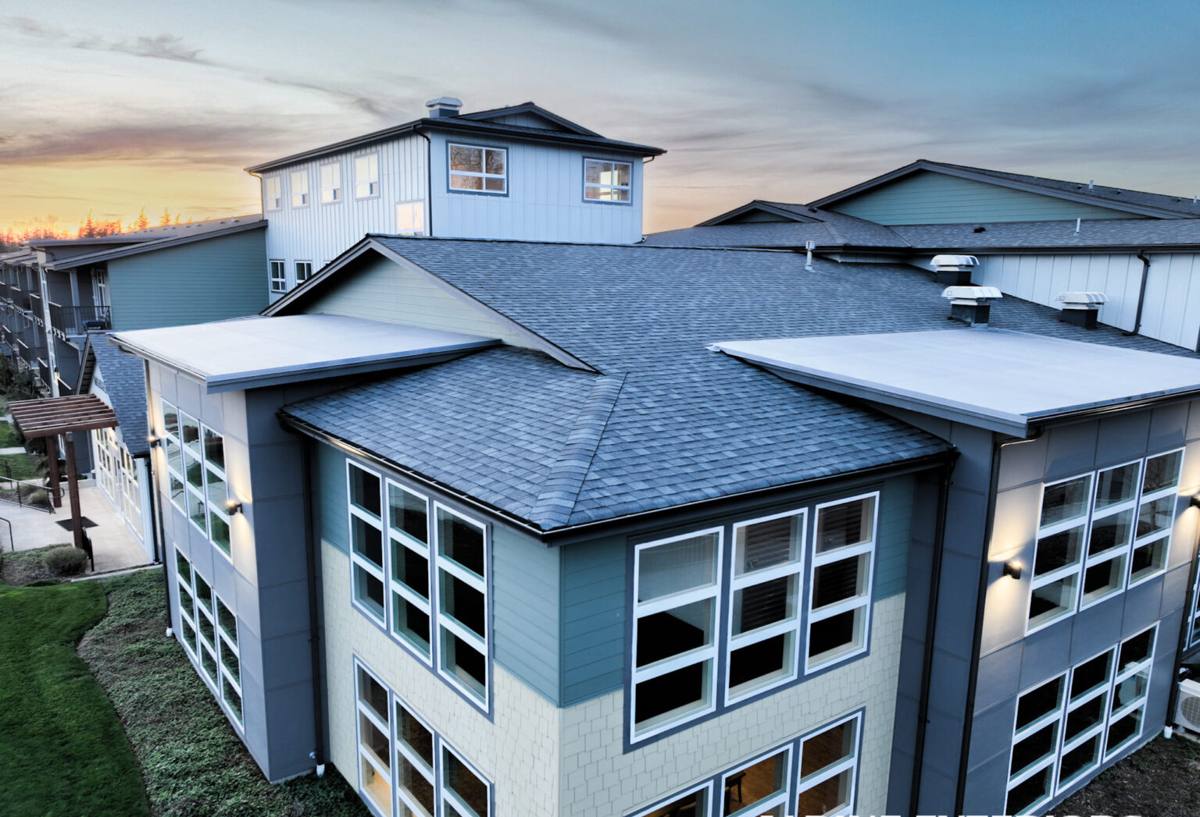
What Salt Air and Driving Rain Do to a Home's Exterior
Salt air is corrosive to exposed metal fasteners, flashing, and trim hardware, and it also holds moisture against surfaces longer than dry inland air does. Combine that with wind-driven rain — rain that gets pushed horizontally into wall assemblies during a storm off the water — and you get a siding system that's being tested from two directions at once: chemically, by salt, and physically, by water intrusion at every seam, joint, and penetration.
Moss season adds a third factor. Whatcom County's wet, mild winters give moss and algae months to colonize any siding surface that stays damp, especially on shaded or north-facing elevations. Moss holds moisture against the wall, and over time that trapped moisture is what actually damages siding and the wall assembly behind it — not the moss itself, but what it enables.
The Three Things Birch Bay Siding Has to Resist
- Salt-driven corrosion of fasteners, flashing, and metal trim components
- Wind-driven rain intrusion at joints, corners, and penetrations (vents, lights, hose bibs)
- Sustained moisture exposure that feeds moss and algae growth on shaded walls
Why We Only Install James Hardie Fiber Cement
Fiber cement is non-combustible and dimensionally stable — it doesn't swell, cup, or rot the way wood-based products can when they take on repeated moisture. That matters directly in a bay-front environment where siding is wet more often than it's dry for months at a time. James Hardie's ColorPlus factory-applied finish is also baked on and cured under controlled conditions, which gives it better adhesion and color retention against salt air and UV than a field-applied paint job typically achieves.
We don't install vinyl, LP SmartSide, primed spruce, cedar, or other fiber cement brands, and we're upfront about why: those products each have real strengths, but none of them match Hardie's combination of moisture performance, factory finish durability, and manufacturer backing for a marine-influenced climate like Birch Bay's. Vinyl can warp and become brittle with age and temperature swings; wood-based products need more diligent maintenance to keep moisture out over the long run. We'd rather install one product correctly than offer several and hope the cheaper options hold up.
Hardie Product Lines Suited to This Area
James Hardie's HZ5 climate-engineered formulation is built for regions with freeze-thaw cycling and sustained damp conditions, which fits Whatcom County's coastal winters well. Depending on the home, we typically work with HardiePlank lap siding for the main field, HardieShingle for accent areas or a more traditional coastal look, and HardieTrim for corners, fascia, and window surrounds — all finished in ColorPlus for consistent, factory-cured color across the whole elevation.
What a Correct Installation Actually Involves
Fiber cement siding is only as good as the assembly it's installed over. In a high-moisture, salt-air environment, the water-resistive barrier, flashing, and gap details do as much work as the siding panels themselves. A rushed or generic installation can leave a home with premium siding sitting over a wall assembly that still traps moisture.
The Assembly, Layer by Layer
- Sheathing inspection and repair — any rot, soft spots, or existing moisture damage gets addressed before anything new goes on.
- Weather-resistive barrier — a continuous, properly lapped house wrap or building paper, installed shingle-style so water is always directed outward and down.
- Flashing at every penetration — windows, doors, vents, hose bibs, and any wall-mounted fixture get individually flashed rather than relying on caulk alone.
- Rainscreen gap — a furring or drainage gap behind the siding lets any water that does get past the cladding drain and dry out instead of sitting against the wall.
- Fastening to spec — corrosion-resistant fasteners, correct nailing pattern and depth, following James Hardie's published installation guidelines rather than generic siding practice.
- Joint and corner treatment — properly gapped and sealed butt joints, factory-mitered or trim-capped corners, and consistent clearance from grade, decks, and roof lines.
- ColorPlus touch-up protocol — cut edges and any field touch-up handled with Hardie's matched touch-up products, not generic paint.
Skipping or rushing any one of these steps is usually invisible on install day and becomes obvious two or three wet seasons later, when water finds the shortcut that was left in the assembly.
Where Birch Bay Homes Are Most Exposed
Not every wall on a home faces the same risk. Elevations that face open water or prevailing weather take the brunt of wind-driven rain and salt exposure, while shaded, north-facing walls tend to stay damp longest and are where moss and algae show up first. Ground-level siding near landscaping, sprinkler zones, or areas that don't get much sun and airflow is also worth extra attention during installation — proper clearance from grade and consistent drainage detailing matter more there than on a wall that dries out quickly in full sun.
Practical Checklist for Homeowners
- Note which walls face open water or prevailing wind — these need the most careful flashing and joint work
- Check whether existing siding near grade has adequate clearance, or if soil, mulch, or plantings are holding moisture against it
- Look for moss or algae buildup on shaded elevations as an early sign of moisture retention
- Ask any contractor specifically how they're handling the rainscreen gap and flashing details, not just what siding brand they're using
- Confirm fastener material and spacing match manufacturer specs for a coastal, high-moisture environment
Cost Factors for a Birch Bay Siding Installation
Every home is different, but a few factors consistently move the price on a coastal siding job more than they would inland. We give firm numbers only after walking the specific home.
| Factor | Why It Affects Cost |
|---|---|
| Existing wall condition | Rot or moisture damage found during tear-off requires sheathing repair before new siding goes on |
| Number and complexity of penetrations | Each vent, fixture, and window needs individual flashing labor |
| Elevation exposure | Water-facing walls often get extra flashing and joint attention beyond baseline installation |
| Trim and accent detail | HardieShingle accents or custom trim work add labor beyond straight lap siding |
| Access and site conditions | Waterfront lots, slopes, or limited staging area can affect scaffolding and logistics |
Our Process, Start to Finish
We start with an on-site walk-through of the home, looking specifically at exposure direction, existing moisture damage, and any problem areas like moss buildup or failing trim. From there we put together a written scope covering the specific Hardie products, colors, and flashing details for that home — no generic bid copied across every job. Once work begins, tear-off and sheathing repair happen before any new material goes up, so we're never installing new siding over a hidden problem. Inspection points during installation focus on the details that matter most in this climate: flashing at every penetration, consistent rainscreen gap, and correct fastening. We walk the finished job with the homeowner before calling it complete.
Why Local Installation Experience Matters Here
A crew that hasn't worked bay-front homes before can install siding that looks correct and still underperforms, because the mistakes that matter in this climate — a skipped flashing detail, an undersized drainage gap, fasteners that aren't rated for salt exposure — don't show up as problems until the wall has been through a few wet winters. Working regularly in Whatcom County's coastal communities means we've seen how these assemblies actually perform over time here, not just on a spec sheet, and we build every installation around that experience rather than a one-size-fits-all approach.
If you're planning a siding project on a Birch Bay home, we're happy to walk the property, talk through what your specific elevations need, and put together a straightforward estimate — no pressure, no upsell to a product we wouldn't put on our own homes. Fill out the form below to get started.