 Semiahmoo
 Why Peace Arch Siding Takes More Abuse Than Most
Homes along the Peace Arch border area sit in one of the more punishing microclimates in Whatcom County. You're close enough to Semiahmoo Bay and Drayton Harbor to catch salt-laden air off the water almost year-round, and the terrain funnels wind-driven rain straight into west- and south-facing walls during fall and winter storms. Add the tree cover and shade that much of this area still has, and you get long stretches where siding simply doesn't dry out between rain events. That combination — salt, driving rain, and a moss season that can run from October into April — is exactly what wears out the wrong siding material faster than a spec sheet ever suggests it will.
None of this makes Peace Arch or Semiahmoo unusual for the Pacific Northwest coast. It just means the margin for error on a siding job is smaller here than it is a few miles inland. Material choice, installation detail, and maintenance habits all matter more when a house is getting this much sustained moisture exposure.
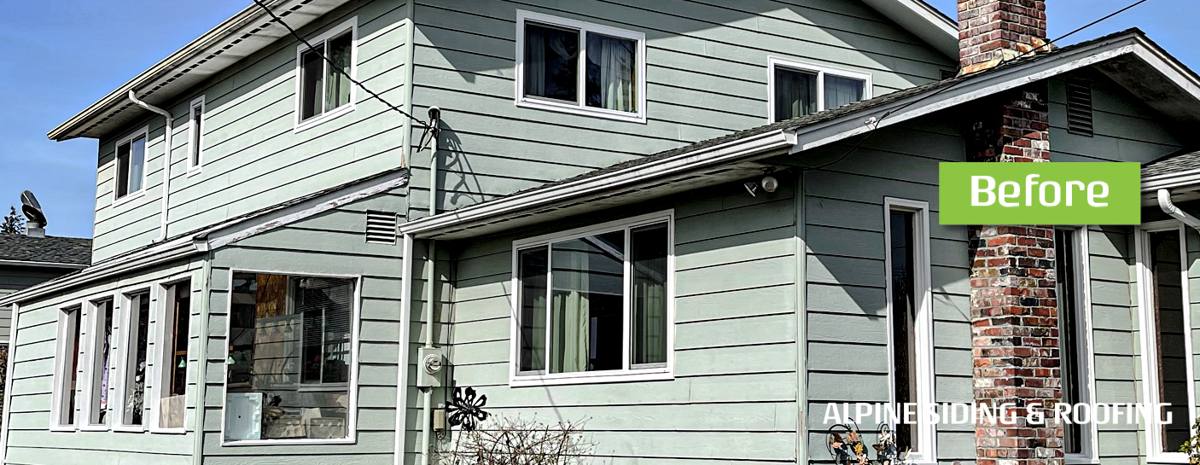
What Salt Air and Moss Actually Do to Siding
Salt air doesn't just sit on a wall — it's corrosive to exposed metal fasteners, flashing, and trim, and it accelerates the breakdown of coatings that aren't formulated to resist it. On wood-based products, that means faster paint failure, faster edge swelling, and a shorter window before rot sets in at joints and butt seams. Moss is a separate problem: it thrives in the shaded, damp conditions common on north- and east-facing walls here, and once it takes hold it holds moisture directly against the siding surface, which is the opposite of what any cladding wants.
The practical result is that siding materials get judged on two things in this climate: how well the material itself tolerates repeated wetting and drying, and how well the finish resists staining, fading, and moss growth without constant homeowner intervention. That's the lens we use on every Peace Arch job, not just what a product looks like on day one.
Why We Only Install James Hardie Fiber Cement
We standardized on James Hardie fiber cement siding for every job we do, including here in the Peace Arch and Semiahmoo area, and it comes down to how the material performs under exactly these conditions. Fiber cement is non-combustible, doesn't swell or rot the way wood-based products can, and holds its shape through repeated wet-dry cycles far better than engineered wood siding. James Hardie's ColorPlus factory-applied finish is baked on under controlled conditions rather than field-painted, which gives it stronger resistance to fading and moisture intrusion at the finish layer — the layer that's taking the brunt of the salt air and rain here.
We don't install LP SmartSide, vinyl, Cemplank, Allura, or primed wood siding. Some of those are reasonable products in the right application; our reasoning is specific to what we're comfortable standing behind long-term on homes in this climate, not a claim that every other product is defective. James Hardie also builds climate-engineered HZ product lines, including versions formulated for the wetter conditions of the Pacific Northwest, and backs its products with a strong transferable warranty when the job is installed to their spec. That warranty only holds up if the installation is done correctly, which is where most siding failures we get called about actually originate.
What a Correct Fiber Cement Install Requires Here
Fiber cement is only as good as the installation behind it. In a high-moisture, salt-exposed area like Peace Arch, a few details matter more than they would somewhere drier:
- Weather-resistive barrier and rainscreen gap: A drainage plane behind the siding lets incidental moisture escape instead of getting trapped against the sheathing — critical when walls stay damp for days at a time.
- Flashing at every penetration: Windows, doors, vents, and hose bibs all need proper head flashing and kick-out flashing so wind-driven rain can't work its way behind the siding at these joints.
- Correct fastener spec: Corrosion-resistant fasteners, driven properly (not overdriven), matter more in salt air where standard hardware degrades faster.
- Clearance from grade and hardscape: Hardie panels need proper clearance from soil, decking, and roofing to avoid wicking moisture from below.
- Joint and butt seam treatment: Caulked and sealed per manufacturer spec, not left to rely on overlap alone.
- Field-cut edge sealing: Any cut edge that isn't factory-finished needs to be sealed before it's closed up, or it becomes the first place moisture gets in.
Skip any one of these and the material's long-term performance drops, regardless of how good the product is on paper. This is also why warranty claims on poorly installed siding — of any brand — so often get denied: the failure traces back to installation, not the material.
Our Process on Peace Arch and Semiahmoo Jobs
Assessment
We walk the house and look specifically at moss buildup, staining patterns, caulk failure, and any soft spots at trim and butt joints — those tell us how the existing siding has actually been performing in this exact microclimate, not just its age.
Scope and Product Selection
We spec the right James Hardie plank profile, panel type, and HZ formulation for the exposure on each elevation. A shaded, moss-prone north wall and a storm-facing west wall don't always need identical treatment in terms of detailing and ventilation.
Prep and Moisture Management
Before new siding goes up, we address the drainage plane, flashing, and any sheathing damage found during tear-off. This is the step that gets skipped on rushed jobs and is the one that determines how the house performs in year eight, not year one.
Installation to Manufacturer Spec
Fastening pattern, clearances, joint treatment, and edge sealing are done to James Hardie's published specifications, which is also what keeps the manufacturer warranty intact.
Final Walkthrough
We go over the finished work with the homeowner, including basic maintenance expectations for this climate, before calling the job done.
Fiber Cement vs. Other Claddings in This Climate
| Factor | James Hardie Fiber Cement | Engineered Wood (LP-type) | Vinyl |
|---|---|---|---|
| Moisture/rot resistance | Does not rot; cement-based core | Vulnerable at cut edges and joints if moisture gets in | Won't rot, but can warp and trap moisture behind panels |
| Salt air / coastal exposure | Factory finish holds up well; non-corrosive core | Finish and substrate more sensitive to sustained salt exposure | Can chalk and become brittle over time near the coast |
| Fire resistance | Non-combustible | Combustible (wood-based) | Melts/deforms under heat |
| Moss and algae resistance | Good with factory finish; cleanable surface | Moderate; finish can degrade faster in constant shade/damp | Can trap moisture behind panels, encouraging growth underneath |
| Finish longevity | Factory-baked ColorPlus finish | Field-applied or factory primer, repaint needed sooner | Color molded in, but fades and chalks over decades |
Maintenance for This Specific Climate
Even the right material still needs basic upkeep in a marine, moss-prone environment. For Peace Arch homes, that means:
- Rinsing salt residue and grime off exterior walls once or twice a year, especially on sides facing open water or prevailing wind.
- Keeping gutters clear so overflow doesn't run down the siding face and feed moss growth at the top courses.
- Trimming back vegetation and tree cover that keeps walls shaded and damp longer than necessary.
- Checking caulking at trim, window, and door joints every couple of years and re-sealing where it's cracked or pulled away.
- Addressing moss at first sign rather than letting it establish — it's far easier to remove early than after it's gripped the surface.
What Fiber Cement Siding Costs to Factor In
Every house is different, but the line items that actually move the price on a Peace Arch job are consistent:
| Cost Factor | Why It Matters Here |
|---|---|
| Tear-off and sheathing condition | Salt-air homes with past moisture intrusion sometimes need sheathing repair before new siding goes on |
| Plank profile and HZ formulation | Coastal-rated formulations and wider exposure profiles vary in material cost |
| Trim and flashing detail | Homes with more window/door penetrations need more flashing work, which adds labor |
| Elevation exposure | Storm- and water-facing walls may warrant extra detailing versus sheltered elevations |
| Finish and color | ColorPlus factory finishes vs. site-painted trim affect both cost and long-term upkeep |
We give exact numbers only after walking the house — anyone quoting a firm price sight unseen on a coastal property is guessing.
Signs Your Siding Is Losing the Fight
- Persistent moss or algae staining that comes back within a season of cleaning
- Soft or spongy spots at butt joints, corners, or trim
- Paint or finish peeling faster than it should for its age
- Visible gaps or cracking at caulked joints
- Warping, bowing, or panels pulling away from the wall
- Rising energy bills that might point to moisture-compromised insulation behind the siding
Why Hiring a Crew That Already Works This Area Matters
A siding crew that mainly works drier, inland jobs doesn't always think about rainscreen detailing, flashing sequence, or fastener corrosion the way it needs to be thought about on a Semiahmoo Bay-facing wall. Working this stretch of Whatcom County regularly means we already know what this climate does to a poorly detailed installation, because we've seen it on tear-offs. That's not a marketing point — it's the difference between siding that looks fine for two years and siding that's still doing its job in twenty.
If you're weighing a siding replacement or repair in the Peace Arch or Semiahmoo area, we're happy to take a look and give you a straightforward, no-pressure estimate — no obligation, just an honest read on what your home actually needs. Use the form below to get started.