 Semiahmoo
 Roofing on the Water Side of Whatcom County
Homes in the Peace Arch area sit close enough to Semiahmoo Bay and the Strait of Georgia that the air itself works against a roof. Salt-laden moisture rides in on the wind, settles into fastener heads and flashing seams, and starts corrosion long before a homeowner notices a leak. Add in the driving, wind-pushed rain that comes through Whatcom County in the fall and winter, plus a moss season that can run eight months out of the year in shaded, north-facing sections, and you get a roofing environment that's genuinely harder on materials than most of the interior Northwest. A roof that would last twenty-five years in a drier inland climate can wear out faster here if it wasn't built with these specific conditions in mind.
This page is about one job, done right, in this one area: putting a new roof on a Peace Arch home. Not a general overview of roofing — the specific decisions, materials, and sequencing that matter when the house is a few minutes from open water.
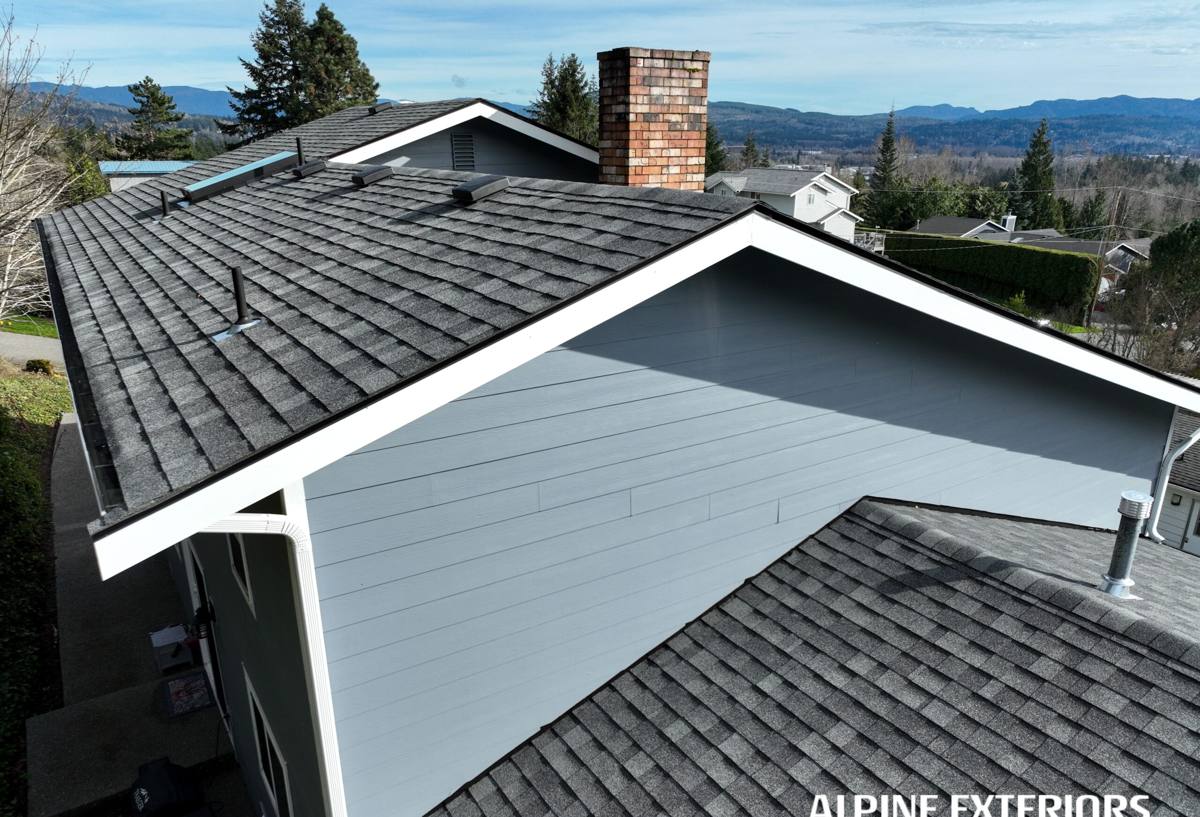
What Makes a Peace Arch Roof Different
Salt Air and Metal Fatigue
Every metal component on a roof — nails, flashing, vent caps, drip edge — is exposed to airborne salt. Cheap or mismatched metals corrode faster near the coast, and once a fastener starts rusting, it loses grip and lets water find a path underneath the roofing material. This is one of the most overlooked failure points on coastal Whatcom County homes.
Driving Rain, Not Just Rain
Rain that falls straight down is easy for any roof to shed. Wind-driven rain off the Strait pushes water sideways and upward under shingle tabs, around vent boots, and into any gap in the underlayment. Roofs here need tighter seams, more attention to lap direction, and stronger sealing at every penetration than a roof built for a calmer climate.
The Long Moss Season
Shaded roof sections — north slopes, areas under overhanging trees, valleys that stay damp — can grow moss nearly year-round in this climate. Moss holds moisture against the roofing surface, lifts shingle edges, and works its way into seams over time. A roof design that ignores airflow and drainage in these shaded areas will grow moss again within a season or two, no matter how thoroughly it's cleaned.
What a Correct Roof Replacement Involves
A new roof is more than laying down fresh shingles or panels over the old ones. A proper installation on a Peace Arch home includes:
- Complete tear-off of the old roofing material down to the deck — never a roof-over on a coastal home, since it traps moisture against the sheathing
- Inspection of the roof deck for soft spots, delamination, or rot, with damaged sections replaced before anything new goes down
- Ice-and-water shield membrane at eaves, valleys, and around every penetration — the areas most exposed to wind-driven rain
- Corrosion-resistant fasteners and flashing metals rated for coastal exposure, not standard-grade hardware
- Balanced intake and exhaust ventilation so the attic breathes and the underside of the roof deck stays dry
- Careful shingle or panel lap direction and nailing pattern matched to prevailing wind and rain direction for this specific property
Skip any one of these and the roof may look fine for a year or two while the real problems build underneath.
Choosing the Right Roofing Material
There's no single "best" roofing material for every Peace Arch home — the right choice depends on the home's exposure, roof pitch, budget, and how much upkeep the owner wants to take on. Here's how the common options compare in this specific climate:
| Material | Coastal Durability | Moss Resistance | Maintenance |
|---|---|---|---|
| Architectural asphalt shingle | Good with proper flashing and fasteners | Moderate — benefits from zinc/copper strips | Periodic moss treatment on shaded slopes |
| Standing seam metal | Very good with marine-grade coatings and fasteners | High — sheds moisture quickly, little for moss to grip | Low; occasional fastener and seam check |
| Cedar shake | Fair — attractive but absorbs moisture in wet climates | Low without diligent upkeep | High; regular treatment and inspection needed |
| Synthetic composite shingle | Good; resists rot and corrosion by design | Moderate to high depending on product | Low to moderate |
We install and stand behind architectural asphalt and metal roofing for the majority of Peace Arch homes because they hold up best against this specific combination of salt exposure and sustained dampness with a manageable maintenance load. Cedar shake can still be the right call for homeowners who want that look and are committed to the upkeep it needs in this climate — we're upfront about what that commitment involves before anyone signs off on it.
Ventilation and Moisture Control
Roof failures near the water are as often about what's happening underneath the roofing material as on top of it. A roof deck that can't dry out between rain events will eventually rot, warp, or grow mold, and that damage isn't visible until it's advanced. Correct attic ventilation — intake at the soffits, exhaust at the ridge, sized to the attic's actual volume — keeps air moving so the deck dries between weather systems instead of staying damp. We also check and correct bathroom and dryer exhaust venting during a re-roof, since vents that dump moist air into the attic instead of outside are a common hidden contributor to deck rot in this climate.
Our Installation Process
- On-site inspection. We walk the roof and attic, check the deck condition, note shaded and moss-prone areas, and assess flashing, ventilation, and drainage.
- Written estimate and material selection. We go over material options suited to the home's exposure and the homeowner's priorities, with clear, itemized pricing.
- Tear-off and deck prep. Old material comes off completely; any soft or damaged decking is identified and replaced before moving forward.
- Underlayment and flashing. Ice-and-water membrane goes down at eaves, valleys, and penetrations, followed by synthetic underlayment across the field and new flashing at every wall, chimney, and vent.
- Roofing installation. Shingles or panels go down with corrosion-resistant fasteners, proper lap direction, and attention to the details that matter most in wind-driven rain.
- Ventilation check. Intake and exhaust venting are confirmed balanced and functioning before the job is called complete.
- Final walkthrough and cleanup. We review the finished roof with the homeowner and do a thorough site cleanup, including a magnetic sweep for stray fasteners.
What a New Roof Costs in Peace Arch
Every roof is priced based on its own size, pitch, material choice, and condition of the existing deck, so we won't quote a number without seeing the roof. What we can share is the main factors that move the price up or down:
| Factor | Effect on Cost |
|---|---|
| Roof size and number of facets | More square footage and more valleys/hips increase labor and material |
| Deck condition | Rotted or soft decking found during tear-off adds repair cost |
| Material choice | Metal and premium synthetics cost more upfront than standard asphalt shingle |
| Roof pitch and access | Steep or hard-to-access roofs take longer and require more safety setup |
| Ventilation and flashing upgrades | Bringing an older roof's ventilation up to standard adds modest cost but pays off in roof lifespan |
We give straightforward, itemized estimates so homeowners can see exactly what they're paying for and why — no vague lump-sum numbers.
Signs Your Roof Needs Replacement, Not Another Repair
Not every roof problem calls for a full tear-off. But in this climate, patching a roof that's already past its service life often just delays a bigger repair bill. Signs it's time to talk about replacement instead of another patch:
- Granule loss heavy enough that shingles look bald or patchy, especially on south- and west-facing slopes
- Curling, cupping, or cracked shingles across multiple areas of the roof, not just one spot
- Persistent moss growth that returns within months of cleaning, even after treatment
- Soft or spongy spots underfoot when walking the roof, or sagging visible from the ground
- Daylight visible through the roof deck from inside the attic
- Water stains on interior ceilings that reappear after every heavy rain
- A roof approaching or past its material's expected service life, especially if it's never had ventilation upgrades
Why Local Experience with Peace Arch Homes Matters
A roofing crew that mainly works drier, inland areas doesn't always think about salt-resistant fasteners, wind-driven rain sealing, or moss-prone shading the same way a crew that works this specific stretch of coastline does. We've built our process around what actually holds up in Semiahmoo's climate — not a generic template applied everywhere. That means knowing which flashing metals corrode fastest near the bay, which roof orientations need extra ventilation attention, and which shortcuts that work fine elsewhere will cause callbacks here within a couple of winters.
Caring for Your Roof After Installation
A well-installed roof still benefits from basic upkeep in this climate. We recommend a visual check after major storms, gutter and downspout clearing at least twice a year so water isn't backing up under the roof edge, and moss monitoring on shaded slopes — catching new growth early is far easier than removing an established mat. Trimming back overhanging branches also helps, since less shade means faster drying and less moss pressure overall. None of this is heavy maintenance, but skipping it is how a well-built roof ends up with avoidable problems a few years in.
If your Peace Arch home needs a new roof, or you're not sure whether repair or replacement makes more sense, we're glad to take a look and give you a straight answer. Fill out the form below for a free, no-pressure estimate.