 Semiahmoo
 Siding Installation in Blaine: A Different Job Than Siding Inland
Blaine sits right where Semiahmoo Bay and Drayton Harbor meet the open water of the Strait of Georgia, which means homes here take on a combination of weather stresses that a house twenty miles inland simply doesn't deal with. Salt-laden air off the water, wind-driven rain that hits siding at an angle instead of falling straight down, and a long wet season that keeps north-facing walls damp for months at a time — all of it adds up to siding wear that shows up faster here than in drier parts of Whatcom County. Installing siding in Blaine isn't just a matter of picking a good product; it's about detailing the job for this specific stretch of coastline.
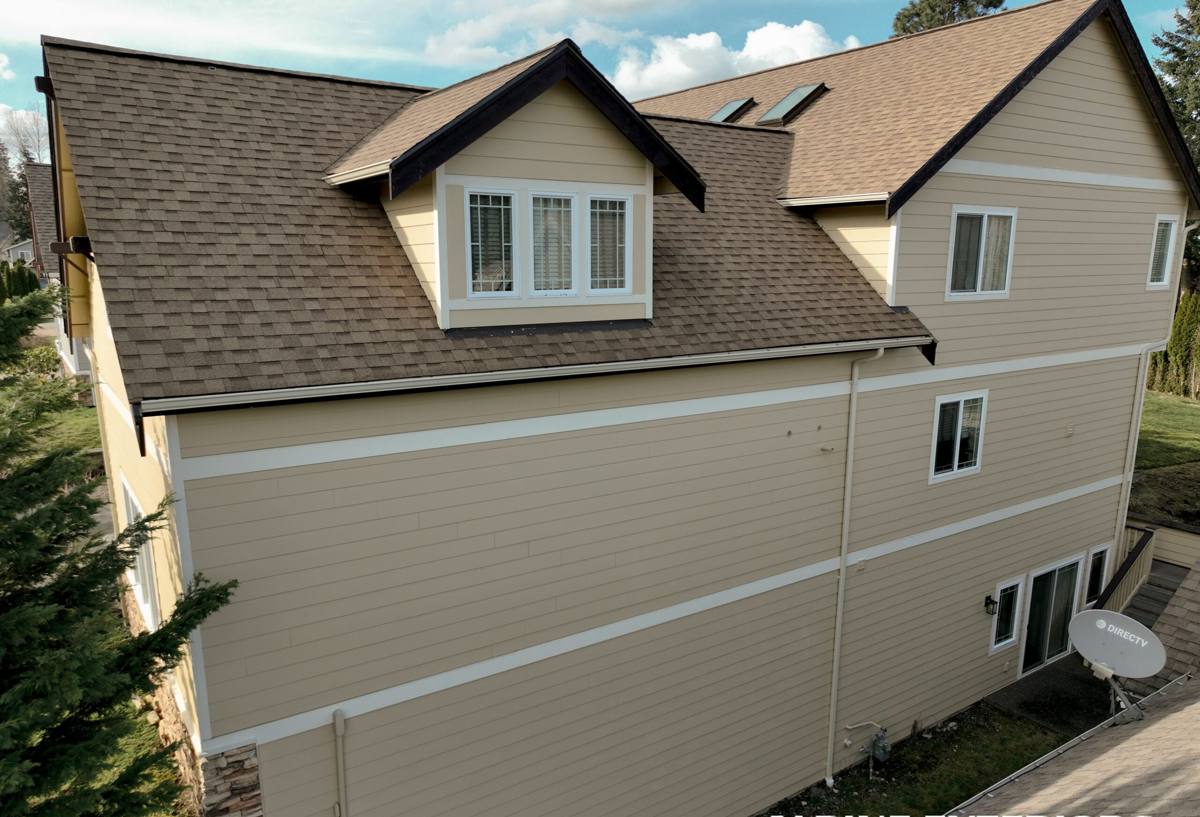
We install exclusively James Hardie fiber cement siding, and we've built our installation process around what Semiahmoo-area homes actually experience each year. This page covers what that means in practice: what the climate does to siding here, what a correct installation looks like, how our process works, and why it matters that the crew on your roofline already knows this area.
What Blaine's Climate Does to Siding
Salt Air and Corrosion
Coastal salt spray doesn't just sit on the surface of a wall — it gets into fasteners, trim joints, and any exposed metal flashing. Over years, salt exposure accelerates corrosion of the wrong fastener type and speeds up the breakdown of finishes not engineered for marine-adjacent conditions. Homes closer to the water see this first, but even a few blocks inland, salt-bearing wind still reaches exterior walls during storms.
Driving Rain
Wind off the water pushes rain sideways into walls rather than letting it run straight down and off. That means seams, butt joints, window and door flashing, and the bottom edge of the siding all take on more direct water exposure than they would on a sheltered inland lot. A siding system that isn't detailed for wind-driven rain will eventually let moisture find its way behind the cladding, and once water gets behind siding, the sheathing and framing pay the price long before the siding itself looks bad from the street.
Moss and Prolonged Dampness
Western Washington's wet season runs long, and Blaine's marine layer keeps humidity elevated even on days without active rain. North- and east-facing walls, areas under eaves, and anywhere airflow is restricted stay damp longer, which is exactly what moss and algae need to take hold. Siding that holds moisture at the surface, or that has small surface imperfections where organic growth can gain a foothold, will show green and black staining well before its structural life is up.
What a Correct Siding Installation Involves
The siding product matters, but a huge share of long-term performance comes down to how it's installed. For Blaine homes specifically, we pay close attention to:
- Weather-resistive barrier and rain screen gap — a drainage plane behind the siding lets any moisture that does get past the cladding dry out instead of sitting against the wall sheathing.
- Flashing at every penetration — windows, doors, hose bibs, vents, and light fixtures all need proper flashing, not just caulk, because caulk alone fails under sustained wind-driven rain.
- Fastener selection — corrosion-resistant fasteners rated for the coastal environment, placed and set to Hardie's specifications rather than driven with a framing nailer set for speed.
- Joint treatment and clearances — proper gapping, sealing, and ground/roof clearances so water sheds away from seams instead of pooling at them.
- Factory-finished panels — ColorPlus finished boards arrive with the color and protective coating baked on, so field-cut edges are the only place that need touch-up sealing, which cuts down on the weak points a site-applied paint job introduces.
Skip any one of these and the siding may still look fine for a year or two — the problems that salt air and driving rain cause are cumulative, and they tend to show up as rot, staining, or bowed panels well after the crew that did the work has moved on.
Why We Install Only James Hardie in This Climate
James Hardie fiber cement is non-combustible, dimensionally stable, and manufactured in climate-specific HZ formulations designed for exactly the conditions Blaine sees — sustained moisture exposure, temperature swings, and coastal weather. A few specifics that matter for this location:
- Fiber cement doesn't absorb and swell with moisture the way wood-based or wood-adjacent products can, which matters when walls stay damp for weeks at a stretch.
- The ColorPlus factory finish is engineered to resist fading and hold up under UV and moisture cycling better than field-applied paint, which reduces how often the exterior needs repainting.
- Because the material is cement-based rather than organic, it doesn't feed moss and algae growth the way some wood and wood-fiber sidings do — surface staining can still occur, but it's a cleaning issue, not a material breakdown issue.
- Hardie backs the product with a strong, transferable warranty, which carries real value on a coastal property where buyers and inspectors pay close attention to exterior condition.
We don't install vinyl, LP SmartSide, Cemplank, Allura, or primed wood siding, and that's a deliberate standard, not an oversight. Vinyl can warp and become brittle with UV and temperature cycling and offers limited protection against wind-driven rain at the seams. Wood-based composite products are more sensitive to sustained moisture exposure — exactly the condition Blaine's marine climate creates for months of the year. Once we compared how each of these products actually performs over a decade-plus in a coastal Pacific Northwest environment against what Hardie delivers, the decision to standardize on Hardie was straightforward.
Our Installation Process for Blaine Homes
1. On-Site Assessment
We look at your home's specific exposure — how close to the water, which walls take the worst of the wind-driven rain, where moss has already established itself, and what condition the existing sheathing and framing are in once the old siding comes off.
2. Moisture and Substrate Check
Before any new siding goes up, we check for water damage from the old system. In a climate like this, it's common to find soft sheathing or compromised framing behind older siding, particularly around windows and at the base of walls. That gets addressed before we move forward, not covered over.
3. Weather Barrier and Rain Screen Installation
We install a proper weather-resistive barrier and rain screen gap so the wall assembly can drain and dry, which is the single biggest factor in how well a siding job holds up in a wet coastal climate over the long run.
4. Hardie Panel Installation to Spec
Panels, fasteners, and joints go in per James Hardie's installation guidelines — the spacing, fastening pattern, and flashing details that keep the manufacturer's warranty intact and keep water out.
5. Trim, Flashing, and Sealant Detailing
Every window, door, and penetration gets proper flashing and sealant work, with particular attention to the walls that face prevailing wind and rain off the water.
6. Final Walkthrough
We walk the finished job with you, cover care and maintenance for a coastal environment, and make sure you know what normal aging looks like versus something worth a call back.
Cost Factors for Blaine Siding Installation
Every home is different, but the following factors move the price of a siding installation up or down more than anything else on a Blaine-area project:
| Factor | Why It Matters Here |
|---|---|
| Extent of substrate repair | Coastal moisture exposure means a higher chance of finding damaged sheathing or framing once old siding comes off |
| Wall exposure and complexity | Walls facing prevailing wind and rain need more careful flashing and detailing than sheltered walls |
| Home size and story height | Larger and multi-story homes require more material, labor, and access equipment |
| Trim and architectural detail | Corner boards, window trim, and accent details add labor time beyond flat-wall coverage |
| Existing siding removal | Tear-off and disposal of the old material adds cost versus a bare-wall install |
| Access and site conditions | Tight lots, landscaping, or limited equipment access can affect labor time |
What to Check Before Hiring a Siding Crew in Blaine
- Do they install a proper rain screen/drainage gap, or just nail siding directly to the weather barrier?
- Do they follow James Hardie's published fastening and flashing specifications, or their own shortcuts?
- Will they check the sheathing and framing condition once the old siding is off, before assuming it's sound?
- Have they worked on homes in Blaine or similarly exposed coastal areas of Whatcom County before?
- Do they use corrosion-resistant fasteners appropriate for a salt-air environment?
- Is the manufacturer's warranty actually preserved by how they install, or voided by improper technique?
Why a Local Crew Matters for This Job
Siding installation isn't a one-size-fits-all trade. A crew that mostly works drier, inland parts of the county may not think twice about rain screen detailing or fastener corrosion resistance, because their jobs don't demand it as urgently. A crew that regularly works Blaine and the Semiahmoo waterfront knows which walls take the worst weather, has seen firsthand what happens when flashing gets skipped near the water, and details every job assuming driving rain and salt air rather than treating them as edge cases. That local pattern recognition — knowing which details actually matter in this specific stretch of coastline — is what separates a siding job that looks good for a season from one that holds up for decades.
Get a Free Estimate for Your Blaine Home
If your siding is showing moss staining, gaps at the seams, or signs of moisture damage, or if you're planning ahead for a replacement, we're happy to take a look and walk you through what a correct installation would involve for your specific home. There's no pressure and no obligation — just a straight assessment from a crew that installs James Hardie siding in this climate every week. Use the form below to request your free estimate.