 Semiahmoo
 Marietta's Climate Puts Real Stress on Exterior Siding
Marietta sits close to the water in Whatcom County, and that proximity shapes everything about how siding ages here. Salt-laden air moves off the nearby marine waters and settles on exterior walls day after day, where it slowly works on fasteners, caulk, and any finish that isn't built to shrug it off. Add the driving rain that comes through on winter storms, pushed sideways by wind instead of falling straight down, and you have a climate that finds every weak seam, gap, and shortcut in a siding installation.
Then there's moss season, which in this part of Washington isn't really a season at all — it's most of the year. Shaded walls, north- and west-facing exposures, and anywhere airflow is blocked by landscaping stay damp long after a storm passes. Moss and algae take hold on surfaces that hold moisture, and once established they keep the wall wetter than it would otherwise be. None of this is unique to any one house in Marietta; it's the baseline every exterior on this stretch of coastline has to deal with.
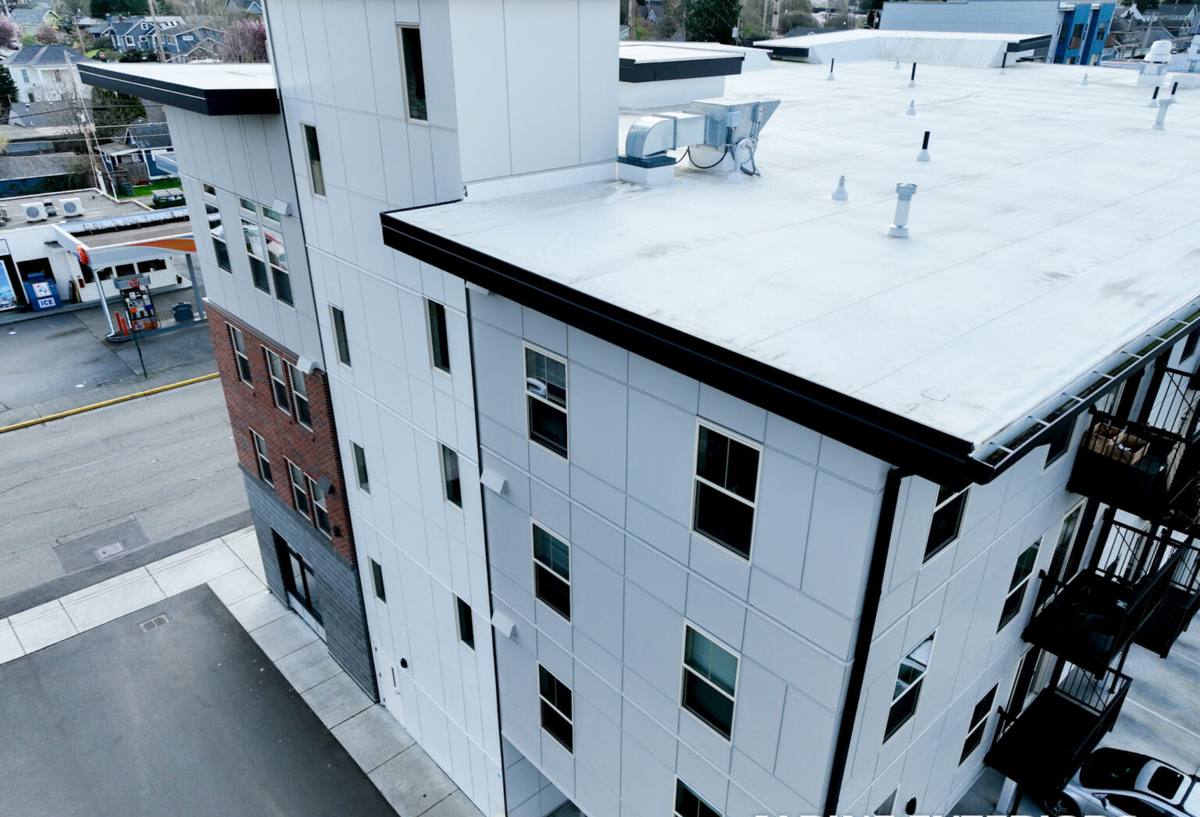
What Correct Siding Installation Actually Involves
Siding looks simple from the curb: overlapping boards or panels, painted or pre-finished, nailed to the wall. What actually keeps water out of the structure is everything underneath and around those boards — the parts nobody sees once the job is done.
Weather-Resistive Barrier and Flashing
A continuous weather-resistive barrier goes on before any siding, and it has to be lapped correctly, shingle-style, so water drains down and out rather than behind it. Flashing at windows, doors, and any roof-to-wall intersection has to be integrated with that barrier, not just caulked over the top. Kickout flashing where a roofline meets a wall is one of the most commonly missed details in this region, and it's also one of the most common places we find hidden rot when we open up an older wall.
Fastening and Clearances
Fiber cement siding has specific nailing patterns, fastener types, and gap requirements published by the manufacturer, and they exist for a reason — get them wrong and you either void the warranty or create a path for water to travel. Clearance from grade, roofing, decks, and hardscape also matters more here than in a drier climate, because standing water and splash-back have more opportunities to reach the bottom courses of siding.
Caulking Is a Backup, Not a Strategy
A siding system that depends on caulk to stay watertight is a system that will eventually leak, because caulk is a maintenance item with a limited lifespan, not a permanent seal. Correct installation uses overlaps, flashing, and drainage to do the real work, with sealant used only where the manufacturer specifies it.
Why We Install Only James Hardie Fiber Cement
We standardized on James Hardie fiber cement siding and don't install vinyl, LP SmartSide, Cemplank, Allura, primed spruce, or cedar. That's not a marketing position — it's a decision based on what holds up in a climate like this one. Fiber cement doesn't absorb moisture and swell the way wood-based and engineered-wood products can, which matters directly when you're dealing with driving rain and near-constant humidity. It's non-combustible, it doesn't feed moss and algae growth the way organic wood fiber can, and Hardie's factory-applied ColorPlus finish is baked on and warranted against fading and chalking, which counts for more here than in a drier inland market where UV and salt exposure are less punishing.
We're not saying every other product is a bad product everywhere. We're saying that after years of doing this work in coastal Whatcom County conditions, fiber cement installed correctly is what we're willing to put our name behind.
Climate-Engineered Product Lines: Why the Formulation Matters
James Hardie doesn't sell one universal product nationwide — its HardieZone system engineers different formulations for different climate profiles, broadly split between regions with heavy freeze-thaw cycling and regions defined more by sustained moisture and humidity. Coastal Pacific Northwest conditions, with mild winters but a lot of wet weather and airborne salt, generally call for the formulation built around moisture resistance rather than freeze-thaw durability. Getting the right product line matched to the site is part of a correct installation, not an afterthought, and it's something worth confirming with any contractor bidding the job.
Our Installation Process for Marietta Homes
- Site and wall assessment. We look at existing siding, trim, and any visible signs of moisture damage before we talk numbers, including a check of walls that don't get sun and stay damp longer.
- Tear-off vs. full removal decision. Where there's evidence of trapped moisture or damaged sheathing, we remove down to the studs rather than covering a problem up.
- Weather-resistive barrier installation. A new, continuous barrier goes on with correct laps and integrated flashing at every penetration.
- Flashing detail work. Windows, doors, roof-wall intersections, and any deck or porch attachment get flashed to shed water outward, with particular attention to kickout flashing.
- Hardie installation to manufacturer spec. Panels or planks go up with the correct fastener type, spacing, and gaps for the specific product line and climate zone.
- Trim, corners, and sealant. Sealant is applied only where Hardie's install guide calls for it, not as a substitute for proper flashing.
- Final walkthrough. We go over the finished job with the homeowner before calling it done.
Common Problems We Find Behind Older Siding in Marietta
When we tear off older siding on homes in this area, a handful of issues show up often enough that they're worth mentioning:
- Moisture trapped between old siding and sheathing, with no functioning drainage path
- Missing or poorly formed kickout flashing at roof-to-wall intersections
- Rot at deck ledgers and other structural attachment points where water collected
- Seams and joints that were sealed with caulk instead of properly lapped or flashed
- Moss and algae buildup on north- and west-facing walls that kept the surface damp for extended stretches
None of these are unusual for a home that's been standing for a couple of decades in this climate. They're also exactly what a correct re-side is supposed to fix, not just cover over with a new layer of material.
What Affects the Cost of a Marietta Siding Installation
Every home is different, and we don't publish blanket per-square-foot pricing because it misleads more than it helps. The factors below are the ones that actually move the number on a real bid.
| Cost Factor | Why It Matters |
|---|---|
| Tear-off vs. install over existing wall prep | Removing old siding and repairing sheathing or framing damage adds labor but is often necessary once a wall is opened up |
| Home size and number of stories | More wall area and taller work require more material, staging, and time |
| Trim, corner, and detail complexity | Homes with more windows, dormers, and roof-wall transitions need more flashing and cutting work |
| Water and wind exposure | Walls facing prevailing weather off the water often need extra flashing attention and sometimes a different fastening approach |
| Product line and finish | HardiePlank, HardiePanel, and different ColorPlus finish options carry different material costs |
| Site access | Tight lots, fencing, and landscaping close to the house can slow staging and add labor time |
Why a Crew That Already Works in Marietta Matters
A siding crew that works this stretch of Whatcom County regularly already knows which walls on a typical lot take the worst of the wind-driven rain, where moss tends to build up fastest, and which flashing details get overlooked most often on homes built to older codes. That's not something you can fully substitute with a general install manual, because every coastal microclimate behaves a little differently. A crew that's used to working near the water also tends to move faster through the weather-dependent parts of the job, because they've planned around this region's rain patterns before and know how to sequence tear-off and dry-in to avoid leaving a wall exposed longer than necessary.
Local familiarity also means fewer surprises with permitting and inspection expectations in Whatcom County, and a better sense of which product line and finish options actually perform well once they've been on a house here through a few wet seasons.
Living With Hardie Siding in Marietta: What Maintenance Looks Like
Fiber cement with a factory finish needs far less upkeep than wood or engineered-wood siding, but "far less" isn't the same as "none." A little attention keeps it performing the way it's designed to in this climate.
- Rinse down siding periodically to clear salt residue and organic buildup, especially on walls facing the water
- Keep landscaping and shrubs trimmed back from walls so air can circulate and surfaces dry out between storms
- Check shaded, north- and west-facing walls for early moss or algae growth and address it before it spreads
- Inspect caulking at trim joints and penetrations periodically, since sealant is a maintenance item even on a well-installed job
- Watch for any signs of water staining near roof-wall intersections, decks, or window trim, and have them looked at promptly
If you're weighing a siding project on a Marietta home and want a straight answer about what your walls actually need, we're glad to take a look and put together a free, no-pressure estimate.