 Semiahmoo
 Why Marietta's Climate Changes How a Deck Should Be Built
Marietta sits close to the water in Whatcom County, and that proximity changes what a deck actually needs to survive here. Salt-laden air moves in off the water and settles on everything outdoors, driving rain comes through for months at a stretch, and moss finds a foothold anywhere wood or composite stays damp and shaded. A deck built the way you'd build one further inland, away from the salt and the wet, won't age the same way in Marietta.
That doesn't mean you can't have a good outdoor space here. It means the build has to account for what this climate actually does to lumber, fasteners, and finishes over years, not just what looks good on install day. That's the difference between a deck that needs major repair in six or seven years and one that's still solid two decades later.
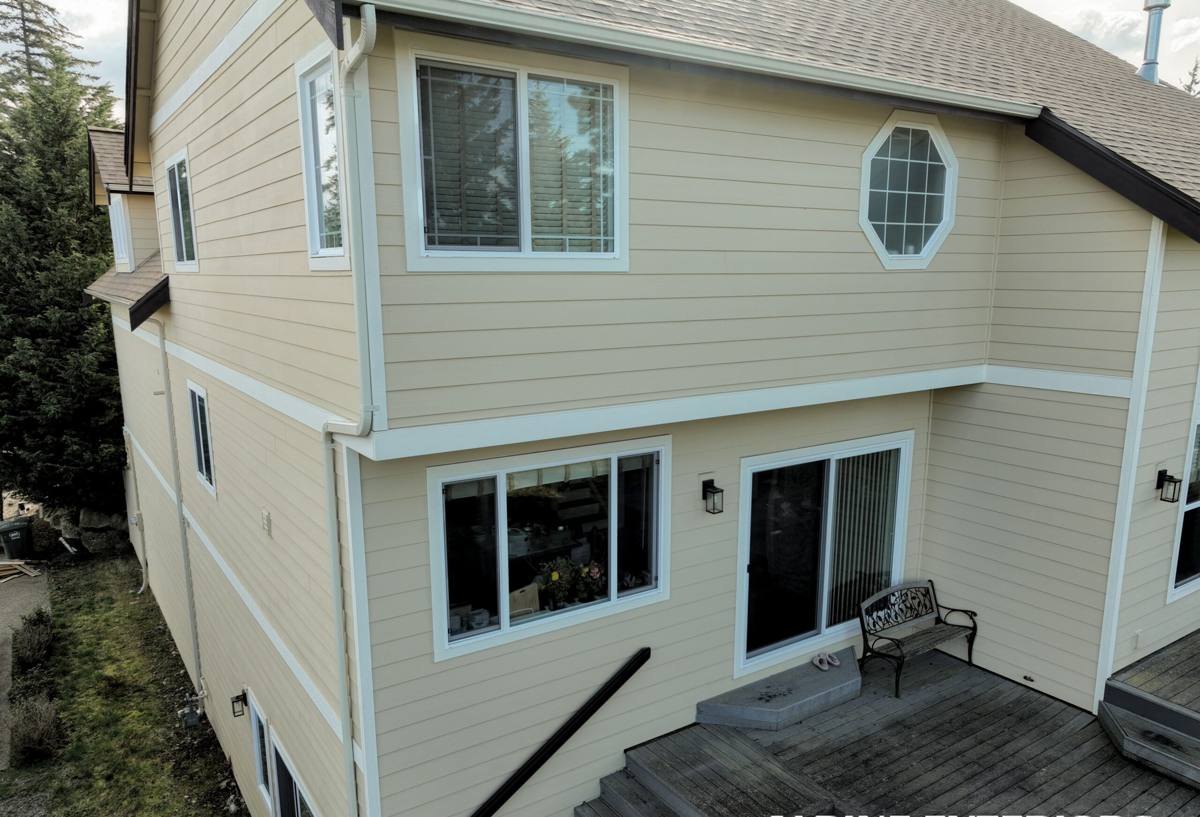
What a Correctly Built Deck Needs Here
A deck that's going to hold up in Marietta's salt air and long wet season needs a few things a generic build often skips or under-specifies:
- Fasteners and structural hardware rated for coastal/corrosive exposure, not standard exterior-grade
- Ledger flashing where the deck ties into the house, installed so water can't wick behind the siding
- Joist protection (tape or a comparable barrier) so end grain and top faces aren't absorbing rain directly
- Board spacing and slope that actually shed water instead of holding it against the framing
- Footings set to the proper depth for our soil and drainage conditions, not just poured to code minimum
Skip any one of these and the deck can still look fine for a few seasons. The problems show up later, usually as rust streaks on fasteners, soft spots around the ledger board, or moss creeping across boards that never fully dry between rains.
What Happens When These Steps Get Skipped
The most common failure we see on older or poorly built decks in this area isn't the decking itself — it's what's underneath. A ledger board without proper flashing lets water track into the house framing over time. Standard fasteners in a salt-air environment corrode faster than most homeowners expect, sometimes staining the wood or composite around them within a few years. These aren't dramatic failures at first. They're slow ones, which is exactly why they're worth building around from day one.
Choosing a Decking Material for a Wet, Salty Yard
There's no single "best" decking material for Marietta — there's a best material for your specific yard, budget, and how much upkeep you actually want to do. Here's how the common options compare in this climate:
| Material | Moss/Mildew Resistance | Maintenance | Typical Lifespan Here | Upfront Cost |
|---|---|---|---|---|
| Pressure-treated wood | Fair — needs regular cleaning to stay ahead of it | Annual cleaning, periodic sealing/staining | 10-15 years | Lowest |
| Cedar | Fair — naturally rot-resistant but still needs upkeep | Annual cleaning, sealing to hold color and resist moisture | 15-20 years | Mid-range |
| Composite | Good — dense, capped boards resist moss better than wood | Periodic washing, no sealing/staining | 25-30 years | Higher |
| PVC / cellular PVC | Best — non-porous, doesn't absorb moisture | Occasional washing only | 30+ years | Highest |
Wood costs less to install but asks more of you every year — cleaning, sealing, and watching for the early signs of rot around fasteners and end cuts. Composite and PVC cost more upfront but shrug off the moss and mildew that our long wet season throws at everything sitting outside. For a lot of Marietta homeowners, the honest trade-off comes down to whether you'd rather spend money once or spend time every year.
Our Standard on Wood Alternatives
We'll install real wood decking when that's what a homeowner wants — there's nothing wrong with cedar or treated lumber when it's built and maintained correctly. What we won't do is install it and let a homeowner believe it's maintenance-free, because in this climate it isn't. We'll walk you through what each material actually asks of you before you commit, not after.
Framing and Footings: What's Underneath Matters Most
The framing and footings are the part of a deck nobody sees once it's finished, which is exactly why they're where corners get cut on a bad build. In our soil and drainage conditions, footings need to be sized and set to actually reach stable, load-bearing ground — not just poured deep enough to pass a quick look.
Joists and beams take the brunt of the moisture over the life of the deck. Rain runs off the decking boards and lands directly on the framing underneath, which is why joist protection matters as much as the decking material itself. A deck with beautiful composite boards over unprotected joists is still going to have a rot problem in ten years — it's just hidden from view until it's a bigger repair than it needed to be.
Timing a Build Around Our Wet Season
When you build matters almost as much as how you build, especially here. Whatcom County's wettest stretch typically runs from fall through late winter, which is exactly the window when moss growth picks up and ground conditions get soft. Concrete footings cure better in drier, more stable weather, and framing lumber that goes in during a stretch of steady rain has more opportunity to take on moisture before it's ever weather-sealed.
That doesn't mean deck projects are off the table for half the year — we build through most of it. It means we plan the steps that matter most, footing pours, framing, and any staining or sealing on wood decking, around realistic weather windows. If your timeline has flexibility, starting in spring or summer gives a new deck the best conditions to cure and set properly before the next wet season tests it.
Railings, Fasteners, and Hardware That Won't Fail Early
Salt air is hard on metal, full stop. Standard zinc-coated fasteners that hold up fine twenty or thirty miles inland can start showing corrosion within a few years this close to the water. That's why the hardware spec matters as much as the decking choice:
- Stainless steel or hot-dip galvanized fasteners rated for coastal/marine-grade exposure
- Post bases and structural connectors matched to the same corrosion standard, not mixed grades
- Railing systems chosen with the same logic — aluminum and cable systems generally shed the salt-air problem better than uncoated steel
- Consistent fastener spacing and torque, since overdriven or underdriven fasteners fail faster regardless of grade
Mixing hardware grades is a small mistake that becomes an expensive one. If the deck boards and railing posts are rated for coastal exposure but the hidden structural screws underneath aren't, you've built in a weak point that won't show itself until the fasteners start failing.
Designing Around Moss, Mildew, and Drainage
A long wet season means moss isn't a maintenance afterthought here — it's a design factor. A few things make a real difference in how much moss and mildew a deck deals with over the years:
- Board gapping sized correctly for the material, so water drains through instead of sitting on the surface
- Framing sloped slightly away from the house to move water off the deck rather than pooling under it
- Layout and railing choices that avoid trapping deep shade where moss thrives, where the site allows it
- Enough clearance under the deck for airflow, instead of a sealed-off, permanently damp space underneath
None of this eliminates moss entirely — nothing does in a climate this wet. But a deck designed with drainage and airflow in mind needs a fraction of the scrubbing and pressure-washing that a poorly drained one does, and it holds up structurally longer because water isn't sitting against the wood or framing for weeks at a time.
Our Process for Marietta Deck Projects
Every deck we build follows the same sequence, adjusted for the specific lot, sun exposure, and drainage pattern of the property:
- Site visit and assessment — we look at grade, drainage, existing structure (if it's a replacement), and how sun and shade fall across the space
- Design and material selection — we talk through decking, railing, and hardware options honestly, including what each one asks of you long-term
- Permitting — we handle the paperwork with the county so the project meets code from the start
- Framing and footings — built to the depth and spec the site actually needs, with corrosion-rated hardware throughout
- Decking, railing, and finish work — installed with the drainage and spacing details that matter in our climate
- Final walkthrough — we go over the finished deck with you and what upkeep, if any, your chosen material needs
A quick checklist of what to expect from a properly built deck once it's done:
- Fasteners and hardware rated for coastal exposure, not just standard exterior-grade
- Flashing at every point the deck meets the house
- Visible drainage — water moving off the deck, not pooling on it
- A clear answer from your contractor about what maintenance your material will actually need
- Permit and inspection paperwork completed, not skipped
Permits and Why Local Experience Matters
Deck projects in Whatcom County typically require a permit once you're past a certain size or height, or when the deck attaches to the house — the exact thresholds depend on your specific property and structure, which is part of what we sort out during the site visit. Setbacks from property lines and easements can also affect where and how large a deck can be built, and that varies lot to lot.
Beyond the paperwork, there's real value in hiring a crew that already works in Marietta specifically. We're not guessing at how exposed a given lot is to wind and salt air, or how a particular yard drains after a week of steady rain — we've seen it on other decks nearby, from Marietta down through the rest of the Semiahmoo area. That translates into fewer surprises during the build and a deck that's specified correctly for your property from the start, instead of a generic build that gets adjusted after something fails.
If you're weighing a new deck or replacing one that's showing its age, we're glad to come take a look and walk the property with you. A free estimate costs you nothing and no-pressure means exactly that — we'll tell you honestly what your yard and budget call for, and you decide from there.