 Semiahmoo
 Asphalt Shingle Roofing Built for Lynden's Weather
Lynden homes take a beating that a lot of shingle manufacturers never designed for. You've got salt-laden air drifting in off the water, driving rain that comes in sideways more often than straight down, and a moss season that seems to stretch longer every year. A shingle roof that would last three decades in a dry inland climate can start showing real trouble in half that time here if it wasn't installed with this specific weather in mind. This page is about doing asphalt shingle roofing right for a Lynden property — not a generic roofing pitch, but what actually matters for a roof in this part of Whatcom County.
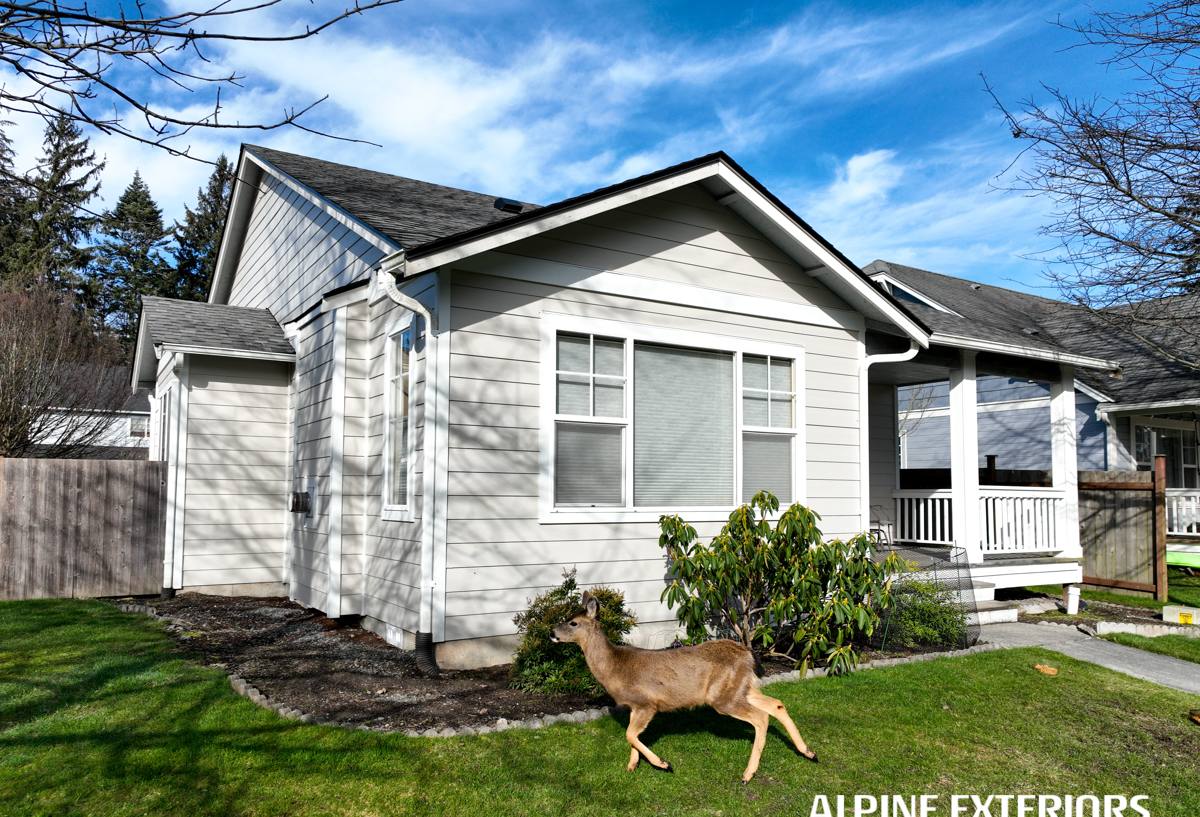
What Whatcom County Weather Does to a Shingle Roof
Before we talk about installation, it helps to understand what a roof here is actually up against. Three things drive almost every early shingle failure we see in this area:
Salt Air and Metal Fatigue
Airborne salt doesn't damage the shingles themselves nearly as much as it damages the metal components tied into the roof system — flashing, drip edge, fasteners, and vent hoods. Cheap galvanized fasteners and thin-gauge flashing corrode faster in a salt-influenced environment, and once a fastener or flashing seam starts to fail, water finds its way underneath the shingle field regardless of how good the shingles themselves are. The fix isn't a special shingle — it's using corrosion-resistant metal and fasteners throughout, every time, not just on the parts that are easy to see.
Driving Rain and Wind-Driven Water
Lynden doesn't just get a lot of rain — it gets rain pushed sideways by wind off open fields and, at times, storm systems moving through the county. That matters because wind-driven rain can work its way up under a shingle course that was installed with standard nailing and standard lap patterns for a calmer climate. Proper nailing pattern, correct shingle exposure, and ice-and-water shield in the vulnerable transition areas (valleys, eaves, around penetrations) are what keep wind-driven rain from getting underneath the shingle layer instead of running off it.
A Long Moss Season
Shaded roof slopes, north-facing pitches, and roofs under tree cover stay damp for long stretches of the year in this climate, and that's exactly what moss needs to get established. Moss isn't just cosmetic — it lifts shingle edges as it grows, holds moisture against the shingle surface, and accelerates granule loss. A roof with poor ventilation or the wrong shingle placement for its exposure will grow moss faster than one that was designed with airflow and drainage in mind from day one.
What a Correct Asphalt Shingle Installation Actually Involves
"Asphalt shingle roof" covers a lot of ground — from a bare-minimum reroof to a system built to hold up for decades in this climate. The difference usually isn't visible from the street. It's in the layers homeowners don't see until something goes wrong.
- Tear-off down to the deck (not layering over old shingles) so we can actually inspect the sheathing for rot or soft spots
- Deck repair or replacement wherever moisture has already gotten in
- Ice-and-water membrane at eaves, valleys, and around every penetration — not just where code requires the minimum
- Synthetic underlayment across the full field for a secondary water barrier under the shingles
- Corrosion-resistant drip edge, step flashing, and fasteners, given the salt exposure in this area
- Balanced intake and exhaust ventilation, so the attic can actually dry out between wet stretches
- Manufacturer-correct nailing pattern and exposure, matched to the wind exposure of the specific roof
Skip any one of these and the roof might look fine for a couple of years. The problems that show up later — soft decking, granule loss, moss colonies, leaks at valleys — almost always trace back to a step that got shortcut during installation, not a defect in the shingle itself.
Shingle Options for a Lynden Roof
Not every shingle product performs the same way in wind, rain, and moss exposure. Here's how the common tiers compare for a home in this climate:
| Shingle Type | Wind Performance | Moss Resistance | Typical Lifespan Here |
|---|---|---|---|
| 3-Tab (economy) | Lower wind rating, more prone to lifting in driving rain events | No built-in resistance | 15–20 years |
| Architectural / Laminate | Higher wind rating, better seal-down performance | Available with algae/moss-resistant granules | 25–30 years |
| Impact-Resistant Architectural | Highest wind rating in the shingle category | Available with algae/moss-resistant granules | 30+ years |
For most Lynden homes, we recommend an architectural shingle with algae/moss-resistant (copper- or zinc-infused) granules as the baseline, not the upgrade. Given how long roofs here stay damp during the wetter months, that granule technology earns its keep. 3-tab shingles still have a place on budget-driven projects or outbuildings, but we're upfront that they'll need closer attention and likely a shorter service life in this climate.
Our Process for a Lynden Roofing Project
- On-site inspection. We walk the roof, check the attic for ventilation and existing moisture damage, and look at exposure — which slopes get the most shade, wind, and standing moisture.
- Written estimate. You get a clear scope: tear-off, deck condition allowance, underlayment and flashing plan, shingle options, and a firm price — no vague allowances buried in the fine print.
- Tear-off and deck inspection. Old roofing comes off completely so we can see the actual condition of the sheathing before anything new goes down.
- Weatherproofing layer. Ice-and-water membrane, underlayment, and flashing go in first, sized and placed for this climate's rain and wind pattern, not the minimum code spec.
- Shingle installation. Installed to manufacturer spec for nailing and exposure, with attention to valleys, penetrations, and any shaded slopes prone to moss.
- Ventilation check. Intake and exhaust are balanced so moisture has a way out of the attic year-round.
- Final walkthrough. We go over the finished roof with you, including what to watch for and how to keep the warranty intact.
Repair or Replace? Signs to Watch For
Not every roofing problem in this climate means a full replacement. A lot of what we get called out for in Lynden is repairable — if it's caught early enough. Here's what should prompt a call:
- Granules collecting in gutters or at the base of downspouts
- Moss or dark streaking on north-facing or shaded slopes
- Curling, cupping, or cracked shingles, especially on the side of the roof that catches the most weather
- Soft or spongy spots when walking the roof, which usually means the deck underneath is compromised
- Water stains on interior ceilings or in the attic after a wind-driven rain event
- Lifted or missing shingles after a storm
- Rusting or corroded flashing and fasteners around chimneys, vents, or skylights
If you're seeing more than one or two of these, or the roof is past 20 years old, it's worth having someone look at the whole system rather than patching one spot at a time.
Cost Factors for a Lynden Reroof
Every roof is priced on its own specifics, but the variables below are what actually move the number on a Lynden job:
| Factor | Why It Matters Here |
|---|---|
| Roof pitch and access | Steeper slopes and limited access add labor time and safety equipment needs |
| Deck condition | Moisture-damaged sheathing found during tear-off adds material and labor to replace |
| Shingle tier | Architectural and impact-resistant shingles cost more upfront but hold up better against wind and moss |
| Ventilation upgrades | Homes with inadequate attic airflow may need added intake or exhaust vents to prevent future moss and moisture issues |
| Flashing and metal scope | Full corrosion-resistant flashing replacement costs more than reusing old metal, but reusing salt-exposed metal is a false economy |
| Roof complexity | Valleys, dormers, skylights, and multiple penetrations all add flashing detail work |
We'd rather walk you through these line by line on your actual roof than throw out a broad number that doesn't mean much until we've seen the deck condition and layout.
Living With Your Roof: Maintenance in This Climate
A well-installed shingle roof still needs some attention in a climate like Whatcom County's. A few habits go a long way toward getting full life out of the investment:
- Keep gutters and downspouts clear so water isn't backing up under the eave line during heavy rain
- Trim back overhanging branches on shaded slopes to cut down on the moisture and debris that feed moss growth
- Have moss treated (not power-washed, which can strip granules) as soon as it appears rather than waiting a full season
- Check attic ventilation isn't blocked by insulation or storage, especially before the wetter months
- Schedule a roof check after any major windstorm to catch lifted shingles before they leak
Why a Crew That Already Works Lynden Matters
A roofing crew that mostly works dry, inland climates will default to specs that are fine somewhere else and undersized here. Knowing which slopes in this part of Whatcom County tend to hold moss, how much wind-driven rain a valley detail actually needs to shed, and which fastener and flashing grades hold up against the salt influence in the air isn't something you learn from a manufacturer's install guide — it's something you learn by doing roofs in this specific climate, year after year. That local experience shows up in the details: where we add extra ice-and-water membrane even when code doesn't strictly require it, which shingle lines we steer people away from because they don't perform well in sustained damp conditions here, and how we set up ventilation so the next moss season doesn't undo the new roof in five years.
If your Lynden home needs a new roof, a repair, or you're just not sure which one it is yet, we're happy to take a look and give you a straight answer. Reach out for a free, no-pressure estimate using the form below.