 Semiahmoo
 Why Drayton Harbor Roofs Wear Differently
A roof over Drayton Harbor doesn't age the same way one does twenty miles inland. Homes here sit close to open water, catch wind straight off the harbor and the Strait, and spend a good chunk of the year under a marine layer that never quite dries out. None of that means your roof is doomed — it means the repair work needs to account for conditions that a lot of roofing crews only deal with occasionally. We deal with them on nearly every job.
Salt Air and Metal Fatigue
Salt-laden air corrodes exposed metal faster than dry inland air does. Flashing, nail heads, gutter fasteners, and any exposed roofing hardware are the first things to show it — usually as rust streaks, pitting, or a flashing seam that's lost its seal and started letting water track behind it. Once corrosion starts on a metal component, patching around it is a temporary fix at best; the metal needs to be replaced with something rated for coastal exposure, not just re-caulked.
Driving Rain and Wind-Driven Water
Storms off the water tend to come in sideways rather than straight down. That matters for a roof, because wind-driven rain gets pushed up under shingle edges, into valleys, and around anything that penetrates the roof deck — vents, chimneys, skylights. A repair that only addresses the visible leak point without checking how water is moving under wind pressure often fails again in the next storm from the same weak spot.
The Long Moss Season
Whatcom County's damp, shaded, mild winters give moss and algae a long runway — often eight or nine months a year of conditions moist enough to sustain growth. Moss doesn't just look bad. It holds water against the roofing material, works its way under shingle tabs and shakes, and can lift edges enough to create a leak path that wasn't there when the moss started. By the time moss is visible from the ground, it's usually been established long enough to have already done some damage underneath.
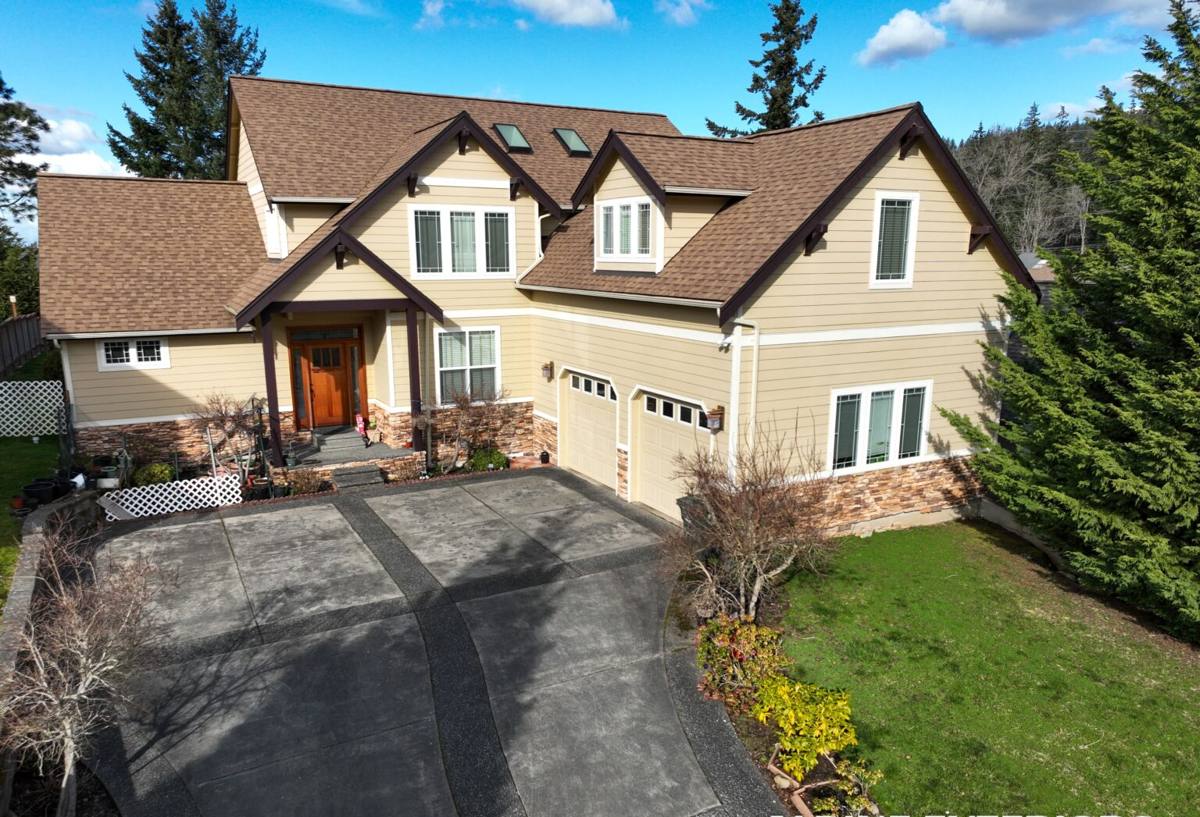
Signs You Need Repair, Not a Full Replacement
Not every problem calls for tearing off the whole roof. Most of what we're called out for on Drayton Harbor homes is legitimate repair work: isolated damage, aging flashing, or a specific failure point rather than a roof that's failed system-wide. Here's what typically points to a repair rather than a replacement:
- A leak that traces back to one clear source — a chimney, vent boot, skylight, or valley — rather than water coming through in multiple, unrelated spots
- Missing or damaged shingles in a limited area, especially after a windstorm, with the surrounding roof still in solid shape
- Cracked, lifted, or corroded flashing around penetrations, while the roofing material itself is still sound
- Moss or algae buildup caught early, before it has lifted shingle edges or damaged the underlayment beneath
- Granule loss or minor wear concentrated on one slope, often the one that takes the brunt of the weather off the water
- A roof that's within its expected service life but has a specific, identifiable failure rather than widespread deterioration
If several of these show up at once, or the roofing material is near the end of its rated life across the board, repair may just delay a replacement rather than solve the problem — we'll tell you that plainly rather than sell you a patch job that won't hold.
What a Correct Roof Repair Actually Involves
Diagnosing the Real Problem
The biggest difference between a repair that lasts and one that doesn't is whether the diagnosis went far enough. A leak stain on a ceiling doesn't always sit directly under the entry point — water can travel along rafters or sheathing before it shows up inside. A proper diagnosis means getting on the roof, checking the suspect area and everything uphill of it, and confirming the actual entry point before any material gets replaced. We also check the roof deck itself where we can access it; if the sheathing underneath has softened from long-term moisture, that has to be addressed as part of the repair, not covered back over.
Matching Materials and Techniques
Repairs need to match what's already on the roof — in material, profile, and ideally age and weathering — so the patched section performs the same as the rest of the roof and doesn't stand out. That means using the right underlayment for the exposure, flashing metal suited to a coastal environment rather than a bargain grade that'll corrode again in a few years, and fasteners rated to hold in wind-driven conditions. Sealants matter too: the wrong sealant on a damp coastal roof can fail within a season, while the right product properly applied will hold for years.
Common Drayton Harbor Roof Repairs We Handle
| Repair Type | Typical Cause Here | What the Fix Involves |
|---|---|---|
| Flashing replacement | Salt-air corrosion, cracked sealant at penetrations | Remove corroded metal, install new flashing rated for coastal exposure, reseal properly |
| Wind-damaged shingles | Gusts off the water lifting or tearing shingle tabs | Remove and replace affected shingles, check underlayment beneath for hidden water intrusion |
| Moss and algae remediation | Long damp season, shaded north-facing slopes | Careful removal (not aggressive scraping), treatment, and repair of any lifted or damaged shingles underneath |
| Valley and joint leaks | Wind-driven rain forced under shingle edges | Rebuild the valley or joint with correct underlayment and flashing detail, not just surface caulk |
| Skylight and vent leaks | Aging boot seals, corroded flashing collars | Replace boots and collars, confirm proper integration with surrounding roofing |
| Gutter and edge damage | Wind, debris, corrosion at fasteners | Repair or replace damaged sections, resecure to sound framing |
Repair vs. Replacement: How We Help You Decide
We don't have an incentive to push a full roof replacement when a repair will genuinely hold — a repair that fails in a year is bad for everyone, including us. The decision usually comes down to a handful of practical factors:
| Factor | Leans Toward Repair | Leans Toward Replacement |
|---|---|---|
| Extent of damage | Isolated to one area or component | Spread across multiple slopes or the whole roof |
| Age of roofing material | Well within its expected service life | At or past the age where materials are failing broadly |
| Deck condition | Sheathing solid where accessible | Soft, delaminated, or rotted sheathing found in multiple spots |
| History of past repairs | First real issue on an otherwise sound roof | Repeated repairs to the same or nearby areas |
| Your plans for the home | Repair buys the time you need | Replacement makes more sense before a sale or long-term hold |
We'll walk the roof, show you what we're seeing, and give you a straight answer — including telling you when a repair is the smarter money even if it's the smaller job for us.
Our Roof Repair Process, Start to Finish
- Inspection and diagnosis. We get on the roof, trace the actual source of the problem, and check the surrounding area and the deck where accessible — not just the spot where the leak showed up.
- A clear, written scope. You get a straightforward explanation of what's wrong, what we're proposing to fix, and why — no vague line items.
- Material and weather prep. We match materials to what's on the roof and to the exposure it faces, and we schedule around Whatcom County's rain patterns rather than rushing a repair into wet conditions where it can't seal properly.
- The repair itself. Damaged material comes out, the deck is checked and addressed if needed, and new flashing, underlayment, and roofing material go in correctly integrated with the existing roof.
- Cleanup and walk-through. We clear debris, including old flashing and moss growth removed during the job, and walk you through what was done.
Materials We Use — and Why
For coastal repair work, we lean toward materials and techniques with a track record in salt air and long wet seasons rather than whatever is cheapest at the moment. That generally means corrosion-resistant flashing metal over standard-grade steel, underlayment suited to prolonged moisture exposure rather than minimum-code product, and sealants formulated to stay flexible in cold, damp conditions instead of cracking after a season or two. We're upfront when a product has real trade-offs — some algae-resistant shingle lines cost more up front but reduce how often moss and algae take hold, which matters a lot on a shaded, damp roof; others require more careful installation to get the warranty terms to apply. We'll walk you through what we're recommending and why, including the maintenance it does or doesn't need going forward.
Why Local Experience in Drayton Harbor Matters
A roofing crew that mostly works dry inland neighborhoods doesn't run into salt-air flashing corrosion or eight-month moss seasons very often, and it shows in how repairs get diagnosed and detailed. Working this stretch of Whatcom County regularly means we've already seen how a given roof type and slope handles wind off the harbor, where moss tends to establish first, and which flashing details hold up here and which ones don't. That's not a marketing point — it changes what we check during a diagnosis and what we spec for the fix, which is the difference between a repair that lasts and one you're calling someone back for next winter.
Keeping a Repair From Turning Into a Repeat Job
A well-executed repair should hold for years, but a few simple habits stretch that further in this climate:
- Keep gutters and downspouts clear so water isn't backing up against roof edges during heavy rain
- Have moss and algae addressed before it establishes on shaded or north-facing slopes, not after it's visibly lifting shingles
- Trim back overhanging branches that keep sections of the roof shaded and damp longer than the rest
- After major windstorms, do a quick visual check for lifted or missing shingles rather than waiting for a leak to show up inside
- Have flashing and sealant checked periodically, since salt air ages these components faster than the roofing material itself
None of this requires much time, but skipping it is how a small, cheap repair issue turns into a bigger one a couple of winters later.
Get a Straight Answer on What Your Roof Needs
If you're dealing with a leak, storm damage, or a moss problem that's gone past cosmetic, we're happy to take a look and tell you honestly whether it's a repair job or something bigger — no pressure either way. Reach out for a free estimate using the form below, and we'll get you a clear, specific answer based on what's actually happening on your roof.