 Semiahmoo
 Building New in Drayton Harbor? The Windows Have to Earn Their Keep
Drayton Harbor sits close enough to the water that every new-construction project inherits the same set of problems before the first coat of paint goes on: salt-laden air off the harbor, wind-driven rain that doesn't behave like a normal downpour, and a wet season that runs long by Whatcom County standards. New-construction windows aren't just a design choice on a build like this — they're one of the few components that either protects the structure for decades or quietly lets moisture in behind the finish work where nobody sees it until there's a problem.
We install new-construction windows for homes going up in and around Drayton Harbor, working directly with builders, GCs, and homeowners managing their own project. This page covers what that work actually involves, what the local climate demands from the window and the install, and how we handle it.
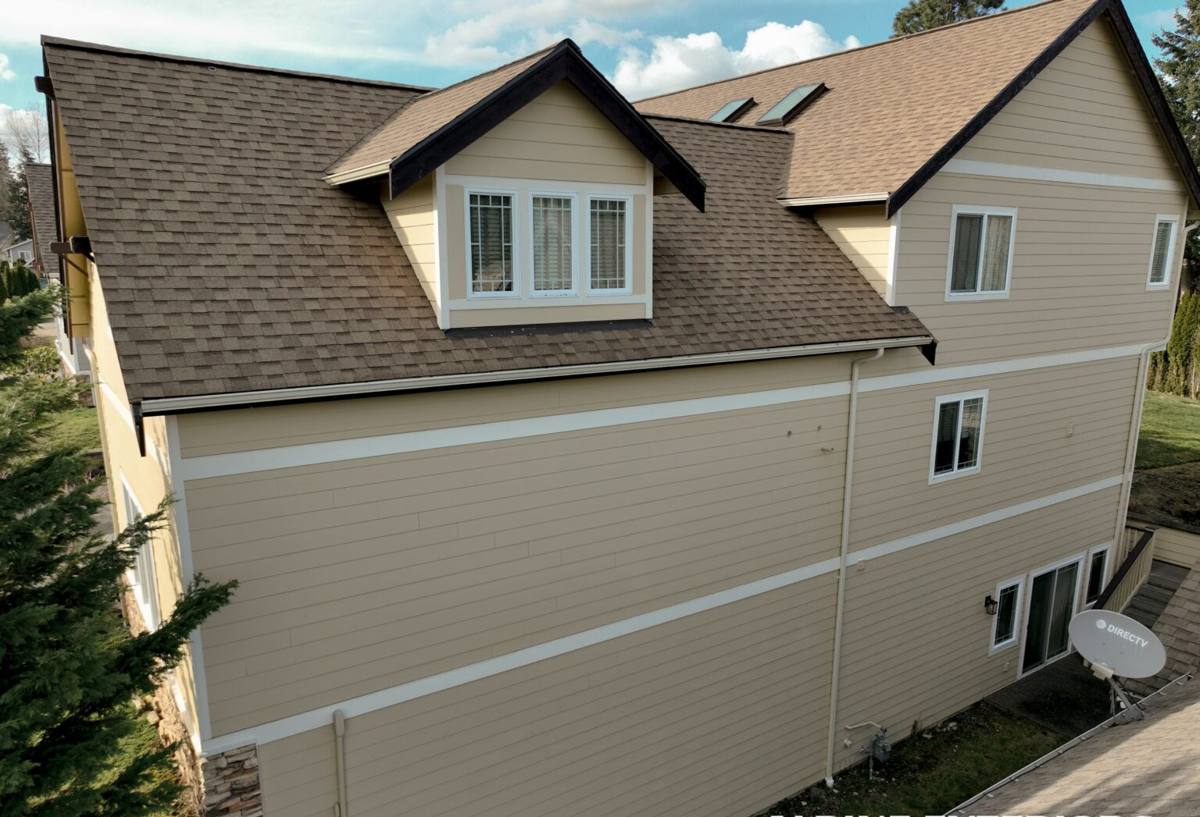
Why Drayton Harbor's Climate Changes the Job
Salt air and marine exposure
Homes near the harbor sit in a mild but persistent salt-air environment. It's not the same corrosive load as a beachfront property getting direct spray, but it's steady, and it accumulates on anything with exposed metal fasteners, low-grade flashing, or cladding that traps moisture against bare wood. Window selection and flashing detail matter more here than they would a few miles inland.
Driving rain, not just rainfall
Whatcom County gets plenty of straight-down rain, but the harbor's exposure adds wind-driven rain that hits window openings at an angle instead of straight on. A window and flashing system that only handles vertical water can still fail against wind-driven rain, because the water is being pushed sideways and upward into laps and seams that were never designed to see it from that direction.
A long moss and mildew season
Extended damp periods mean anything that stays wet — sills, trim, the transition between window and siding — stays wet longer here than in drier parts of the state. Moss and mildew don't damage a window directly, but they hold moisture against surfaces and accelerate rot in any wood trim or sheathing that's already marginal from a poor seal.
What a Correct New-Construction Install Actually Involves
"New construction" matters as a category because it's a different job than a retrofit or replacement. On a new build, the window goes in before the exterior finish, which means the flashing and water management around it become part of the wall assembly — not a repair bolted on after the fact. Done right, that's an advantage. Done wrong, it's a defect that's expensive to find later.
The sequence that has to happen in order
- Rough opening checked for square, level, and correct dimensions before the window ever shows up on site
- Weather-resistive barrier lapped correctly at the opening — water has to shed down and over each layer, never into it
- Sill pan flashing installed to carry any water that gets past the window back out, not into the wall cavity
- Window set, shimmed, and fastened per the manufacturer's structural requirements — not just "close enough"
- Flashing tape and head flashing integrated with the WRB in the correct shingle-lap order
- Insulation and air-sealing around the frame without over-compressing it, which can bow the frame and cause operational issues later
- Interior and exterior trim installed after the water management is confirmed complete, not before
Every one of those steps is a place where a rushed install can look fine for a year or two and then start failing quietly behind the wall. That's the real risk with new-construction windows — the mistakes aren't visible at closing.
Choosing Windows for a Harbor-Adjacent Build
There's no single "best" window brand for this area, and we're not going to tell you there is. What matters is matching the frame material, glazing, and hardware to the exposure the house actually faces, and being honest about the maintenance each option carries.
| Factor | What to weigh in Drayton Harbor conditions |
|---|---|
| Frame material | Vinyl and fiberglass tolerate salt air and moisture with low maintenance; wood frames look great but need consistent upkeep to avoid rot in a damp climate |
| Fastener and hardware finish | Corrosion-resistant hardware is worth the upgrade this close to the water — standard-grade fasteners can show wear faster |
| Glazing package | Double or triple-pane with low-E coatings help with condensation control during the long wet, cool stretches of the year |
| Water management design | Look for a sill design that actively sheds water rather than relying only on sealant to keep it out |
| Warranty structure | Understand what's covered on the frame versus the glass unit versus labor — they're often separate, and installation defects can void frame warranties |
We'll walk through these trade-offs with you honestly, including where a premium option isn't worth it for a given elevation of the house versus where it is.
Orientation and Exposure Matter Window by Window
Not every window opening on a new build faces the same conditions. The side of the house facing the harbor and prevailing weather takes a different beating than the leeward side. On new construction, this is worth planning for before the openings are framed, not after.
What we look at per elevation
- Which walls face open water or prevailing wind and rain direction
- Roof overhang depth at each opening — deeper overhangs reduce direct wetting significantly
- Proximity to grade and splash-back risk from ground-level rain bounce
- Whether a given wall is shaded most of the day, which slows drying time after a storm
This isn't about installing a different window brand on each wall — it's about making sure the flashing detail and sealant choice on the exposed side gets the attention it needs, since that's where a marginal install shows problems first.
Our Process on a Drayton Harbor New-Construction Job
1. Plan review and coordination
We look at the window schedule and rough opening dimensions early, alongside the builder's timeline, so window delivery lines up with when openings are actually ready — not before, not after framing has drifted out of spec.
2. Opening inspection
Before a single window is set, we confirm each rough opening is square, correctly sized, and that the WRB is properly lapped. If something's off, it gets corrected before install, not worked around.
3. Flashing and install
Sill pans, tape flashing, and head flashing go in following manufacturer instructions and standard water-shedding sequence, adapted for the wetter, salt-air conditions this area sees compared to inland Whatcom County.
4. Fastening and air-sealing
Windows are shimmed and fastened to the manufacturer's structural spec, then air-sealed without over-compressing the frame — a common shortcut that can cause windows to bind or operate poorly for the life of the house.
5. Final check before trim-out
We confirm every window operates correctly and the flashing is fully integrated before trim carpenters close things up. Once trim goes on, most of the flashing work is hidden, so this is the last real chance to catch a problem cheaply.
Why It Matters Who's Doing This Work
New-construction window installation is largely invisible once the house is finished. A homeowner or even a general contractor overseeing several trades can't easily tell, by looking at the finished wall, whether the sill pan was installed correctly or whether the flashing laps run the right direction. That's exactly why the crew doing this work needs to already understand what this specific area throws at a house — not be learning the harbor's quirks on your project.
A crew that regularly works Drayton Harbor and the surrounding Semiahmoo area already knows which elevations typically take the worst weather, how long the wet season really runs here, and where salt air causes premature wear on hardware that inland installers might not think twice about. That familiarity shows up in fewer callbacks and fewer surprises during the first few wet seasons after move-in — which is when a marginal install usually reveals itself.
A quick gut-check list for your build
- Is the rough opening confirmed square and correctly sized before the window arrives on site?
- Is there a documented sill pan flashing detail, or is it just caulk and hope?
- Does the installer know which elevation faces the harbor's prevailing weather?
- Is the fastener and hardware spec upgraded for a marine-adjacent environment, or is it a standard inland spec?
- Who's responsible if a flashing defect shows up two years in — the builder, the window manufacturer, or the installer?
If you can't answer these confidently for your project right now, that's a good sign to get a second set of eyes on the window scope before trim-out closes everything up.
Get a Straight Answer Before You Commit
Whether you're a homeowner managing a build in Drayton Harbor or a builder looking for a window crew that already understands this stretch of Semiahmoo, we're glad to walk the plans or the site with you and give you an honest read on what the job needs. There's no pressure and no charge for the estimate — just a straightforward look at what correct new-construction window installation looks like for your specific project. Use the form below to get started.