 Semiahmoo
 Roofing for a Marine Peninsula, Not a Typical Suburb
Semiahmoo Resort sits out on the spit, with water on multiple sides and very little to break the wind coming off the Strait of Georgia and Drayton Harbor. That location is exactly why it's a beautiful place to live and exactly why it's a tougher place to keep a roof healthy than most neighborhoods a few miles inland in Whatcom County. Salt-laden air, near-constant humidity, driving winter rain, and a moss season that can run eight months or longer all work on a roof at the same time. An asphalt shingle roof that would coast along for two decades in a drier climate can start showing problems years early out here if it wasn't built for this specific exposure.
This page is about one job in one place: asphalt shingle roofing on homes in and around Semiahmoo Resort. Not a general overview of shingle roofing everywhere — the specific choices that matter when the roof in question is going to spend its life a short walk from saltwater.
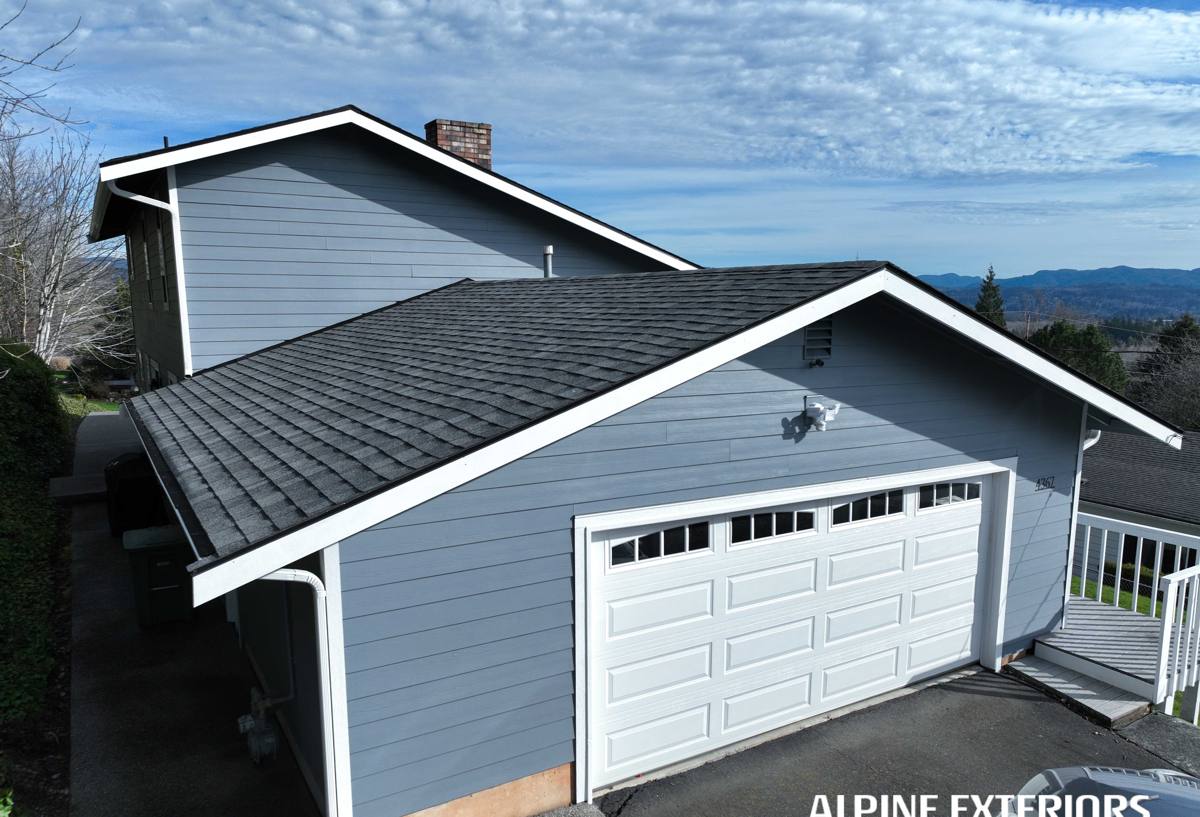
What the Semiahmoo Climate Actually Does to a Roof
It helps to understand the mechanism, not just the symptom, because it changes what "doing the job right" means here.
- Salt air accelerates metal corrosion. Flashing, fasteners, drip edge, and vent housings all take more abuse near the water than they would inland. Lower-grade or under-coated metal shows rust and pinholing years before it should.
- Driving rain finds weak laps. Storms coming off open water often push rain sideways instead of straight down, which stresses shingle laps, ridge caps, and flashing details that would never see that kind of pressure in a sheltered yard.
- Shade, moisture, and mild temperatures grow moss fast. Semiahmoo Resort has a lot of mature trees and landscaping, and that combination of shade plus a wet marine climate is close to ideal moss habitat. Moss holds moisture against the shingle surface, lifts tabs as it grows, and shortens shingle life if it's never addressed.
- Long wet stretches punish poor ventilation. A roof deck that can't dry out between rain events stays damp longer, which invites rot in the sheathing and premature aging in the shingles from underneath.
None of this means asphalt shingles are the wrong material for this location — they're not. It means the installation details have to account for these conditions instead of following a generic, one-size-fits-all approach.
What a Correct Job Looks Like Here
Underlayment and Water Barrier
Given the amount of driving rain this location sees, we don't treat underlayment as an afterthought. Self-adhered ice-and-water barrier at eaves, valleys, and around every penetration gives the roof a second line of defense in the spots most likely to see wind-driven water get up under the shingle course. Synthetic underlayment across the rest of the field holds up better to the humidity and won't degrade the way older felt products can over a long wet season.
Flashing That's Built for Salt Exposure
Flashing is where a shingle roof usually fails first near saltwater, not in the shingle field itself. We use metal and fasteners suited to a corrosive coastal environment at chimneys, walls, skylights, and valleys, and we make sure every flashing detail is actually integrated with the underlayment and shingle courses — not just caulked and hoped for.
Ventilation That Lets the Deck Dry
Balanced intake and exhaust ventilation matters everywhere, but it matters more where wet weather is the norm rather than the exception for half the year. Proper ventilation keeps the roof deck closer to ambient temperature and moisture levels, which reduces the conditions moss and algae need to take hold and helps the shingles themselves last closer to their rated life.
Shingle Selection
Algae-resistant shingles (with copper or zinc granules) are worth the modest upcharge on a property like this, since they directly address the moss and algae streaking that this climate produces. We also pay attention to wind rating given the exposed setting — a standard rating is often not enough this close to open water.
Our Process, Step by Step
1. Inspection and Honest Assessment
We start on the roof, not with a sales pitch. We check the current shingles, flashing, decking condition, ventilation, and any moss or moisture staining, and we tell you plainly whether you're looking at a repair or a full replacement, along with why.
2. Tear-Off and Deck Check
A full replacement means a full tear-off so we can see the deck itself. Any soft, delaminated, or water-damaged sheathing gets replaced before anything new goes down — covering over a compromised deck just hides the problem under new shingles.
3. Water Barrier and Underlayment Installation
Ice-and-water membrane goes in first at the vulnerable areas, followed by synthetic underlayment across the field, installed to shed water correctly at every lap.
4. Flashing and Detail Work
All flashing — valleys, step flashing at walls, chimney flashing, skylight flashing, drip edge — gets installed or replaced as part of the job, using materials chosen for coastal durability rather than whatever's cheapest.
5. Shingle Installation
Shingles go down to manufacturer spec for nailing pattern, exposure, and fastener count, with extra attention to wind performance given the site. Ridge and hip caps are finished last.
6. Ventilation Verification
We confirm intake and exhaust venting are balanced for the attic space, adding or correcting vents where the existing setup falls short.
7. Final Walkthrough
We walk the property with you, review the work, and answer questions before we consider the job finished.
Comparing Shingle Options for a Coastal Property
| Option | Typical Lifespan Here | Best For | Trade-Offs |
|---|---|---|---|
| Standard 3-tab shingle | Shorter end of range in this climate | Budget-driven projects | Lower wind rating, no algae resistance, ages faster near saltwater |
| Standard architectural (laminate) shingle | Mid-to-long range with proper install | Most Semiahmoo Resort homes | Good balance of cost, durability, and appearance |
| Algae-resistant architectural shingle | Same base lifespan, better appearance retention | Shaded or moss-prone lots | Slightly higher material cost, meaningfully less streaking and moss buildup |
| High-wind-rated architectural shingle | Long range with proper install | Fully exposed, open-water-facing roofs | Higher material and fastening cost, best resistance to gusts off the water |
We'll walk through which tier makes sense for your specific roof, exposure, and budget rather than defaulting everyone to the most expensive option.
Maintenance That Actually Matters in This Location
- Have moss and debris cleared from the roof and gutters at least once a year, more often under heavy tree cover.
- Never pressure-wash shingles — it strips granules and shortens shingle life; moss removal should be done with gentle methods and appropriate treatments.
- Check flashing and sealant at chimneys, skylights, and vent penetrations annually, since these are the first places a coastal roof tends to show wear.
- Keep gutters and downspouts clear so water isn't backing up under the eave line during heavy storms.
- Trim back overhanging branches where practical to reduce shade and debris buildup that feeds moss growth.
- After major windstorms, do a visual check (or have us do one) for lifted or missing shingles rather than waiting for a leak to show up inside.
Repair or Replace? What to Look For
Not every roofing problem in Semiahmoo Resort means a full replacement. Isolated flashing failures, a handful of wind-lifted shingles, or a localized leak are often legitimate repairs. Widespread granule loss, shingles that are curling or cracking across large areas, repeated leaks in different spots, or a roof that's simply reached the end of its rated life in a demanding climate usually point toward replacement being the more honest recommendation. We'll tell you which situation you're actually in rather than upselling a repair into a replacement or the reverse.
Cost Factors Worth Understanding
| Factor | Why It Matters Here |
|---|---|
| Roof size and pitch | Larger and steeper roofs take more material, labor, and safety setup |
| Number of penetrations | Chimneys, skylights, and vents each need flashing work, which adds time and material |
| Deck condition | Rotten or soft sheathing discovered at tear-off adds repair cost but shouldn't be skipped |
| Shingle tier chosen | Algae-resistant and high-wind shingles cost more up front but reduce maintenance and re-work |
| Access and site conditions | Landscaping, water frontage, and limited staging space can affect setup and logistics |
We provide clear, itemized estimates so you can see exactly what you're paying for and why, rather than a single lump number with no explanation behind it.
Why Hire a Crew That Already Works This Area
A roof that performs well in a dry inland climate can still underperform on a property exposed to open water and salt air if it's built to generic specs. Working regularly in Semiahmoo Resort and the surrounding Blaine and Whatcom County waterfront means we already know which flashing materials hold up, how much moss pressure to expect on a shaded lot, and where driving rain typically causes trouble on this kind of exposed roofline. That's not something you can shortcut with a crew that's never worked a saltwater-adjacent roof before — it shows up later in callbacks, premature moss growth, or corroded flashing that should have lasted much longer.
Ready for an Honest Look at Your Roof?
If you're dealing with moss buildup, aging shingles, or you just want a straight answer on whether your roof needs attention, we're glad to take a look. Use the form below to request a free, no-pressure estimate — we'll assess your roof, explain what we find in plain terms, and give you options that fit your home and your budget.