 Semiahmoo
 Why Ferndale Decks Wear Out Faster Than Homeowners Expect
Ferndale sits close enough to the water that salt-laden air is a real factor in how fast exterior wood and hardware age, and that's on top of the rain totals Whatcom County sees most of the year. A deck here isn't just dealing with sun exposure like it might inland — it's dealing with near-constant moisture cycling, salt air that accelerates corrosion on fasteners and connectors, and a moss season that can stretch from fall through spring. Put those together and you get decks that look fine on the surface while the framing underneath is quietly failing.
We've replaced enough decks in this area to know the failure pattern is almost always the same: surface boards get replaced once or twice over the years because that's the visible problem, but the ledger board, joists, and post bases underneath never get a real inspection. By the time someone notices a soft spot or a rail that wiggles, there's usually rot that's been developing for several seasons.
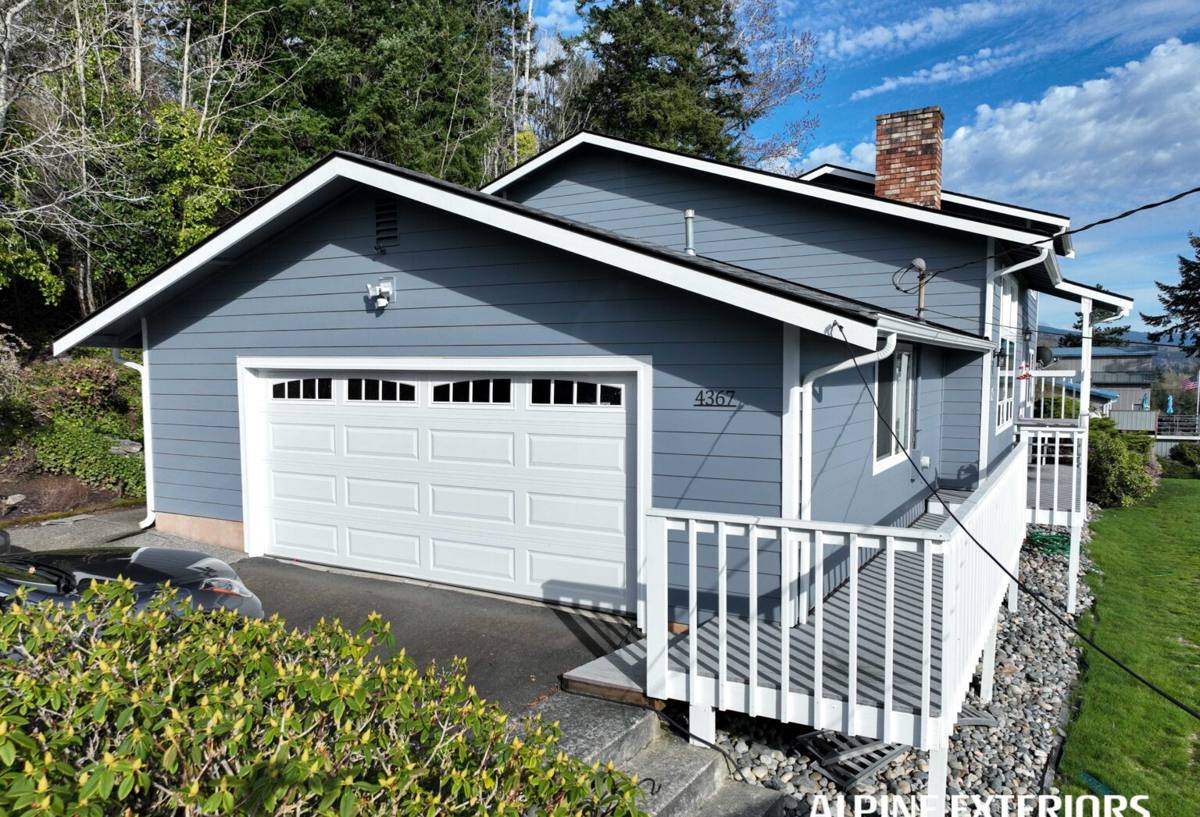
Signs a Ferndale Deck Needs Replacement, Not Another Repair
Not every deck problem means starting over. But there's a point where patching individual boards stops making sense — either because the framing is compromised or because repair costs start approaching what a full replacement would cost anyway. Here's how we tell the difference on a site visit.
Repair Territory
- A handful of cupped or splintering boards on an otherwise sound frame
- Loose railing balusters or a single wobbly post that hasn't spread to the rest of the structure
- Surface graying or moss growth on decking that hasn't yet reached the wood fibers underneath
Replacement Territory
- Soft or spongy spots when you walk across the deck, especially near the house or stair stringers
- Visible rot, rust streaking, or corrosion at the ledger connection to the house
- Fasteners that have worked loose or corroded through, which is common with older galvanized hardware exposed to salt air over many years
- A deck older than 15-20 years that was built before current ledger-flashing and hardware standards were common practice
What a Correct Deck Replacement Actually Involves
A deck replacement done right is mostly about what happens before the new boards ever go down. This is where corners get cut on cheap jobs, and it's exactly the part that determines whether the new deck lasts 10 years or 25.
Ledger and Structural Attachment
The ledger board — where the deck attaches to the house — is the single most important connection on the whole structure, and it's also the point most exposed to water intrusion if it isn't flashed correctly. In a climate with Ferndale's rainfall, proper ledger flashing that directs water away from the house sheathing isn't optional. We treat this as a non-negotiable step, not an upgrade.
Framing and Hardware
Joists, beams, and posts should be sized and spaced for the actual load and span, not just matched to what was there before if what was there before was undersized. Fasteners and structural connectors matter more here than in a drier inland climate — we use corrosion-resistant hardware rated for ground contact and coastal exposure rather than standard galvanized fasteners that can start rusting within a few years in salt air.
Footings
Post footings need to sit below frost depth and bear on stable soil, which in low-lying areas near Ferndale sometimes means going deeper or wider than a textbook minimum. This is also where a permit and inspection process earns its keep — it catches footing shortcuts before they're buried under a finished deck.
Drainage and Airflow
Standing water and trapped moisture under a deck are what feed moss and rot. Correct grading beneath the structure, gaps between boards for drainage, and ventilation at skirting or enclosed areas all matter more here than in a dry climate, where those details are sometimes treated as afterthoughts.
Decking Material Options for a Whatcom County Climate
Material choice matters more in a wet, salt-air environment than in most parts of the country. Here's how the common options compare for a Ferndale application specifically.
| Material | Moisture Behavior | Maintenance | Typical Lifespan Here |
|---|---|---|---|
| Pressure-treated wood | Absorbs moisture readily; needs sealing to resist checking and rot | Annual cleaning, re-sealing every 1-2 years | 10-15 years with upkeep |
| Cedar | Naturally rot-resistant but still needs sealing in constant wet/dry cycling | Regular sealing, moss treatment | 15-20 years with upkeep |
| Composite decking | Doesn't absorb water like wood, but can trap surface moisture that feeds moss/mildew if not cleaned | Periodic washing, no sealing needed | 25+ years |
| PVC/capped decking | Fully moisture-resistant surface, best resistance to salt air and staining | Occasional washing | 25-30+ years |
We don't push one material on every job. A lot of it comes down to budget, how the deck is used, and how much upkeep a homeowner actually wants to do. What we will flag honestly: in a climate that stays wet for months at a stretch, a natural wood deck that isn't re-sealed on schedule will show moss and surface rot years faster than the same deck would inland. That's a maintenance-commitment conversation, not a knock on wood as a material.
Our Deck Replacement Process
1. Site Evaluation
We inspect the existing deck's framing, ledger connection, footings, and grading — not just the surface boards — so the estimate reflects what's actually needed rather than guessing from the top down.
2. Permit and Code Check
Whatcom County and local jurisdictions have specific requirements for ledger attachment, footing depth, and railing height that vary by deck size and height above grade. We handle this step rather than leaving it to the homeowner to sort out mid-project.
3. Demo and Disposal
Old decking, framing, and any compromised material is removed and hauled off, with the area checked for hidden damage to the house structure behind the ledger before rebuilding starts.
4. Rebuild
Framing, flashing, footings, and decking go in per the plan, with hardware and fasteners chosen for coastal exposure rather than standard-grade options.
5. Final Walkthrough
We walk the finished deck with the homeowner, cover any material-specific care (sealing schedule for wood, cleaning routine for composite/PVC), and make sure everything is solid before calling the job done.
Permits and Local Code Considerations
Deck replacement in Whatcom County generally requires a permit once you're rebuilding structural elements rather than just swapping surface boards — this includes most full replacements since the framing typically needs attention anyway. Requirements can vary depending on deck height, size, and proximity to property lines. Skipping this step is one of the more common shortcuts on cheap deck jobs, and it can create real problems at resale when a buyer's inspector or the county flags unpermitted structural work.
Deck Maintenance Checklist for This Climate
- Clear leaves and debris from board gaps and drainage paths before fall rains set in
- Check and treat moss growth early — it spreads faster once established in shaded or low-airflow areas
- Inspect the ledger flashing and house connection point annually for signs of water staining
- Re-seal wood decking on the schedule appropriate to the product — don't wait until graying is obvious
- Check fasteners and hardware periodically for corrosion, especially on decks closer to the water
- Keep gutters and downspouts clear so runoff isn't dumping extra water onto or near the deck structure
Why a Crew That Already Works Ferndale Makes a Difference
A contractor who works this specific area regularly already knows what the local permit process looks for, what footing depths hold up in the soil conditions around here, and how fast moss and salt air actually degrade different materials — because they've seen it firsthand on other decks nearby, not from a manufacturer's spec sheet written for a national market. That local knowledge shows up in small decisions: which hardware grade to spec by default, how much drainage slope to build in, where to add extra ventilation under a low deck. Those are the details that separate a deck that needs major work again in eight years from one that holds up for two or three decades.
Ready for an Honest Look at Your Deck
If your deck is showing soft spots, moss buildup, or you're just not sure whether it's a repair or a replacement situation, we're happy to take a look. The estimate is free, there's no pressure, and you'll get a straight answer about what your deck actually needs — use the form below to get started.