 Semiahmoo
 Deck Repair Built for Custer's Weather, Not Just Any Deck
Custer sits close enough to the water and open enough to the weather coming off the Strait that decks here take a beating most inland homes never see. Salt-laden air corrodes fasteners and hardware faster than manufacturers' warranties assume. Driving rain gets pushed sideways under railings and through ledger boards by wind rather than falling straight down. And the long, gray moss season that runs from fall through spring keeps deck surfaces damp for months at a stretch, which is exactly the condition wood rot and slick algae need to take hold. A deck repair that doesn't account for all three of these factors is a repair that will be back on someone's to-do list within a year or two.
We work on decks throughout Whatcom County, and Custer's mix of older single-family homes and newer builds near the water gives us a good cross-section of what actually fails out here. This page walks through what we look for, what a correct repair involves, and why the details matter more in this climate than they would somewhere drier.
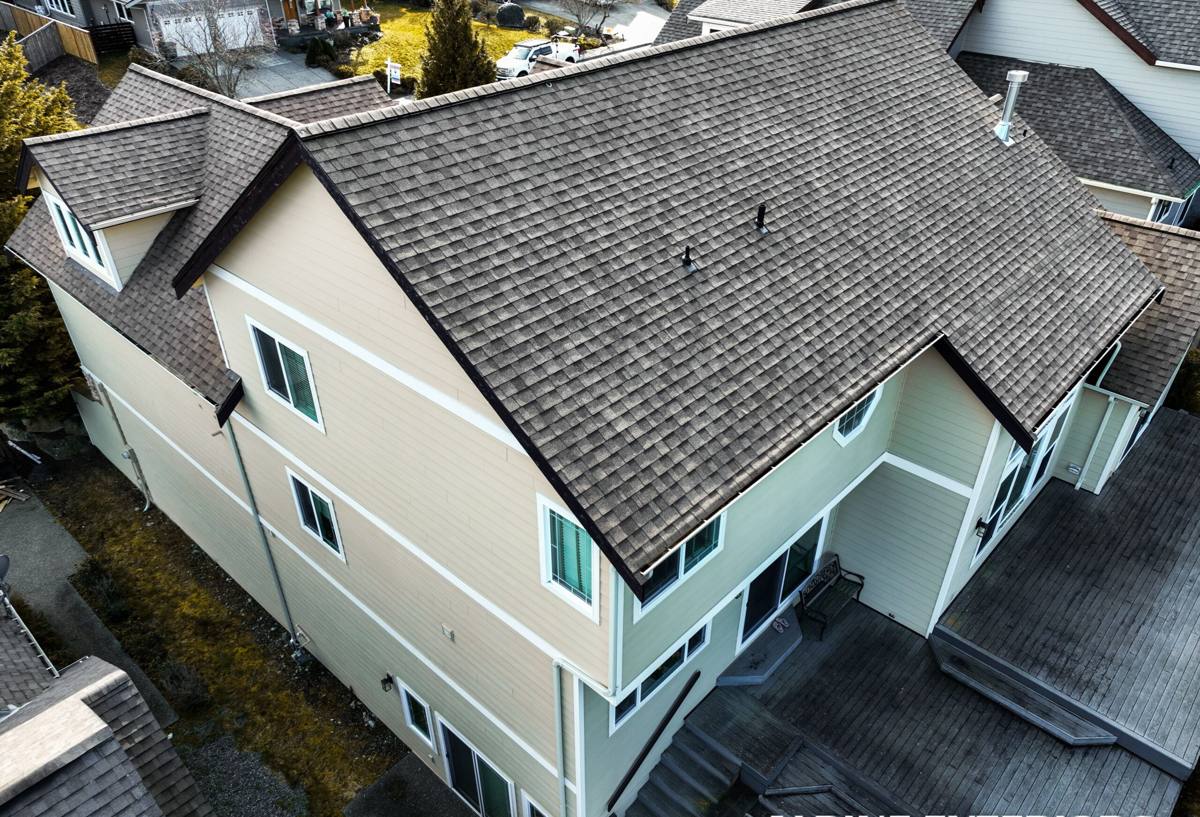
What Salt Air, Rain, and Moss Actually Do to a Deck
Salt Air and Corrosion
Airborne salt doesn't just affect decks right on the waterfront — it travels with the wind and settles on any exposed metal, including fasteners, joist hangers, and railing brackets well inland from the shoreline. Once corrosion starts on a nail or screw head, it weakens the connection from the inside out, often long before there's any visible sign on the surface of the wood. This is one of the most common reasons a deck that "looks fine" turns out to have a structural problem once we start probing the framing.
Driving Rain and Water Intrusion
Wind-driven rain finds its way into places vertical rain never would: under top rails, behind fascia boards, and into the gap where a deck ledger meets the house. Once water gets behind a ledger board or under a rail cap, it can sit there for days without drying, because that area gets little sun or airflow. That trapped moisture is what turns a cosmetic issue into a structural one.
Moss, Algae, and Prolonged Dampness
Whatcom County's moss season isn't just an aesthetic nuisance. A deck surface that stays damp and shaded for months builds up moss and algae that hold moisture directly against the wood or composite decking, slow evaporation, and create a genuinely dangerous walking surface when wet. Left untreated, this buildup accelerates decay in wood decking and can void some composite manufacturers' warranties if cleaning recommendations weren't followed.
Common Deck Repair Issues We See in Custer
- Soft or spongy decking boards, usually near the house or under planters where water pools
- Rusted or corroded fasteners, joist hangers, and railing hardware
- Loose or wobbly railings and posts — often a sign the post base has started to rot
- Ledger board separation or moisture staining where the deck meets the house
- Moss and algae buildup making the surface slick, especially on north-facing or shaded decks
- Warped, cupped, or splitting boards from repeated wet-dry cycles
- Undersized or missing flashing at the ledger, allowing water behind the siding
- Stair stringers showing rot at the base where they meet the ground or a concrete pad
How We Assess a Deck Before Recommending Repair
A proper deck assessment starts underneath, not on top. Surface boards can look presentable while the framing beneath them is compromised, so we check the structure first and the cosmetics second.
What We Check
- Framing and structural connections — joists, beams, posts, and especially the ledger board connection to the house, since this is the single most safety-critical joint on most decks
- Fasteners and hardware — probing for corrosion and confirming that hangers and structural screws are rated for exterior, and ideally coastal, exposure
- Decking surface condition — soft spots, cupping, splitting, and moss or algae coverage
- Railings and guards — checking that posts are solidly anchored, since a loose railing is a safety issue, not a cosmetic one
- Drainage and grading — whether water is shedding away from the deck or pooling against posts, footings, or the ledger
- Flashing — confirming water is being directed away from the house at the ledger board, which is where we most often find hidden damage
We'll tell you plainly if a deck needs full replacement rather than repair — patching a structurally compromised deck just to save money up front usually costs more once framing failure forces a full rebuild anyway.
What a Correct Repair Actually Involves
Deck repair isn't just swapping out a bad board. Done right, it addresses the cause of the damage, not just the symptom.
Fastener and Hardware Upgrades
Where we find corroded fasteners, we replace them with stainless steel or hot-dip galvanized hardware rated for coastal and marine-grade exposure — standard exterior-rated fasteners are a step up from interior hardware, but in a salt-air environment like Custer's, they still corrode faster than the coastal-rated versions. This matters more here than it would 30 miles inland.
Ledger Board and Flashing Repair
If the ledger board connection shows water damage, we don't just seal it and move on. We check the flashing detail, correct it if it's missing or undersized, and confirm the connection is properly through-bolted or lag-screwed per code — this joint carries a significant share of the deck's structural load and is the single spot most responsible for deck collapses when it fails.
Board Replacement
Individual board replacement makes sense when damage is localized. We match species and treatment for wood decking, or the correct profile and color run for composite, so repairs don't stand out as an obvious patch job.
Railing and Guard Repair
Loose posts usually mean the post base or blocking has rotted. We address the underlying wood, not just tighten the existing loose connection, since re-tightening hardware into rotted wood is a temporary fix that fails again within a season or two.
Moss and Algae Treatment
Beyond a one-time cleaning, we'll point out where shade and poor airflow are contributing to repeat moss growth, and what realistic maintenance — periodic cleaning, keeping nearby vegetation trimmed back — will slow it down going forward.
Wood vs. Composite: What Matters for Repair in This Climate
| Factor | Wood Decking | Composite Decking |
|---|---|---|
| Moisture behavior | Absorbs and releases moisture; needs sealing/staining maintained regularly in a wet climate | Doesn't absorb moisture into the board itself, but moss and algae still grow on the surface |
| Repair approach | Individual boards can be replaced and finished to blend reasonably well | Requires matching the exact product line and color; discontinued lines can be hard to match |
| Fastener sensitivity | Standard deck screws work, but corrosion-resistant hardware is essential near salt air | Often requires manufacturer-specific hidden fastener systems |
| Maintenance burden | Higher — periodic cleaning, sealing, and inspection for rot | Lower surface maintenance, but still needs periodic cleaning for moss/algae |
| Underlying framing | Same structural risks apply regardless of surface material | Same structural risks apply regardless of surface material |
Whichever surface material a deck has, the framing underneath is almost always wood, and that framing is where the real climate risk lives. Surface material choice affects maintenance and appearance more than it changes the structural repair conversation.
Signs Your Custer Deck Needs Attention Now
- Boards that feel soft, spongy, or flex noticeably when you walk across them
- A railing or post that wobbles when pushed
- Visible staining, dark streaking, or gaps where the deck meets the house
- Persistent green or black buildup that doesn't fully clear with cleaning
- Fasteners with visible rust bleeding into the surrounding wood
- Stairs that feel less solid than they used to, especially near the base
- A noticeable musty smell coming from underneath the deck
None of these on their own mean a deck is unsafe, but any of them are worth having looked at before the next wet season adds to the problem.
Our Process for Custer Deck Repairs
- Free on-site assessment — we walk the deck, check the framing where accessible, and give you a straight answer on what's needed
- Written scope and estimate — what we'll repair, what materials and hardware we'll use, and why
- Repair work — scheduled around Whatcom County's weather windows, since some repairs (like sealing or staining) need dry conditions to hold properly
- Final walkthrough — we show you what was fixed and flag anything worth keeping an eye on going forward
Why Hire a Crew That Already Works in Custer
A contractor who only occasionally works this stretch of Whatcom County can still do competent repair work, but a crew that's already familiar with Custer's conditions doesn't have to relearn them on your project. We already know which fastener grades hold up here, how far the salt air's effects reach inland, and which framing details tend to fail first in this specific mix of coastal wind and prolonged damp weather. That local pattern recognition is what separates a repair that lasts from one that's back on the schedule in two years.
If you're not sure whether your deck needs a repair, a partial rebuild, or just a good cleaning and hardware check, we're happy to take a look and give you an honest read — no pressure, no upsell. Reach out for a free estimate using the form below.