 Semiahmoo
 Why Windows Wear Out Faster in Custer
Custer sits close enough to Semiahmoo Bay and the Strait of Georgia that homes here take on a different kind of weather than houses fifty miles inland. Salt-laden air moves in off the water, rain comes in sideways more often than it falls straight down, and the region's mild, damp winters give moss and mildew months at a time to work into anything that holds moisture. Windows are one of the first things on a house to show it. A window that would last two or three decades in a dry climate can start failing in half that time here if it wasn't installed with this specific weather in mind.
We replace windows on Custer homes regularly enough to know the failure patterns before we even get up close: fogged double panes on the north and west-facing walls, soft trim under sills, hardware that's gone stiff or corroded, and frames that have quietly let water behind them for years without an obvious leak inside. None of that is unusual for the area. It's just what Whatcom County weather does to windows that weren't installed with it in mind, or that have simply reached the end of their service life.
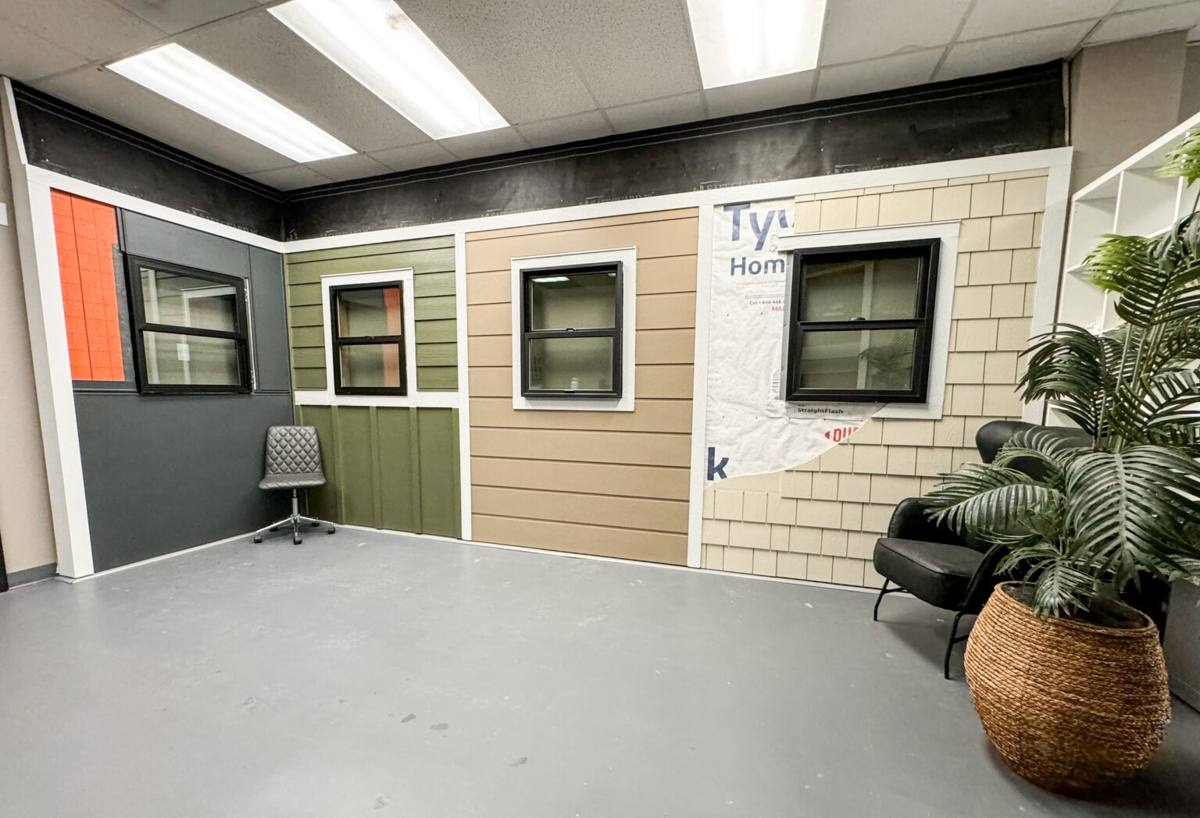
What Salt Air, Driving Rain, and Moss Actually Do to a Window
Each of these has a distinct effect, and understanding them helps explain why the replacement details matter as much as the window itself.
Salt Air
Airborne salt is corrosive to metal. It attacks window hardware — hinges, locks, balance mechanisms — and it's especially hard on aluminum frames and lower-grade fasteners. Corrosion doesn't happen overnight, but on a property this close to the water it happens faster than most homeowners expect, and it's rarely visible until a window won't latch properly or a crank mechanism seizes.
Driving Rain
Wind-driven rain doesn't just hit a window, it gets pushed into any gap it can find — around the frame, under the sill, into old or compressed weatherstripping. Once water gets behind a window frame, it can travel and cause rot in the wall framing before anything shows up on the interior. This is why flashing and sealing details matter more here than in calmer climates; a window that's watertight in a light rain can still leak in a Whatcom County windstorm if it wasn't detailed for wind-driven moisture.
Moss and Prolonged Dampness
Moss doesn't grow on the glass, but it takes hold on sills, trim, and anywhere organic debris collects and stays damp — which, given how many gray, wet weeks this area gets, is most of the year. Moss and the moisture it holds against wood trim accelerate rot. On older wood-frame windows especially, we regularly find soft or rotted sills hiding under a layer of moss that looked cosmetic from a few feet away.
Signs a Custer Home Is Due for Window Replacement
Some of these are obvious, some aren't. Most homeowners notice one or two of these before calling anyone:
- Fogging or a hazy film between the panes — the seal has failed and the insulating gas is gone
- Soft, discolored, or spongy trim and sills, especially where moss has been sitting
- Windows that are hard to open, close, or lock, or that no longer latch flush
- Visible gaps between the frame and the siding or trim
- Noticeable drafts or cold spots near the window even when it's closed
- Condensation forming on the inside of the glass regularly during cold, wet weeks
- Paint that keeps peeling or bubbling on the interior sill no matter how often it's redone
- A musty smell near a window that doesn't go away with cleaning
Any one of these on its own might just need a repair rather than a full replacement. Several of them together, especially on a home more than 20 years old, usually mean the windows have reached the point where replacement costs less over time than continuing to patch them.
What a Correct Window Replacement Job Actually Involves
The window itself is only part of the job. In a climate that pushes rain sideways and keeps everything damp for weeks at a stretch, how the window is installed matters as much as which window you buy.
Removal and Rough Opening Inspection
Once the old window is out, we check the rough opening before anything goes back in. This is where hidden rot or past water intrusion shows up. Skipping this step and just dropping a new window into a compromised opening is one of the most common ways a "new" window ends up leaking within a few years.
Flashing and Moisture Management
Proper flashing directs any water that does get past the window down and out, away from the wall framing, instead of letting it pool or soak in. This is the single most important detail for a window that's going to face driving rain year after year, and it's also the detail that's easiest to shortcut if a crew isn't used to installing in this kind of weather.
Sealing, Insulation, and Weatherstripping
The gap between the new window frame and the rough opening gets insulated and sealed — not just caulked around the outside. A window that's air-sealed properly also resists the salt-laden drafts that work their way into gaps over time.
Trim and Finish
Exterior trim gets refinished or replaced as needed, with attention to keeping it from sitting directly against constant moisture, which is what invites moss and rot to start again.
Choosing a Window Frame for This Climate
There's no single "best" window for every house, but some materials hold up better than others against salt air and constant damp. This is a general comparison, not a ranking — the right choice depends on the home, the budget, and how much upkeep you want to take on.
| Frame Material | Salt Air / Moisture Resistance | Maintenance | Typical Lifespan | Relative Cost |
|---|---|---|---|---|
| Vinyl | Good — won't rust or rot; UV can affect color over decades | Low | 20-30 years | Lower |
| Fiberglass | Very good — dimensionally stable, resists corrosion | Low | 30+ years | Higher |
| Wood-Clad | Depends on cladding condition; wood core vulnerable if seals fail | Higher | 20-30 years with upkeep | Higher |
| Aluminum | Prone to corrosion in salt air unless marine-grade and well-finished | Moderate | Varies widely | Moderate |
We steer most Custer homeowners toward vinyl or fiberglass for exactly the reasons in that table: neither one rusts, rots, or needs repainting, and both handle the freeze-thaw and constant humidity swings of this area without much fuss. Wood-clad windows can still be the right call for a homeowner who wants that look and is committed to the maintenance, but we're honest that they carry more long-term upkeep in this climate specifically because of how sensitive the wood core is if the cladding or seals ever fail.
Window Style Matters Almost as Much as Material
Casement windows — the kind that crank outward and seal by compressing against a gasket — generally resist wind-driven rain better than sliding or hung windows, because closing them pulls the sash tight against the weatherstripping rather than relying on gravity or a friction fit. That doesn't mean every window in a Custer home should be a casement; it means we factor wind exposure into style recommendations, not just looks, especially on walls that catch weather directly off the water.
Glass and Glazing
Most replacement windows here get dual-pane glass with a low-E coating and argon gas fill, which balances heat retention with condensation resistance. Triple-pane glass is available and performs better in extreme cold, but in a climate defined more by dampness than deep cold, the bigger win usually comes from a well-sealed dual-pane unit and a tight, properly flashed installation rather than paying extra for triple-pane performance this weather doesn't really demand.
Our Process for a Custer Window Replacement
- On-site assessment. We look at every window being considered, check for hidden rot around openings, and talk through which ones actually need replacing versus repair.
- Honest, itemized estimate. No pressure, no inflated urgency — just what we found and what it would take to fix it right.
- Product selection. We walk through frame material, glass package, and style options based on the home's exposure — a west-facing wall catching the weather off the water gets different priorities than a sheltered side.
- Installation. Removal, rough opening check, flashing, insulation, sealing, and finish trim — done in the sequence that keeps the wall protected at every stage, not just at the end.
- Final walkthrough. Every window gets operated, checked, and inspected before we consider the job done.
Energy Performance and Comfort in a Marine Climate
Whatcom County's climate is mild compared to inland Washington, but it's also consistently damp and breezy, which makes air-sealing and glass performance matter more than raw insulation value alone. A window with a good U-factor keeps heat from escaping on cold, wet nights, while proper installation keeps moist outside air from finding its way in around the frame — which is often the bigger source of drafts and condensation problems than the glass itself. We size glass packages to the wall's exposure rather than defaulting to one spec for the whole house, since a window facing the open water off Semiahmoo Bay deals with more wind-driven weather than one on a sheltered wall.
Why a Crew That Already Works in Custer Matters
A window installed by someone unfamiliar with this area's weather can look fine for a year or two and still fail early, because the failure points here — flashing details, moss-prone trim, salt-air hardware corrosion — aren't things every installer thinks to prioritize. A crew that works Custer and the surrounding Semiahmoo area regularly has already seen how the local climate finds the weak points in a window installation, and builds the job to account for that from the start rather than learning it the hard way on your house.
That local familiarity also means knowing what tends to go wrong behind the walls of homes in this specific area, what window orientations take the worst of the weather, and how to sequence a job around the region's wet stretches so the house isn't sitting open to the weather any longer than it has to be.
If your windows in Custer are fogging, drafting, sticking, or just showing their age, we're glad to take a look. Fill out the form below for a free, no-pressure estimate — we'll tell you honestly what we find and what your options actually are.