 Semiahmoo
 Windows in Cherry Point Work Harder Than Most
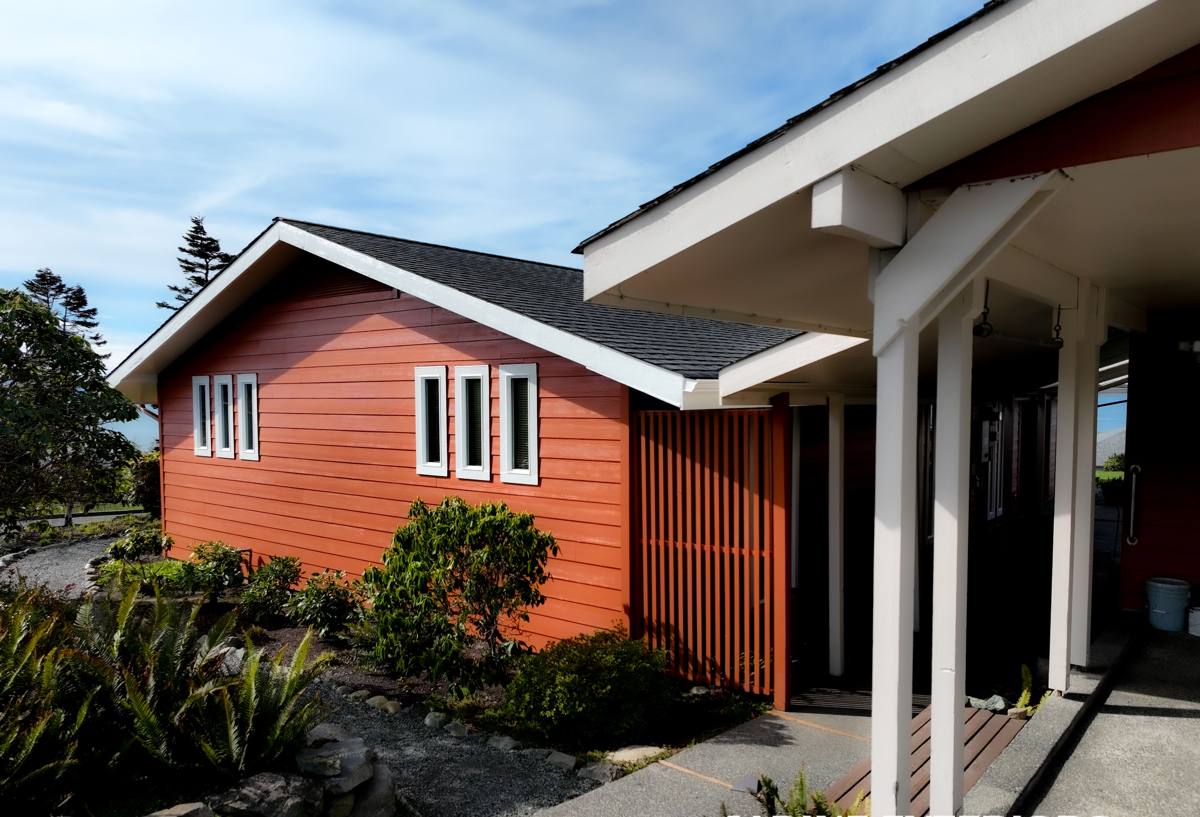
Cherry Point sits right up against the Strait of Georgia in Whatcom County, and that waterfront exposure changes what a window has to survive. It isn't just cold in the winter here — it's salt-laden air moving off the water, wind-driven rain that gets pushed sideways into every gap and seam, and a long stretch of damp, low-sun months where moss and mildew get a real foothold on anything that stays wet. Windows that would hold up fine forty miles inland start showing seal failure, frame rot, and drafts years earlier out here.
We've worked on homes throughout this stretch of the county long enough to know the pattern: it's rarely one catastrophic failure. It's a slow accumulation — a failed seal here, a soft sill there, a draft that shows up every time the wind comes off the water — until one winter the heating bill or the condensation on the glass makes it obvious something needs to change. Energy-efficient window replacement done right, for this specific climate, is what stops that cycle.
What "Energy-Efficient" Actually Means for a Coastal Home
Energy-efficient windows aren't just about a sticker or a U-factor number. Out here, efficiency and durability are the same conversation, because a window that lets moisture in is a window that's losing performance no matter what its rating says on day one.
The Building Science Basics
- U-factor: measures how much heat the window lets through — lower is better for our cool, wet winters.
- Solar heat gain coefficient (SHGC): matters less here than in sunnier climates, but still affects comfort on the clearer summer days.
- Air infiltration rating: arguably the number that matters most on an exposed lot — a tight seal keeps wind-driven rain and drafts out, not just cold air.
- Condensation resistance: a real concern in a marine climate where indoor and outdoor humidity are both high much of the year.
A window with a great U-factor but a poor installation will still perform badly. The frame, the flashing, and the sealant matter as much as the glass package — sometimes more, especially on a coastal lot where wind pressure is pushing water into every weak point.
Frame Material Trade-Offs
| Frame Type | How It Handles Salt Air & Moisture | Maintenance |
|---|---|---|
| Vinyl | Doesn't corrode or rot; performs well near saltwater with proper drainage detailing | Low — occasional cleaning |
| Fiberglass | Very stable dimensionally, holds paint well, strong moisture resistance | Low — repaint on your schedule |
| Wood (clad or unclad) | Needs consistent maintenance to avoid rot in this climate; clad exteriors help but interior wood still needs care | Higher — regular inspection and upkeep |
| Aluminum | Prone to condensation and conductive heat loss unless thermally broken; can pit near salt air over time | Moderate |
We'll talk through the honest trade-offs of each option for your specific home rather than pushing one material for every job. A lot of it comes down to your home's exposure — a lot buffered by trees behind Cherry Point performs differently than one with a clear line to the water.
Why Old Windows Fail Faster Here
The biggest culprits we see on coastal Whatcom County homes:
- Seal failure in insulated glass units — the humidity swings between damp winters and drier summer stretches stress the seal faster than in a stable climate, leading to fogging between panes.
- Sill and frame rot — moss and algae hold moisture against wood surfaces, and once bare wood is exposed, rot sets in quickly in a climate that rarely dries out for long.
- Hardware corrosion — locks, hinges, and balance mechanisms exposed to salt air can seize or corrode well before the glass itself fails.
- Flashing and sealant breakdown — UV and constant wet-dry cycling break down old caulk and flashing tape faster than manufacturers' warranties often assume.
None of these are dramatic on their own. But together they're why a window that might last 25-30 years in a drier inland climate can start showing real problems a decade sooner on an exposed Cherry Point lot.
What a Correct Installation Involves
Replacing a window is not just pulling the old one and setting a new one in the same hole. On a site with this much wind and moisture exposure, the installation details are where performance is actually won or lost.
Our Process
- On-site assessment — we check the existing frame, sill, and sheathing condition before quoting anything, since hidden rot or water damage changes the scope.
- Correct sizing and product selection — matched to the opening, the home's exposure, and your priorities (efficiency, sound, maintenance, or a mix).
- Removal with damage control — old units come out carefully to avoid tearing up siding or trim that doesn't need replacing.
- Inspection of the rough opening — any soft wood, compromised sheathing, or old flashing gets addressed before a new window goes in, not covered up.
- Proper flashing and weather barrier integration — this is the step most likely to get rushed on a lower-quality install, and it's the one most responsible for long-term water intrusion problems.
- Air-sealing and insulation — the gap around the frame gets sealed correctly, not just stuffed with fiberglass or foam and forgotten.
- Interior and exterior trim finish — sealed and finished to shed water, not just look tidy.
- Final function and seal check — every unit gets operated and checked before we call the job done.
Skipping the flashing and weather barrier step is the single most common shortcut we see on other contractors' work when we get called out to diagnose a leak. It's invisible once the trim goes back on, which is exactly why it matters that whoever does the work does it right the first time.
Signs Your Cherry Point Home Needs New Windows
| What You Notice | What It Usually Means |
|---|---|
| Fogging or haze between the glass panes | The insulated glass seal has failed — the unit needs replacement, not just cleaning |
| Drafts you can feel near the frame in wind | Seal or weatherstripping breakdown, sometimes combined with a frame that's no longer square |
| Soft or discolored wood at the sill | Moisture intrusion, often further along than it looks from the surface |
| Difficulty opening, closing, or locking | Hardware wear or frame movement — sometimes fixable, sometimes a sign of bigger issues |
| Rising heating bills with no other explanation | Air infiltration through aging windows is a common, overlooked contributor |
| Visible moss or algae buildup on frames | Chronic moisture exposure — worth having the frame condition checked, not just the surface cleaned |
Cost Factors Worth Understanding
We won't quote a number without seeing the home, but the honest range for a project depends on a handful of factors that are worth knowing up front:
- Number of openings and sizes — the most direct cost driver.
- Frame material — vinyl is typically the most budget-friendly, fiberglass and clad-wood cost more but bring different long-term maintenance profiles.
- Hidden repair needs — rot or damaged sheathing found once the old window is out adds labor and materials that a clean opening wouldn't.
- Access and site conditions — second-story or hard-to-reach openings take more time and equipment.
- Glass package — upgraded low-E coatings or gas fills add cost but can matter more on an exposed, view-facing wall.
We'd rather walk your home and give you a real number than throw out a broad estimate that doesn't hold up once we see what's actually behind your existing trim.
Why It Matters to Hire a Crew That Already Works This Area
Window installation done to a manufacturer's generic spec sheet doesn't always account for what a Whatcom County waterfront property actually deals with. A crew that's worked homes in and around Semiahmoo and Cherry Point knows to check for things a crew from a drier climate might not think to look for — moss-related sill damage, the wind-loading on an exposed wall, the way salt air affects hardware choices over time. That local pattern recognition is the difference between a fix that lasts and one that needs revisiting in a few years.
It also means we're not guessing at what "typical" looks like for this stretch of coastline. We've seen how these homes age here, and we build the installation around that reality rather than a one-size-fits-all approach.
Get an Honest Look at Your Windows
If your windows are drafty, fogged, hard to operate, or you're just not sure whether repair or replacement makes sense, we're glad to take a look and give you a straight answer — no pressure, no upsell. Fill out the form below to schedule a free estimate for your Cherry Point home.