 Semiahmoo
 Roof Repair in California Creek: What the Local Climate Demands
Homes around California Creek sit close enough to Semiahmoo Bay and Drayton Harbor that salt-laden air is part of daily life, and close enough to mature tree cover that shade and moisture linger on the roof long after a storm has passed. That combination — salt air, driving rain, and a moss season that can run from October well into spring — is harder on a roof than most homeowners realize until something starts leaking. A repair here isn't just patching a hole; it's addressing the specific way this stretch of Whatcom County wears a roof down.
Wind off the water tends to drive rain sideways rather than straight down, which pushes water into laps, valleys, and flashing details that a roof further inland might never stress. Add in the shade and humidity that keep moss and algae established for most of the year, and you get a roof that ages differently than one in a drier, more open part of the county. Repairing it correctly means understanding that pattern, not just sealing the spot where the ceiling stain showed up.
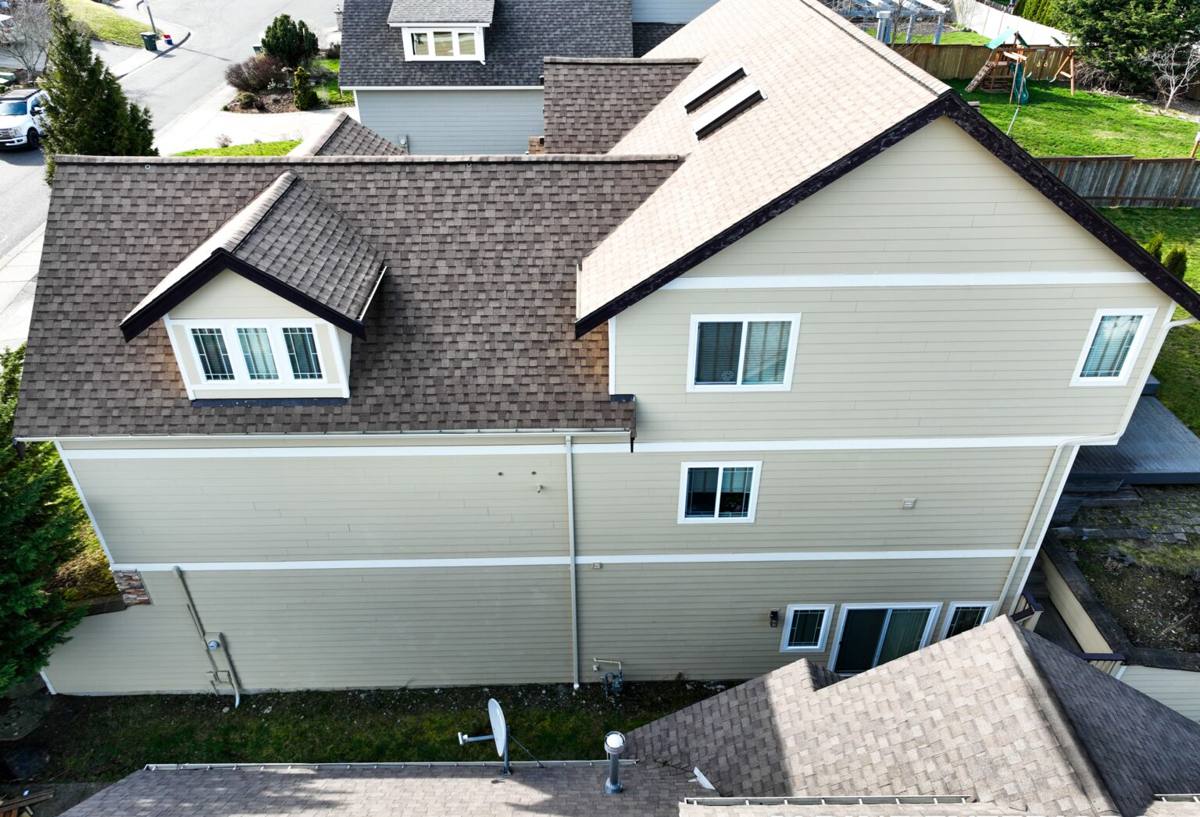
Common Roof Problems We See Near California Creek
Moss and Trapped Moisture
Moss doesn't just look bad — it holds water against the roofing material and works its way under shingle tabs and shake edges over time. On shaded, north-facing slopes near the creek, moss can re-establish within a season or two of a cleaning if the underlying moisture problem isn't addressed. Left alone, it lifts shingle edges and creates channels where wind-driven rain can get underneath.
Salt Air and Fastener Corrosion
Salt air accelerates corrosion on exposed metal — nail heads, flashing seams, and any exposed fastener on a roof this close to the bay corrode faster than the same materials would inland. A repair that reuses standard fasteners or unprotected flashing is a repair that will need to be redone sooner than it should.
Wind-Driven Rain at Valleys and Flashing
Valleys, chimney flashing, skylight curbs, and any place two roof planes meet are where storm-driven rain finds its way in. These are also the spots most often patched with sealant alone rather than properly re-flashed, which buys a season or two before the leak returns.
Gutter Backups and Overflow Damage
Heavy, sustained rain combined with needle and leaf litter from surrounding trees clogs gutters faster here than in more open neighborhoods. Backed-up water finds the roof edge, the fascia, and eventually the sheathing underneath — damage that often gets misdiagnosed as a roofing problem when it started as a gutter problem.
What a Correct Roof Repair Actually Involves
Diagnosing the Real Cause, Not Just the Symptom
A ceiling stain rarely marks the exact spot where water is entering the roof — water travels along rafters and sheathing before it shows up inside. A proper repair starts on the roof itself: checking the suspect area, the flashing details nearby, the condition of the underlayment where it's exposed, and the general state of surrounding shingles or shakes. Sealing the visible symptom without finding the actual entry point is the single most common reason a "repaired" roof leaks again the next winter.
Matching Materials and Fastener Choices
Patch repairs should use materials that match the existing roof in type, weight, and where possible, color — mismatched patches shed water differently and stand out. Just as important given the local air is fastener choice: corrosion-resistant nails and screws, and flashing metal chosen to hold up near saltwater rather than the cheapest option on the shelf.
Flashing, Underlayment, and the Water Path
Most durable repairs are really about re-establishing the water's intended path off the roof — proper step flashing at walls, correctly lapped underlayment at valleys, and counterflashing that sheds water rather than trapping it. Sealant has a place, but it's a backup, not the primary defense.
Our Repair Process, Step by Step
- Inspection. We get on the roof (not just a look from the ground) and check the suspect area plus flashing, valleys, penetrations, and gutter lines nearby.
- Diagnosis and photos. We identify the actual entry point and any secondary damage — soft sheathing, deteriorated underlayment, corroded fasteners — before quoting anything.
- Written scope and estimate. You get a plain explanation of what's wrong, what we'll do about it, and a fair price range before work starts.
- Repair. We remove and replace only what's damaged, re-flash where needed, and match materials to the existing roof.
- Moisture and ventilation check. We look at attic ventilation and any signs of trapped moisture, since a repair that ignores ventilation often fails again.
- Cleanup and walkthrough. We clear debris, check gutters near the repair, and walk you through what was done and what to watch going forward.
Repair or Replace? How We Help You Decide
Not every roof problem near California Creek needs a full replacement, and not every leak is a simple patch. Here's the honest breakdown we use when we're on your roof:
| Signs a Repair Makes Sense | Signs You Should Plan for Replacement |
|---|---|
| Leak traced to one flashing detail or a small area of damaged shingles | Multiple leaks in different areas of the roof |
| Roof is under roughly 15-20 years old with granule loss/wear limited to one section | Roof is near or past its expected material lifespan overall |
| Sheathing underneath the damaged area is still solid | Soft or rotted sheathing found in more than one spot |
| Moss/algae is surface-level and hasn't lifted shingle edges broadly | Widespread moss growth with lifted tabs across multiple slopes |
| One-time storm or impact damage to an otherwise sound roof | Recurring leaks in the same general area after prior repairs |
When a roof is borderline, we'll tell you honestly — including when a repair now is the more sensible near-term move even if replacement is a few years out.
Materials and Cost Factors for a California Creek Repair
Repair cost depends on roof type, how many areas need attention, and access. Broad ranges only — every roof is different, which is why we quote after inspection, not over the phone:
| Factor | Why It Affects the Job |
|---|---|
| Roof material (asphalt comp, cedar shake, metal) | Matching materials and fastener types varies in cost and availability |
| Number and location of leak points | Multiple flashing repairs cost more than a single localized patch |
| Sheathing or decking damage | Rotted decking underneath adds material and labor beyond the visible repair |
| Roof pitch and access | Steeper slopes and multi-story sections require more setup and time |
| Age and condition of surrounding roofing | Older, brittle shingles nearby are more likely to be damaged during the repair itself |
For asphalt composition roofs, repairs generally involve removing and replacing damaged shingles and re-flashing the affected area. Cedar shake repairs take more care — matching shake thickness and exposure so the patch weathers evenly with the rest of the roof. Metal roof repairs near the water get extra attention to fastener and flashing corrosion resistance, since that's where salt air does the most damage over time.
After the Repair: Keeping Moss and Moisture From Coming Back
A good repair fixes the current leak. Keeping it from happening again is mostly about ongoing maintenance in a climate that doesn't give a roof much of a break:
- Clean gutters at least twice a year, more often if you're under heavy tree cover
- Have moss physically removed rather than just treated when it's established, especially on shaded north-facing slopes
- Trim back overhanging branches to reduce shade and debris buildup on the roof
- Check attic ventilation — poor airflow traps moisture and speeds up moss and rot from the inside
- Walk the roofline (or have it checked) after major windstorms for lifted or displaced shingles
- Address small flashing issues early — a $200 fix now is a lot cheaper than the sheathing repair it becomes if ignored
Why a Crew That Already Works California Creek Matters
A roofer who works this specific area regularly knows which flashing details tend to fail first on homes near the water, which slopes hold moss longest under the local tree cover, and what fastener and material choices actually hold up to salt air instead of just meeting a generic spec. That local pattern recognition shortens the diagnosis and avoids repairs that look right on paper but don't account for what this stretch of Whatcom County actually does to a roof over a few winters.
It also means someone who can speak plainly about what's really going on with your roof, without pushing a bigger job than the problem calls for. If a targeted repair is the right call, that's what we'll recommend — replacement gets suggested only when the roof's condition actually warrants it.
Timing a Repair Around the Local Wet Season
Roof repairs can be done most of the year here, but timing matters. Late spring through early fall gives the most reliable working conditions and the best chance for sealants and adhesives to cure properly. That said, a leak found mid-winter shouldn't wait for better weather — active water intrusion during the wettest months causes far more damage than the inconvenience of a repair during a rain break. We work with the weather when we can and respond to urgent leaks regardless of season, because a delayed repair on a roof already stressed by driving rain rarely stays a small problem.
If you're dealing with a leak, visible moss buildup, or just want an honest read on your roof's condition, we're happy to take a look. Reach out for a free, no-pressure estimate using the form below.