 Semiahmoo
 Why Blaine Homes Need a Different Approach to Siding
Blaine sits right where Semiahmoo Bay meets the open water, which means homes here take on a combination of weather stresses that inland Whatcom County properties simply don't deal with. Salt-laden air off the bay works its way into every seam and fastener point on a home's exterior. Wind-driven rain doesn't just fall on a house here — it gets pushed sideways into siding laps, trim joints, and corner boards. And the long, damp moss season that runs through much of the fall and winter gives organic growth months to take hold on any surface that stays wet too long.
Siding that works fine in a drier climate, or one without the salt exposure, often struggles in Blaine. That's the reason we standardized on James Hardie fiber cement for every home we side, and it's especially true for the Blaine area, where the combination of coastal exposure and sustained moisture is tougher than what most siding products were designed to handle over the long term.
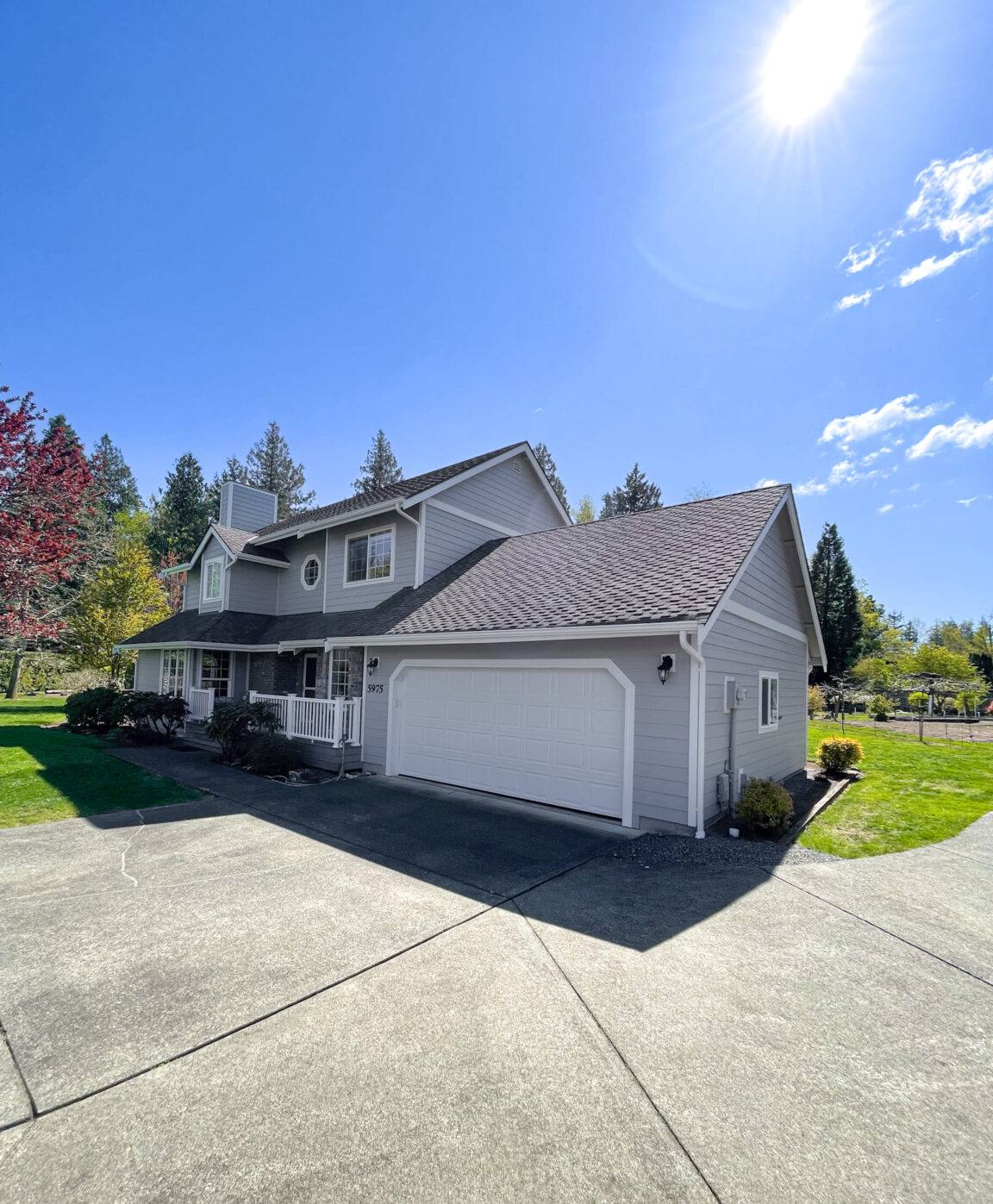
What Salt Air, Rain, and Moss Actually Do to Siding
Salt air
Airborne salt is corrosive to fasteners and hardware, and it accelerates the breakdown of finishes that aren't built to resist it. On products with a painted or coated surface, salt exposure speeds up chalking, fading, and finish failure. It also tends to find any gap in a coating and start working on the substrate underneath.
Driving rain
Blaine's exposure to wind off the water means rain doesn't behave the way it does in a sheltered inland yard. It gets forced upward and sideways under laps and around trim, which is why lap spacing, flashing details, and caulking practices matter more here than in calmer settings. A siding system that depends on perfect, permanent caulk lines to stay watertight is a liability in this kind of wind exposure.
Moss and organic growth
Western Whatcom County's wet season gives moss, algae, and mildew a long window to establish themselves. North-facing walls, areas under tree cover, and anywhere siding stays damp longer than it should are the first places this shows up. Surfaces that hold moisture, or that develop hairline cracks where spores can lodge, are more susceptible over time.
Why We Only Install James Hardie in This Climate
James Hardie fiber cement is engineered specifically to hold up to moisture cycling without swelling, delaminating, or rotting the way wood-based products can. It's non-combustible, which matters given the dry-summer wildfire smoke and ember exposure the Pacific Northwest has seen in recent years, and it carries a factory-applied ColorPlus finish that's baked on under controlled conditions rather than field-painted. That finish is formulated to resist fading and hold up to UV and moisture exposure far longer than a standard field-applied paint job.
James Hardie also engineers regional product lines (HZ5 and HZ10) specifically for climate zones like ours, accounting for moisture and temperature patterns rather than using one generic formulation everywhere. For a bay-exposed area like Blaine, that climate-specific engineering is exactly the kind of detail that separates a siding job that lasts from one that needs attention again in a few years.
We don't install LP SmartSide, vinyl, Cemplank, Allura, primed spruce, or cedar. Each of those has legitimate uses in the right setting, but none of them combine the moisture resistance, factory finish durability, non-combustibility, and long-term warranty backing that we want standing between a Blaine home and the weather it actually faces. That's a standard we hold across every home we work on, not a sales pitch specific to this page.
What Correct Installation Involves
Fiber cement siding is only as good as the installation behind it. Hardie's own installation instructions are detailed for a reason — skipping steps is where most long-term siding failures start, regardless of the product.
- Proper drainage plane and weather-resistive barrier behind the siding, not just house wrap stapled up and covered
- Correct fastener type, spacing, and depth — over-driven or under-driven nails compromise the water management system
- Minimum clearance from grade, roof lines, decks, and patios so siding isn't sitting in standing moisture
- Proper lap dimensions and butt joint treatment, with joints flashed rather than relying solely on caulk
- Correct flashing at windows, doors, and any horizontal trim or transition point
- Factory-cut and factory-sealed edges used wherever possible, with any field cuts properly sealed per Hardie specification
- Ventilation and rainscreen detailing appropriate for a high-exposure coastal wall
On a bay-exposed property, we pay particular attention to the water management details around window and door openings, since that's where wind-driven rain finds its way in if flashing is shortcut. We also look closely at how a home's siding will perform on its most exposed elevation — usually the side facing the water or prevailing wind — rather than treating all four walls the same.
Our Process for a Blaine James Hardie Project
1. On-site assessment
We walk the property and look at current siding condition, moisture damage, trim and flashing details, and which elevations take the brunt of the weather. This tells us where extra attention is needed and whether there's existing water damage to address before new siding goes up.
2. Product and color selection
We help homeowners choose the right Hardie product line and ColorPlus finish for their home, factoring in HOA or neighborhood expectations where relevant and how a color will read against Semiahmoo's coastal light.
3. Removal and substrate check
Old siding comes off and we inspect sheathing underneath for rot, moisture intrusion, or prior water damage — common on homes that have had years of salt and rain exposure — and address any issues before new material goes on.
4. Weather barrier and flashing installation
This is the step that determines how the home performs in driving rain, and it's where we spend the most care given Blaine's wind exposure.
5. Siding installation to manufacturer spec
Installed per James Hardie's fastening, clearance, and joint requirements, not shortcuts.
6. Final inspection and cleanup
We walk the finished job with the homeowner and confirm trim, caulking, and finish details before we consider the project complete.
Comparing Approaches: Why This Matters for a Bay-Exposed Home
| Factor | What a Shortcut Installation Risks | What Correct Installation Delivers |
|---|---|---|
| Moisture management | Reliance on caulk alone; water intrusion at laps and joints over time | Flashed joints and proper drainage plane hold up under driving rain |
| Salt air exposure | Fasteners and finish degrade faster; hidden corrosion | Correct fastener spec and factory finish resist salt-driven wear |
| Moss and organic growth | Trapped moisture behind siding accelerates growth | Proper ventilation and clearance keep walls drying properly |
| Warranty | Field errors can void manufacturer coverage | Spec-compliant installation keeps warranty intact |
Why Local Experience with Blaine Homes Matters
A crew that has worked other homes in Blaine and around Semiahmoo Bay already understands which elevations take the worst weather, how local moisture patterns behave through the wet season, and where moss tends to establish first on this kind of exposure. That's not something a crew from outside the area picks up on the first job. It shows up in small decisions — where to add extra flashing attention, which side of the house needs the most careful joint work, how to talk through color choice against the coastal light — that add up to a siding job that performs the way it's supposed to for decades, not just years.
It also means a shorter learning curve on permitting and any local requirements specific to Whatcom County or the Blaine area, and a crew that isn't guessing about how the climate here behaves.
What to Ask Before Hiring a Siding Contractor in Blaine
- Are they a certified or preferred James Hardie installer, and can they explain the specific product line they'd recommend for a bay-exposed home?
- Do they follow Hardie's published fastening, clearance, and flashing specifications, or do they treat those as optional?
- Have they worked on homes in Blaine or similar coastal-exposure areas before, and can they speak to how they handle wind-driven rain and salt air specifically?
- What does their warranty cover, and how does it relate to the manufacturer's warranty?
- Will they inspect the substrate for existing moisture damage before installing new siding?
If your Blaine home's siding is showing its age, or you're planning ahead for a home that can actually stand up to salt air, driving rain, and a long moss season, we're happy to take a look and talk through what correct James Hardie installation would involve for your property. Request a free, no-pressure estimate using the form below.