 Semiahmoo
 Why Blaine Harbor Roofs Age Differently
Blaine Harbor sits right where the Strait of Georgia meets Semiahmoo Bay, and that location shapes what a roof has to put up with. Salt-laden air off the water works into fasteners, flashing, and any exposed metal faster than it would a few miles inland. Wind-driven rain off the Strait doesn't fall straight down — it gets pushed sideways under shingle tabs and around poorly sealed penetrations. And like most of Whatcom County, Blaine Harbor gets a long, damp shoulder season every fall and spring where roofs stay wet and shaded long enough for moss and algae to take hold and never fully dry out.
None of that means a roof here is doomed to fail early. It means the installation has to account for those conditions from the start — the right underlayment, the right fastener hardware, the right ventilation, and flashing detail work that doesn't cut corners. A roof built the same way you'd build one in a dry inland climate will show its age in Blaine Harbor years before it should.
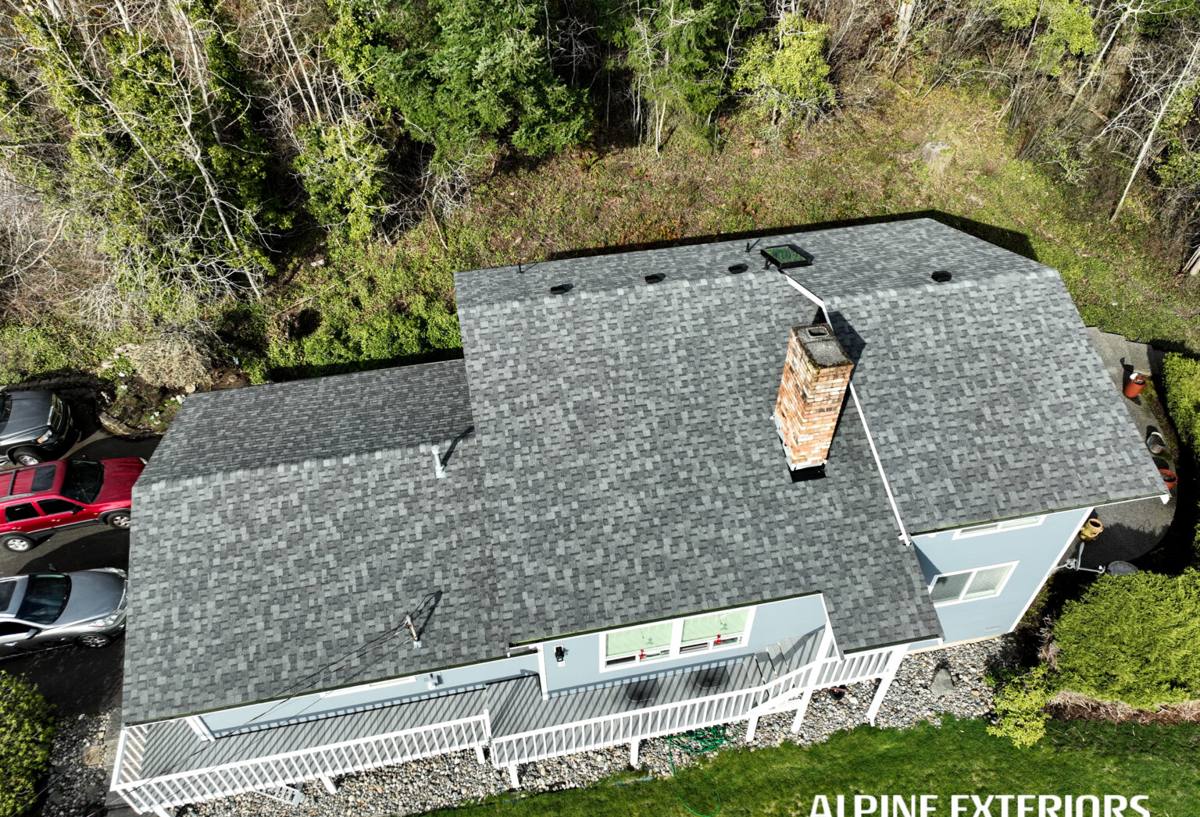
Signs a Roof Needs Replacing, Not Just Repairing
Homeowners often call us for a repair and find out the roof has actually reached the point where patching isn't the honest answer. Some signs point clearly toward replacement rather than another round of spot repairs:
- Shingles that are cupping, curling, or losing granules across large sections rather than one isolated spot
- Soft or spongy decking felt underfoot in the attic or from the roof surface
- Daylight visible through the roof deck from inside the attic
- Moss growth that's lifted shingle edges rather than just sitting on the surface
- Repeated leaks in different locations after previous repairs
- A roof approaching or past the manufacturer's expected service life for its material and exposure
A roof near the water in Whatcom County often shows wear at the eaves, valleys, and north-facing slopes first — those are the areas that stay wettest longest and take the brunt of wind-driven rain. If that's where the damage is concentrated, it's worth a full inspection before committing to another repair.
What a Correct Roof Installation Actually Involves
A roof is a system, not a single layer of shingles. Skipping or shortcutting any one layer is usually where premature failures start, especially in a wet coastal climate.
Tear-off and deck inspection
We remove the old roofing down to the deck rather than laying new material over old — that lets us actually see the plywood or OSB underneath and replace any sections that have soaked up moisture and gone soft. Roofing over a compromised deck just hides a problem that gets worse.
Ice and water shield at vulnerable areas
Eaves, valleys, and roof-to-wall transitions get a self-adhering waterproof membrane underneath the main underlayment. These are the spots where wind-driven rain and ice damming (on the colder days Whatcom County still gets) are most likely to force water backward under the shingles.
Synthetic underlayment across the field
A quality synthetic underlayment covers the rest of the roof as a second line of defense. It matters more here than in a dry climate — if wind ever lifts or damages a shingle before it's noticed, the underlayment is what keeps the deck dry in the meantime.
Flashing detail work
Chimneys, skylights, vent pipes, and wall intersections are where most roof leaks actually originate — not the open field of shingles. Correct step flashing, counter-flashing, and pipe boot installation, sealed properly rather than just caulked over, is where an installation crew's experience really shows.
Fasteners rated for coastal exposure
Given the salt air near the harbor, we pay attention to fastener and flashing hardware quality. Cheaper galvanized hardware can corrode faster this close to saltwater than it would inland — using corrosion-resistant fasteners and flashing is a small cost difference that pays off over the life of the roof.
Choosing a Roofing Material for a Harbor-Adjacent Home
There's no single "best" roofing material for Blaine Harbor — it depends on the home, the budget, and how much long-term maintenance the owner wants to take on. Here's how the common options actually compare for this specific climate:
| Material | How it handles salt air & rain | Moss resistance | Typical lifespan here |
|---|---|---|---|
| Architectural asphalt shingle | Good with proper flashing; algae-resistant granules recommended | Moderate — benefits from zinc/copper strips | 20–30 years |
| Standing seam metal | Excellent shedding of wind-driven rain; use coastal-rated coatings and fasteners | High — sheds moss and debris well | 40–50+ years |
| Cedar shake | Traditional look but needs diligent maintenance in this moisture level | Low without regular treatment | 15–25 years with upkeep |
| Composite/synthetic shake | Good weather resistance, consistent performance | Moderate to high depending on product | 30–50 years |
Asphalt shingle remains the most common choice because it balances upfront cost with solid performance when installed correctly and paired with algae-resistant granules. Metal roofing costs more up front but sheds this area's rain and moss pressure better than almost anything else, which is why we see more of it going on homes near the water. Cedar shake has real curb appeal but asks the most of the homeowner in ongoing maintenance given how much moisture this area holds onto — we're upfront about that trade-off rather than talking anyone out of a look they want without explaining the upkeep involved.
Ventilation and Moisture Control
A correctly ventilated attic is one of the most overlooked parts of a roof installation, and it matters more in a damp coastal climate than almost anywhere else. Without balanced intake and exhaust ventilation, moisture from inside the home gets trapped against the underside of the roof deck, which shortens the life of the decking and the shingles from below — separate from anything happening on the outside surface.
We check soffit intake vents aren't blocked by insulation, confirm ridge or other exhaust venting is sized correctly for the attic's square footage, and make sure the whole system is balanced rather than just present. On north-facing slopes and shaded sections — common around Blaine Harbor's tree cover — good airflow also helps the roof surface dry out between rain events, which is one of the more effective ways to slow moss growth without relying on chemical treatments alone.
Our Installation Process
- On-site inspection and estimate — we look at the whole roof, not just the area you called about, and give you a straightforward assessment of what's needed.
- Material selection — we walk through the honest trade-offs for your home, budget, and how much maintenance you want to take on long-term.
- Tear-off and deck inspection — old roofing comes off, deck is inspected and any damaged sections replaced.
- Underlayment and flashing installation — ice and water shield at vulnerable areas, synthetic underlayment across the field, correct flashing at every penetration and transition.
- Roofing material installation — installed to manufacturer specification, not shortcut for speed.
- Ventilation check — intake and exhaust venting confirmed balanced before we call the job done.
- Final walkthrough — we go over the finished roof with you and answer any questions before we leave.
What a New Roof Costs — and What Drives the Price
Every roof is different, but the factors that move the price up or down are consistent. Rather than quote a number that doesn't apply to your home, here's what actually drives the estimate:
| Factor | Why it matters |
|---|---|
| Roof size and number of squares | Larger roof surface means more material and labor |
| Roof pitch and complexity | Steep or multi-plane roofs take longer and require more safety setup |
| Number of valleys, penetrations, and transitions | Each one needs individual flashing work |
| Deck condition | Rotted or soft decking sections add replacement cost |
| Material choice | Asphalt, metal, and composite materials all price differently per square |
| Tear-off layers | Removing multiple existing layers takes more labor than a single layer |
The only way to get an accurate number is a walk of the actual roof — we're happy to give you that assessment and a written estimate with no pressure to commit on the spot.
Why Local Experience in Blaine Harbor Matters
A crew that regularly works this specific stretch of Whatcom County already knows which details matter here: how far the salt air travels inland from the harbor, which slopes on a given lot layout stay shaded and mossy longest, and how hard wind-driven rain off the Strait tends to hit an eave versus a valley. That's not something you learn from a general roofing checklist — it's learned from doing the work on homes in this specific area, season after season.
It also means we're not disappearing after the invoice clears. Warranty questions, a flashing detail that needs a second look after a storm, a maintenance question a few years down the line — a local crew is the one who's still around and familiar with your specific roof.
Keeping a New Roof Performing Long-Term
A correctly installed roof still benefits from basic upkeep, especially in a climate that stays damp as long as this one does:
- Clear leaves and debris from valleys and gutters at least twice a year, more often under heavy tree cover
- Have moss growth treated or removed before it lifts shingle edges, not after
- Check attic ventilation isn't blocked by added insulation or storage
- After major windstorms, do a visual check (or have one done) for lifted or missing shingles
- Address any small leak or stain immediately rather than waiting for it to spread
If you're weighing a repair against a full replacement, or just want an honest read on where your roof stands, we're glad to take a look. Fill out the form below for a free, no-pressure estimate.