 Semiahmoo
 Blaine Harbor Sits in One of the Toughest Microclimates in Whatcom County
Homes around Blaine Harbor take a harder beating than houses even a few miles inland. The combination of salt-laden air off the water, wind-driven rain that hits siding sideways instead of straight down, and a moss season that can run eight or nine months out of the year adds up to real, measurable wear on a home's exterior. Paint fails faster here. Caulk joints open up sooner. Wood trim goes soft in places that would stay dry a mile inland. None of this is unique to any one house — it's just what happens when a building sits close to open water in the Pacific Northwest.
That's the backdrop for every siding decision a Blaine Harbor homeowner makes. The product, the flashing details, the fastener choice, and the crew doing the work all matter more here than they would in a drier, more sheltered part of Whatcom County. This page is about one thing specifically: what it takes to do James Hardie fiber cement siding right on a Blaine Harbor home, and why that "right" looks a little different this close to the water.
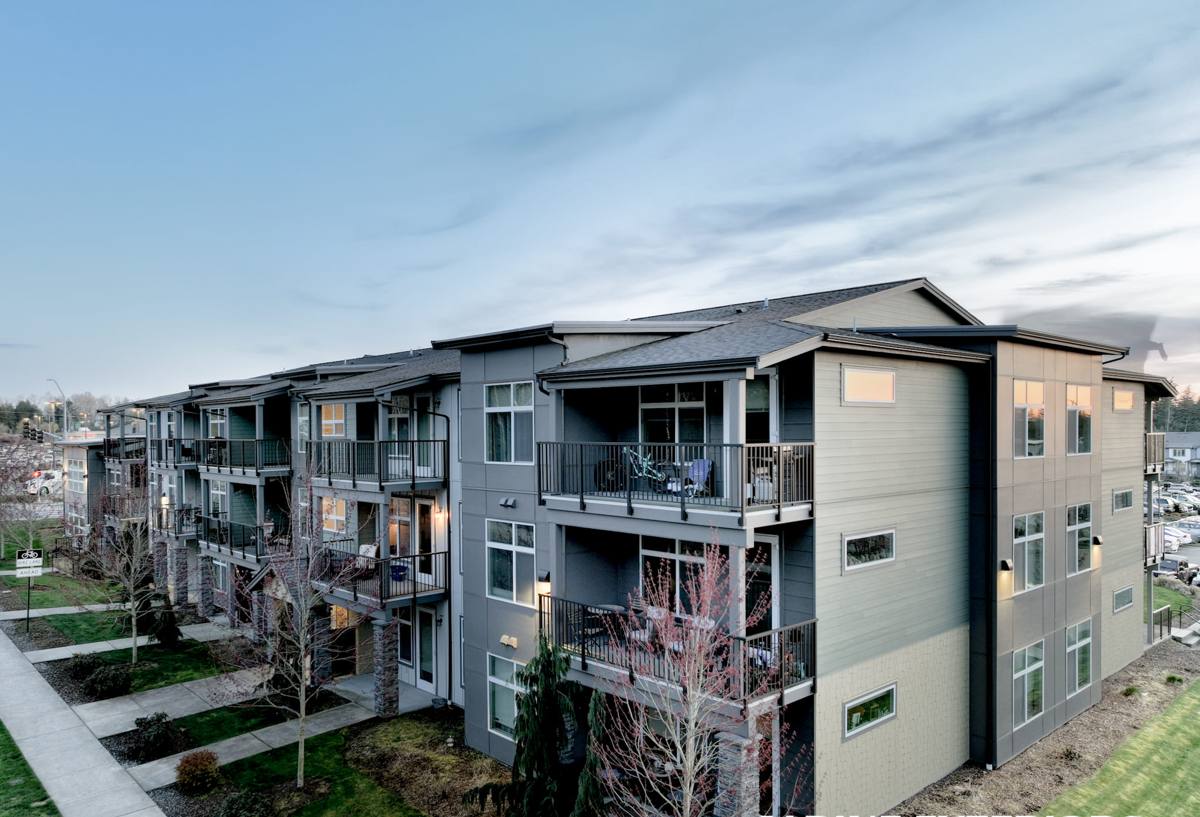
Why We Only Install James Hardie This Close to the Water
We install James Hardie fiber cement exclusively — not vinyl, not LP SmartSide, not cedar or primed spruce. That standard matters even more in a marine environment. Vinyl siding softens, warps, and becomes brittle faster under UV and temperature swings, and it has no real defense against wind-driven rain finding its way behind loose panels near a harbor. Wood-based products, including engineered wood siding, depend on an intact factory coating and diligent field caulking to keep moisture out — and in an environment where salt air and constant dampness attack seams and cut edges, that margin for error shrinks fast.
James Hardie is fiber cement: sand, cement, and cellulose fiber, non-combustible, and dimensionally stable in a way wood-based and vinyl products aren't. It doesn't expand and contract with humidity the way wood does, and it doesn't rely on paint film alone to keep water out — the material itself is inert to rot. That's not a marketing point, it's a practical one for a house that gets salt spray and driving rain more days than not.
What ColorPlus Finish Does for Salt-Air Exposure
Standard field-painted siding is only as good as its paint job, and paint adhesion struggles in salty, humid air — you'll see it in blistering, chalking, and early peeling on painted trim around any harbor. James Hardie's ColorPlus finish is baked on at the factory in multiple coats under controlled conditions, which gives it better adhesion and UV resistance than most site-applied paint can match, along with a longer color warranty. For a home that's fighting salt air year-round, starting with a finish that isn't dependent on field painting technique or weather conditions on install day is a real advantage.
Getting the Product Line Right for Blaine Harbor
James Hardie engineers its siding by climate zone, and homes in this part of Washington fall into the zone Hardie designates for the Pacific Northwest's wet, moderate climate — engineered around sustained moisture exposure rather than the extreme humidity of, say, the Gulf Coast. That distinction matters when we're specifying product: the goal isn't just "James Hardie," it's the right Hardie system, installed with the right moisture-management details, for this specific exposure.
- HardiePlank lap siding — the most common choice for Blaine Harbor homes, available in several profiles and textures, with ColorPlus finish options that hold color without repainting on the schedule painted wood needs.
- HardiePanel vertical siding — often used on accent walls, gables, or in combination with lap siding for homes going for a more contemporary or coastal look.
- HardieTrim boards — for corners, window and door casings, and fascia; matching trim material to the field siding matters for long-term performance, not just looks, since mismatched trim and siding move differently and open gaps over time.
- HardieSoffit panels — worth considering on homes with exposed eaves getting direct wind-driven rain, since soffit performance affects how much moisture works its way into the attic and wall assembly.
What Correct Installation Actually Involves Here
Fiber cement siding is only as good as the installation behind it, and that's especially true in a high-rain, salt-air setting. A lot of the problems we get called out to fix on other contractors' work aren't material failures — they're installation shortcuts that don't show up for a few years, right around the time driving rain finds the gap.
The details that matter most in this climate
- Correct clearances — siding held up off grade, roofing, decks, and hardscape per manufacturer spec, so splash-back and standing water don't sit against the bottom edge of the boards.
- Proper flashing at every window, door, and horizontal trim transition, lapped so water sheds outward rather than getting trapped behind the cladding.
- A drainable water-resistive barrier behind the siding, giving any moisture that does get past the cladding a path to drain and dry out instead of sitting against the sheathing.
- Corrosion-resistant fasteners — stainless steel or hot-dip galvanized — since standard fasteners can streak and corrode faster in salt air, leaving rust stains bleeding through the finish.
- Tight, correctly caulked joints at butt seams and trim, using sealants rated for the movement and weather exposure this location gets.
None of this is exotic. It's the manufacturer's installation spec, followed completely, on a home where skipping a step shows up faster than it would somewhere drier and more sheltered.
Living With Salt Air and Moss: What Blaine Harbor Homeowners Should Expect
Even correctly installed Hardie siding lives in this environment, so it's worth knowing what normal upkeep looks like versus what signals a problem.
Salt air mostly shows up as surface residue and, on fasteners or trim without proper corrosion resistance, streaking. A periodic gentle rinse — garden hose pressure, not a pressure washer aimed at seams — keeps salt film from building up and helps preserve the finish.
Moss and algae favor the shaded, damp, north-facing walls that are common on harbor-adjacent lots with tree cover or tight setbacks. Hardie's factory finish resists moss better than bare wood, but moss can still take hold on grime buildup or in areas that stay wet longer than they should — often a sign that gutters, downspouts, or grading are sending water where it shouldn't go rather than a siding problem itself.
Wind-driven rain is the one that actually tests the installation, not just the material — it's why flashing and drainage details behind the siding matter as much as the boards themselves.
A simple maintenance rhythm that works here
- Rinse siding once or twice a year, more often on shaded or harbor-facing walls.
- Keep gutters and downspouts clear so water isn't sheeting down the wall face.
- Trim back vegetation that keeps a wall section shaded and damp longer than the rest of the house.
- Re-caulk any joint that looks cracked or pulled away — small gaps are cheap to fix and expensive to ignore.
- Walk the exterior once a year and look at low corners, bottom courses, and trim returns — the spots closest to grade and splash-back age first.
Our Process for a Blaine Harbor Siding Project
We handle these projects the same way regardless of size, because skipping steps is exactly what causes problems in a climate like this one:
- On-site assessment — we look at wall exposure, current siding and sheathing condition, drainage around the foundation, and any trouble spots specific to how the wind and rain hit that particular lot.
- Product and detail plan — profile, trim, and finish selection, plus a plan for flashing, water-resistive barrier, and fastener spec suited to the exposure.
- Tear-off and substrate check — old siding comes off and we inspect sheathing for hidden moisture damage before anything new goes up; problems found here get addressed, not covered over.
- Weather barrier and flashing installation — the part of the job that determines whether the house stays dry for the next thirty years, done before a single piece of Hardie board goes up.
- Siding installation to manufacturer spec — clearances, fastening pattern, and joint treatment followed exactly, not approximated.
- Trim, caulking, and final detailing — the finishing work that keeps water out of seams and corners long-term.
- Final walkthrough so you know what was done and what routine maintenance looks like going forward.
What Affects Cost on a Blaine Harbor Project
| Factor | Why It Moves the Price |
|---|---|
| Home size and wall complexity | More corners, gables, and dormers mean more cutting, trim, and flashing detail work. |
| Current siding removal | Tear-off and any sheathing repair from prior moisture damage adds labor before new siding can go up. |
| Product selection | Lap profile versus panel siding, trim board width, and ColorPlus color all affect material cost. |
| Exposure level | Walls facing prevailing wind and rain off the water often get upgraded flashing and drainage detailing. |
| Site access | Waterfront and marina-adjacent lots can have tighter access, staging limits, or seasonal timing considerations. |
| Trim and accent work | Soffit, fascia, and accent panel upgrades add scope beyond a straightforward re-side. |
We don't quote from a distance — every estimate is based on an actual look at the house, because two homes on the same block can need different scopes depending on their exposure and current condition.
Why It Matters That We Already Work Blaine Harbor
A crew that's worked this specific stretch of shoreline knows things a general contractor coming from inland doesn't automatically know: which wall orientations take the worst of the weather, how moss behaves on shaded harbor lots, what fastener and flashing upgrades are worth the extra cost here versus optional elsewhere in Whatcom County. That local pattern recognition is the difference between a siding job that looks right on install day and one that's still performing correctly in year fifteen.
Questions worth asking any contractor before you hire them for a home this close to the water
- Do you install James Hardie exclusively, or are you switching between several siding brands depending on the bid?
- What fastener material do you use, and is it upgraded for salt-air exposure?
- What's your flashing and water-resistive barrier detail at windows and horizontal trim breaks?
- Have you worked on homes in this immediate area, and can you speak to what this exposure actually does to siding?
- Is your bid itemized enough that I know what product line, trim, and finish I'm actually getting?
- What does the manufacturer warranty cover, and does it stay valid with your installation method?
If a contractor can't answer those clearly, that's worth knowing before the tear-off starts, not after.
If you're weighing a siding replacement or repair on a Blaine Harbor home, we're happy to take a look and give you a straight, no-pressure estimate — what your home actually needs, what it would cost, and why. There's a form below to get started.