 Semiahmoo
 Why Blaine's Climate Is Hard on Windows
Blaine sits at the northern edge of Whatcom County on the Semiahmoo Peninsula, right where Pacific storm systems roll in off the water and the Canadian border traffic never stops. That location is beautiful, but it's tough on a house. Homes here deal with three things that older or poorly installed windows just can't handle over time: salt-laden air off the harbor and bay, wind-driven rain that gets pushed sideways into wall assemblies instead of falling straight down, and a moss and mildew season that can run eight or nine months out of the year in a wet stretch.
None of those things are dramatic on their own. The damage is slow. A window that seals fine in July can be letting in moisture by January because the frame has swollen, the sealant has failed, or condensation has been sitting in the sash pocket since October. By the time a homeowner notices soft trim or a musty smell near the sill, the window has usually been underperforming for a couple of seasons already.
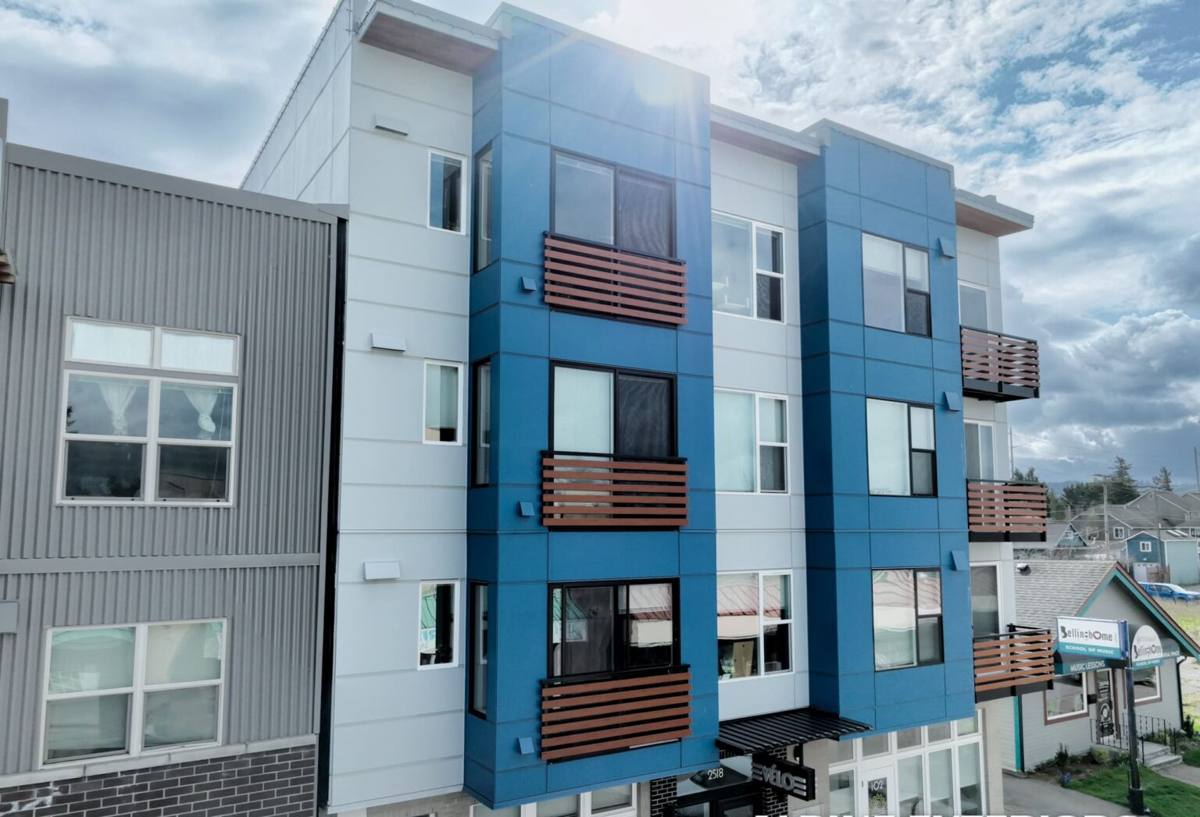
What "Energy-Efficient" Actually Means for a Coastal Home
Energy efficiency isn't just a sticker on the glass. For a Blaine home, it's really three separate jobs the window has to do at once:
- Keep heat in. Low-E coatings and gas-filled sealed units cut down on the heat loss you'd otherwise get through a large pane of glass, which matters when the house is heating almost year-round in this part of Whatcom County.
- Keep water out — not just rain hitting the glass, but wind-driven rain hitting the frame at an angle. This is a flashing and installation issue as much as a product issue.
- Resist what salt air does to metal and finishes over years, not months. Corrosion and coating breakdown happen slowly, but they happen faster here than fifty miles inland.
A window that's rated for energy performance but installed without addressing the second and third points will still fail early in this environment. We treat all three as one job, not three separate concerns.
U-Factor, Condensation, and What to Actually Look At
For this climate, U-factor (how well the window resists heat flow) matters more than solar heat gain coefficient, since Blaine doesn't get the intense summer sun that drives cooling-focused window choices in other regions. What we pay closer attention to locally is condensation resistance — a window with a poor thermal break will fog and sweat on the interior during our damp, mild winters, and that moisture is exactly what feeds mold and rot around a sill over a few seasons.
Frame Material Comparison for Salt Air and Driving Rain
There's no single "best" frame material for every house — it depends on exposure, budget, and the look you're going for. Here's how the common options actually hold up in a Semiahmoo Peninsula environment:
| Frame Material | Salt Air / Coastal Performance | Maintenance | Typical Trade-Off |
|---|---|---|---|
| Vinyl | Good — won't corrode or rust; UV-stable finishes hold up well | Low — occasional cleaning | Fewer color/paint options; frame profiles can look bulkier |
| Fiberglass | Very good — dimensionally stable in temperature and moisture swings | Low | Higher upfront cost than vinyl |
| Aluminum | Weaker — prone to corrosion and pitting near salt air unless heavily coated/maintained | Higher — coatings need monitoring | Strong and slim sightlines, but our standard is to avoid it in direct coastal exposure unless the coating spec is right |
| Wood-clad | Fair to good depending on cladding quality; the wood core is the vulnerable point if the seal ever breaks | Higher — cladding seams need periodic inspection | Best interior appearance for some homeowners, but least forgiving of installation mistakes |
For most Blaine homes we work on, vinyl and fiberglass cover the vast majority of cases well. We don't push aluminum-frame replacements in direct water or bay-facing exposure as a matter of our own installation standard — not because the material is bad everywhere, but because the long-term coating maintenance it needs doesn't match how most homeowners actually want to spend their weekends.
Signs Your Blaine Home's Windows Are Underperforming
A quick self-check most homeowners can do without any tools:
- Condensation or fogging between the panes (means the seal in the insulated glass unit has failed)
- Visible daylight or a draft you can feel at the frame edge on a windy day
- Soft, discolored, or spongy wood trim around the window, inside or out
- Moss or dark streaking building up on the sill or the siding directly below the window
- Difficulty opening/closing, or a sash that's swollen shut part of the year and loose the rest
- A noticeably colder spot in the room near the window compared to the rest of the wall
- Paint or caulk around the frame that's cracked, peeling, or missing in sections
Any one of these on its own isn't an emergency. Two or three together, especially moss plus soft trim, usually means water has been getting behind the frame for a while and it's worth having someone look before it spreads into the wall framing.
What a Correct Installation Involves
This is the part that actually determines whether a window performs for 20+ years or starts failing in five. Because we do siding and exterior work as our core trade, we look at window replacement as part of the wall assembly, not a standalone swap.
Before the New Window Goes In
The old unit comes out and we inspect the rough opening — sheathing, framing, and any existing house wrap — for hidden water damage. This is often the first real look anyone's had at that part of the wall in years, and on the wetter, older housing stock around Whatcom County it's not unusual to find something that needs attention before a new window goes in at all.
Flashing and Water Management
This is where driving rain gets stopped or doesn't. Proper installation means correctly lapped flashing tape integrated with the house wrap or building paper — sill pan first, then jamb flashing, then head flashing — so that any water that does get past the window sheds down and out, not into the wall cavity. This sequence matters more here than in drier climates because Blaine's storms genuinely do push rain sideways and upward under eaves at times.
Sealing and Insulation
Low-expansion foam or backer rod and sealant around the frame, sized correctly for the gap — too much rigid foam can bow a vinyl frame, too little leaves air gaps that show up as drafts and cold spots.
Tie-In With Siding and Trim
Since we're already a siding crew, we finish the trim and siding tie-in around the new window to match the surrounding wall rather than leaving a visibly different or poorly caulked transition — a common problem when window installation and siding work are handled by two different contractors who never coordinate.
Our Process
- On-site assessment. We look at each window individually — exposure, current condition, and how the wall assembly around it is holding up — rather than quoting a flat per-window number sight unseen.
- Product selection. We walk through frame material, glass package, and performance ratings based on that specific window's sun and weather exposure, not a one-size answer for the whole house.
- Written scope and timeline. What's being replaced, how the opening will be flashed, and what happens to the surrounding siding and trim.
- Removal and inspection. Old units come out carefully; any hidden moisture damage gets flagged and discussed before we move forward.
- Installation. Sill pan, flashing sequence, insulation, and sealing done in that order, every time.
- Exterior finish. Trim and siding tie-in matched to the existing wall.
- Walkthrough. Operation check on every window, interior and exterior clean-up.
Cost Factors to Understand
Window replacement pricing varies a lot based on real factors, not just the base unit price. Broad ranges depend heavily on size, glass package, and how much of the surrounding wall needs work:
| Factor | Why It Changes the Price |
|---|---|
| Frame material | Vinyl is generally the most budget-friendly; fiberglass and wood-clad cost more upfront |
| Glass package | Double-pane vs. triple-pane, and Low-E coating options, change both cost and performance |
| Opening condition | Hidden rot or framing damage found during removal adds repair work beyond the window itself |
| Number of windows | Whole-house replacements typically bring a better per-unit cost than one-off swaps |
| Siding/trim tie-in | Matching new trim to existing siding adds labor but avoids a mismatched, leak-prone patch |
| Access and second-story work | Upper-floor windows or difficult access add labor time |
We'd rather walk a homeowner through where their money is actually going than quote a number that hides a bad opening or a corner cut on flashing.
Why a Crew That Already Works Blaine Matters
A window installer who mainly works inland or in drier parts of the region isn't necessarily going to get the flashing sequence and material choices wrong — but they may not default to treating salt air exposure and wind-driven rain as the standard case, because it isn't the standard case where they usually work. On the Semiahmoo Peninsula, it is the standard case. Every window we spec and install here starts from that assumption rather than treating coastal exposure as an upgrade or an afterthought.
It also matters that we do siding as our core trade. A window is only as good as the wall it's set into, and a lot of the water problems we get called out to fix started as a window installed correctly on its own terms but poorly integrated with the siding and flashing around it. Handling both under one job means there's no gap between two contractors' scopes of work for water to find.
If your windows in Blaine are drafty, fogging, or just older than you'd like to admit, we're happy to take a look and give you a straight answer on what's actually going on — no pressure, no obligation. Fill out the form below for a free estimate.