 Semiahmoo
 Roofing for a Salt-Air, Moss-Prone Corner of Whatcom County
Blaine Harbor sits close enough to the water that homes here take a different kind of beating than roofs a few miles inland. The combination of salt-laden air off Semiahmoo Bay, long stretches of driving rain, and a moss season that can run most of the year puts real demands on an asphalt shingle roof. A roof that would hold up fine in a drier part of Whatcom County can wear out faster here if it wasn't built with these conditions in mind. This page covers what that means in practice for a Blaine Harbor home and how we approach the job.
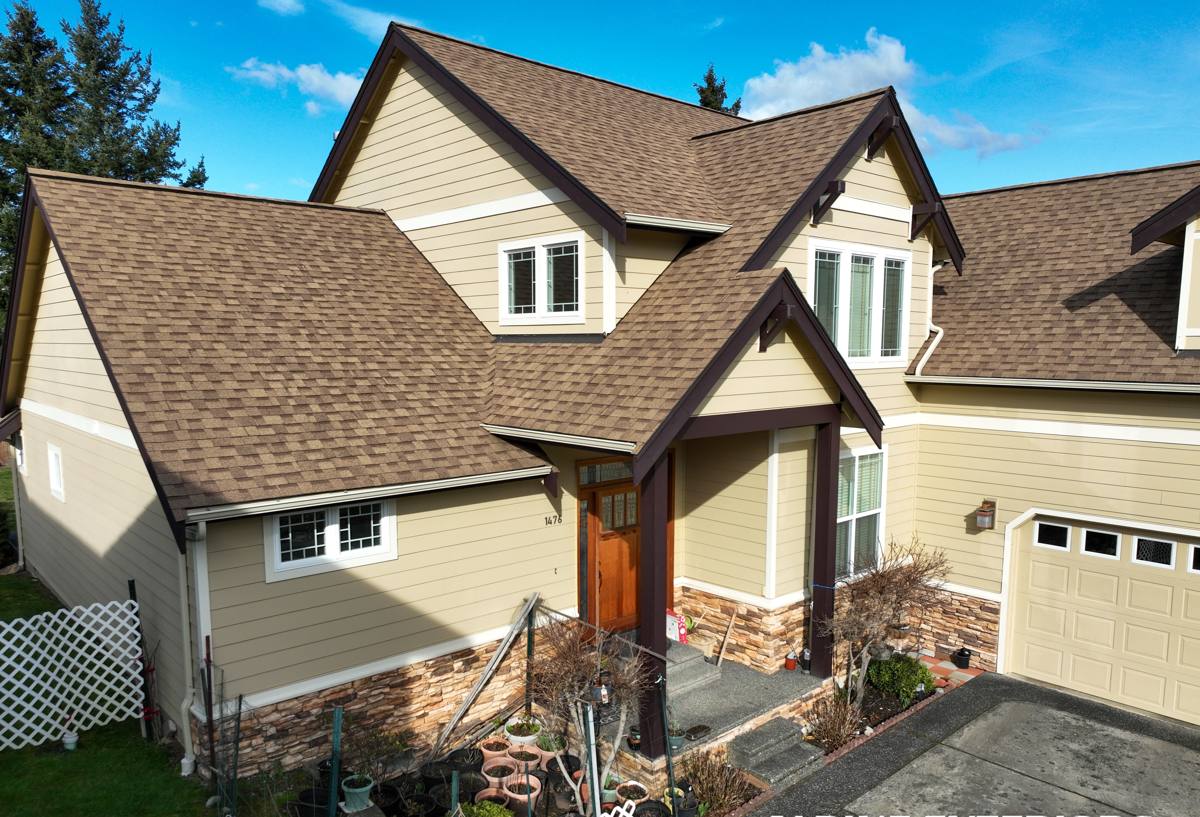
What the Local Climate Actually Does to a Roof
Salt Air
Airborne salt from the bay settles on every exterior surface, including roofing. On its own, asphalt shingle material isn't as vulnerable to salt corrosion as metal, but the metal components of a roofing system — flashing, drip edge, roofing nails, vent stacks, and gutter hardware — are. Lower-grade fasteners or flashing can start corroding years before they would inland, which is one reason we pay close attention to metal selection on jobs this close to the water.
Driving Rain
Wind-driven rain off the bay doesn't just fall straight down onto a roof — it gets pushed sideways and can work its way under shingle edges, around chimneys, and into valleys if the underlayment and flashing details aren't done right. A roof in this location needs more margin for error at every penetration and edge than a roof that only deals with calm, vertical rainfall.
Moss and Shade
Blaine Harbor's tree cover and marine humidity create long stretches of damp, shaded roof surface — exactly what moss and algae need to establish. Moss holds moisture against the shingle mat, lifts shingle edges as it grows, and can shorten the life of an otherwise sound roof if it's left unmanaged for years.
What a Correct Asphalt Shingle Roof Needs Here
A roof built for Blaine Harbor conditions isn't a different product line — it's the same asphalt shingle system installed with more attention to the details that matter in this climate:
- A synthetic underlayment rated for high-moisture exposure, not just builder-grade felt
- Ice-and-water shield membrane at eaves, valleys, and around penetrations, not just at the eave line
- Corrosion-resistant flashing and fasteners suited to a coastal-influenced environment
- Balanced intake and exhaust ventilation so moisture doesn't get trapped in the attic
- Algae-resistant shingle granules where the roof has shaded or north-facing exposure
- Proper nailing pattern and shingle overlap sized for wind-driven rain, not just standard exposure
Skipping any one of these doesn't usually show up as a problem in year one. It shows up as a leak, premature granule loss, or moss damage three, five, or eight years down the road — which is exactly why the installation details matter more here than the shingle brand printed on the wrapper.
Choosing a Shingle for This Environment
Most Blaine Harbor homes are well served by a mid-to-upper-tier architectural (laminated) asphalt shingle rather than a basic three-tab. Architectural shingles are heavier, sit flatter against the deck, and generally resist wind uplift and moss intrusion better than thinner three-tab products. That said, the right choice depends on the roof's exposure, pitch, and your budget.
| Factor | 3-Tab Shingle | Architectural Shingle |
|---|---|---|
| Typical lifespan (local conditions) | Shorter — more exposed edges catch wind and moss | Longer — thicker mat resists lifting and granule loss |
| Wind/rain performance | Adequate on sheltered roofs | Better on exposed, water-facing slopes |
| Moss resistance | Standard granules unless upgraded | Often available with algae-resistant granule options |
| Upfront cost | Lower | Moderate to higher |
| Best fit | Detached structures, budget-driven projects | Primary roofs facing the water or heavy tree shade |
We don't push a specific brand as the only acceptable option. What we do insist on is matching the shingle's rated wind and algae performance to where your roof actually sits — a roof facing open water or heavy shade deserves a different spec than a sheltered, south-facing slope.
Our Process on a Blaine Harbor Roof
1. Inspection and Scope
We start by getting on the roof, not just looking at it from the ground. We check the decking for soft spots, evaluate existing flashing and ventilation, and note any moss or algae staining that points to trouble areas. This determines whether the job is a straightforward re-roof or whether there's deck repair or ventilation work to fold in.
2. Tear-Off and Deck Check
Old roofing comes off down to the deck so we can see what's actually underneath — not layered over. Any water-damaged or delaminated sheathing gets replaced before anything new goes down. Roofing over a compromised deck just hides the problem.
3. Underlayment and Water Barrier
Given the rainfall here, we install a full synthetic underlayment with ice-and-water membrane reinforced at eaves, valleys, skylights, and any roof-wall intersections — the spots wind-driven rain is most likely to exploit.
4. Flashing and Penetrations
Chimneys, vent stacks, and any roof-to-wall transitions get new corrosion-resistant flashing, properly stepped and sealed rather than just caulked over old metal.
5. Shingle Installation
Shingles go down with the nailing pattern and exposure spec that fits the roof's pitch and wind exposure, with extra attention to valleys, hips, and ridge lines.
6. Ventilation Check
We confirm intake and exhaust ventilation are balanced. Poor attic ventilation traps moisture, which speeds up shingle aging from underneath — a problem that's easy to miss because it doesn't show on the surface right away.
7. Cleanup and Walkthrough
Magnetic sweep for nails, full site cleanup, and a walkthrough so you know what was done and what to watch for going forward.
Living With Moss, Algae, and Salt Air After Installation
A well-built roof still needs some basic upkeep in this climate. None of it is complicated, but skipping it shortens the roof's life:
- Keep gutters and downspouts clear so water doesn't back up under the shingle edge
- Trim back overhanging branches to reduce shade and debris buildup on the roof surface
- Have moss growth removed gently (no aggressive pressure washing, which strips granules) rather than left to spread
- Check flashing and sealant around chimneys and vents every couple of years, especially after a hard winter
- Have the attic checked periodically for signs of trapped moisture or poor airflow
Signs Your Roof Needs a Closer Look
Homeowners in Blaine Harbor tend to notice these signs later than they should, mostly because a roof is easy to ignore until there's a leak. Worth a call if you're seeing:
- Dark streaking or thick moss patches, especially on shaded or north-facing slopes
- Granules collecting in gutters or at downspout outlets
- Shingle edges curling, cupping, or lifting
- Soft or spongy spots when walking the attic floor above the roof deck
- Daylight visible through the roof deck from inside the attic
- Water stains on interior ceilings, particularly near chimneys or valleys
What Affects the Cost of a Blaine Harbor Re-Roof
| Cost Factor | Why It Matters Here |
|---|---|
| Roof size and pitch | Steeper, larger roofs take more material and labor time |
| Number of layers to remove | Tear-off of multiple old layers adds disposal and labor cost |
| Deck condition | Rot or soft sheathing from long-term moisture adds repair cost |
| Shingle tier chosen | Architectural and algae-resistant lines cost more than basic 3-tab |
| Flashing and ventilation scope | More chimneys, skylights, or vents mean more detail work |
| Access and site conditions | Tree cover, steep lots, or tight access near the water can add time |
We give a straightforward, itemized estimate rather than a single lump number, so you can see what you're actually paying for and where there's room to adjust scope if budget is a factor.
Why a Crew That Works This Area Matters
A roofing crew that regularly works Blaine Harbor and the broader Semiahmoo area already knows which details matter here — where moss tends to build up fastest, which roof orientations take the worst of the driving rain, and what flashing and fastener choices hold up under salt-air exposure over years, not just in the first season. That local pattern recognition shows up in fewer callbacks and a roof that's built for the conditions it actually faces, not a generic spec sheet.
Get a Straightforward Estimate
If you're weighing a repair against a full replacement, or just want an honest read on how much life is left in your current roof, we're glad to take a look. Use the form below to request a free, no-pressure estimate for your Blaine Harbor home.