 Semiahmoo
 Storm Damage Roof Repair Built for Custer's Coastal Climate
Custer sits close enough to the water that every roof here deals with a mix most inland homes never see: salt-laden air off the Strait of Georgia, wind-driven rain that comes in sideways during winter storms, and a moss season that can run half the year. Whatcom County roofs take a beating that's different from what you'd find twenty miles inland, and storm damage here often shows up in ways that are easy to miss until a small problem becomes a ceiling stain. This page covers what storm damage repair actually looks like for a Custer home, what we check, and how we approach the work so it holds up through the next storm season instead of just getting you through this one.
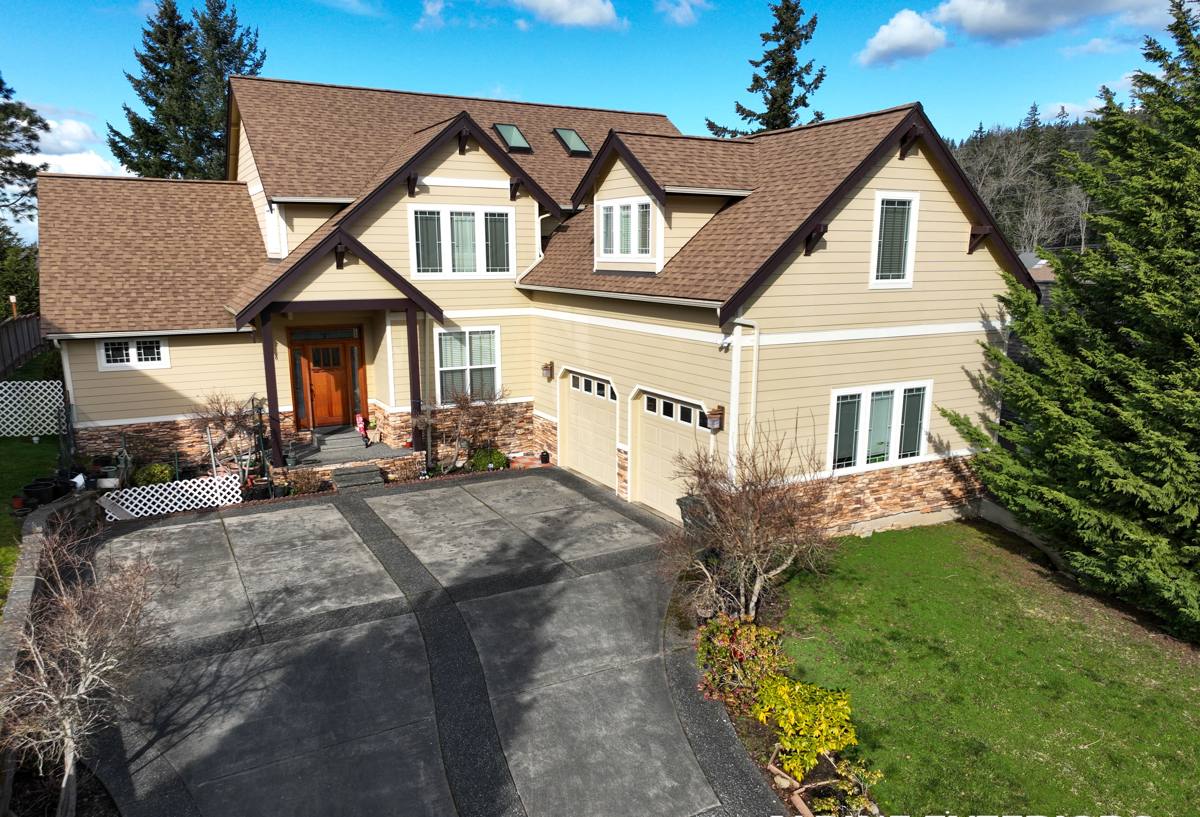
What Coastal Storms Actually Do to a Custer Roof
Wind and rain don't damage every roof the same way. Understanding the mechanism matters because it changes what "repaired" actually means.
Wind-Driven Rain and Uplift
Storms coming off the water rarely drop rain straight down. Wind pushes it sideways and up under shingle edges, ridge caps, and flashing that would shed a normal rain just fine. A shingle doesn't have to blow off for water to get underneath it — a lifted tab or a flashing seam that's opened even a quarter inch is enough during a sustained blow. Repeated wind events also work fasteners loose over time, so a roof can look intact from the ground while several shingles are barely holding on.
Salt Air and Metal Fatigue
Being close to the Strait means airborne salt settles on every exterior surface, including your roof. It accelerates corrosion on exposed fasteners, drip edge, flashing, and any metal roofing components. A nail that would last decades inland can start rusting and losing its grip years sooner here. When we're repairing storm damage on a Custer roof, we're always checking whether the fasteners and flashing nearby are still sound or whether salt exposure has already weakened them — patching over corroded metal just means another failure point next winter.
Moss, Trapped Moisture, and Rot
Whatcom County's moss season is long, and moss doesn't just look bad — it holds moisture against the roof surface and lifts shingle edges as it grows, which is exactly the kind of small gap wind-driven rain needs to get underneath. A storm-damaged spot that already had moss buildup around it is usually further along than it looks, because the wood beneath may have been absorbing moisture for a while before the storm made the damage visible.
Signs Your Custer Roof May Have Storm Damage
Some damage is obvious. Most of it isn't — it shows up as a slow leak weeks after the storm that caused it. Here's what we tell Custer homeowners to check after a significant wind or rain event:
- Shingles that look lifted, curled, or out of alignment compared to the rest of the roof
- Granules collecting in gutters or at the base of downspouts
- Soft or discolored ceiling spots, especially near chimneys, skylights, or where two roof planes meet
- Flashing around vents, chimneys, or sidewalls that looks bent, separated, or newly exposed
- Moss or debris buildup concentrated in one area, which can hide lifted shingles underneath
- Daylight visible through the attic roof deck, or damp insulation below the roofline
- Gutters pulling away from the fascia, which often points to water backing up under the roof edge
If you notice any of these after a storm, it's worth getting a look before the next round of weather moves through — a small gap that's fine in dry conditions can become an active leak the moment wind-driven rain hits it directly.
What a Correct Storm Damage Repair Actually Involves
Assessment Before Any Patching
The most common mistake in storm repair is patching the visible symptom without checking how far the water actually traveled. Water runs downhill under a roof deck, not necessarily straight down from where it entered. We check the decking, the underlayment, and the surrounding shingles — not just the spot where the leak showed up inside — before deciding what needs to be replaced versus what can be sealed and left alone.
Matching Materials and Flashing Details
A repair that doesn't match the surrounding roofline in material, color, and installation detail is a repair that fails again at the seam. This matters most at flashing — around chimneys, skylights, and roof-to-wall transitions — where a rushed patch is the single most common source of a repeat leak. We rebuild flashing details properly rather than caulking over a gap, because caulk is a temporary fix, not a repair.
Documentation for Insurance
If the damage is significant enough to involve a homeowner's insurance claim, we document the roof condition with photos and a written scope before starting work. That record matters — it's the difference between a claim that moves smoothly and one that gets disputed over what was storm-caused versus pre-existing wear.
Our Storm Damage Repair Process
The steps below are the same order we follow on every storm call, adjusted for how severe the damage is.
- Immediate mitigation. If there's active water intrusion, we get a tarp or temporary cover in place first to stop further damage while a full repair is scheduled.
- Full roof assessment. We inspect the entire roof plane involved, not just the damaged spot, checking decking, underlayment, flashing, and fastener condition.
- Written scope and estimate. You get a clear description of what's damaged, what needs to be repaired versus replaced, and a straightforward cost range before any work starts.
- Insurance coordination, if applicable. We provide documentation and can walk through the scope with your adjuster if the claim requires it.
- Repair. Damaged decking, underlayment, shingles, and flashing are replaced and tied into the surrounding roof properly, not just surface-patched.
- Cleanup and check. We clear debris, check gutters and downspouts for damage or blockage from the same storm, and confirm the repair area sheds water correctly.
Repair or Replace? How We Help You Decide
Not every storm-damaged roof needs full replacement, and not every roof is worth repairing again. The table below covers the factors that actually drive that decision.
| Factor | Leans toward repair | Leans toward replacement |
|---|---|---|
| Roof age | Under roughly half its expected lifespan | Already near or past typical service life |
| Damage extent | Isolated to one section or flashing detail | Multiple areas or widespread granule loss |
| Decking condition | Solid, dry wood under the damaged area | Soft, rotted, or repeatedly wet decking |
| Moss/moisture history | Minimal prior moss or trapped moisture | Long-term moss buildup with underlying rot |
| Prior repairs | First significant repair on this roof | Roof has needed several patches already |
We'll give you an honest read on where your roof falls on that scale. There's no reason to push a full replacement on a roof that just needs a proper flashing repair, and no reason to keep patching a roof that's telling you it's done.
Storm Damage Types and How We Typically Approach Them
| Damage type | Typical cause here | Repair approach |
|---|---|---|
| Lifted or missing shingles | Sustained wind gusts off the water | Replace affected shingles, re-secure surrounding tabs |
| Flashing separation | Wind flexing the roof deck at transitions | Remove and rebuild flashing, not just re-caulk |
| Granule loss / bare spots | Wind-blown debris and driving rain | Assess remaining shingle life, patch or section-replace |
| Moss-related lifting | Extended damp, shaded conditions | Clear moss, treat, replace lifted shingles, check decking |
| Corroded fasteners/metal | Salt air exposure over time | Replace with corrosion-resistant fasteners and flashing |
Working With Your Insurance Claim
Most storm damage repairs in this area go through a homeowner's insurance policy, and the process goes smoother when the documentation is done right the first time. We take photos of the damage, note the likely cause, and provide a written scope of work that itemizes what's being repaired and why. If your adjuster has questions about the scope, we can speak to the specifics directly. What we won't do is inflate a scope to pad a claim or downplay damage to speed things along — the goal is an accurate picture of what the storm actually did, because that's what protects you if there's a dispute or a follow-up claim later.
Why a Crew That Already Works Custer Matters
Storm repair isn't just carpentry — it's knowing what this specific stretch of Whatcom County throws at a roof. A crew that mostly works inland may not think twice about salt exposure on fasteners, or may not recognize how far moss has already undermined a section before a storm finished the job. Working roofs in and around Semiahmoo and Custer regularly means we're used to matching materials to what actually holds up in this climate, coordinating repairs around the weather windows we actually get in the Pacific Northwest, and responding quickly when a storm comes through — because we're already local, not driving in from somewhere that doesn't deal with this coastline day to day.
Protecting the Roof After the Repair
A good repair only holds up if the roof around it is maintained the same way. A few habits make a real difference in this climate:
- Keep gutters and downspouts clear so wind-driven rain has somewhere to go besides under the roof edge
- Have moss treated before it spreads, especially on north-facing or shaded roof sections
- Check flashing around chimneys and skylights each fall, before the winter storm pattern sets in
- Trim back overhanging branches that trap moisture and drop debris into valleys
- Schedule a roof check after any storm strong enough to cause visible damage nearby
None of that replaces a professional inspection, but it reduces how much storm damage a given season actually causes.
If a recent storm left you with a leak, missing shingles, or just a nagging feeling something's not right up there, we're glad to take a look. We offer free, no-pressure estimates for Custer homeowners — fill out the form below and we'll get a time on the calendar.