 Semiahmoo
 Why Peace Arch Siding Wears Differently Than Siding Inland
Homes in the Peace Arch area sit close to Semiahmoo Bay and the Strait of Georgia, right up against the Canadian border in one of the wettest, most marine-influenced pockets of Whatcom County. That combination — salt-laden air off the water, driving rain that comes in sideways during winter storms, and heavy tree cover that keeps everything shaded and damp — is a harder environment on exterior siding than most manufacturers design for on paper. It's a different problem than a house twenty miles inland in Bellingham or Ferndale faces, even though the annual rainfall numbers look similar on a chart.
Salt air corrodes exposed fasteners and metal trim faster than fresh air does. Driving rain doesn't just wet a wall — it drives moisture up and under laps, into seams, and behind poorly flashed penetrations. And the long moss season here, often stretching from October through May, means anything that traps moisture against a wall — bark siding, wood, or poorly primed composite panels — stays wet for months at a time instead of drying out between storms. Siding replacement in this neighborhood isn't just about picking a new color. It's about choosing a material and an installation method that can actually stand up to what the site throws at it.
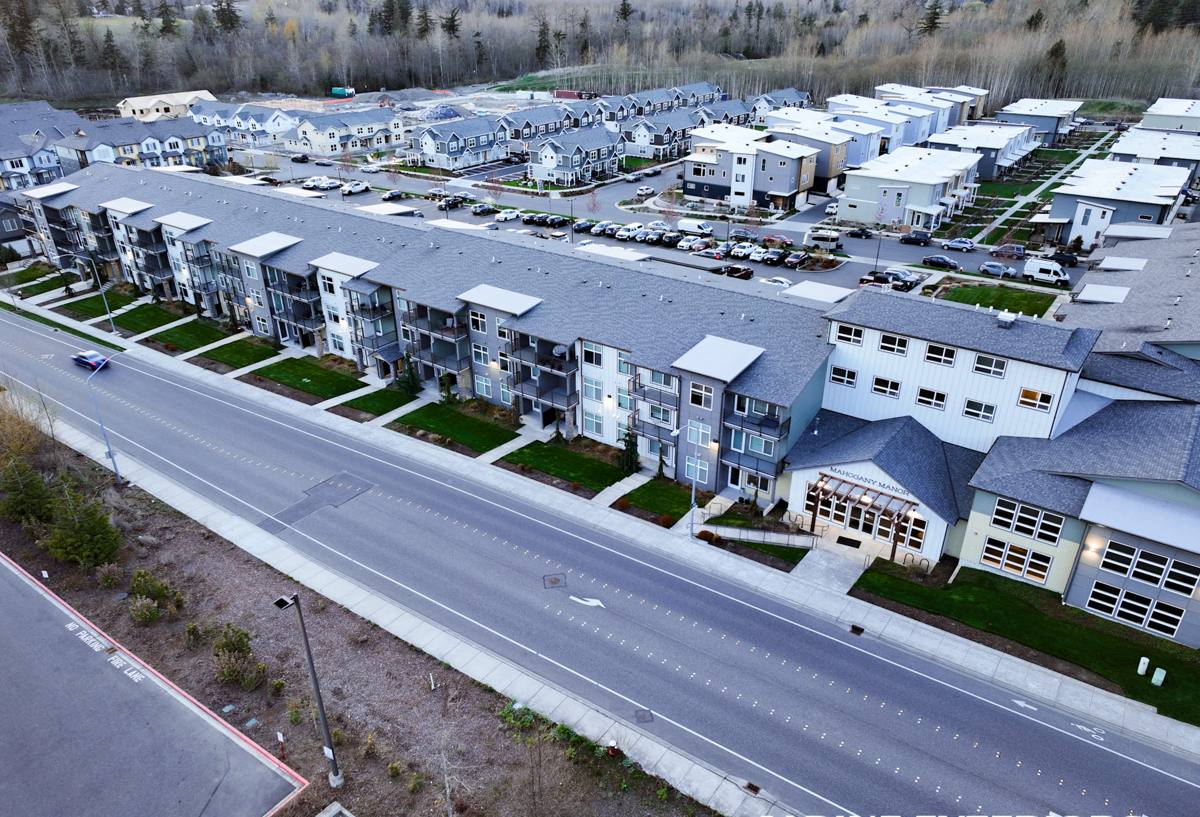
Signs a Peace Arch Home Needs Siding Replaced, Not Patched
Homeowners near the water often ask whether a section of damaged siding can just be repaired instead of replacing the whole wall or the whole house. Sometimes that's a reasonable option. Often, once we're on a ladder up close, it isn't. Here's what usually tips a job from "repair" to "replace":
- Soft or spongy spots when you press on the siding, especially near the bottom courses and around window sills
- Paint that keeps failing within a year or two of repainting, even with quality paint — a sign moisture is moving through the wall from behind
- Persistent moss or algae growth that comes back within a season of cleaning
- Visible cupping, warping, or delamination on wood-based or composite panels
- Rust streaking from nail heads or corroded trim fasteners
- Gaps that have opened at butt joints, corners, or where siding meets trim, window, or door casings
- Interior clues — musty smell, peeling interior paint on an exterior wall, or visible staining near where the wall meets the ceiling
One or two of these on a well-maintained home might mean targeted repair is enough. Several of them together, especially on walls that face the water or sit under tree canopy, usually mean the underlying material and water management have failed and a full or wall-by-wall replacement is the honest recommendation.
What a Correct Siding Replacement Actually Involves
A siding replacement done right is mostly invisible once it's finished — the parts that matter most are underneath the finish material. Skipping them is how a brand-new-looking house ends up with rot behind the walls again in five years.
Tear-off and inspection
We remove the old siding down to the sheathing and actually look at what's underneath — sheathing condition, any existing rot at sill plates or window openings, and the state of the old weather-resistive barrier. On homes near Semiahmoo Bay that have had wood or older composite siding for a couple of decades, it's common to find some degree of moisture damage at penetrations that was hidden until the cladding came off.
Water management, not just a wrap
A weather-resistive barrier goes on correctly lapped, taped, and integrated with flashing at every window, door, and penetration — so water that does get past the siding (and some always will, in this climate) has a planned path down and out instead of a place to pool. This is the single most important part of the job for a house exposed to driving, wind-blown rain, and it's the step that gets rushed on cut-rate replacements.
Rainscreen and ventilation
On exposed, shaded, or moss-prone walls, a ventilated rainscreen gap behind the siding gives any moisture that gets behind the cladding a way to dry out instead of sitting against the wall. Given how long the moss season runs here, that drying capacity matters more on this stretch of coastline than it would on a drier site.
Correct fastening and clearances
Fastener type, spacing, and depth all affect how well siding performs over decades, not just years. Ground clearance and gaps at trim, corners, and penetrations also matter — tight, caulked-shut joints with no room to shed water are a common cause of early failure on homes near the water.
Why We Install Only James Hardie Fiber Cement
We don't install vinyl, LP SmartSide, or other engineered wood products, and that's a deliberate standard, not a lack of options. Vinyl can crack and fade under UV and temperature swings and doesn't hold up well to the physical debris and moisture cycling common on wooded, waterfront lots. Engineered wood siding depends heavily on its factory coating staying intact — once an edge or cut is exposed to the kind of sustained damp this area sees for months at a stretch, moisture can wick into the substrate and the material can swell or deteriorate from the inside out.
James Hardie fiber cement is non-combustible, dimensionally stable in wet climates, and doesn't feed mold or rot the way wood-based products can. Hardie's HZ5 product line is engineered specifically for cold, wet, freeze-prone climates like this one. The ColorPlus factory finish is baked on under controlled conditions and holds color and adhesion far longer than field-applied paint, which matters on a home that spends half the year under cloud cover and moisture. It's backed by a strong transferable warranty on the product itself. For a house sitting in salt air with a long wet season, it's the material we're willing to put our name behind.
Our Process for a Peace Arch Siding Replacement
| Step | What Happens |
|---|---|
| On-site assessment | Walk the exterior, check for moisture damage, note exposure to wind, water, and shade on each elevation |
| Written estimate | Scope, material, and price laid out plainly — no vague allowances |
| Tear-off | Old siding and trim removed, sheathing inspected and repaired where needed |
| Water management install | Weather-resistive barrier, flashing, and rainscreen installed and detailed at every penetration |
| Hardie installation | Fiber cement siding and trim installed to manufacturer spec and local fastening requirements |
| Final walkthrough | Joint sealant, touch-up, and a walk-through with the homeowner before we call it done |
Because we work this stretch of Whatcom County regularly, we already know which details on a Peace Arch or Semiahmoo-area home need extra attention — where wind-driven rain hits hardest, which elevations stay shaded and damp longest, and how much ventilation a given wall assembly actually needs. That's not something a crew coming from outside the area picks up on the first job.
Cost Factors for Siding Replacement in This Area
Every house is different, so we don't quote prices sight unseen — but the factors that move the number up or down are consistent. Here's what actually drives cost on a project like this:
| Factor | Why It Matters |
|---|---|
| Extent of hidden damage | Rot found at tear-off means added sheathing and framing repair before new siding goes on |
| Home size and wall complexity | More corners, dormers, and trim details mean more labor and material |
| Siding profile chosen | Lap siding, panel siding, and shingle-style Hardie products carry different material and labor costs |
| Trim and accessory scope | Full trim replacement adds cost but keeps the whole envelope consistent in age and performance |
| Access and site conditions | Steep lots, mature landscaping, or limited staging area near the water can add labor time |
| Story height | Two- and three-story elevations require more scaffolding and safety setup than single-story walls |
Broadly, homeowners should expect siding replacement to be a mid-to-upper five-figure investment on an average-sized home once hidden repairs are accounted for — but the honest answer only comes from an on-site look, since guessing from square footage alone misses the moisture damage that's often the real cost driver on homes in this climate.
Why Hiring a Crew That Already Works Peace Arch Matters
Siding performance in this specific pocket of Whatcom County depends on details that are easy to get wrong if you don't already build here regularly — how much rainscreen ventilation a shaded, tree-covered wall actually needs versus a wall that gets more sun and wind; how corrosion-resistant fasteners and trim need to be this close to salt water; how long moss and algae take to establish on north-facing walls under a tree canopy versus open ones. A crew that's done this work up and down this coastline brings that judgment to the estimate, not just to the installation.
It also matters for warranty follow-through. Fiber cement siding performs for decades when it's installed correctly, but manufacturer warranties can be affected by installation errors — meaning the contractor's workmanship is part of what protects your investment, not just the product itself.
What to Check Before You Hire
- Do they carry current WA state contractor licensing and insurance, and will they show you proof without being asked twice
- Do they specialize in fiber cement installation specifically, or is siding one of a dozen things they do
- Will they put water management and flashing details in writing as part of the scope, not just "install siding"
- Can they explain why they'd recommend a particular Hardie profile for your specific exposure and elevation
- Do they have experience with homes in this immediate area, not just the general region
- Is the estimate itemized enough that you know what happens if hidden damage is found at tear-off
Living With New Siding in a Marine Climate
Even correctly installed fiber cement siding benefits from basic upkeep in this environment. Rinsing salt residue and moss spores off the siding once or twice a year, especially on north- and west-facing walls, keeps growth from establishing. Keeping gutters clear prevents overflow from running down the wall face and staying wet longer than it should. Trimming back vegetation that keeps a wall shaded and damp helps the assembly dry between storms the way it's designed to. None of this is heavy maintenance — it's the kind of upkeep that lets a properly installed Hardie system reach the lifespan it's built for instead of fighting the marine climate the whole way.
If your siding is showing its age, holding onto moisture, or just due for an honest look, we're glad to walk the exterior with you and tell you straight what we see — no pressure, no upsell. Fill out the form below for a free estimate on siding replacement for your Peace Arch home.