 Semiahmoo
 Why Roofs in California Creek Wear Faster Than the Regional Average
Homes in the California Creek area sit close enough to Semiahmoo Bay and the open water of the Salish Sea that salt-laden air is a constant, low-grade stressor on a roof system. Salt air doesn't just affect boats and railings — it accelerates corrosion on exposed fasteners, metal flashing, gutter hangers, and any unprotected steel in a roof assembly. Over years, that corrosion is what turns a small flashing failure into a leak.
Add to that the driving, wind-pushed rain that comes off the water during Whatcom County's wetter months. Rain that falls straight down is easy for a roof to shed. Rain that's being pushed sideways by wind finds every marginal lap, under-driven nail, or thin spot in the underlayment. A roof that would hold up fine in a more sheltered inland lot can leak in California Creek simply because of exposure and wind direction.
Finally, tree cover is heavier and shade lasts longer in many California Creek lots than it does in more open parts of Semiahmoo. That shade keeps roof surfaces damp longer after every rain, which is exactly what moss and lichen need to establish. The combination of salt exposure, wind-driven rain, and a long moss season is what makes roof replacement decisions here different from a generic "how old is your roof" conversation.
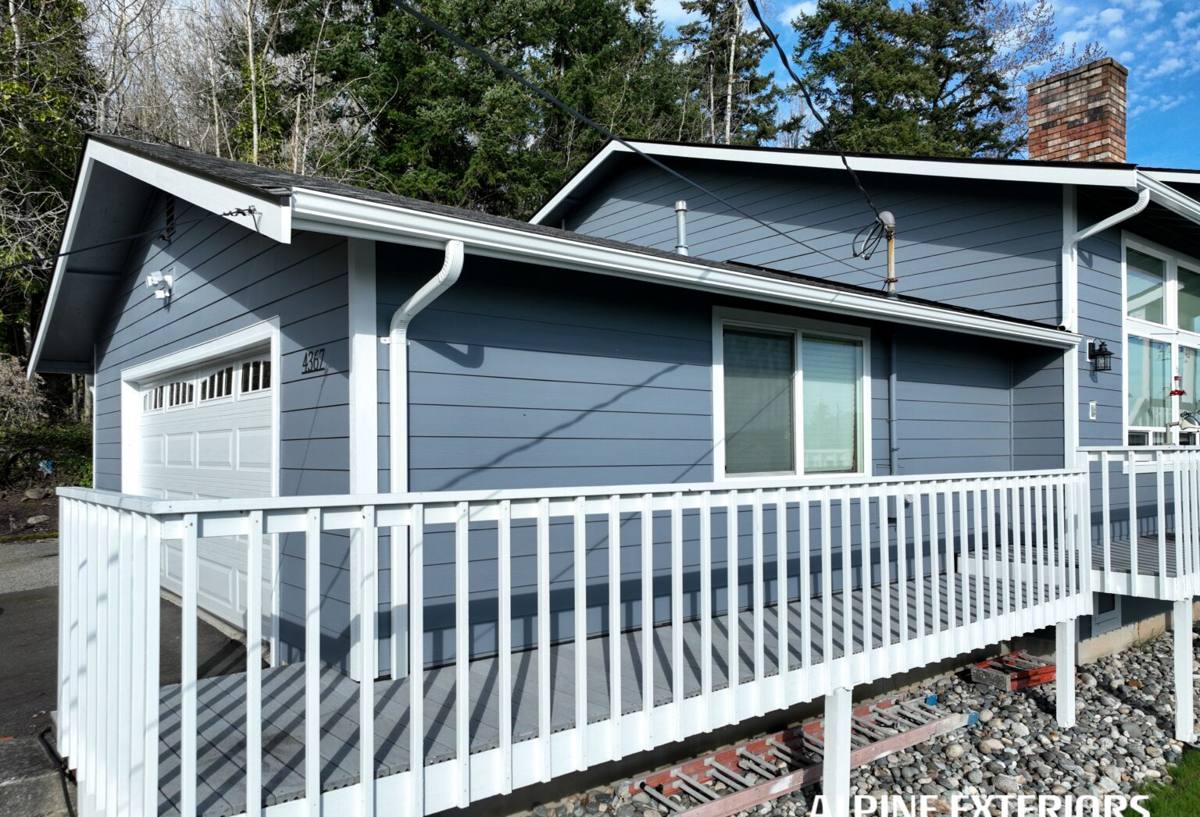
Signs a California Creek Roof Needs Replacement, Not Just a Patch
Not every issue calls for a full tear-off. But when several of these show up together, patching usually stops being the honest answer:
- Heavy moss mats on north-facing or shaded slopes, especially where moss has been scraped off before and keeps returning
- Granule loss showing up in gutters or downspouts, or bald patches on the shingle surface
- Curling, cracked, or cupped shingles, particularly on slopes that get the most sun-to-shade cycling
- Rust streaks below flashing, vents, or old fasteners — a sign salt air has already started breaking down metal components
- Soft or spongy spots when walking the roof, or visible sagging between rafters
- Daylight, water staining, or damp sheathing visible from inside the attic
- Ceiling or wall stains that show up specifically after wind-driven rain events, not just steady rain
- A roof that's already had two or more patch repairs in the last few years
- A shingle roof approaching or past its manufacturer-rated service life, especially if it was installed with basic felt underlayment
Why Overlays Are a Bad Fit Here
Roofing over existing shingles skips the one step that matters most in this climate: a look at the decking. In a damp, shaded, salt-air environment, sheathing can be quietly rotting under an intact-looking shingle surface. An overlay locks that problem in place and adds weight on top of it. A proper replacement removes the old roofing so the decking can actually be inspected and repaired where needed.
What a Correct Roof Replacement Involves
A roof replacement done right for a California Creek home isn't just "new shingles, same as before." Given the exposure this area gets, several details matter more here than they would on a sheltered inland roof:
- Full tear-off to expose and inspect the decking, with any soft, delaminated, or rotted sheathing cut out and replaced — not skimmed over
- Self-adhered membrane at eaves, valleys, and around every penetration, giving a second line of defense against wind-driven rain finding its way under the primary roofing
- Full synthetic underlayment across the whole deck rather than felt, which tends to wrinkle and hold moisture in this humidity
- Corrosion-resistant flashing and fasteners at chimneys, skylights, sidewalls, and vents — salt air is hard on standard galvanized components over time
- Fastening patterns rated for the wind exposure this stretch of Semiahmoo actually sees, not just the manufacturer's minimum
- Balanced intake and exhaust ventilation so the attic doesn't stay damp underneath the new roof, which matters directly to moss and rot prevention
Skip any one of these and you haven't shortened the job — you've just moved the next repair call up by several years.
Material Choices for Salt Air and a Long Moss Season
There's no single "best" roofing material for every California Creek home — it depends on the home's exposure, roof pitch, budget, and how much maintenance the owner wants to take on. Here's how the common options actually behave in this climate:
| Material | Moss/Moisture Behavior | Salt-Air Durability | Maintenance Needed |
|---|---|---|---|
| Algae-resistant architectural asphalt shingle | Good with proper ventilation; copper or zinc strips can slow moss regrowth on shaded slopes | Good — asphalt itself doesn't corrode; watch fastener and flashing quality | Periodic moss/debris removal, gutter cleaning |
| Standing-seam metal | Sheds moisture fast; steep profile discourages moss buildup | Very good with the right coating; avoid mismatched metals that promote galvanic corrosion | Low — occasional inspection of seams and fasteners |
| Cedar shake | Attractive but holds moisture in shaded, damp spots; higher rot risk without diligent upkeep | Fair — needs regular treatment to hold up to sustained damp/salt conditions | High — regular cleaning and treatment |
| Synthetic/composite shake | Doesn't absorb moisture like wood; holds up well through the moss season | Good | Low to moderate |
We steer most California Creek homeowners toward algae-resistant asphalt or standing-seam metal, not because other materials are inferior products, but because both hold up predictably in sustained damp, shaded conditions with a maintenance load most owners are actually willing to keep up with. Cedar can look great here, but it's an honest trade-off — it asks for more attention than most schedules allow in a climate this wet.
Ventilation and Moisture Control Matter as Much as the Shingles
A new roof with poor attic ventilation will still grow moss and still trap moisture against the underside of the decking — it just delays the problem instead of solving it. Balanced intake at the eaves (through vents or baffles that don't get blocked by insulation) paired with exhaust at the ridge lets an attic actually dry out between rain events instead of staying damp through the fall and winter. In a neighborhood with as much shade and moisture exposure as California Creek, this isn't an upsell — it's the difference between a roof that makes it to its rated lifespan and one that doesn't.
Our Roof Replacement Process
- On-site inspection — we walk the roof and attic, note decking condition, ventilation, flashing points, and any moss or wear patterns specific to your slopes and tree exposure
- Written estimate — clear scope, material options, and pricing, no pressure to decide on the spot
- Material walkthrough — we talk through the honest trade-offs between options for your roof and budget
- Scheduling around weather — we plan tear-off days for realistic dry windows given this area's rain patterns
- Tear-off and decking inspection — old roofing comes off, decking gets checked, and any repairs are handled before anything new goes down
- Dry-in — membrane and underlayment go on the same day the deck is exposed, so your home isn't sitting open overnight
- Installation — new roofing, flashing, and ventilation components installed to spec
- Cleanup and magnet sweep — job site and yard cleared of debris and stray fasteners
- Final walkthrough and warranty paperwork — we go over the finished roof with you before calling the job done
Why Hiring a Crew That Already Works California Creek Matters
A roofer who mostly works drier, inland parts of Whatcom County isn't wrong about roofing in general — they just haven't built the habits this specific exposure requires. Crews that regularly work California Creek know which slopes tend to hold moss longest based on tree cover and sun angle, how to schedule around this stretch of coastline's rain patterns, and which flashing and fastener upgrades are worth the extra cost given the salt air. That local pattern-recognition is what keeps a new roof from repeating the same failure points as the one it replaced.
There's also the practical side: familiarity with Whatcom County permitting, comfort working tree-heavy lots with tighter staging and access, and established relationships for material delivery and debris disposal in the area. None of that shows up on a spec sheet, but it affects how smoothly your project actually runs.
What Affects the Cost of a Roof Replacement Here
| Factor | How It Affects Price |
|---|---|
| Roof size and pitch | More square footage and steeper pitches increase material and labor time |
| Layers to remove | Tearing off multiple existing layers costs more in labor and disposal than a single-layer tear-off |
| Decking repair needed | Rot from a long moss season or past leaks means replacing sheathing before new roofing goes down |
| Material selection | Standard asphalt, upgraded algae-resistant shingle, and metal all carry different material costs |
| Accessibility and tree cover | Tight, tree-heavy lots common in California Creek can add setup, staging, and debris-handling time |
| Penetrations and flashing detail | Chimneys, skylights, and multiple valleys each add flashing work and time |
Most full roof replacements land in a broad middle range once size, pitch, and material are factored in — we'll give you real numbers for your roof after the inspection rather than a guess over the phone.
Protecting the Investment After Replacement
A correctly installed roof still benefits from basic upkeep in this climate:
- Clean gutters at least twice a year given the tree cover common in California Creek — clogged gutters back up moisture right at the roof edge
- Do an annual visual check for moss regrowth on shaded slopes and address it early rather than letting mats build up
- Avoid pressure washing the roof surface — it can strip granules and force water under laps; a soft wash approach is gentler
- Keep overhanging limbs trimmed back to reduce shade, debris, and abrasion on the roofing surface
- Have flashing and fasteners checked periodically given the corrosive effect of salt air over time
If you're weighing a repair against a full replacement, or just want an honest read on where your roof stands, we're happy to take a look. Fill out the form below for a free, no-pressure estimate.